

Transitioning from Foils to Balayage: A Gentle Guide
What if moving from foils to balayage is less about changing techniques in one visit and more about building a colour plan around your hair as it is now? If you’re wondering how to transition from foils to balayage without a harsh line or an abrupt change, start by considering what’s already in your hair. Previous highlights, your natural colour, any at-home colour and your hair’s condition all influence the result.
It’s understandable to want a softer, more natural-looking finish while worrying that the change could take several appointments or leave your colour uneven along the way. A thoughtful plan accounts for existing foil lines and your preferred level of brightness. Rather than following a fixed formula, the approach should suit your colour history and hair’s needs.
In this guide, you’ll learn what the changeover may involve, why blending existing highlights can take time and how to care for your colour between salon visits. You’ll also find practical ways to prepare for a colour consultation and decide whether to keep your foils, blend them or gradually introduce balayage.
Key Takeaways
- Balayage placement can create a more varied, softly blended effect than the consistent pattern of foil highlights.
- How to transition from foils to balayage depends on your colour history, hair condition and preferred brightness. The plan may adapt existing foils rather than replace every one.
- Compare keeping your foils, blending existing highlights or gradually introducing balayage to find a direction that suits your hair and upkeep preferences.
- Bring your colour history, inspiration images and current haircare routine to help shape a practical colour plan.
- Think of the first appointment as a step towards your goal. The result and next steps depend on your starting point and how your hair responds.
Why move from foils to balayage, and what changes in the look?
Foils and balayage place colour in different ways, so switching techniques can change the overall feel of your highlights. Foils enclose selected sections during processing, while balayage involves painting colour onto chosen areas of the hair. Both approaches can create brightness and dimension. The final effect depends on your starting colour, hair condition and the placement of the colour.
Foils place brightness in selected sections; balayage paints colour onto chosen areas for the possibility of a softer, more graduated blend. That’s a useful distinction, not a promise of a particular finish. Foils can create a more structured, consistent pattern of brightness. Balayage may look more diffused, but the technique alone doesn’t determine how light, blended or high-contrast your hair will appear. For a simple overview of how hair coloring works, explore how colour techniques alter the hair.
How do foils and balayage create different results?
With foils, selected sections are separated and enclosed, which can support a more defined highlight pattern. With balayage, colour is painted onto chosen areas, so placement can vary across the hair. Either approach can be used to shape brightness around the face or add dimension. Your existing colour and the placement plan influence the final effect.
What makes a softer grow-out appealing?
If you’re tired of a distinct regrowth line, a blended root area may soften the contrast between your natural colour and highlighted lengths. This can make regrowth less noticeable for some people, particularly when the desired look has a gradual shift from root to lighter ends. Balayage isn’t automatically lighter or lower-maintenance, though, and it won’t suit every starting point. Existing foil lines, colour contrast and hair condition all matter.
Maintenance depends on the finish you choose. A subtle blend close to your natural colour may grow out differently from bright, high-contrast pieces near the roots, so changing techniques doesn’t guarantee fewer salon visits. A tailored colour plan can balance your preferred brightness with your hair’s condition and the upkeep you’re comfortable with.
If you’re exploring how to transition from foils to balayage, begin with the look you want rather than assuming one technique is always better. Lived-in colour may suit those seeking softer regrowth. Read our lived-in blonde guide for more on softer, lower-maintenance colour.
How does a foils-to-balayage colour transition work?
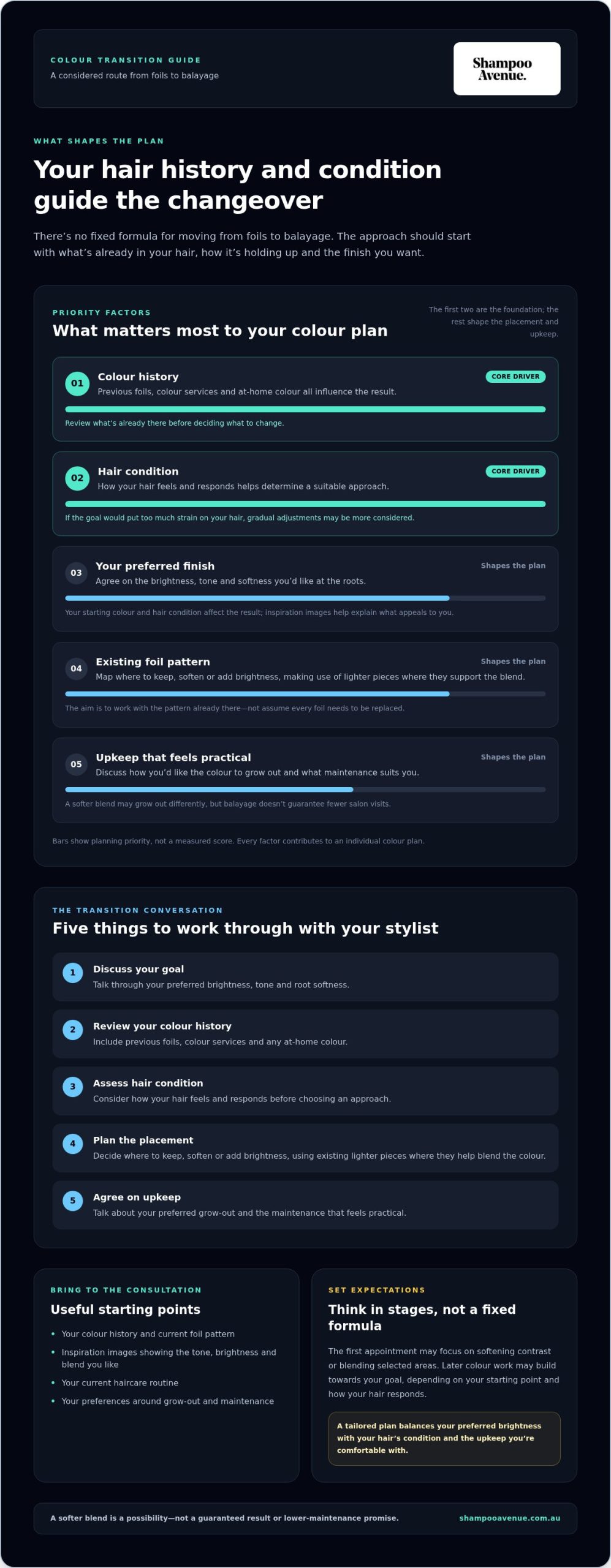
There isn’t one set formula for how to transition from foils to balayage. Start with the result you want, then factor in what’s already in your hair and how it’s holding up. Rather than replacing every foil with painted colour, your stylist can plan a combination of placements to blend existing highlights and shape the next stage.
A considered transition generally involves:
- Discussing your goal: Agree on the brightness, tone and root softness you’re after.
- Reviewing colour history: Talk through previous foils, colour services and at-home colour, if relevant.
- Assessing hair condition: Consider how your hair feels and responds before deciding on a suitable approach.
- Planning placement: Map where to keep, soften or add brightness, making use of existing lighter pieces where they support the blend.
- Agreeing on upkeep: Discuss how you’d like the colour to grow out and what maintenance feels practical.
Your colour history and hair condition guide the transition plan, so the technique should be tailored to your starting point, not applied as a fixed formula. Existing light sections may be incorporated into the new look, while other areas could need a different approach to help the overall colour feel balanced. The aim is to work with the pattern already there, not assume every foil needs to be recreated as balayage.
What happens during the colour consultation?
Describe your current foil pattern, previous colour services and what you’d like to change. Reference photos can help you explain the tone, brightness and blend you have in mind. Use them to show what appeals to you, while keeping in mind that your starting colour and hair condition affect the result. A thorough assessment helps shape an approach around both your goal and your hair’s needs.
Why might the transition take more than one appointment?
Your starting colour, previous colour work and desired brightness all influence the plan. If reaching your goal in one visit would put too much strain on your hair, gradual adjustments may be a more considered path. The first result could focus on softening contrast or blending selected areas, with later colour work building towards the look you want. The pace depends on your individual starting point, not a set number of appointments.
For an individualised colour transformation, a clear conversation about your hair history, priorities and maintenance helps set a considered direction.
Will balayage suit your existing foils, colour and hair condition?
There isn’t one right route for every head of highlighted hair. The best fit depends on the look you want, how your existing colour sits and how your hair is feeling. An in-person assessment helps your stylist consider those details and plan whether to keep some foils, blend them with another placement approach or make a gradual change.
Use this comparison as a starting point, not a prescription:
Maintain foils: This may suit you if you prefer a brighter, more uniform blonde. Regrowth and upkeep depend on how close the highlights sit to your roots, the contrast with your natural colour and how often you want to refresh the look.
Blend existing highlights: A mix of placements may soften the root area while keeping some of your current brightness. Suitability depends on where the foils sit, how distinct their lines are and whether the existing tones work with your desired finish.
Introduce balayage gradually: Colour can evolve over successive appointments, with each step shaped by your starting point and goal. This can suit a gradual change, though it won’t create an instantly blended result or guarantee less upkeep.
Which transition route fits your colour goal?
If you love a luminous, consistent blonde, retaining some foil placement may help preserve that sense of brightness. For a softer root area, a blended approach could be considered, while a gradual plan lets the colour direction develop over time. Balayage doesn’t automatically mean less maintenance. Root contrast, placement and your preferred level of brightness all affect how the colour grows out and when you may want to refresh it.
How can hair condition affect the plan?
Dryness, previous lightening and overall hair resilience are important parts of the colour conversation. If your lengths have already been lightened repeatedly, adding more brightness may need a careful approach, with hair wellness considered alongside the colour goal. The right balance is individual. An in-person assessment helps guide what’s appropriate for your hair instead of chasing a reference photo at any cost. For more context, read our protein treatment and hair repair guide.
So, how to transition from foils to balayage depends on more than the technique name. Bring your colour history and preferred finish into the discussion, then build a plan around your hair’s condition, desired look and realistic maintenance needs.
How to prepare for your first balayage appointment after foils
A little preparation can help turn “I’d like it softer” into a clear colour conversation. Bring information that explains your starting point and priorities, but avoid making a last-minute colour or lightening change before your appointment, as this can affect the plan. Follow the personalised preparation advice for your service.
What should you bring to the consultation?
Gather a few useful details before you go. Clear photos of your current hair, taken in natural light where possible, can show how your foils look across different areas. Inspiration photos can help you describe the tone, brightness and root softness you like. It’s just as useful to explain what you don’t want.
- Colour history: Make a brief record of previous salon colour and any at-home colour, including roughly when it was done if you remember.
- Your current routine: Share how you care for your hair and how often you typically refresh your colour.
- Your priorities: Decide whether brightness, a softer root, added dimension or a more gradual change matters most.
- Your current result: Identify what you like about your foils and what you’d prefer to soften or change.
These details make the discussion more specific to you. If you’re still working out how to transition from foils to balayage, use your photos to describe the look you’re drawn to, rather than expecting a reference image to map exactly onto your own hair.
How can you plan for maintenance after the change?
Talk about what upkeep feels realistic for you. The tone and brightness you choose can call for different care at home and different plans for future salon visits. Ask how to preserve the tone you like and what kind of refresh may help maintain your preferred level of brightness. Your stylist can shape a practical routine around the colour plan and your hair’s condition.
For broader guidance on planning a salon colour change, explore this hair colour transformation guide. Arrive ready to share your history, inspiration and priorities, then leave room for a plan that considers both your goal and your hair’s needs.
Plan your colour transformation with Shampoo Avenue.
What to expect as your foils become a balayage look
The first appointment may be a step towards your goal rather than the complete change. Your result depends on the colour you’re starting with, where new colour is placed and how your hair is holding up. If your existing foils create strong bands of brightness, the first step may focus on softening the overall effect, with further work refining the blend over time.
A tailored colour transformation takes your existing highlights and desired finish into account instead of following a one-size-fits-all formula. Keep your expectations flexible: your stylist can explain what the first result is designed to achieve and how it may support the next stage.
How might the colour evolve between appointments?
Follow-up colour work may adjust brightness, add dimension or soften the root area as your hair and preferences allow. The best next step depends on how the colour looks and feels, rather than a fixed schedule. Fading and regrowth vary with individual hair and care routines, so follow a plan suited to your result and discuss any changes you’d like to make along the way.
A gradual approach can be useful if you’re aiming for a more blended look while keeping your hair’s condition in view. It also leaves room to reassess. You might decide you’re happy with a softer, deeper finish, or want more brightness refined at a later appointment.
How do you care for the new colour at home?
Follow aftercare guidance suited to your colour and hair. Gentle handling and consistent care can support your routine between salon visits, while your stylist can help you understand whether tone or brightness needs particular attention. Shampoo Avenue uses professional salon-grade haircare and provides guidance tailored to your hair’s needs. For more practical ideas, read our hair colour aftercare guide.
There’s no single timeline or routine that suits everyone. Keep track of how your colour changes between visits and share that with your stylist, so future adjustments stay aligned with your preferred look and your hair’s condition.
At Shampoo Avenue, colour transformations are tailored to your starting point, desired brightness and hair wellness. The salon offers lived-in blonde services and professional haircare to support your colour plan.
Take a thoughtful next step towards softer colour
Moving from foils to balayage doesn’t have to mean changing everything at once. The right approach depends on your existing highlights, colour history, desired brightness and hair condition. A tailored plan may blend what’s already there and build towards a softer result over time, while keeping realistic maintenance in view.
Knowing how to transition from foils to balayage starts with a clear conversation about what you love, what you’d like to change and how you want your colour to grow out. Bring your inspiration and colour history, then let your hair’s needs help guide the plan.
Shampoo Avenue specialises in luxury colour transformations and lived-in blonde services, with hair wellness considered as part of colour planning and professional Davines haircare used in the salon. Plan your colour transformation with Shampoo Avenue.
Frequently Asked Questions
Can you go from foils to balayage in one appointment?
Sometimes, but it depends on your existing highlights, colour history, hair condition and desired result. Your stylist may be able to blend your foils and introduce balayage in one visit, while a more noticeable change may call for a gradual plan. Agree on what the first appointment can realistically achieve. If your hair needs a gentler pace, building towards the goal over time may be more suitable.
Will balayage cover or blend my existing foil highlights?
Balayage may blend with existing foil highlights, but it doesn’t simply erase them. Your stylist can assess where the lighter sections sit and decide whether they can contribute to the new colour pattern. Foil lines or uneven tones may need a tailored approach to soften their appearance. The final result depends on your starting colour, the placement chosen and the condition of your hair, so an inspiration photo is a guide rather than a guarantee.
Is balayage less damaging than foil highlights?
Not automatically. Both foils and balayage can involve lightening, and the effect on your hair depends on factors such as previous colour work, hair condition and the colour plan. The application method alone doesn’t determine how gentle the service will be. Your stylist should consider dryness and resilience before planning further lightening, and may adjust the goal or pace to give hair wellness appropriate consideration alongside the desired colour result.
How long does it take to transition from foils to balayage?
There’s no fixed timeframe for a foils-to-balayage transition. Some starting points may allow a change in one appointment, while others need gradual adjustments to blend old highlights or work towards a brighter finish with care for hair condition. The number of visits depends on your colour history, current hair and chosen result. Your stylist can outline an individual plan and review it as your colour develops.
Will my hair look darker when I switch from foils to balayage?
It might look less uniformly bright, but balayage doesn’t have to make your hair darker. Foils can create a more consistent pattern of light pieces, while balayage placement may leave more of your natural or deeper colour visible between them. The perceived result depends on how much brightness you want to keep, where colour is placed and whether the tones are adjusted as part of the plan.
How do I maintain balayage after having regular foils?
Follow a maintenance plan that suits your colour, hair and preferred level of brightness. At home, use gentle handling and professional haircare suited to your needs. Shampoo Avenue uses professional Davines haircare. Salon maintenance may focus on tone, brightness or blending as your colour changes, but timing varies between people. Keep your stylist updated on how the colour is fading and growing out so the plan can be adjusted.
Can balayage work if my hair has been coloured at home?
It may be possible, but at-home colour is an important part of your colour history and can affect how your hair responds to lightening. Tell your stylist what you used and, if you can, when you applied it. The plan depends on your hair’s current condition and colour. Avoid making last-minute colour changes before your appointment, and follow personalised preparation advice so your stylist can assess your starting point clearly.