


Tangled Hair: The Professional Guide to Detangling and Prevention
You’ve just come inside after a beautiful, blustery walk along the coast, only to catch a glimpse of yourself in the mirror and realise your tangled hair has transformed into a birds-nest of knots. We’ve all been there, staring down a hairbrush while bracing for the inevitable pain and the sight of broken strands in the sink. It’s deeply frustrating when your morning routine feels more like a battle than a moment of self-care, especially when you’re dealing with persistent breakage and frizz. You deserve a ritual that feels restorative rather than a chore that leaves your ends feeling shredded.
The good news is that these stubborn knots don’t have to be your daily reality. In this guide, you’ll discover the professional secrets to transforming your locks into a smooth, manageable mane using luxury wellness techniques and sustainable Australian hair care. We’ll explore the root causes of your hair struggles and provide a clear path to a simplified, pain-free morning. From expert detangling methods to the science of cuticle health, you’ll learn exactly how to achieve the silky, knot-free hair you’ve been dreaming of.
Key Takeaways
- Understand how the Australian climate and lifted cuticles create knots, and learn how to shield your strands from environmental damage.
- Identify whether your hair is “thirsty” or structurally compromised to ensure you’re using the correct moisture or protein repairs.
- Master the professional “bottom-up” technique to safely manage tangled hair without snapping the delicate ends.
- Learn the “saturation rule” for using professional products to eliminate friction and make your morning routine effortless.
- Discover why regular “dusting” trims and professional colour aftercare are essential for keeping the hair cuticle sealed and smooth.
What Causes Tangled Hair? Understanding the Science of the Knot
To truly solve the problem of tangled hair, we need to look beneath the surface. It isn’t just a random occurrence; it’s a mechanical process where individual hair shafts interlock and refuse to let go. Think of your hair as a collection of microscopic fibres that should glide past each other. When they don’t, you’re left with knots that can range from a minor annoyance to a severe case of Plica neuropathica (felted hair), where the hair becomes so matted it forms a solid mass. While a simple knot might involve just a few strands, a “birds nest” is typically the result of intense friction and compromised hair health.
The Role of the Hair Cuticle
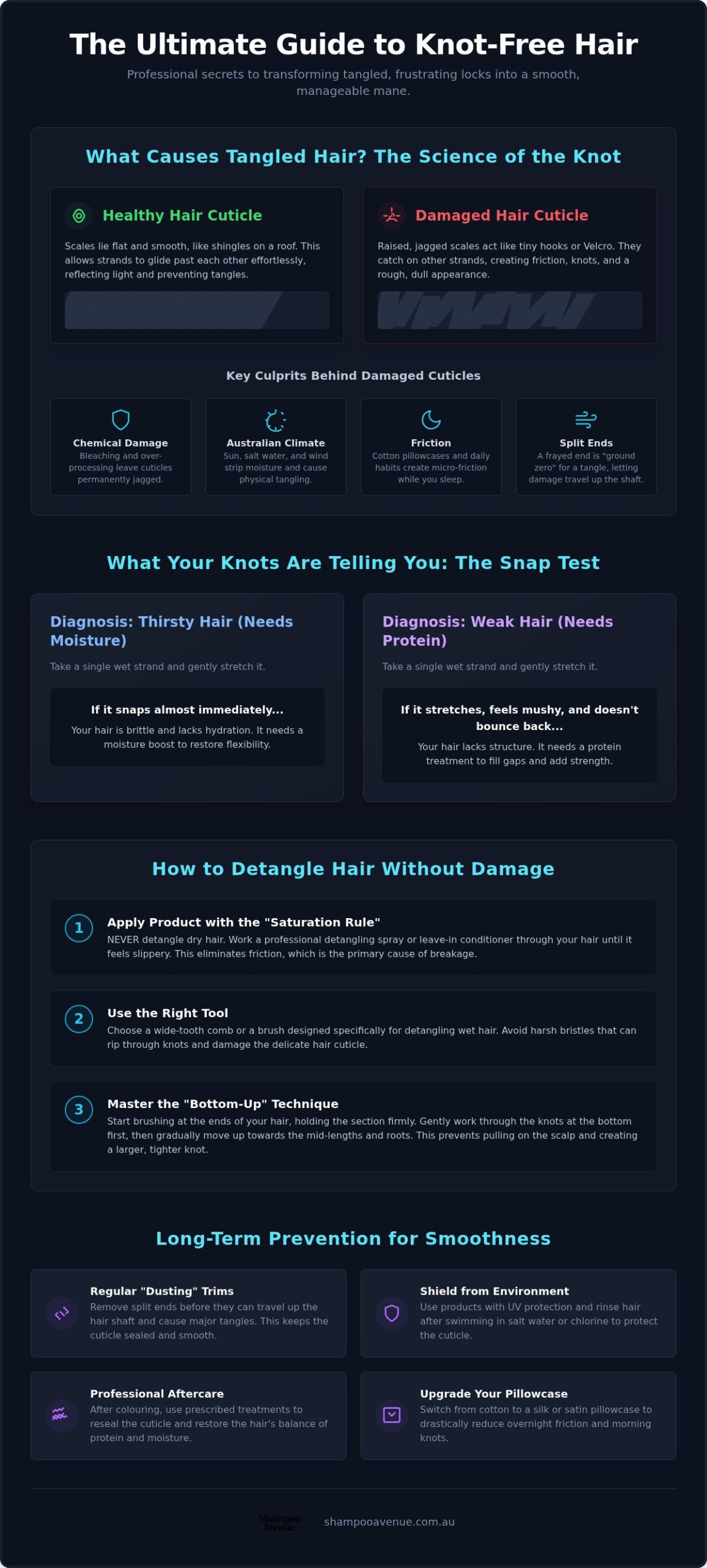
A healthy hair strand is protected by the cuticle, a layer of overlapping scales that lie flat like shingles on a roof. When these scales are smooth, your hair reflects light and slides easily against neighbouring strands. However, when the cuticle is raised or damaged, those scales act like tiny hooks or Velcro. They catch on other “lifted” strands, creating a physical bond that’s difficult to break. Chemical over-processing, such as excessive bleaching without professional hair repair treatments, often leaves the cuticle permanently jagged. This is why damaged hair feels rough and tangles almost instantly after brushing; the structural integrity is simply no longer there to keep the strands separate.
Environmental and Lifestyle Factors
Living in Australia brings unique challenges to our hair wellness journey. Our beautiful coastline and outdoor lifestyle mean frequent exposure to salt water and chlorine, both of which strip away the hair’s natural protective oils. Without this moisture barrier, the cuticle stays open and vulnerable. The Australian sun also plays a part, as UV rays can degrade the proteins in your hair, leading to a brittle texture that is far more prone to snagging.
Then there’s the “wind factor.” Whether you’re walking along the beach or waiting for a train, the wind whips long hair around, causing strands to wrap around each other at high speeds. These friction-based tangles are often tightened by our daily habits. For instance, sleeping on a standard cotton pillowcase creates constant micro-friction throughout the night. While you’re dreaming, the rough cotton fibres are essentially “teasing” your tangled hair into knots, making your morning routine a much tougher task than it needs to be. High humidity also plays a role, as moisture in the air causes the hair shaft to swell and the cuticle to lift, inviting even more friction and making knots harder to avoid.
Tangled Hair as a Symptom: What Your Knots are Telling You
Persistent knots are often a cry for help from your strands. If you find yourself constantly wrestling with tangled hair, it’s time to listen to what your mane is trying to communicate. Usually, it is a sign that your hair’s internal balance of moisture and protein has shifted. Healthy hair should possess a specific blend of elasticity and strength. When this balance is lost, the cuticle becomes rough and the strands start to cling to each other like magnets, leading to those frustrating morning sessions at the mirror.
Think of a split end as “ground zero” for a major tangle. Much like a frayed rope, once the protective outer layer of the hair is gone, the inner fibres are exposed and easily snagged. This damage quickly travels up the hair shaft, turning a small knot into a complex mat. Ensuring long-term smoothness also starts with scalp health, as a nourished foundation produces more resilient hair that is naturally less prone to breakage and snagging from the moment it grows.
Moisture vs. Protein Imbalance
You can easily self-diagnose your hair’s needs with a simple “snap test.” Take a single strand of wet hair and gently stretch it. If it snaps immediately, your hair is brittle and likely needs a boost of hydration. If it stretches and stretches without bouncing back, or feels “mushy” to the touch, it lacks structural integrity. A professional protein treatment for hair can fill those microscopic gaps in the cuticle, providing the strength needed to prevent snagging. Just be careful not to over-moisturise; too much hydration without enough protein can lead to hygral fatigue, making hair limp and prone to matting.
The Impact of Colour Damage
Chemical processes can significantly alter how your hair behaves. High-porosity hair, which is common after heavy bleaching, acts like a sponge. It absorbs water quickly but cannot hold onto it, leaving the cuticle open and vulnerable to friction. This is why luxury hair colour should always be approached with a “health-first” mindset. Choosing a “lived-in” blonde or a subtle grey blend allows for a beautiful result without compromising the hair’s surface. According to this scientific overview of hair cosmetics, using the right professional formulations is essential for maintaining the lipid layer that naturally prevents tangled hair.
If you are struggling to find that perfect balance between strength and softness, our team at Shampoo Avenue can help you identify exactly what your hair is missing through a bespoke hair wellness consultation.
The Professional Detangling Toolkit: Tools vs. Techniques
Possessing the right tools is only half the battle when managing tangled hair. Even the most expensive brush can cause significant breakage if your technique is aggressive. Think of your toolkit as a curated set of instruments designed to work in harmony with your hair’s natural structure. While a wide-tooth comb is a classic choice for the shower, a dedicated detangling brush with flexible bristles is often superior for stubborn knots. Natural bristle brushes, while excellent for distributing oils on smooth hair, should generally be avoided when dealing with active tangles as they can create too much tension.
The golden rule of professional detangling is the “bottom-up” technique. It’s tempting to start at the scalp and pull downwards, but this actually pushes small knots together, creating a much larger, tighter mess. Instead, start at the very tips of your hair. Once the bottom few centimetres are clear, move up slightly and repeat. This methodical approach ensures you aren’t putting unnecessary stress on the hair shaft. Most importantly, never attempt to detangle bone-dry hair. Without a “buffer” to reduce friction, the hair is far more likely to snap. You need “slip” so that the strands can slide apart effortlessly.
Choosing the Right Detangling Brush
When shopping for a brush, look for bristles that offer a bit of “give.” If the bristles are too rigid, they won’t bend when they hit a knot; they’ll simply rip through it. This is particularly important for wet hair, which is at its most fragile state. Check the tips of your brushes regularly. Many cheaper brushes have small plastic balls on the ends that can crack or peel over time. These damaged tips act like tiny hooks, snagging your strands and causing more tangled hair rather than fixing it. A high-quality brush is an investment in your hair’s long-term integrity.
The Power of Leave-In Treatments
Professional leave-in treatments act as a “liquid comb,” coating the hair in a microscopic layer of protection. These formulas often use a sophisticated blend of essential oils and high-grade silicones that smooth the cuticle and eliminate the “Velcro effect” we discussed earlier. At Shampoo Avenue, we often recommend Davines OI All In One Milk as a cult favourite for this very reason. It provides incredible slip and shine while nourishing the hair, making even the most complex knots manageable. By applying a treatment before you even touch a brush, you’re ensuring that the hair remains protected and hydrated throughout the entire process.
How to Detangle Tangled Hair Without Damage: A Step-by-Step Guide
We’ve all felt that rising panic when a knot simply won’t budge. While it’s tempting to just pull harder, the secret to managing tangled hair without causing permanent breakage is a combination of patience and the right sequence of actions. Before you even reach for your brush, try the “finger-first” method. Use the pads of your fingers to gently tease the largest, most obvious knots apart. This manual separation reduces the physical workload for your tools and prevents you from accidentally tightening a knot into a permanent mat.
Step 1: Section and Saturate
Never tackle your entire head of hair at once. Divide your mane into four manageable quadrants, using clips to keep the other areas out of your way. This prevents you from feeling overwhelmed and ensures every strand receives the attention it needs. Apply the “saturation rule” by using a generous amount of professional detangler or leave-in milk on the mid-lengths and ends. You aren’t just looking for a light mist; you want enough product to create a slippery barrier. Wait at least 60 seconds before you start brushing to allow the formula to penetrate the knots and soften the hair fibres.
Step 2: The Bottom-Up Brush
Start exactly one inch from the very ends of your hair and work your way up. It’s vital to hold the section of hair you’re working on firmly at the root with your other hand. This prevents scalp tension and ensures you aren’t pulling directly on the follicle, which can lead to thinning over time. Use short, gentle strokes rather than long, sweeping motions. If you hit a snag, stop immediately. Don’t try to power through it; instead, re-apply a small amount of product to that specific spot and try again. This methodical approach is the only way to ensure your tangled hair stays intact.
Step 3: Seal and Protect
Once you’ve worked through all four sections and the brush glides through easily, do a final check with a fine-tooth comb to catch any tiny micro-knots. To finish, apply a small amount of nourishing oil or serum to the ends to lock in moisture and keep the cuticle sealed against the wind. Hair slip is the reduction of friction between strands to prevent mechanical damage. By maintaining this “slip” throughout the day, you’ll find that knots are far less likely to reform.
If you’re struggling with a particularly stubborn birds-nest that feels beyond your control, our expert stylists can help you restore your hair’s integrity with a professional smoothing and repair treatment.
Long-Term Prevention: Turning Tangles into Smoothness
Prevention is the ultimate act of hair wellness. While knowing how to untangle a knot is vital, the goal is to create a hair surface so resilient that tangled hair becomes a rarity. This journey starts with regular “dusting” trims. Unlike a full restyle, a dusting removes only the very tips where split ends begin. By catching these frayed ends early, you stop them from travelling up the hair shaft and creating the “Velcro effect” that catches on other strands. It is a simple maintenance step that keeps your mane feeling fresh and reduces the mechanical work required during your morning routine.
Environmental factors in Australia, like the salt air and coastal winds, mean our hair needs constant protection. Switching to a silk or satin pillowcase is a simple but effective change. Unlike cotton, which absorbs moisture and creates friction as you toss and turn, silk allows your hair to glide. This significantly reduces those “birds-nest” tangles you find in the morning. Additionally, investing in high-quality hair colour aftercare is essential to keep the cuticle sealed and smooth after a salon visit. When the cuticle is closed, the hair is naturally more resistant to snagging.
Professional Smoothing Treatments
For those who struggle with chronic knots, professional smoothing and frizz control services are a game-changer. These treatments essentially “reset” your hair’s texture by infusing it with protective proteins and sealing the cuticle. The result is a mane that is far more manageable for several months, even in high humidity. This is particularly beneficial for active, outdoor Australian lifestyles where wind and sun exposure are part of the daily routine. It turns a thirty-minute detangling struggle into a five-minute breeze, allowing you to enjoy your lifestyle without the hair-related stress.
The Davines Wellness Routine
We believe that your home care should feel like a ritual. At Shampoo Avenue, we exclusively use Davines because their formulations align with our commitment to integrity and results. The “OI” range is a particular favourite for preventing tangled hair. The OI Shampoo and Conditioner provide mirror-like shine and incredible slip, while a weekly hair mask ensures your strands maintain their internal hydration. This deep nourishment is what keeps the hair flexible enough to resist breaking when you do encounter a small knot.
Your stylist can help you build a custom “wellness kit” during your next visit. By combining professional-grade products with a consistent maintenance schedule, you aren’t just fixing a problem; you’re investing in the long-term health of your hair. We take pride in helping you move from frustrating knots to effortless, silky strands that reflect your personal style and well-being.
Embrace the Path to Effortless Hair
Managing tangled hair doesn’t have to be a daily struggle against breakage and pain. By understanding that knots are often a signal of compromised cuticle health, you can shift from reactive brushing to a proactive wellness routine. We’ve explored how the right professional toolkit, the “bottom-up” technique, and simple changes like silk pillowcases can drastically reduce friction and preserve your hair’s integrity. Long-term smoothness is built on a foundation of regular maintenance and the highest quality sustainable care.
If you’re ready to move beyond the frustration of knots and frizz, book your Hair Wellness Transformation at Shampoo Avenue. As expert hair problem solvers, we specialise in lived-in luxury blonde services and use only professional Davines products to ensure your strands stay strong and silky. Let our team create a bespoke plan that restores your confidence and simplifies your morning routine. You don’t have to settle for damaged ends; beautiful, manageable hair is well within your reach. We look forward to welcoming you into our community and helping you achieve the hair you’ve always wanted.
Frequently Asked Questions
Is it better to detangle hair wet or dry?
It’s generally better to detangle hair when it’s damp and saturated with a professional conditioner or leave-in treatment. Wet hair is more elastic and fragile, but the added moisture provides the necessary “slip” to slide knots apart without snapping the strands. If you try to brush bone-dry tangled hair, you’re likely to cause mechanical breakage because there is too much friction between the dry, overlapping cuticles. Always use a gentle touch.
Why does the back of my hair always get knotted at the neck?
This area, often called the “nape knot,” is primarily caused by friction from your clothing, scarves, and even the movement of your head against your neck. Sweat and oils from the skin can also make the hair at the base of your skull more “tacky,” causing strands to stick together. To prevent this, ensure you apply extra leave-in protection to the bottom sections and consider wearing your hair up when wearing high-collared jackets or coats.
Can tangled hair cause permanent hair loss?
While knots themselves don’t cause permanent balding, aggressive brushing and constant scalp tension can lead to traction alopecia or significant thinning. If you’re constantly pulling at the root to work through tangled hair, you can prematurely pull strands from the follicle or cause breakage near the scalp. This creates the appearance of hair loss over time. Switching to a “bottom-up” brushing technique is essential to protect your hair’s long-term density and overall health.
What is the best product for extremely matted hair?
For severe matting, you need a professional product that offers maximum slip and hydration. We recommend the Davines OI All In One Milk because its sophisticated formula coats the hair shaft, allowing the most stubborn knots to slide apart effortlessly. Avoid using heavy oils on dry mats, as this can sometimes make the knot tighter. Instead, saturate the area with a water-based leave-in treatment and use your fingers to gently tease the strands loose before brushing.
How often should I brush my hair to prevent tangles?
Brushing twice a day, once in the morning and once before bed, is usually sufficient for most hair types. Consistent, gentle brushing prevents small snags from developing into complex nests. However, avoid over-brushing, as excessive friction can actually damage the cuticle and make it more prone to catching. Always use a professional detangling brush with flexible bristles and work in sections to ensure you’re being thorough without being aggressive on your mane. It’s about quality over quantity.
Does sleeping in a braid help with tangled hair?
Yes, sleeping in a loose braid is one of the most effective ways to prevent overnight knots. By securing your hair in a braid, you limit the movement of individual strands, which stops them from rubbing together and tangling as you toss and turn. Just ensure the braid isn’t too tight, especially around the hairline, to avoid tension. This simple habit keeps your hair organised and makes your morning styling routine much faster and more enjoyable.
Will a silk pillowcase really stop my hair from knotting?
A silk pillowcase is a genuine game-changer for anyone prone to knots. Unlike cotton fibres, which are relatively rough and absorbent, silk allows your hair to glide across the surface with minimal friction. This means your hair’s cuticle stays flat and smooth throughout the night rather than being “teased” into a mess. It also helps your hair retain its natural moisture, which is vital for preventing the dryness that leads to persistent tangling and breakage.