

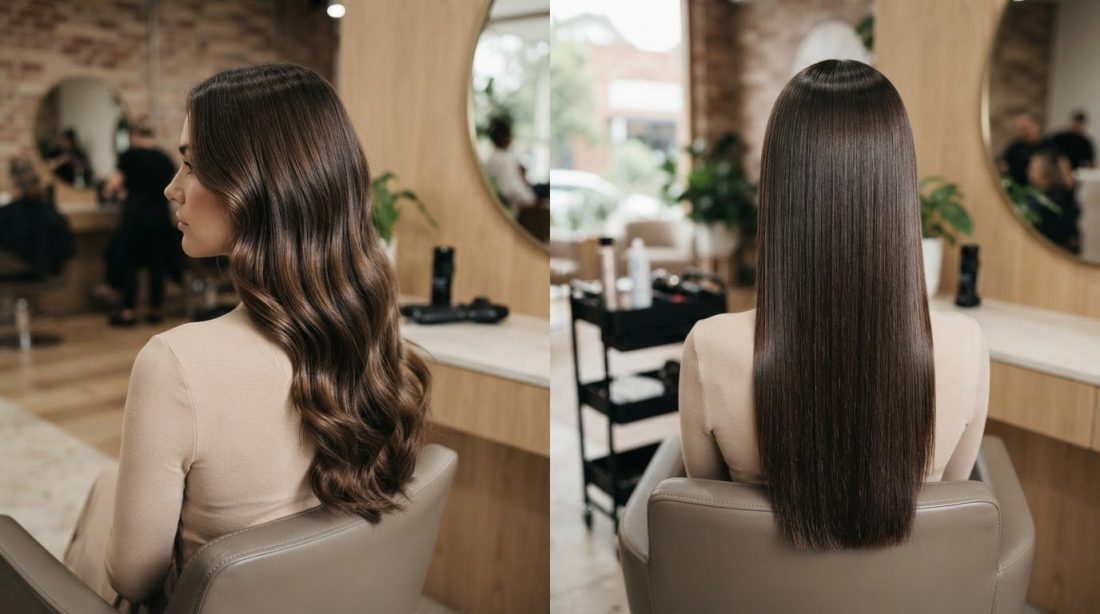
Keratin Treatment vs Chemical Straightening: Which Smoothing Service Is Right for Your Hair?
The most permanent fix for unruly frizz might actually be the wrong choice for your hair’s long-term condition. When weighing up a keratin treatment vs chemical straightening, it’s easy to assume both salon services deliver identical results. In reality, one gently coats the hair to restore manageable movement, while the other permanently rebuilds your hair’s internal bonds.
If you’re exhausted from battling humidity and spending forty minutes blow-drying every morning, you simply want hair that feels soft, healthy, and effortless. You shouldn’t have to risk severe chemical breakage or end up with pin-straight stiffness just to reclaim your styling time. In this guide, you will discover the essential differences between keratin treatments and chemical straightening to choose the ideal smoothing solution for your hair, lifestyle, and colour routine. We’ll break down how each method transforms your strands, what the regrowth really feels like, and how to protect your holistic hair wellness for months to come.
Key Takeaways
- Understand the vital biological differences in a keratin treatment vs chemical straightening, contrasting gentle surface cuticle smoothing with permanent internal bond alteration.
- Compare everyday styling outcomes, from the natural bounce and wave retention of keratin to the high-gloss, ultra-sleek rigidity of chemical reconditioning.
- Discover how your hair history, particularly blonde lightening or colour services, dictates your treatment threshold and structural safety.
- Learn what long-term upkeep looks like, comparing a gradual, wash-out fade against sharp regrowth lines that demand ongoing salon maintenance.
- Master the questions to ask during a professional salon consultation so you can prioritise your scalp wellness and hair health before booking.
The Science of Smoothing: How Keratin Treatments and Chemical Straightening Work
At a Glance: Surface Shield vs Structural Rebuild
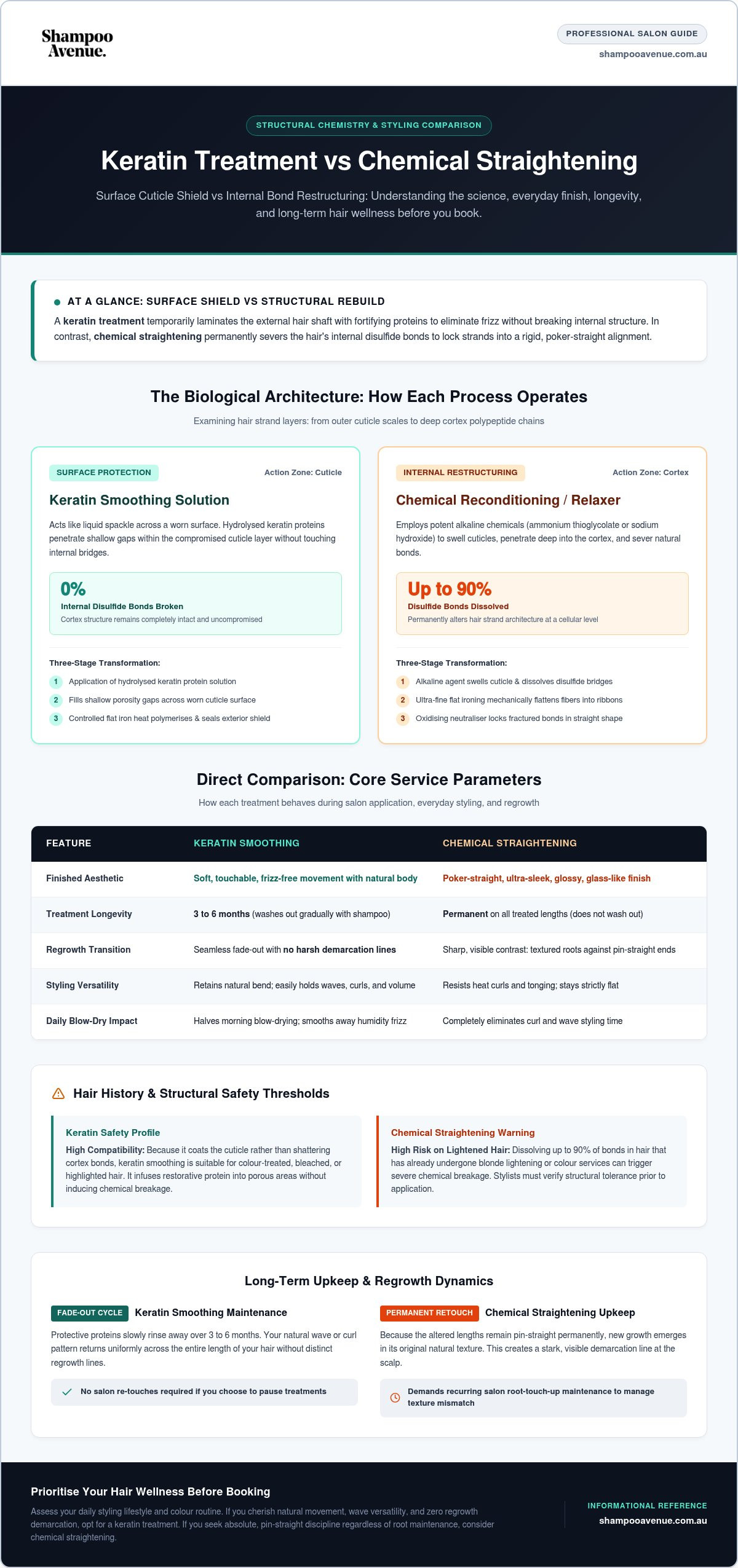
A keratin treatment temporarily laminates the external hair shaft with fortifying proteins to eliminate frizz without breaking internal structure. In contrast, chemical straightening permanently severs the hair’s internal disulfide bonds to lock strands into a rigid, poker-straight alignment.
Every strand of your hair relies on an intricate biological architecture. At the core sits the cortex, comprised of tough fibrous protein found in hair that twists together in long polypeptide chains. Tiny cross-links known as disulfide bonds bind these chains together; their natural angle determines whether your hair grows bone-straight, gently wavy, or tightly coiled. Understanding the true chemistry of a keratin treatment vs chemical straightening comes down to a clear distinction: protein smoothing coats and cushions your strands, whereas chemical restructuring shatters and reassembles their fundamental bonds.
The Cuticle-Sealing Action of Keratin Treatments
Keratin treatments work entirely from the outside in. Your stylist applies a solution rich in hydrolysed keratin proteins, which acts like liquid spackle across a worn surface. These microscopic proteins penetrate shallow gaps within the compromised, porous cuticle layer. Using a flat iron set to a precise, controlled temperature, the stylist polymerises and seals that protective shield around the perimeter of the hair shaft. Because the treatment leaves your cortex untouched, your delicate disulfide bonds stay intact, allowing you to maintain your hair’s natural strength, body, and movement.
The Internal Bond Alteration of Chemical Straightening
Chemical straightening, frequently referred to as Japanese thermal reconditioning or hair relaxing, takes an invasive structural route. Stylists apply a potent alkaline chemical solution, often based on ammonium thioglycolate or sodium hydroxide. This swells the cuticle and forces its way deep into the cortex to dissolve up to 90% of the natural disulfide bonds holding your natural curl pattern together.
Once those internal bridges are dissolved, the stylist irons the softened hair in ultra-fine sections to mechanically flatten the fibres into straight ribbons. Finally, an oxidising neutraliser goes on to rebuild those fractured bonds into their new, flattened formation. This process delivers permanent straightness, but it leaves your strands permanently altered at a cellular level.
Keratin Treatment vs Chemical Straightening: Side-by-Side Comparison
Choosing between a keratin treatment vs chemical straightening comes down to your personal aesthetic goals, styling routine, and how you want your hair to feel every day. Here is how both options stack up side by side:
| Feature | Keratin Smoothing | Chemical Straightening |
|---|---|---|
| Finish | Soft, touchable, frizz-free movement | Poker-straight, glossy, glass-like finish |
| Longevity | 3 to 6 months (washes out gradually) | Permanent on treated lengths |
| Regrowth Behaviour | Seamless fade without demarcation lines | Visible, textured roots against straight ends |
| Styling Freedom | Holds waves, curls, and natural volume | Resists heat curls; stays strictly flat |
Texture, Volume, and Styling Versatility
A keratin service delivers a soft-straight finish. It knocks out humidity-induced fuzz and halves morning blow-drying time, but your hair still holds natural bend, body, and movement. You can easily switch between polished waves and a sleek blowout. Chemical reconditioning produces an ultra-flat profile that stays pin-straight in rain, mist, or sea breeze, yet it actively resists curling tongs when you want extra fullness.
Longevity, Fading Behaviour, and Regrowth
Living with your result is vastly different with each technique. Keratin slowly softens over several months, gracefully washing away with zero distinct line where the treated hair meets new growth. Chemical straightening lasts permanently on processed lengths. As your natural pattern emerges, you will face an obvious line of demarcation at the roots that requires ongoing salon touch-ups every four to six months.
Salon Chair Time and Immediate Aftercare Rules
Expect to spend anywhere from two to four hours in the chair for either treatment. Both require patience during the vital forty-eight-hour resting phase afterwards. You must keep strands dry, loose, and completely uncreased. No tucking behind your ears, no hair elastics, and no sweat-inducing gym sessions.
Holistic hair wellness matters just as much as longevity. Modern salons increasingly favour clean formulations over outdated treatments containing formaldehyde, a classified known human carcinogen. If you want silky manageability without compromising your hair’s long-term health, exploring professional frizz control and smoothing treatments gives you effortless daily texture tailored directly to your routine.
Hair Type and Compatibility: Finding Your Ideal Match
Your hair’s chemical past dictates its future. When deciding on a keratin treatment vs chemical straightening, your current porosity, density, and chemical processing history matter far more than your natural curl pattern alone. Placing aggressive alkaline straighteners over fragile fibres invites instant structural failure. A thorough salon consultation acts as your essential safety net, assessing strand elasticity and identifying invisible vulnerabilities before any product touches your head.
Bleached, Highlighted, and Colour-Treated Hair
Bleached hair and chemical straightening simply do not mix. Lightening pulls essential melanin and structural proteins from your cortex, leaving the inner disulfide matrix fragile. Applying ammonium thioglycolate or relaxers over pre-lightened lengths risks melting the hair fibres, leading to severe breakage and a gummy, rubbery texture. Keratin treatments work in the opposite direction. They infuse plant-derived and hydrolysed proteins into raised cuticle scales, reinforcing colour-compromised strands.
Timing your salon services ensures optimal colour radiance. If you are planning luxury hair colour alongside a smoothing service, always schedule your colour application first or wait two full weeks after your keratin appointment. This prevents hot styling irons from shifting fresh toners or stripping delicate pigments from your locks.
Coarse, Resilient Curls and Natural Virgin Textures
Virgin, thick hair handles permanent chemical restructuring with ease. If you have dense, resistant coils and want zero residual wave, chemical reconditioning delivers that pin-straight result permanently. Keratin takes a softer path, relaxing between 50% and 80% of your curl pattern while wiping out surface fuzz. Fine hair textures require careful consideration, however. Applying heavy straightening treatments to fine strands often eliminates all natural root lift, leaving hair looking limp and stringy.
Scalp Wellness and Sensitivity Considerations
A balanced scalp environment anchors resilient hair growth. Professional stylists apply defensive barrier creams and leave a precise half-centimetre margin from your scalp during application, preventing alkaline irritation or follicle blockages. Prioritising your foundational scalp health preserves skin barrier integrity throughout intensive salon treatments.
Air quality and ingredient purity are equally non-negotiable. Modern conscious salons rely on dedicated extraction systems and formaldehyde-free innovations, following authoritative updates like the FDA information on formaldehyde in hair products to protect both clients and stylists from airborne irritants.
Regrowth, Upkeep, and Daily Maintenance Routines
Your salon visit is only step one. How you care for your hair at home determines whether your investment endures for six months or fades within six weeks. The debate surrounding a keratin treatment vs chemical straightening usually centres on upfront results, but the daily reality of managing regrowth and ocean swims in the Australian climate reveals where the two paths diverge entirely.
Sulphate-Free Cleansing and Nourishing Formulations
Sodium chloride and harsh sulphates act like sandpaper on smoothed cuticles. They strip away protective protein barriers and expose the hair shaft to external humidity. Maintaining your results demands gentle, pH-balanced formulas that keep cuticles sealed flat. Just like following dedicated hair colour aftercare routines, pairing your smoothed strands with professional, sustainable haircare preserves lustrous shine and locks in essential hydration after every wash.
Managing the Regrowth Phase Gracefully
Living with the grow-out cycle requires two very different mindsets:
- Keratin softening: The formula washes away progressively. Your natural texture returns without abrupt breaks or awkward transitional stages, letting you delay salon visits whenever life gets busy.
- Chemical straightening maintenance: New hair emerges in its natural wavy or coiled state right beside poker-flat lengths. This harsh demarcation line requires precise root touch-ups every four to six months. Overlapping the chemicals onto previously treated lengths risks chemical shearing and severe snapping.
Balancing Moisture, Heat Protection, and Protein Repair
Smoothing treatments temporarily alter how your hair drinks in moisture. Keratin saturates the cuticle with fortifying bonds, meaning you must avoid protein overload. Using an intensive protein treatment for hair too frequently on keratin-treated strands can leave ends feeling brittle, stiff, and prone to snapping. Instead, focus on weightless lipid nourishment and deep conditioning masques.
Heading to the beach or pool? Salt water and chlorinated pools actively erode smoothing shields. Always coat your mid-lengths with leave-in conditioner before swimming, and mist a broad-spectrum thermal protectant across your hair before using any blow-dryers or hot tools.
Ready to reclaim easy mornings and humidity-proof style? Book a smoothing consultation with our stylists to tailor an aftercare plan designed for your hair’s unique history.
Choosing Your Ideal Smoothing Solution for Long-Term Hair Wellness
Finding the right path between a keratin treatment vs chemical straightening isn’t about chasing viral styling trends. True hair wellness centres on your daily lifestyle, how much morning effort you want to invest, and the level of styling freedom you expect from your hair.
Assessing Your Morning Routine and Lifestyle
If you demand wash-and-wear locks that dry completely flat without touching a styling brush, chemical straightening delivers that uncompromising discipline. Keratin smoothing is the ideal match if you love wearing waves on the weekend and simply want humidity-proof manageability during busy work weeks. Fitness lovers, regular runners, and ocean swimmers also benefit from keratin’s gentler footprint, as frequent washing doesn’t leave an awkward demarcation line as new hair grows.
The In-Salon Consultation and Strand Assessment
Never guess your hair’s structural integrity. A comprehensive professional consultation eliminates the guesswork through four essential steps:
- Chemical History Audit: A transparent chat about past colour sessions, lighteners, and previous texturisers.
- Porosity and Scalp Analysis: Evaluating your skin barrier condition and whether cuticles are naturally compact or chemically lifted.
- Tensile and Wet Elasticity Check: Gently stretching damp strands to test cortex strength and identify any risk of snapping.
- Isolated Strand Testing: Processing a discreet section to monitor how the formula reacts before treating your entire head.
Being completely honest about home colour or past salon lightening protects you from unexpected chemical reactions and permanent structural damage.
Begin Your Smoothing Journey with Professional Guidance
Healthy, vibrant hair always looks better than forced straightness. Weighing up a keratin treatment vs chemical straightening becomes effortless when you partner with stylists who treat hair wellness as a craft rather than a quick service. Our collaborative team loves solving complex texture challenges, pairing advanced smoothing methods with sustainable haircare to keep your strands glowing.
Take the guesswork out of your routine and book a tailored smoothing consultation with Shampoo Avenue to discover your hair’s true potential.
Step Into Your Healthiest, Smoothest Hair Era
Deciding between a keratin treatment vs chemical straightening comes down to honouring your unique lifestyle and aesthetic goals. Whether you crave the touchable, frizz-free bounce of an external protein shield or the permanent, pin-straight discipline of internal bond realignment, your hair’s integrity should always come first. You don’t need to sacrifice condition to enjoy effortless daily styling.
At Shampoo Avenue, our team is specialised in frizz control and advanced smoothing treatments that celebrate real, touchable texture. We take a dedicated approach to scalp health and holistic hair wellness, pairing bespoke consultations with the exclusive use of ethical professional haircare. Every strand receives the thoughtful care it deserves, giving you luminous shine without the worry of chemical damage.
Ready to reclaim your mornings and fall in love with your hair again? Book your tailored smoothing and hair wellness consultation at Shampoo Avenue, and let’s design your ideal low-maintenance routine together.
Frequently Asked Questions
Can I colour or bleach my hair after getting a keratin treatment?
Yes, but you must wait at least two weeks before colouring or bleaching your hair after a keratin service. Applying tint or lightener too early can strip away the freshly sealed protein coating, causing uneven tone and reducing your smoothing results. If possible, complete all colour or lightening transformations first. Alternatively, consult your stylist to plan the ideal sequence for your specific shade and condition.
Is chemical straightening permanent or does it wash out over time?
Chemical straightening is completely permanent and never washes out over time. The chemicals permanently dissolve and restructure your hair’s internal disulfide bonds, keeping treated lengths pin-straight until they are cut away. Only new hair growing from your roots will showcase your natural curl pattern or wave. When evaluating a keratin treatment vs chemical straightening, this permanence is the most significant practical factor to keep in mind.
How much time does a keratin treatment shave off daily blow-drying?
A keratin treatment typically cuts daily blow-drying and heat styling time by roughly 50%. Because the protein formula coats porous cuticles, water cannot soak deeply into the inner hair fibres. Your hair naturally repels excess moisture and smooths out much faster under low-to-medium heat. What once took forty exhausting minutes with a round brush and flat iron often takes just fifteen minutes of effortless rough-drying with your fingers.
Can I tie my hair up immediately after a smoothing treatment?
No, you must avoid tying your hair up for at least forty-eight hours following a smoothing service. During this initial resting window, the treatment is still oxidising and settling into place. Using hair ties, clips, bobby pins, or even tucking strands behind your ears can leave permanent kinks or indentations across the cuticle. Keep your hair loose, completely dry, and straight down your back to ensure a flawless, crease-free result.
What happens if you use regular supermarket shampoo on keratin-treated hair?
Regular supermarket shampoos will strip your keratin coating within just a few washes. Most mass-market cleansers contain harsh sulphates and sodium chloride, which act as abrasive detergents against the cuticle layer. They quickly dissolve the external protein shield, triggering premature frizz, dullness, and rough texture. To protect your investment, always wash with gentle, sulphate-free, pH-balanced professional haircare designed specifically to sustain smoothed hair.
Is a keratin treatment safe for extremely fine or damaged hair?
Yes, modern keratin treatments are generally safe for fine or compromised hair, provided your stylist uses a gentle formulation. Unlike harsh chemical relaxers, keratin reinforces fragile strands by filling in surface gaps with hydrolysed proteins. However, fine hair requires precise heat control during the sealing stage to prevent flat-iron scorching. When comparing a keratin treatment vs chemical straightening for delicate hair types, keratin is infinitely safer because it preserves internal strand structure.
Can chemical straightening cause irreversible hair breakage or scalp irritation?
Yes, chemical straightening carries a significant risk of irreversible breakage and severe scalp irritation if applied incorrectly. Alkaline straightening solutions aggressively break internal bonds and can cause chemical burns if left in contact with your skin. Overlapping fresh solution onto previously treated hair often leads to catastrophic snapping along the line of demarcation. Prioritising an in-depth salon consultation and strand elasticity test protects your long-term scalp health and hair wellness.