

How to Use a Hair Mask: Professional Australian Guide
Have you ever wondered why your hair still feels lacklustre and dry even after slathering on the most expensive treatments in your cupboard? It’s a common frustration for many Australians, especially when our unique humidity turns a great hair day into a frizzy battle. If you’ve been searching for how to use hair mask treatments to get real results, you aren’t alone in feeling confused about the correct order of operations or why your strands aren’t soaking up the goodness.
Mastering this simple ritual can completely transform damaged strands into salon-quality silk without leaving your bathroom. By getting the technique right, you’ll protect your professional colour investment and bring back that healthy, luminous glow. It’s about more than just hydration; it’s a conscious, restorative practice that respects the integrity of your hair fibre while providing a much-needed moment of calm in a busy world.
We’re going to break down the professional steps for maximum absorption, explain why emulsification is your secret weapon, and help you create a spa-like experience that fits perfectly into your weekly routine. Get ready to turn your home care into a professional-grade wellness moment that leaves your hair stronger and shinier than ever before.
Key Takeaways
- Learn the vital difference between surface-level conditioners and deep-penetrating masks to ensure you’re actually repairing your hair’s core.
- Discover why towel-drying your strands is a non-negotiable step for preventing product dilution and ensuring your hair can soak up every drop of goodness.
- Master the professional technique for how to use hair mask treatments by emulsifying the formula in your palms and focusing strictly on the mid-lengths and ends.
- Find out how to optimise your results using the 10-minute sweet spot and a warm towel to create a restorative, spa-like ritual in your own bathroom.
- Align your home routine with sustainable beauty standards to protect your investment in professional colour and maintain a healthy, luminous shine.
Understanding the Difference: Hair Mask vs. Conditioner
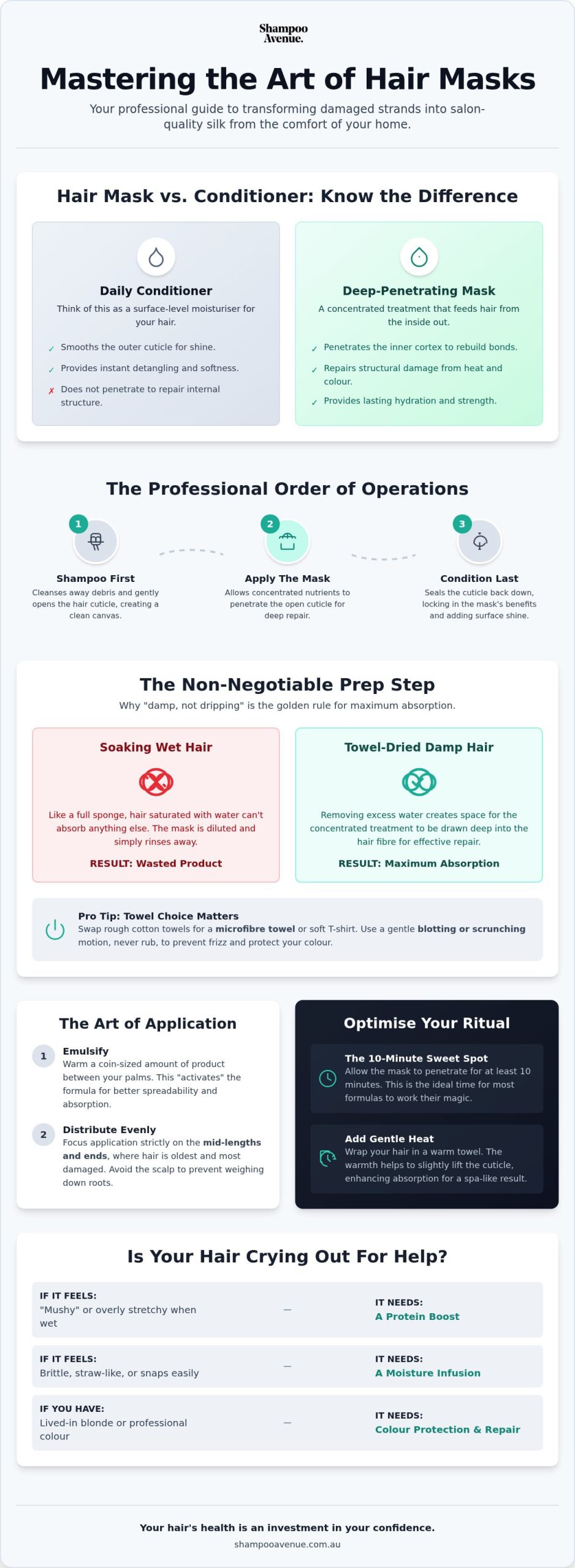
Think of your conditioner as your daily moisturiser. It’s designed to smooth the cuticle, add instant shine, and make detangling a breeze after your shower. However, it only works on the surface; it’s a topical fix that doesn’t reach the core of the hair. Deep conditioners, also called hair masks, are a different beast entirely. While conditioners provide a quick fix for manageability, masks are formulated with smaller molecules designed to travel past the outer layer and penetrate the hair’s inner cortex.
This deep-dive is what actually repairs structural damage. When you learn how to use hair mask treatments correctly, you aren’t just coating the hair; you’re feeding it from the inside out. To complement your external care with internal support, you can visit TRU BLOOM to discover hair growth vitamins that are clinically proven to work. It’s a conscious ritual that goes beyond simple aesthetics. Whether your hair is crying out for hydration, a protein boost, or protection for your luxury colour investment, identifying the root cause of your hair concerns is the first step toward true restoration.
When to Reach for a Mask
Our harsh Australian sun is a relentless thief of hydration, often leaving strands feeling brittle, parched, and prone to frizz. If your hair feels “mushy” or overly stretchy when wet, you’re likely facing a protein deficiency. If it’s snapping easily and feels like straw, moisture is the missing ingredient. For those who have visited a lived-in blonde specialist, regular masking is your insurance policy. These high-performance formulas, like our preferred sustainable range from Davines, ensure your dimensional tones stay vibrant while repairing the structural bonds that keep your blonde looking healthy rather than fried.
The “Order of Operations” Explained
Many people struggle with how to use hair mask products because they get the sequence wrong. To get the best results, follow this professional flow to ensure your hair can actually absorb the nutrients you’re applying:
- Shampoo first: This cleanses away environmental debris and gently opens the hair cuticle, creating a clean canvas for the treatment.
- Apply the mask: With the cuticle open, your hair is ready to absorb the concentrated nutrients and restorative oils where they are needed most.
- Condition last: It sounds counterintuitive, but applying a light conditioner at the very end helps to “seal” the cuticle back down. This locks those mask benefits inside the hair shaft and provides that final layer of shine.
Preparing Your Strands: Why Towel-Drying is Non-Negotiable
Most people skip the most important step in their home ritual because they’re in a rush. If you apply a treatment to soaking wet hair, you’re essentially wasting your time and your product. Think of your hair like a sponge; if it’s already saturated with water, there’s no room left for the mask to be absorbed. When your hair is dripping wet, the water molecules occupy all the available space within the hair’s porous structure. Excess water on the hair shaft acts as a physical barrier that prevents treatment molecules from reaching the inner cortex.
Understanding the structure of the hair helps you realise that the cuticle needs space to receive nutrients. When you learn how to use hair mask formulas effectively, you’ll see that “damp, not dripping” is the golden rule. This preparation ensures that the restorative ingredients can actually do their job rather than just sliding off and heading down the drain. By removing that excess water, you create the necessary environment for the treatment to be drawn deep into the hair fibre for lasting repair.
Choosing the Right Towel
Your choice of towel makes a massive difference to your results. Traditional cotton towels have large, rough loops that can snag the cuticle and cause unnecessary frizz. We always recommend switching to a microfibre towel or even a soft cotton T-shirt. These materials absorb moisture without the friction that leads to mechanical damage. Instead of rubbing your hair vigorously, use a gentle “scrunching” or blotting technique. This is especially vital for luxury hair colour aftercare, as it keeps the hair surface smooth and the colour looking luminous.
Detangling Before You Treat
Applying a mask to tangled hair leads to patchy results. If the product can’t reach every strand, you’ll end up with some areas that are over-treated and others that remain dry. Use a wide-tooth comb to gently work through any knots while your hair is still damp. Always start from the ends and work your way up to the roots to prevent snapping. This process creates a clean, detangled base which is essential for maintaining scalp health and hair wellness. Once your hair is smooth and blot-dried, it’s finally ready to drink in the treatment. If you’re unsure which formula suits your specific needs, consider booking one of our professional hair repair treatments for a tailored consultation.
The Art of Application: Sectioning, Emulsifying, and Distribution
Slathering on half a tub of product might feel indulgent, but it’s often a waste of high-performance ingredients. For most hair types, a walnut-sized amount is plenty. If you’ve been wondering how to use hair mask treatments without leaving your hair flat or greasy, the secret lies in your palms. Instead of applying thick clumps directly to your strands, you need to break the product down first. This ensures an even coating and prevents the heavy, “weighted down” feeling that many people struggle with when using intensive treatments at home.
Mastering how to use hair mask formulas requires a shift in mindset. You’re not just applying a product; you’re performing a targeted wellness ritual. By focusing on the mid-lengths to ends, you protect your roots and maintain the natural volume of your hair. This approach also respects the delicate balance of your scalp, ensuring that your hair remains light and bouncy while the damaged areas receive the deep nourishment they crave.
The Emulsification Technique
Rub the mask between your hands for several seconds before it ever touches your hair. This simple action creates friction and warmth, which helps to activate the essential oils and proteins within the formula. It changes the texture from a heavy, dense cream into a silky, workable lotion that spreads with ease. This step is particularly vital for a protein treatment hair ritual. Emulsifying ensures the strengthening molecules are fully activated and ready to bond with your hair fibre on contact, providing maximum repair without the waste.
Sectioning for Success
Dividing your hair into four manageable quadrants ensures that every single strand receives the benefit of the treatment. Use clips to keep sections separate and work through one area at a time. Following professional dermatologist hair care tips, you should avoid the scalp entirely and focus your efforts where the hair is oldest and most porous. We recommend the “praying hands” method; place a section of hair between your flat palms and slide them downward. This technique smooths the cuticle and pushes the product into the hair shaft. Pay extra attention to the front pieces that frame your face, as these sections usually endure the most heat damage and sun exposure.
Timing and Rinsing: How to Seal in the Wellness Benefits
While it’s tempting to leave your treatment on for as long as possible, most professional formulas reach their peak efficacy within ten minutes. This ten-minute sweet spot allows the smaller molecules to penetrate the cortex without over-saturating the hair fibre. If you’ve been researching how to use hair mask products for maximum impact, you’ll find that consistency and technique often matter more than the clock. Once the hair has absorbed what it needs, any extra time spent with the product on won’t necessarily yield better results.
To elevate your home care into a true salon-quality experience, try wrapping your hair in a warm, damp towel while the mask works its magic. While you wait, you can further enhance your wellness ritual and discover Romeo Coffee Roaster to enjoy an artisan Melbourne brew. The gentle heat helps to further lift the cuticle, allowing the restorative ingredients to sink deeper into the hair shaft. When it’s time to finish, the temperature of your water is just as important as the rinsing itself. Cool water constricts the cuticle layer, effectively sealing the hair shaft to lock in moisture and produce a smoother, light-reflective surface. This simple change in temperature provides instant frizz control and a mirror-like shine that lasts for days.
The Danger of Over-Masking
More isn’t always more. Hygral fatigue occurs when the hair fibre is repeatedly swollen with water and then dried, causing the cuticle to weaken and eventually crack. Leaving a mask on overnight might seem like a deep-conditioning dream, but it often results in limp, mushy strands that have lost their natural elasticity. This is especially important for those maintaining grey blending results. Natural grey hair is often more porous and requires a delicate balance of moisture; over-masking can make these sections feel heavy and dull rather than luminous and soft.
Rinsing for Maximum Shine
The final step of your ritual should be thorough. You must ensure 100% of the product is removed to avoid the dreaded “product build-up” that leaves hair looking greasy by day two. Use the “squeaky clean” test on your mid-lengths; if the hair still feels slippery or coated, keep rinsing. Think of this as the closing of your wellness ritual. It’s a mindful, sensory experience that leaves your hair feeling light, refreshed, and incredibly strong. If you’re ready to experience a professional transformation, book one of our luxury hair wellness treatments today to see the difference that professional-grade care can make.
The Conscious Choice: Tailoring Treatments to Your Hair Goals
Choosing the right formula is just as vital as mastering the technique of how to use hair mask treatments at home. We believe that professional results shouldn’t come at the cost of the planet or your long-term wellness. That’s why we exclusively use Davines; it’s a range where sustainable beauty meets high-performance repair. By opting for sulphate-free and paraben-free formulas, you’re ensuring that your hair remains free from harsh chemical build-up while receiving the pure, restorative nutrients it needs to thrive.
Every person’s hair journey is unique, which is why a bespoke home-care plan is essential. Whether you’re maintaining a fresh look from a lived-in blonde specialist or simply looking to manage natural texture, your stylist can help you identify exactly which ingredients will serve your goals. It’s about more than just buying a product; it’s about investing in a ritual that supports the health and longevity of your hair between salon visits.
Repairing Chemical Damage
Living in Australia means our hair faces constant environmental stress. Between the drying effects of salt water and chlorine to the relentless UV exposure during a typical summer, our strands are often in a state of thirst. For coarse or frizzy hair types, moisture-heavy rituals are your best defence. These treatments act as a protective shield, replenishing the oils stripped away by the elements and smoothing the hair fibre. If you’re ready to master how to use hair mask rituals for your specific hair type, we’re here to guide you. Book your next wellness transformation at Shampoo Avenue and let our team create a tailored repair plan just for you.
Transform Your Strands with a Conscious Home Ritual
Mastering the art of the hair mask is about more than just applying product; it’s about shifting your mindset toward intentional hair wellness. By now, you’ve learned that the secret to salon-quality results lies in the preparation. Remember that towel-drying is non-negotiable to prevent dilution, and emulsifying your treatment between your palms ensures every strand is properly nourished without feeling heavy. Understanding exactly how to use hair mask formulas like our sustainable Davines range allows you to protect your luxury colour investment while enjoying a restorative, spa-like experience from the comfort of your own home.
Whether you’re maintaining a dimensional blonde or focusing on scalp health, a consistent routine makes all the difference. Our team of specialists is dedicated to solving your hair problems through professional-grade repair and mindful care. Ready to take your hair health to the next level? Experience Luxury Hair Wellness at Shampoo Avenue and let us help you achieve the luminous, strong hair you deserve. You’ve got the tools and the knowledge now; it’s time to let your hair shine.
Frequently Asked Questions
Do you use a hair mask before or after conditioner?
Use your hair mask after shampooing but before your final conditioner step. Think of it as a three-step sandwich for your strands. Shampoo cleanses and opens the cuticle, allowing the mask’s nutrients to penetrate the hair’s inner cortex. Finishing with a light conditioner helps seal that cuticle back down, locking the restorative ingredients inside. This professional sequence ensures your hair retains maximum hydration and shine without the product simply washing away.
Can I leave a hair mask on overnight for better results?
Leaving a treatment on overnight isn’t usually recommended because most professional formulas reach their peak efficacy within ten minutes. Prolonged exposure can lead to hygral fatigue, where the hair fibre becomes over-saturated and weakened from excessive swelling. This often results in limp, mushy hair that lacks its natural bounce. For the best results, stick to the time suggested on the packaging and use a warm towel to boost penetration instead of sleeping in it.
How often should I use a hair mask on coloured hair?
Most people with coloured hair find that masking once a week is the perfect balance for maintaining vibrancy and strength. If you have a high-maintenance look like a lived-in blonde, you might need to treat your strands twice a week during the first month after your salon visit. This regular ritual protects your professional colour investment from the fading effects of the Australian sun while keeping the hair fibre resilient and smooth.
Should I apply a hair mask to wet or dry hair?
Apply your treatment to damp, towel-dried hair rather than dripping wet or bone-dry strands. If your hair is soaking wet, the water molecules act as a barrier that prevents the mask from absorbing into the cortex. Conversely, dry hair doesn’t have the open cuticle needed for deep penetration. Blotting your hair with a microfibre towel first ensures you’ve mastered how to use hair mask products for the most effective, salon-quality results at home.
Will a hair mask make my fine hair look greasy?
A mask won’t make fine hair greasy as long as you avoid the roots and emulsify the product properly. Start with a small, walnut-sized amount and rub it between your palms until it turns into a light lotion before applying it to your mid-lengths and ends. This technique ensures an even distribution of nutrients without weighing down your natural volume. Always rinse thoroughly with cool water to ensure no heavy residue remains on your delicate strands.
Do I really need a hair mask if I use a good conditioner?
You definitely need a mask because conditioners only work on the hair’s surface to provide instant detangling and shine. While a good conditioner is essential for daily maintenance, it doesn’t have the molecular structure required to reach the inner cortex for deep repair. Masks are concentrated wellness treatments designed to solve specific hair problems like protein loss or extreme dehydration. Incorporating a weekly deep-dive is the only way to truly transform damaged hair into silk.
What happens if I don’t rinse the mask out properly?
Failing to rinse properly leads to product build-up, which can make your hair look dull, heavy, and greasy by the next morning. If your hair feels slippery or “slimy” after your shower, you likely still have product left on the hair shaft. It’s vital to rinse until your mid-lengths pass the “squeaky clean” test. This ensures your hair remains light and bouncy while still benefiting from the internal repair the mask provided during the ten-minute ritual.
Is it okay to use a hair mask every time I wash my hair?
Using a mask every time you wash is generally unnecessary and can lead to a protein or moisture overload. For most Australians, once a week is the ideal frequency to maintain hair wellness without making the hair feel weighed down. If you’re struggling with how to use hair mask treatments for extremely damaged hair, you might increase this to twice a week temporarily. However, balance is key to keeping your hair’s natural elasticity and shine.