

How to Keep Blonde Hair Bright, Not Yellow: A Practical Care Guide
Purple shampoo can help keep blonde hair bright, but using it more often isn’t always the answer. If you’re wondering how to keep blonde hair bright not yellow, start by identifying what has changed: unwanted yellow warmth, reduced shine or a concern with your hair’s condition. The right care depends on the cause.
It’s frustrating when your blonde looks warmer or duller between salon visits. Sun, swimming, heat styling and product build-up can all affect its appearance, but they don’t affect every head of hair in the same way. Yellow tones may respond to violet pigment, while general dullness may call for a different kind of care. Purple shampoo is a maintenance tool, not a fix for every colour change.
This guide will help you build a manageable routine that supports both your blonde tone and your hair’s condition. You’ll learn how to use toning products selectively, protect your colour from everyday wear and recognise when home care isn’t enough. If your blonde needs an individual approach, salon advice can help you choose a suitable next step without adding unnecessary treatments.
Key Takeaways
- Warmth can develop gradually, and yellow tones aren’t the same as overall dullness. Identify what has changed before choosing a toning approach.
- For how to keep blonde hair bright not yellow, build a routine around gentle cleansing, conditioning and practical protection from sun, swimming and heat.
- Use purple shampoo selectively. Violet pigment can soften some yellow tones, but it isn’t permanent colour correction.
- Treat a weekly plan as a flexible guide, not a fixed washing or toning schedule. Let your scalp and hair condition guide your routine.
- If warmth persists, the tone looks uneven or your hair’s condition concerns you, individual salon advice can help you decide what to do next.
Why blonde hair turns yellow, and what “bright” blonde really means
A warmer blonde doesn’t automatically mean your colour has failed. Tone can shift gradually between salon visits as colour fades and your hair meets everyday exposures. “Yellow” or “brassy” describes a visible change in tone, not one universal problem with one universal fix. Your starting colour, colour history, hair condition and routine all influence what you see.
Blonde created through lightening involves a chemical process of hair bleaching that changes the hair’s natural pigment. After colouring, the shade you see can continue to change with washing, products and exposure. That’s why a routine that suits one blonde may not suit another, even if both use a similar shade name.
Yellow, brassy or dull: how to tell the difference
Yellow warmth is a tonal shift: the blonde looks more golden or yellow than you’d like. Dullness is different. Hair may look less reflective or vibrant without the underlying tone necessarily becoming more yellow. Unwanted warmth is a change in tone; dullness is often a loss of shine that can make the whole colour look flat.
Before reaching for purple shampoo, check your blonde in consistent, natural light if possible. Ask yourself whether the shade looks distinctly more yellow, less shiny, or both. Consider your hair’s condition and recent colour history too. If your hair feels dry or fragile, more frequent toning may not address what’s bothering you.
What can affect blonde tone between salon visits?
Gradual fading is one reason a freshly coloured blonde can look different over time. Mineral deposits from water or product build-up may also affect how clean and reflective the colour appears. Sun exposure can contribute to oxidation, while frequent heat styling can affect the look and condition of lightened hair. These influences vary, so there isn’t one cause to assume for everyone.
Time outdoors, swimming and heat styling are practical factors to keep in mind. Notice whether your blonde looks different after a stretch of sunny days, regular swims or more heat-tool use, but don’t assume the same exposure will affect every head of hair in the same way. The right next step depends on what you can see. If your colour looks yellow, assess the tone; if it looks flat, consider build-up or dryness before choosing a toning product. That’s a more balanced starting point for how to keep blonde hair bright not yellow than reaching for purple shampoo by default.
How to keep blonde hair bright with a balanced care routine
A steady routine can support both your blonde tone and your hair’s condition without turning every wash into a toning session. Start with a cleanser suited to your scalp and colour-treated hair, condition the lengths, protect your hair from everyday exposure, then assess the tone before deciding whether it needs extra help.
There’s no single wash schedule that suits every blonde. Let your scalp’s needs and your hair’s condition guide how often you cleanse, and follow the directions on each product. If your hair starts to feel dry or your colour looks overly cool, review how often you’re using toning products and adjust according to the product directions. For wider colour-protection ideas, see our hair colour aftercare guide.
Cleansing and conditioning without stripping blonde hair
Choose a cleanser that suits your scalp as well as your colour-treated lengths. Apply and rinse it as directed rather than assuming a stronger cleanse will make blonde brighter. Conditioner helps hair feel softer and easier to manage, but it won’t change the colour itself. If your blonde still looks flat despite a suitable cleansing routine, consider whether styling products may be building up and review how you use them.
Keep the routine responsive. If your scalp feels uncomfortable or your lengths are becoming dry, reassess your cleansing and conditioning choices rather than adding more toning straight away. These adjustments are a practical foundation for how to keep blonde hair bright not yellow, while keeping hair condition in view.
Protect blonde hair from sun, swimming and heat
Exposure is part of everyday life. Cover your hair outdoors where practical, and rinse it after swimming. Before using heat-styling tools, apply a heat protectant according to its label directions. It can help protect your hair, but it can’t promise complete prevention of heat damage, so use heat styling thoughtfully.
Once your routine feels consistent, check the tone in good light before reaching for a toning product. Is it noticeably warmer, or does it simply look less shiny? That quick assessment can help you avoid toning when your hair may need a different kind of care. If you’d value individual advice that considers both blonde tone and hair condition, explore Shampoo Avenue’s professional blonde-care support, a helpful complement to your home routine.
Purple shampoo or regular care: which approach suits yellow blonde hair?
Purple shampoo has a specific job: its violet pigment can visually counter some yellow tones. It isn’t essential for every blonde or something every blonde needs to use with every wash. If your colour looks dull rather than distinctly warm, a toning product may not address the issue. Choose based on what you can see, your hair’s condition and the product directions.
Here’s how the main options differ:
| Approach | Best suited to | Limits |
|---|---|---|
| Purple shampoo | Visibly unwanted yellow warmth, if the product suits your hair | Results vary; it’s not permanent colour correction or a repair treatment |
| Regular colour-care shampoo | Routine cleansing of colour-treated hair | It won’t specifically neutralise yellow tones |
| Salon toning | Refreshing tone with advice tailored to your colour and hair condition | It may not be the answer to every concern, particularly if the issue is dryness or damage |
Toning products can adjust how blonde hair looks, but they don’t repair hair damage. Keep tone and condition as separate considerations when deciding what your hair needs.
When can purple shampoo help blonde hair?
Consider it if you can see unwanted yellow warmth and the product is suitable for your hair. Violet pigment can make some yellow tones appear less prominent, but the result depends on your starting shade, hair condition and how you use the product. Follow its label directions rather than guessing how long to leave it on or how often to use it. If you’re unsure whether it suits your blonde, ask your stylist for individual advice.
How to avoid over-toning or a dry feel
More toning isn’t automatically better. Don’t use a stronger or more frequent routine than the product directions recommend. If your blonde starts looking dull or overly cool, or your hair feels less manageable, pause and reassess instead of adding another toning wash.
Dryness, breakage and scalp discomfort aren’t simply tone problems, and purple shampoo may not address them. Consider the hair’s condition as well as its colour before choosing a next step. A balanced approach to how to keep blonde hair bright not yellow means using toning selectively, while keeping regular care focused on your scalp and hair needs.
A step-by-step weekly plan to maintain bright blonde at home
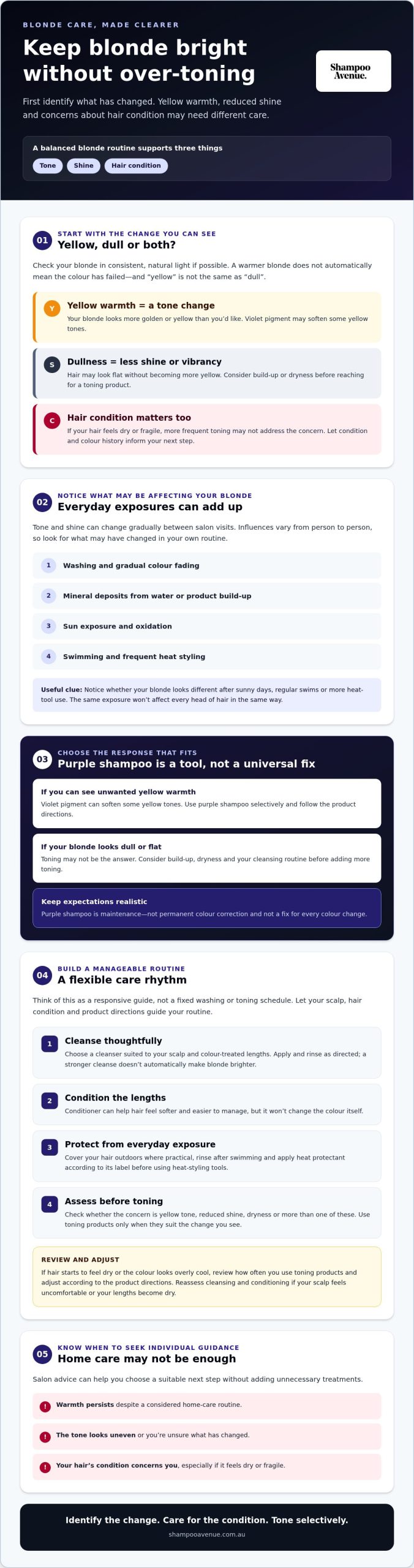
Think of “weekly” as a planning framework, not a schedule that tells you to wash or tone on fixed days. Your scalp may need cleansing more or less often than someone else’s, and your lengths may respond differently depending on texture and colour history. A useful routine keeps the same priorities in view: cleanse as needed, condition, protect and check your blonde before changing its tone.
Use this sequence as a flexible guide:
- Notice what your hair needs. Before washing, check how your scalp feels, whether your lengths seem dry or hard to manage, and whether the blonde looks warmer or simply less reflective.
- Cleanse when your scalp needs it. Choose a cleanser suitable for your scalp and colour-treated hair, then follow its label directions. Don’t add an extra wash just because it’s a particular day of the week.
- Condition after cleansing. Follow the conditioner directions, focusing on the lengths where appropriate. Handle damp hair gently to help keep it manageable.
- Protect between washes. Cover your hair outdoors where practical, rinse it after swimming and use heat protection as directed before heat styling.
- Assess tone occasionally. In consistent lighting, decide whether you can see unwanted yellow warmth before choosing a toning product. Follow its directions and adjust if your hair feels dry or looks overly cool.
This approach supports how to keep blonde hair bright not yellow without assuming every blonde needs the same wash frequency or toning timetable. Your routine may also need to shift with changes in your scalp, hair texture, colour history or the products you use.
Set up a routine that fits your wash schedule
Keep a simple note after washes: how your scalp feels, how manageable your lengths are and whether the blonde looks warmer, duller or unchanged. Over time, that can help you spot what suits your hair rather than copying someone else’s routine. If products have specific use directions, follow them; don’t stretch or increase their use to force a faster result.
Adjust care after colour, swimming or a change in tone
After salon colour, follow your colourist’s aftercare instructions alongside product guidance. After swimming, rinse your hair and use suitable cleansing and conditioning care as directed. If you’re concerned about fragile or heavily processed hair, our protein treatment and hair repair guide offers further reading. If the tone changes suddenly or your hair’s condition worsens, pause experiments and seek professional advice.
For a routine tailored to both blonde tone and hair condition, explore Shampoo Avenue’s lived-in blonde services and professional haircare.
When home care is not enough to keep blonde bright
A home routine can help maintain blonde between salon visits, but it can’t solve every change in tone or condition. If warmth persists despite using products as directed, your blonde looks uneven, or your hair feels noticeably worse, an individual assessment can help clarify what’s going on. The aim isn’t to add more products by default. It’s to understand your colour history, current hair condition and the result you’re hoping for.
Routine upkeep and colour correction aren’t the same thing. Home care may support the appearance of your existing colour, while a larger or uneven shift may need a colourist to assess the hair before suggesting next steps. Avoid trying to correct a complex colour change blindly at home, especially if you’re unsure what services or products have been used previously.
Signs it may be time to ask a colourist
Consider seeking professional advice if unwanted warmth continues despite appropriate product use, or if the blonde looks patchy or uneven. Significant dryness, breakage or scalp discomfort are also reasons to look beyond tone alone. If you don’t know your colour history, mention that too. Without assessing your hair in person, it’s not possible to promise a particular result or know which approach is suitable.
What to discuss about your blonde and hair condition
Help your colourist understand the full picture. Describe your current routine, the products you use, any recent colour services and how your blonde has changed. Be clear about the tone you’d like, but also explain how much upkeep feels realistic for you. You might ask:
- What could be contributing to the warmth or uneven tone?
- Which home-care products suit my colour and hair condition, and how should I follow their directions?
- What maintenance should I expect, and how can we take my hair’s condition into account?
Shampoo Avenue specialises in lived-in blonde services and colour transformations, with hair wellness and repair treatments as part of its broader hair-care offering. This professional perspective can complement your home routine by considering tone and condition together, rather than treating every concern as a need for more toning. It’s a considered next step for anyone exploring how to keep blonde hair bright not yellow.
If you’d like to explore a softer, more lived-in approach to blonde, take a look at Shampoo Avenue’s lived-in blonde services.
Keep your blonde bright with care that fits your hair
Bright blonde isn’t about toning at every wash. It’s about noticing whether your hair looks warm or simply dull, choosing care that supports its condition, and protecting it from everyday exposure. Purple shampoo can help with some yellow tones, but use it selectively and follow the product directions.
For how to keep blonde hair bright not yellow, start with a manageable home routine and seek individual advice if warmth persists, your colour looks uneven or your hair’s condition concerns you. Shampoo Avenue’s expertise in lived-in blonde and colour transformations, professional salon haircare, and hair wellness and repair treatments can complement the care you give your hair at home.
Explore Shampoo Avenue’s blonde services and professional haircare to find support that considers both your colour and hair condition. With a balanced routine and the right guidance, you can care for your blonde with confidence.
How to keep blonde hair bright not yellow: Frequently Asked Questions
How do I keep blonde hair from turning yellow?
A practical answer to how to keep blonde hair bright not yellow is to protect your colour and hair condition, then tone only if you can see unwanted warmth. Cleanse according to your scalp’s needs, condition your lengths, rinse after swimming and cover your hair outdoors where practical. Mineral or product build-up, sun exposure and heat styling can affect how blonde looks, though the causes vary from person to person.
Does purple shampoo stop blonde hair going yellow?
No, purple shampoo doesn’t stop yellowing at its source. Its violet pigment can visually counter some yellow tones, so it may help when unwanted warmth is visible and the product suits your hair. It’s a maintenance option, not a permanent colour correction or a substitute for everyday colour care. If your blonde looks dull rather than yellow, or feels dry, assess those concerns before adding a toning product.
How often should I use purple shampoo on blonde hair?
There isn’t one schedule that suits every blonde. Follow the directions on your specific product, and consider your starting shade, hair condition and how your colour responds. Don’t use it at every wash by default or leave it on longer than directed to chase a faster result. If your hair starts looking overly cool or feels less manageable, pause and reassess. Ask your stylist if you’re unsure what frequency suits your hair.
Can I keep blonde hair bright without purple shampoo?
Yes. Purple shampoo is optional, not a requirement for every blonde. Use a regular colour-care shampoo suited to your scalp and colour-treated hair, condition as directed, and protect your hair from sun, swimming and heat where practical. Check whether your concern is warmth or simply a lack of shine before choosing a solution. If you’re happy with your tone, there may be no reason to add a toning product.
Why does my blonde hair look yellow after washing?
Washing may make existing warmth more noticeable, but it doesn’t necessarily mean the wash caused the colour change. Mineral deposits from water or product build-up can affect how reflective blonde looks, while gradual fading may reveal a warmer tone. Consider whether the colour looks distinctly yellow or simply flat, and review any recent changes to your routine. If the shift is sudden or uneven, seek advice before trying to correct it at home.
Does Australian sun make blonde hair turn yellow?
Sun exposure can contribute to oxidation, which may affect the appearance of blonde hair, but the effect isn’t identical for everyone. Your colour history, hair condition and other exposures also matter. To reduce direct exposure, cover your hair outdoors where practical and follow the directions of any suitable protective product. If your tone changes after time in the sun, assess whether it looks warmer or simply less shiny before deciding what care it needs.
Should I use purple shampoo on dry or damaged blonde hair?
Be cautious if your hair is dry or damaged. Purple shampoo may address some visible yellow warmth, but it won’t repair dryness or breakage, and it may not suit every hair condition. Follow the product directions and stop to reassess if your hair feels less manageable or looks overly cool. If you’re also experiencing breakage or scalp discomfort, ask a colourist for advice that considers your tone and hair wellness together.