

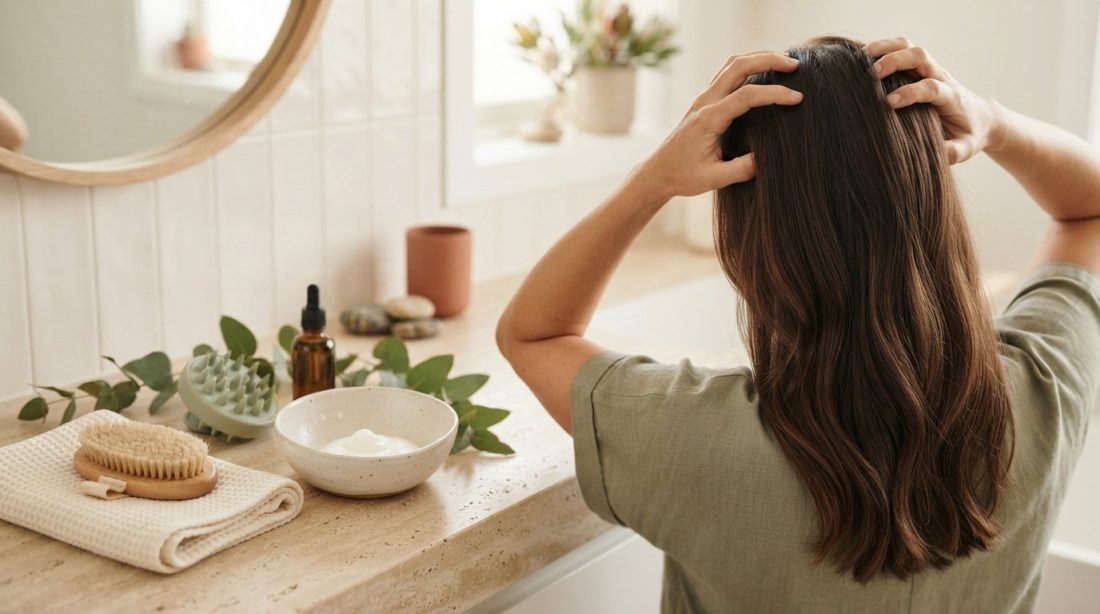
Detox Your Scalp at Home: The Complete Step-by-Step Guide
A true scalp detox restores your delicate skin barrier; it never strips it. Squeaky-clean friction might feel satisfying in the shower, but scouring your roots bare only triggers an aggressive rebound of oil and flaking. If you want to know how to detox your scalp at home without dulling your salon colour or causing uncomfortable dryness, the solution begins with treating your scalp like facial skin.
We have all leaned on dry shampoos and styling sprays to stretch our blow-dries through a frantic week. Over time, that stubborn product build-up suffocates follicles, flattens your natural lift, and leaves your head feeling tight and itchy despite regular washes. You don’t have to settle for congested roots or harsh clarifying shampoos.
In this guide, you will learn how to safely cleanse, exfoliate, and revitalise your scalp to unlock bouncier, fuller-looking hair from root to tip. We preview a simple step-by-step ritual, breaking down nourishing ingredients and gentle weekly habits that leave your hair refreshed, balanced, and full of natural vitality.
Key Takeaways
- Master how to detox your scalp at home using a gentle five-step ritual designed to melt away stubborn product build-up without stripping away moisture.
- Understand the differences between physical scrubs and gentle chemical exfoliants like AHAs and BHAs to select the right approach for your scalp condition.
- Customise your detox cadence to suit your unique hair texture, porosity, and lifestyle to maintain a balanced, healthy scalp microbiome.
- Protect your hair colour and encourage root lift by adopting clarifying techniques that nurture your protective skin barrier.
- Recognise when to complement your at-home ritual with in-salon scalp wellness treatments to address deeper follicular congestion.
What Is a Scalp Detox and Does Your Hair Need One?
A scalp detox is an intentional, deep-cleansing ritual designed to unblock congested follicular openings and restore balance to your skin barrier. Think of it as a revitalising facial, but tailored specifically for the skin beneath your hair. Between layers of dry shampoo, heavy silicones, sweat, and urban pollutants, our roots endure significant daily strain. In the field of trichology, follicular congestion is recognised as a primary roadblock to resilient hair growth. When sebum oxidises and mixes with stubborn styling polymers, it disrupts the scalp microbiome, suffocating follicles and draining hair of its natural shine. Understanding how to detox your scalp at home allows you to clear this buildup and reset your hair’s natural growth environment.
The Difference Between Regular Washing and Scalp Detoxing
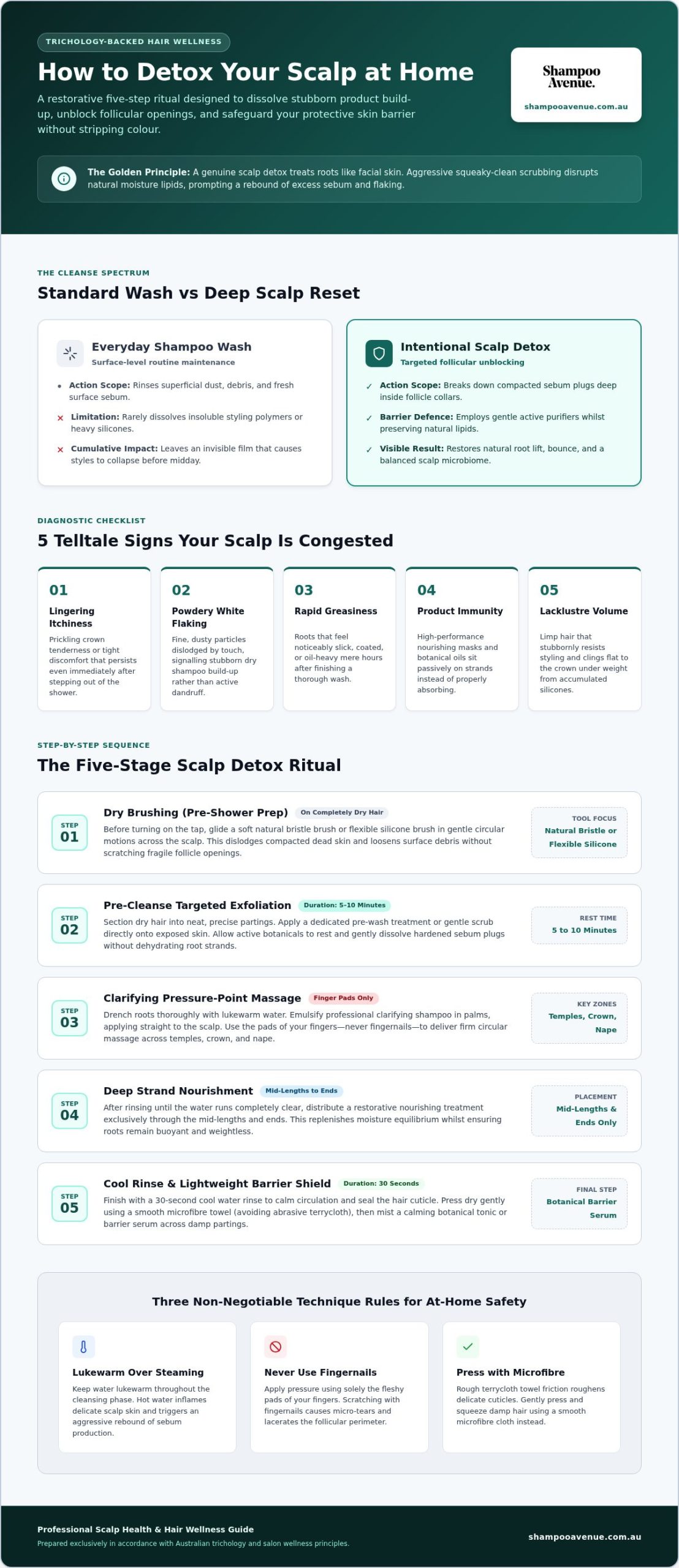
Everyday shampoos handle standard surface hygiene. They wash away day-to-day dust and fresh surface sebum, but they rarely dissolve insoluble styling resins or break down compacted sebum plugs. A true detox goes deeper. By combining mild chemical exfoliants or targeted purifying agents with mechanical stimulation, a detox loosens stubborn debris nestled inside follicle collars without stripping away protective natural lipids. Without this reset, chronic accumulation forms an invisible film over the scalp, weighting down root lift and leaving your styles falling flat before lunchtime.
5 Telltale Signs Your Scalp Is Calling for a Reset
Your scalp communicates when it feels overwhelmed. If you notice any of the following symptoms, learning how to detox your scalp at home will quickly bring relief:
- Lingering itchiness or crown tenderness: An uncomfortable, prickling tightness that persists even immediately after a shower.
- Powdery white flaking: Fine, dusty particles that loosen when touched, which typically indicate dry shampoo residue rather than active dandruff.
- Rapid root greasiness: Hair that feels slick or coated at the roots just hours after washing.
- Product immunity: High-performance hair masks and botanical oils suddenly sitting on top of your strands instead of absorbing.
- Lacklustre volume: Limp hair that resists styling and clings closely to the head due to heavy silicone accumulation.
How to Detox Your Scalp at Home: A Step-by-Step Guide
Achieving salon-level clarity doesn’t require aggressive friction. When learning how to detox your scalp at home, technique and patience matter far more than elbow grease. Following an intentional five-step sequence; preparing, purifying, stimulating, hydrating, and sealing, clears dense residue while respecting your skin barrier. Keep your water temperature comfortably lukewarm throughout. Hot water inflames delicate tissues and triggers an immediate rebound of excess oil.
Step 1 & 2: Dry Brushing and Pre-Cleanse Exfoliation
Begin on dry hair before stepping into the shower. Using a soft natural bristle brush or a flexible silicone brush, make small, gentle circular motions across your head. This loosens compacted dead skin and dislodges surface build-up without scratching delicate follicle openings. Next, divide your hair into neat partings and apply a dedicated pre-wash treatment or gentle scrub directly to the skin. Allow the active botanicals to rest for five to ten minutes, gently dissolving stubborn sebum without drying out your roots.
Step 3 & 4: Clarifying Massage and Deep Scalp Nourishment
Drench your hair thoroughly with lukewarm water. Emulsify a professional clarifying shampoo between your palms before smoothing it directly through your roots. In line with established scalp hygiene best practices, use the pads of your fingers, never your fingernails, to perform a firm pressure-point massage across the temples, crown, and nape. Rinse generously until the water runs completely clear. Immediately follow with a restorative treatment through mid-lengths and ends to replenish lost moisture while keeping your roots weightless.
Step 5: Cool Rinse and Lightweight Barrier Protection
Conclude your wash with a thirty-second cool water rinse to soothe circulation and help seal the hair cuticle. Gently press away excess moisture with a smooth microfibre towel instead of rubbing with rough terrycloth. Finally, mist a calming botanical tonic or barrier serum across damp partings to lock in equilibrium. If you want to know which restorative formulas match your individual hair needs, exploring professional scalp health and hair wellness treatments can help you curate the right at-home routine.
Scalp Exfoliation Methods: Physical Scrubs vs Chemical Exfoliants
Choosing the right exfoliation method is the difference between a radiant scalp reset and an irritated skin barrier. Just as you wouldn’t scrub delicate facial skin with rough sandpaper, your head requires balanced actives suited to its unique biology. Medical research examining scalp condition and hair growth demonstrates that managing surface oxidative stress and microflora balance directly impacts strand quality. When determining how to detox your scalp at home safely, understanding whether your roots need mechanical buffing or gentle acid exfoliation ensures you clear buildup without compromising delicate follicles.
Physical Scrubs: When to Use Sugar, Salt, or Jojoba Beads
Physical exfoliants rely on manual friction to shift dense, stubborn deposits off the surface. Look for spherical, dissolving particles like fine raw sugar or smooth jojoba wax beads. These melt naturally under warm water, preventing excessive abrasion. Coarse sea salts, rough apricot kernels, and jagged walnut shells create microscopic tears across the epidermis, inviting inflammation and bacterial imbalance. Reserve gentle physical scrubs for thicker hair profiles and resilient, oily scalps that carry heavy layers of stubborn dry shampoo or hair styling waxes.
Chemical Exfoliants: The Power of Salicylic, Glycolic, and Lactic Acids
Chemical exfoliants require zero friction, dissolving dead cellular debris through targeted biochemical action. Oil-soluble beta hydroxy acids, notably salicylic acid, penetrate deep inside lipid-filled follicular openings to dissolve hardened sebum plugs from within. Alpha hydroxy acids like glycolic and lactic acids focus on the surface, dissolving the glue binding dry, dead skin flakes to the scalp. Professional formulations engineered specifically for hair follicles offer controlled, pH-balanced concentrations, providing a safe alternative for anyone managing tender, flaky, or colour-treated scalps.
Why DIY Kitchen Recipes Often Do More Harm Than Good
Online forums frequently champion pantry staples as cheap detox miracles, but they carry serious risks for your hair health:
- Baking soda: Highly alkaline with a pH around 9, it rapidly strips the acid mantle, swells hair cuticles, and causes brittle strand breakage.
- Undiluted apple cider vinegar: While acidic, raw home doses can burn sensitive skin and disrupt your resident microbiome.
- Lemon juice: Extremely harsh citric acid bleaches salon toner and weakens the keratin structure under direct sun exposure.
Mastering how to detox your scalp at home means trusting dermatologically balanced formulations over unpredictable pantry mixtures every time.
Tailoring Your Scalp Detox Routine by Hair and Scalp Type
A tailored approach makes all the difference. Your hair texture, natural porosity, and weekly styling habits determine exactly how your skin responds to deep purification. When roots are free of congested residue, everyday conditioning treatments can penetrate the hair fibre effortlessly rather than slipping off the surface. Adapting how to detox your scalp at home to your specific hair profile protects your investment in salon services while keeping your roots fresh.
Protecting Colour-Treated and Lived-In Blonde Hair
Lived-in blondes and dimensional colour require extra caution during clarifying rituals. Highly porous, lightened strands can absorb clarifying agents unevenly or shed delicate toners. To prevent fading, coat your mid-lengths and ends with a rich conditioner or treatment mask before massaging the detox formula into your roots. Always opt for sulfate-free, colour-safe purifying options. For deeper advice on preserving salon vibrancy, explore our guide to luxury hair colour. Always schedule detox sessions at least one week prior to your colour appointments, rather than right after a fresh gloss.
Routines for Dry Flakes, Oily Roots, or Sensitive Skin
Different scalp environments call for specific active care:
- Oily roots: Use a targeted salicylic acid treatment fortnightly to dissolve excess sebum before it coats the root shaft.
- Dry or tight scalps: Reach for calming, anti-inflammatory botanical oils and gentle enzymatic exfoliants that hydrate while lifting flaking skin.
- Sensitive skin: Stick to mild, fragrance-free solutions packed with soothing plant extracts to protect delicate tissue.
For more holistic protocols on balancing individual skin challenges, read our essential guide to scalp health.
Finding Your Ideal Frequency: How Often Should You Detox?
Moderation is key to maintaining a healthy lipid barrier. If you rely on daily dry shampoos, styling pastes, or frequent workout sweat, an at-home detox every two weeks maintains clean follicular openings. For drier textures or delicate colour-treated hair, once a month provides ideal maintenance. Watch for signs of over-detoxing; if your scalp feels uncomfortably tight or suddenly produces twice as much oil within twenty-four hours, scale back immediately. When you need personalised guidance to balance stubborn root issues, book a scalp health and hair wellness treatment with our salon team to restore your scalp’s optimal baseline.
Elevating Your Routine: When to Seek Professional Salon Scalp Wellness
A consistent home ritual keeps daily congestion at bay, but there comes a point where professional care becomes indispensable. Think of salon therapy as the difference between daily skincare and a clinical facial. High-definition diagnostic cameras in a professional salon environment reveal invisible micro-layers of sebum oxidation, trapped pollutants, and inflamed pore collars that standard bathroom mirrors cannot capture. While knowing how to detox your scalp at home provides an exceptional baseline, periodic professional wellness treatments reset your follicles to their purest state, creating the ultimate foundation for vibrant hair colour and lasting volume.
The Limits of At-Home Care for Chronic Congestion
Stubborn build-up sometimes resists even the best at-home purifying routines. If you experience lingering follicular tenderness, persistent redness, or recurring heavy flakes, aggressive home scrubbing will only worsen the irritation. In-salon treatments provide concentrated, pH-stabilised actives delivered with specialised therapeutic techniques that decongest without disrupting your acid mantle. Pairing these sessions with targeted protein treatments for hair ensures that while your roots are deeply purified, your mid-lengths and ends receive essential structural reinforcement.
The Benefits of Sustainable, Professional Formulations
Modern hair wellness is rooted in ethical care. Choosing sustainable formulations protects your biological ecosystem alongside the natural environment. Advanced professional haircare systems combine biodynamic botanical extracts with high-grade active concentrates to soothe the microbiome without introducing synthetic fillers. Scalp care should never feel like an abrasive weekly chore; it is a restorative wellness ritual that nurtures long-term hair density. Once you have established how to detox your scalp at home between visits, booking a dedicated appointment with the team at Shampoo Avenue offers the diagnostic precision and bespoke pampering needed to maintain radiant hair health year-round.
Revitalise Your Hair From the Roots Up
Nurturing radiant, buoyant strands always starts at the follicle. By mastering how to detox your scalp at home, you create an optimal environment for natural growth without compromising your protective moisture barrier or stripping away salon-fresh colour. Remember to lean on gentle chemical exfoliants or dissolving physical scrubs, keep the shower water pleasantly lukewarm, and tailor your cleansing rhythm to your unique lifestyle.
While a thoughtful home routine keeps congestion under control, pairing your self-care rituals with expert care delivers unbeatable results. When you’re ready to treat your hair to an in-depth reset, experience professional scalp wellness and bespoke colour at Shampoo Avenue. Our team combines a holistic focus on scalp health with ethical, high-performance Davines formulations, giving your roots the restorative care they deserve. Here’s to healthier, lighter, and bouncier hair every single day.
Frequently Asked Questions
How often should you detox your scalp at home?
You should detox your scalp once every two to four weeks depending on your hair type and styling routine. If you use dry shampoo daily, workout frequently, or apply heavy silicones, a fortnightly reset works well. Drier scalps and fragile, colour-treated hair benefit from a gentle monthly cadence. Over-washing strips natural protective lipids, so listen to your scalp’s texture rather than following a rigid daily schedule.
Can a scalp detox help with hair growth and shedding?
Yes, clarifying congested follicles encourages healthier strand emergence by clearing hardened sebum and environmental debris. When you understand how to detox your scalp at home, you remove physical blockages that constrict follicle collars. While it won’t cure genetic hair thinning, routine decongestion improves local microcirculation and fosters an optimal environment for existing hair to grow thicker, glossier, and with significantly less premature snapping.
Will detoxing my scalp strip my hair colour or toner?
Not if you use gentle, sulfate-free exfoliating formulas and protect your ends beforehand. Aggressive clarifying shampoos can leach toners from porous blondes, which is why pre-coating mid-lengths with a nourishing mask is vital. Apply the detox treatment solely to the skin at your roots, rinse with cool water, and avoid scheduling deep purifying treatments within the first week after a fresh gloss or salon colour appointment.
What is the difference between dandruff and product build-up?
Dandruff consists of oily, yellowish flakes caused by an overgrowth of yeast on the scalp, whereas build-up presents as dry, powdery white residue. Dandruff is typically accompanied by redness, inflammation, and persistent itching. Product build-up stems from styling polymers, dry shampoo powders, and mineral deposits that cling to hair shafts. A detox readily clears styling build-up, whereas chronic inflammatory dandruff requires targeted therapeutic care.
Can you detox your scalp using apple cider vinegar?
While diluted apple cider vinegar offers mild clarifying benefits, undiluted pantry vinegar is too acidic and risks chemical burns or severe dryness. Raw recipes lack the pH buffers found in professional haircare formulations. If you choose to use it, dilute one tablespoon of vinegar into a large cup of warm water, or opt for a professionally balanced cosmetic rinse engineered to safeguard your delicate acid mantle.
What happens if you over-exfoliate your scalp?
Over-exfoliating damages your protective barrier, leading to redness, stinging, and a paradoxical rebound surge of excess oil. When natural lipids are stripped away, the skin overcompensates by pumping out heavy sebum, leaving your roots greasier than before. You might also notice heightened sensitivity, flaking, and tender hair roots. If this happens, pause all physical and chemical exfoliants immediately and focus on soothing botanical tonics.
Is a scalp scrub or a liquid chemical exfoliant better?
Neither is universally better; the right choice depends on your specific skin condition and hair density. Liquid chemical exfoliants containing salicylic or lactic acids work best for tender, flaky, or fine hair because they dissolve sebum without friction. Dissolving sugar or jojoba scrubs suit resilient, oilier scalps dealing with stubborn styling buildup. Knowing how to detox your scalp at home means picking the medium that matches your scalp’s sensitivity.