

Sun Protection for the Hair: Your 2026 Summer Survival Checklist
Would you ever spend a full Saturday at the beach without applying a single drop of SPF to your face? Probably not, yet most of us leave our luxury colour completely vulnerable to those same intense UV rays. Prioritising sun protection for the hair is just as vital as protecting your skin, especially when the Australian sun is at its peak. We understand the frustration of seeing a fresh, creamy blonde turn brassy or feeling those ends go brittle like straw after just one week at the coast.
This guide is here to help you preserve your luxury colour investment while keeping your daily routine effortless. You will learn how to shield your strands from UV damage and maintain soft, hydrated hair all summer long. We are diving into the latest 2026 UV filter updates and the simple, professional habits that act as “colour insurance” for your hair. From scalp health to the restorative power of Davines essentials, here is everything you need to keep your mane glowing until autumn.
Key Takeaways
- Learn how the intense Australian sun breaks down keratin proteins and lifts the hair cuticle, causing rapid moisture loss and premature colour fade.
- Discover how to implement a simple daily routine for sun protection for the hair that serves as essential “colour insurance” for your salon investment.
- Master the “Fresh Water Flush” and other checklist essentials to shield your mid-lengths and ends before you even step onto the sand.
- Understand the difference between physical barriers and UV-filtering products to ensure your scalp and strands are fully protected all summer long.
- Identify the warning signs that your hair needs professional intervention and how specialist treatments can repair UV-broken bonds.
Why Sun Protection for the Hair is the Unsung Hero of Your Summer Routine
Most of us wouldn’t dream of spending a day at Bondi or Cottesloe without a thick layer of SPF 50 on our skin. Yet, we often head out with our hair completely exposed to the elements. The Australian sun is particularly aggressive, boasting some of the highest UV levels in the world. This radiation doesn’t just dry out your strands; it actively dismantles the structural integrity of your hair. Effective sun protection for the hair acts as a dedicated barrier, shielding your tresses from both UVA rays that cause deep structural damage and UVB rays that strip away your hard-earned colour.
We know how soul-crushing it is to invest in a gorgeous salon service only to see it turn brassy and feel like straw after a single week of holiday. It’s a common frustration. By viewing sun care as “colour insurance,” you can stop the cycle of damage before it starts. Instead of constantly playing catch-up with heavy masks in March, you can maintain that fresh-out-of-the-salon glow all the way through the hottest months. It’s about being proactive rather than reactive.
The Difference Between Scalp and Strand Protection
Your scalp is often the most forgotten part of your summer routine. Your parting is a direct line of exposure where UV-induced inflammation can occur quickly. This isn’t just about the immediate sting of a burn. Prolonged sun exposure on the scalp can actually hinder the quality of new hair growth. While natural melanin provides a tiny bit of built-in defence for darker hair, lightened or fine hair has almost no natural shield. Protecting the scalp ensures the “soil” for your hair remains healthy and productive.
UV Rays vs. Luxury Colour: The Hidden Battle
Think of UV light as a slow-motion bleach that never stops working. When solar radiation hits your hair, it triggers oxidative stress that breaks down the delicate pigment molecules within the strand. This is exactly why a cool-toned brunette starts looking orange or a creamy blonde turns yellow. To preserve the depth and shine of your luxury hair colour, you need specialised formulas. Modern sunscreen ingredients for hair are specifically engineered to prevent this protein degradation and pigment loss. By incorporating sun protection for the hair into your morning ritual, you are effectively locking in your shade and preventing the “lifting” of the cuticle that leads to that dreaded summer frizz.
The Science of UV Damage: How Solar Rays Affect Your Tresses
The Australian sun doesn’t just sit on the surface of your hair; it penetrates deep into the core. Think of solar radiation as a persistent, invisible force that targets your hair’s structural integrity. When you mix this with salt water or pool chlorine, the damage accelerates. These elements act as catalysts, opening the hair’s protective scales and allowing UV rays to do their worst. Without a dedicated strategy for sun protection for the hair, your strands are left to face this onslaught alone.
Keratin and Protein: The Building Blocks Under Attack
Hair is primarily made of keratin. Within these proteins are disulphide bonds, which act like the rungs of a ladder, giving your hair strength and shape. Research on how UV radiation damages hair shows that UVB rays specifically target these proteins, leading to significant structural weakness. This process is known as photodegradation. It is a chemical reaction where light energy breaks molecular bonds and reduces hair elasticity until it snaps easily. If you’ve noticed your hair feels thinner or less resilient after a beach trip, you’re likely seeing the effects of protein loss. This is why professional hair repair becomes essential to rebuild those broken internal bonds and restore life to your mane.
Moisture Evaporation and the Frizz Connection
The outermost layer of your hair is the cuticle. In its healthy state, it’s covered by a thin, oily “hydrophobic” layer that naturally repels water and keeps moisture locked inside. UV exposure strips this away. Once this shield is gone, the cuticle scales lift and your hair becomes highly porous. It might feel dry to the touch, but as soon as you step into a humid Aussie afternoon, it drinks in moisture from the air. This causes the strand to swell and frizz uncontrollably. You can identify sun-parched hair by its rough, “crunchy” texture from roots to ends, which differs from chemical damage that usually concentrates on the tips.
Blondes and redheads are particularly vulnerable to this solar stress. Lightened hair has already had its natural melanin reduced, meaning there’s less pigment to absorb the UV energy before it hits the protein. Red pigments are also notoriously unstable under light. Without consistent sun protection for the hair, these delicate tones can shift into unwanted brassy territory almost overnight. If you’re struggling to keep your shade vibrant, you might want to check your current home care routine for UV filters.
Physical vs. Product Barriers: Choosing Your Shield
Protecting your hair from the harsh Australian elements requires more than a single product. It involves a holistic strategy that combines mechanical barriers with high-performance formulas. Think of it as a layered defence system. While your skin needs a thick layer of cream, sun protection for the hair is often more about lightweight mists and smart styling choices that work together to keep your colour from fading and your ends from fraying. Relying on just one method often leaves gaps that the intense UV levels of a 2026 summer will quickly exploit.
The Power of Physical Protection
A wide-brimmed, UPF-rated hat remains the gold standard for scalp and strand safety. It provides 100% shade, which is something no spray can truly replicate. If you’re spending the day outdoors, especially during peak UV hours between 10 am and 4 pm, a hat is your best friend. For those who prefer a more stylish approach, silk scarves offer a breathable alternative that prevents friction while blocking direct rays. You can also use protective styling to your advantage. By tucking your hair into a sleek bun or a firm braid, you significantly reduce the surface area exposed to the sun. This keeps the inner layers of your hair, where most of your moisture and colour live, safely hidden from the light.
Liquid Shields: Leave-ins and UV Sprays
When a hat isn’t practical, professional UV-filtering sprays step in to neutralise free radicals before they can cause oxidative stress. Unlike skin sunscreens, these products are designed to be weightless and non-greasy. We often recommend the Davines SU line as a primary defence because it’s specifically formulated to combat the drying effects of the sun. For a true multi-tasker, Davines OI All In One Milk is an exceptional choice. It provides a restorative barrier that softens the hair while offering essential protection. Be mindful that “waterproof” claims in hair care can be misleading. Just like skin SPF, these products require frequent reapplication after you’ve been for a dip in the ocean or a pool.
One of the most effective habits you can adopt is the “Pre-Soak” method. Your hair is like a sponge; it can only hold so much liquid. Before you hit the surf, drench your hair with fresh water and apply a leave-in treatment. This ensures your strands are already “full,” preventing them from soaking up salt water or chlorine that act as catalysts for UV damage. Once you leave the water, make it a priority to rinse the salt and sand out immediately. Leaving these minerals in your hair while you bake on the sand creates a sandpaper effect that can tear the cuticle, making sun protection for the hair much harder to maintain. A quick rinse at the beach shower makes a world of difference for your hair wellness.
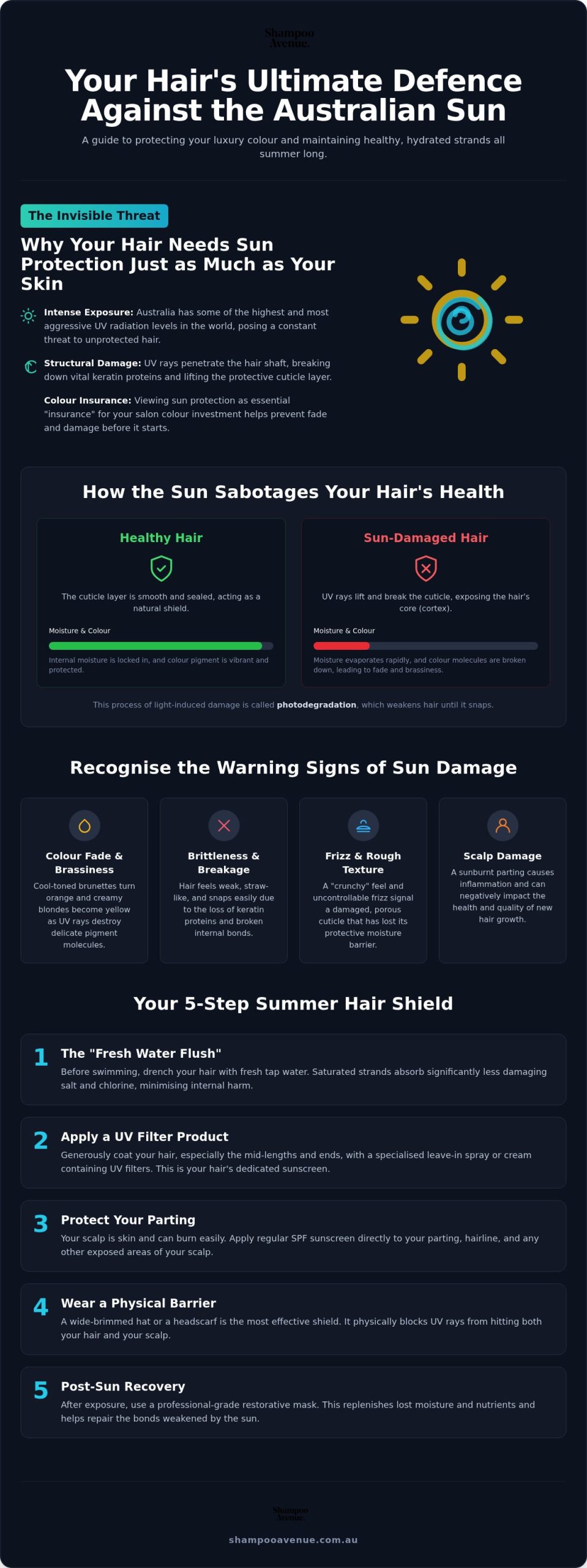
Your Ultimate Summer Hair Care Checklist: 7 Steps to Shield Your Strands
- Step 1: The Fresh Water Flush. Before you dive into the ocean or a chlorinated pool, drench your hair with fresh tap water. As we discussed earlier, a saturated strand absorbs far less salt and chemicals.
- Step 2: Apply a UV-Specific Leave-In. Work a professional treatment through your mid-lengths and ends. This creates a secondary barrier that filters out harmful rays while you’re out in the elements.
- Step 3: Secure a Low Bun. Your ends are the oldest and most fragile part of your hair. By tucking them into a sleek low bun, you hide them from direct solar exposure and prevent wind-tangles.
- Step 4: Don a Hat. If you’re planning to be outdoors for longer than 15 minutes, put on a hat. It is the only way to provide 100% shade to your scalp and face.
- Step 5: Rinse Immediately. As soon as you step off the sand, find a beach shower. Rinsing away salt and sand prevents these abrasive minerals from drying on the hair cuticle and causing micro-tears.
The Post-Beach Recovery Routine
Once you’re home, the focus shifts from protection to restoration. Step 6 involves using a hydrating, sulphate-free shampoo to gently remove any lingering salt or minerals without stripping away your natural oils. Follow this with Step 7: a weekly deep-conditioning mask. Understanding the difference between a hair mask vs conditioner is vital for replenishing the lipids lost during a day of heat exposure, as each product serves a distinct restorative purpose. For more detailed advice on maintaining your shade between appointments, explore our guide on hair colour aftercare. These steps ensure your luxury investment remains vibrant and soft to the touch.
Scalp-Specific Sun Safety
Your scalp needs just as much attention as your strands, but nobody wants greasy roots. To protect your parting without ruining your style, look for mineral-based powder sunscreens or lightweight “scalp mists” designed for hair. You can apply these directly to your parting with a small makeup brush for precision. Keep an eye out for signs of scalp sun damage, such as persistent redness, flaking, or unusual sensitivity. If your scalp feels tight and tender after a day out, it’s a clear signal that your sun protection for the hair needs to include a more robust physical barrier like a hat next time.
Ready to restore your hair’s natural glow? Book a wellness treatment with our expert team to deeply hydrate and repair your sun-drenched strands.
Professional Recovery: Restoring Sun-Drenched Hair
UV radiation does not just dry out the hair. It actively dismantles the internal architecture. This is where a professional protein treatment for hair becomes a game-changer for your recovery. These specialised formulas work to repair UV-broken bonds and restore the structural integrity that solar radiation has stripped away. Alongside protein, a post-summer gloss or toner is the perfect way to refresh “sun-bleached” colour. It neutralises unwanted brassiness and adds a layer of reflective shine, making your luxury colour look intentional and vibrant once again.
The Davines Wellness Approach
We believe in a wellness-first approach to hair care that prioritises both results and ethical responsibility. By utilising the Davines SU and OI lines, we provide restorative care that is gentle on your scalp and kind to the environment. These professional products focus on sustainable ingredients that replenish lost lipids and antioxidants. When you consult with our expert team, we don’t just look at the damage; we create a personalised plan to transition your hair health through the seasons. It is about looking after yourself and your mane with a sense of pride and purpose.
Trimming Away the Summer Damage
Never underestimate the power of a “dusting.” A micro-trim after a long holiday is essential for preventing split ends from travelling further up the hair shaft. Even if you are trying to grow your hair long, removing those few millimetres of sun-parched tips will make your hair look thicker and feel significantly softer. Booking a post-summer refresh allows us to assess the effectiveness of your sun protection for the hair and adjust your home care for the months ahead. It is the final, vital step in ensuring your tresses remain as resilient and beautiful as they were on the first day of summer.
Keep Your Glow All Summer Long
If the summer heat has already taken its toll, don’t worry. As specialists in lived-in blondes and hair wellness, we are here to help you restore your mane’s natural strength. As a proud Davines professional stockist, we use restorative, ethical products that truly respect your hair’s integrity and the environment. We would love to help you design a personalised plan to keep your scalp healthy and your colour glowing until the leaves start to turn.
Book your summer hair wellness consultation at Shampoo Avenue and let’s make 2026 your best hair year yet. We look forward to seeing you in the salon and helping you maintain your most radiant self.
Frequently Asked Questions
Can I use regular skin sunscreen on my hair or scalp?
You can use regular sunscreen on your scalp parting, but avoid putting it through your hair strands. Traditional skin formulas are often too thick and oily, which leads to heavy buildup and can make your hair feel weighted down. Instead, look for dedicated sun protection for the hair in a mist format. These professional sprays provide the necessary UV filters without the sticky residue of a cream.
How often should I reapply sun protection spray to my hair?
You should reapply your protective spray every two hours while you are outdoors. If you have been swimming or sweating heavily, apply it again immediately after drying off. Just like the SPF you use on your face, the active ingredients in hair-specific mists break down over time under direct solar radiation. Keeping a travel-sized bottle in your beach bag makes this habit much easier to maintain.
Does sun protection for the hair make it look greasy or flat?
Professional formulas are designed to be weightless and won’t leave your hair looking greasy or flat. High-quality mists, such as those from the Davines range, use fine-atomised particles that coat the hair without adding heavy oils. If you have fine hair, focus the application on your mid-lengths and ends rather than the roots to ensure you keep your natural volume while staying protected.
Is salt water actually good for my hair if I’m in the sun?
Contrary to the “beach babe” myth, salt water is quite harsh on your hair when combined with the sun. Salt is a natural desiccant, which means it draws essential moisture out of the hair shaft. It also forms tiny crystals that can act like miniature magnifying glasses, intensifying the UV damage on your cuticles. Always rinse with fresh water as soon as you leave the surf to stop this drying process.
Which hair colours fade the fastest in the Australian sun?
Vibrant reds and cool, creamy blondes tend to fade the fastest under the intense Australian sun. Red pigment molecules are larger and more unstable, making them prone to rapid oxidation. Cool blondes often lose their icy tones first, leaving behind the unwanted brassy warmth we discussed earlier. Using consistent sun protection for the hair is the only way to slow down this inevitable colour shift during summer.
Can UV damage cause permanent hair loss or thinning?
UV damage doesn’t cause permanent hair loss from the root, but it can lead to significant thinning through breakage. When the sun destroys the keratin proteins in your strands, the hair becomes brittle and snaps easily. Additionally, a badly sunburned scalp can become inflamed, which may temporarily disrupt the healthy growth cycle. Protecting your scalp parting is vital for maintaining the quality of your new hair growth.
What is the best way to protect my hair while swimming in a pool?
The best strategy for pool swimming is to saturate your hair with fresh water before you get in. Since your hair is like a sponge, it can only hold so much liquid; pre-soaking it prevents it from drinking in the chlorinated pool water. Applying a thin layer of a UV-filtering leave-in treatment provides an extra chemical barrier that helps neutralise chlorine before it can strip your luxury colour.
Does wearing a hat all day damage my hair or scalp?
Wearing a hat is the gold standard for sun safety and won’t damage your hair if you choose the right style. Opt for breathable fabrics like cotton or straw to prevent excessive heat and sweat buildup on the scalp. Ensure the hat isn’t excessively tight, as constant friction against the hairline can lead to minor breakage. Overall, the benefits of 100% shade far outweigh any minor risks of wearing a hat.