

What Is a Shadow Root? A Friendly Guide to Softer Hair Colour
What if darker roots could make your colour look softer, rather than like obvious regrowth? If salon terms leave you picturing a harsh line or colour that has already grown out, you’re not alone. So, what is a shadow root? It’s a colouring technique where a deeper shade is applied at the roots and blended into lighter lengths, creating depth and a more gradual transition.
The effect is intentional, lived-in colour: your roots have a little more depth, while the blend softens the shift into your lengths. The result depends on your starting colour and the look you want, so a shadow root won’t suit every colour plan or upkeep preference.
This guide explains how shadow roots differ from root smudges and root melts, how the technique can look on different hair colours, and what to discuss when planning a blended result. At Shampoo Avenue, our lived-in colour expertise and personalised colour work help shape the root-to-length transition around your goals. Read on to decide whether a softer grow-out feels right for your hair and routine.
Key Takeaways
- Learn what is a shadow root and how a blended darker root can create a softer transition into lighter lengths.
- See how a colourist plans root depth and blends it with your existing colour and desired finish in mind.
- Compare shadow roots, root smudges and root melts to understand how each creates a different transition.
- Weigh up your preferred root depth, colour contrast and upkeep routine when deciding if the look suits you.
- Discover how a personalised colour conversation can help shape a root-to-length transition around your hair goals.
What is a shadow root, and what does it look like?
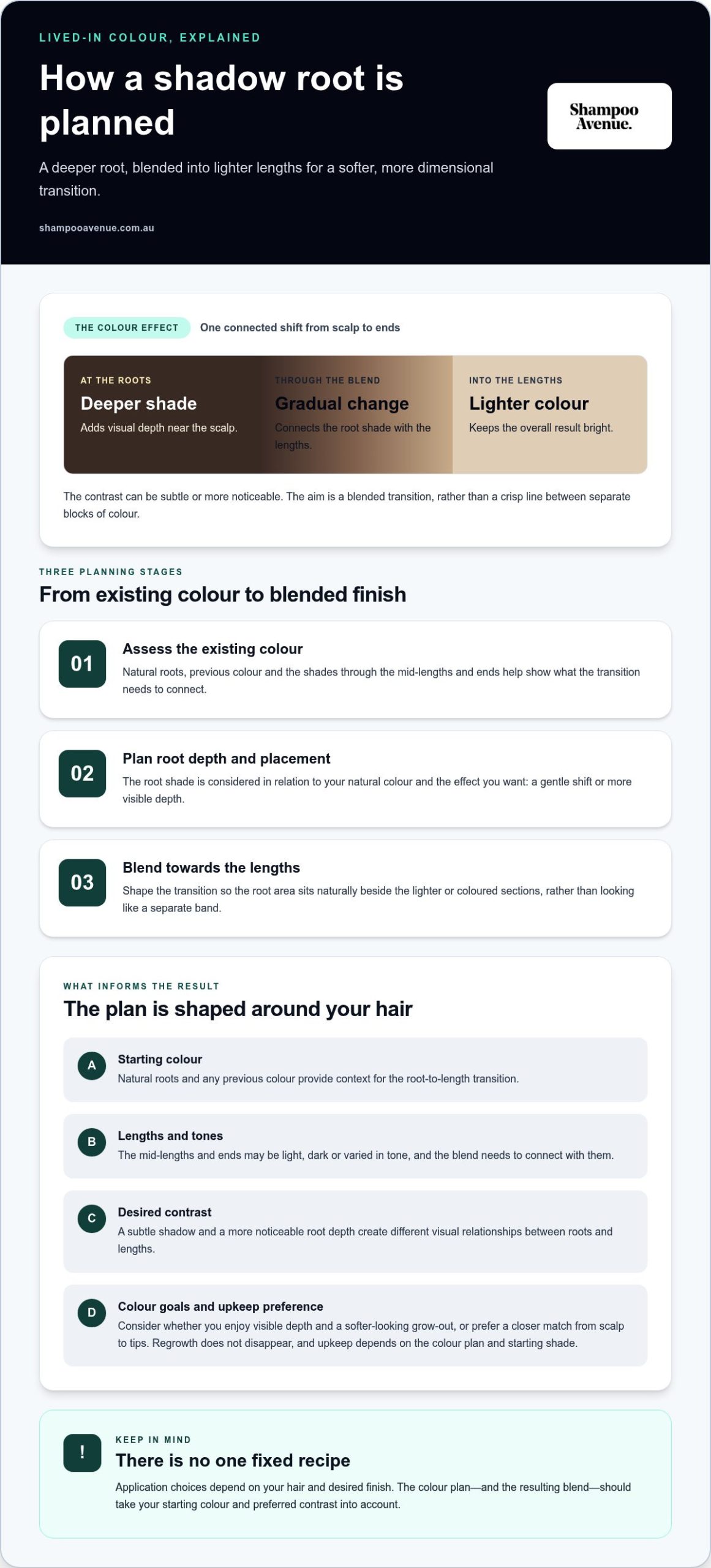
A shadow root creates a darker, blended root area beside lighter lengths. It’s an intentional colour effect, not simply natural roots left untouched as the rest of your hair fades or grows out. The deeper shade adds dimension near the scalp, while blending softens the shift into the mid-lengths and ends.
A shadow root is a colour technique that blends deeper tones at the roots into lighter lengths for a softer, more dimensional finish.
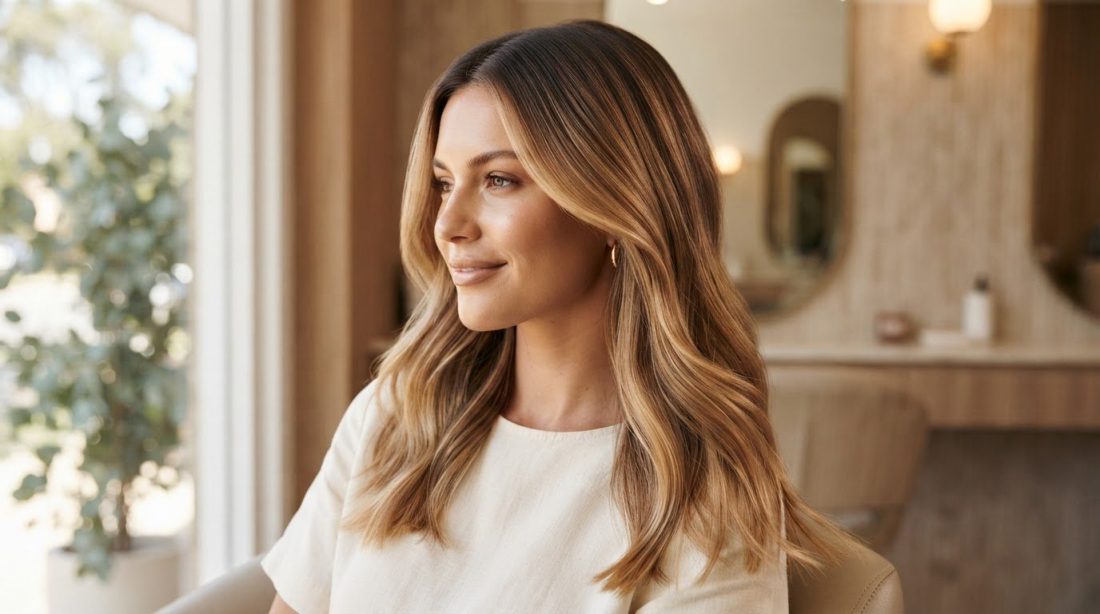
Picture a deeper brown at the roots gradually softening into blonde lengths. Instead of a sharp border between two blocks of colour, the transition is blended. The contrast and placement can vary depending on the look you want. For wider context on how colour can be applied to create different effects, explore these hair colouring techniques.
How a shadow root changes the overall colour
The root area gives the hair visual depth, while lighter mid-lengths and ends keep the overall result bright. That contrast can make the colour feel less uniform and give the lengths more definition. The effect doesn’t have to be dramatic: a subtle difference in tone creates a gentle shadow, while a more noticeable difference makes the root depth a feature of the look.
Blending connects the shades. Rather than a crisp line where the darker root ends and lighter colour begins, you see a gradual change through the hair. Imagine a soft brunette root fading into blonde lengths, with the tones meeting rather than stopping abruptly. The blend can be adjusted to suit your existing colour and the finish you want.
The result also depends on where the lighter pieces sit and how much contrast you prefer. The same technique can look softly lived-in or more defined, so describe the effect you have in mind rather than relying on salon terminology alone.
Why people choose a shadow-root look
Some people like the depth a darker root brings, especially if they’d rather not have one consistent shade from scalp to ends. It can give lighter colour a more dimensional, grounded appearance and connect natural-looking roots with brighter lengths.
A softer-looking grow-out can be another appeal. As natural roots appear, they may sit more comfortably alongside the deeper root area than against a very even, light colour. That doesn’t mean every shadow root is low-maintenance or that regrowth disappears. The effect depends on the colour plan, your starting shade and how much contrast you’re happy to see.
Consider what you enjoy seeing in the mirror: a noticeable difference between root and ends, or a closer match from scalp to tips? A shadow root may suit someone who likes visible depth and a blended transition. If you prefer an even colour throughout, that contrast may not be your ideal look. Thinking about both your colour goals and preferred upkeep can make the choice clearer.
How is a shadow root created and blended into the lengths?
To understand what is a shadow root in practice, think of it as a colour plan built around the hair you already have. The colourist assesses your existing shade, considers how much depth you want near the scalp, then plans how that deeper area will meet the lengths. The approach varies because your starting colour and desired finish both shape the result.
The finished shadow-root blend depends on your starting colour and the contrast you want between your roots and lengths.
A colour plan usually considers these stages:
- Assess the existing colour. Natural roots, previous colour and the shade through the mid-lengths and ends all provide useful context. This helps the colourist understand what the transition needs to connect.
- Plan the root depth and placement. The root shade is considered in relation to your natural colour and the overall effect you want. The aim might be a gentle shift or more visible depth, depending on your preference.
- Blend towards the lengths. The transition is shaped so the root area sits naturally beside the lighter or coloured sections, rather than appearing like a separate band.
These are planning principles, not a fixed recipe. Application choices depend on your hair and desired finish, so there isn’t one formula or processing time that suits everyone.
What informs the root shade and placement?
Your natural root colour is one consideration, but it’s not the only one. Existing colour matters too: a colourist looks at how the roots relate to the mid-lengths and ends, including whether those lengths are light, dark or varied in tone. The intended effect guides the plan as well. A subtle shadow calls for a different visual relationship than a more noticeable contrast.
Placement needs to connect the root shade with the lengths in a way that feels considered. Your hair and goals shape the plan, rather than one depth or position being assumed to suit everyone.
Why blending matters to the finished result
Blending makes the colour transition feel connected. A sharp, unconnected line can make the root shade and lengths look like separate blocks. A gradual shift helps the shades sit together, creating a softer visual change from scalp to ends. The transition might be barely noticeable or more defined, but it should work with the overall colour you want.
It can help to describe the effect in everyday terms, for example, “a deeper root that softly meets my lighter lengths”. That gives the colour conversation a clear starting point without needing technical colourist language.
If you’re exploring a softer root-to-length transition, a colour conversation can take your existing colour and goals into account. At Shampoo Avenue, personalised colour work can be shaped around the finish you have in mind.
Shadow root vs root smudge vs root melt: what is the difference?
These terms describe ways of softening the change between the roots and the rest of the hair, but they often suggest different results. A shadow root commonly signals more deliberate depth at the roots; a root smudge usually points to a subtle blend where lighter colour begins; and a root melt suggests a gradual transition through the lengths. Salon terminology can overlap, though, and colourists may use these labels differently.
Use the comparison as a guide to the look each term commonly describes, not as a set of universal technical rules.
| Technique | Root depth | Transition | Common visual effect |
|---|---|---|---|
| Shadow root | A deeper shade creates noticeable root depth | Blended into lighter lengths | Defined, dimensional roots with a softened edge |
| Root smudge | Often closer to the natural root colour | Softens where lighter colour begins | A subtle, diffused blend |
| Root melt | May begin with a deeper root shade | Blends further through the hair, often across multiple shades | A smooth, gradual colour gradient |
Shadow root and root smudge compared
Both terms can describe adding or blending depth around the root area. A shadow root commonly suggests more intentional contrast, making the roots visibly deeper beside lighter lengths. A root smudge often implies a subtler adjustment, using a shade closer to the natural root to blur where highlights or lighter colour begin. The result can be delicate rather than a distinct band of depth.
Two salons may not use the labels in exactly the same way. If you have a particular finish in mind, explain what you want to see, for example, “a little depth at the roots, but no obvious line where my highlights start”. A visual reference can also help you communicate the balance of depth and brightness you like.
Shadow root and root melt compared
A root melt commonly describes a blend that travels further down the hair and may connect the roots to the ends through more than one shade. This can create a continuous gradient, rather than focusing mainly on the contrast between a deeper root and lighter lengths. A shadow root, by comparison, usually emphasises the darker root area and its softened edge.
The distinction isn’t fixed: one colourist might use “root melt” for a result another describes as a shadow root. During a colour conversation, focus on the transition you want. Would you like a noticeable deeper root, a softly blurred start to your lighter pieces, or a gradient that flows through several tones? Clear, everyday descriptions help turn salon terminology into a shared picture of the result.
So, what is a shadow root compared with these other options? It’s generally the term for visible root depth and a blended connection to lighter lengths, while the other labels tend to emphasise a softer blur or a more extended gradient. The best description is the one that makes your colour goal clear.
Would a shadow root suit your colour goals and maintenance routine?
A shadow root may suit you if you like some depth near the scalp and don’t want your colour to look identical from root to tip. If you prefer a consistent shade throughout, or want the roots to stay as light as the lengths, another colour approach may feel more like you. The choice comes down to the contrast you enjoy, your current colour and how you feel about upkeep as your hair grows.
Your starting point matters. Natural root colour, previous colouring and the tones already through your lengths all influence how a new root-to-length transition can be planned. If you have lightened lengths, you might want a gentle shift into your natural root shade. A different colour history may call for other considerations. Maintenance also varies with the colour plan and your hair growth, so a shadow root doesn’t automatically remove the need for future colour appointments.
Questions to consider before choosing a shadow root
Before settling on a look, think about what you’d be comfortable seeing at the roots and how you want the lengths to appear. These prompts can help you explain your preferences:
- Do you like the idea of visible depth at the roots, or would you rather have a more uniform colour from scalp to ends?
- How much contrast feels right between your root area and lighter lengths: subtle, noticeable or somewhere in between?
- What is your natural root colour, and what colour work is already through your hair?
- How often do you prefer to refresh your colour, and how do you feel about seeing your natural roots emerge?
Bring a few inspiration images if you have them. Choose examples that show the transition you like, not just a colour you love on the ends. Point out whether you want the roots softly blended, more defined or close to your natural shade. This makes it easier to discuss the result without needing salon terminology. If you’re weighing up a softer blonde finish, a lived-in blonde colour guide can also help you explore the broader look.
Planning care after a colour appointment
Aftercare should suit the finished colour and your individual hair needs. Your routine may depend on the shades used, the condition of your hair and the result you want to maintain. Follow the guidance given for your colour work, and let your stylist know if your hair feels different or your colour isn’t wearing as you expected. There’s no single refresh schedule that fits everyone, and a blended root doesn’t mean touch-ups are never needed.
Discuss which professional haircare products suit your routine and support your colour and hair goals. For more on caring for coloured hair, explore a hair colour aftercare guide. If you’re ready to talk through your starting colour, desired contrast and upkeep preferences, book a personalised colour conversation with Shampoo Avenue.
How Shampoo Avenue approaches a personalised shadow-root look
Knowing what is a shadow root gives you a useful starting point, but the right colour plan depends on your hair and the finish you hope to see. At Shampoo Avenue, personalised luxury colour work begins with your goals: the depth you want near the roots, how softly you’d like it to meet the lengths, and how your existing colour fits into the picture.
A colour conversation can turn a broad idea, such as “softer blonde” or “more depth at the roots”, into a clearer direction. Your current colour, previous colour work and overall hair goals all matter. The aim is to plan a transition that feels considered across your hair, rather than choosing a label and expecting one standard result.
If you’re exploring blonde options alongside a blended root, the luxury hair colour guide can help you think about the wider colour transformation you might be working towards.
Bring your colour goals into the conversation
Describe the contrast you like, how soft you want the transition to feel and the overall mood you’re after. Inspiration images can show the root depth and length colour that catch your eye, while a conversation about your usual colour upkeep helps shape realistic goals. You don’t need to know every salon term. The words are a starting point, not a test.
Explain what you like and what you’d rather avoid in an image. Perhaps you like the depth at the roots but want a more gradual change into the lighter pieces. Sharing that distinction gives the colour conversation something practical to work with. Bring images that show the overall effect you’re drawn to, not just a close-up of a particular shade.
A considered approach to colour and hair wellness
Colour goals sit alongside the needs of your hair. A personalised approach considers your existing colour and desired transition as part of your wider hair goals, with hair wellness in the conversation too. Shampoo Avenue’s professional haircare offering supports this focus on caring for hair alongside its colour work. Your routine and preferences can help inform the discussion, so the plan feels relevant to you.
There’s no need to arrive with a perfect description or a fixed decision. Start with how you want your colour to feel, then explore the possibilities. Whether you’re drawn to subtle root depth, a softer blend or another colour direction, your goals deserve a thoughtful conversation.
Explore colour services at Shampoo Avenue.
Start picturing your next colour direction
Now that you know what is a shadow root, you can use the idea as a starting point, not a commitment. Think about how you want your colour to feel: brighter, softer, more dimensional or closer to your natural tones. A few inspiration images and a note about the upkeep you prefer can help turn that feeling into a useful conversation.
Your next step might be refining a blonde look, exploring grey blending or considering a personalised colour transformation that feels more like you. At Shampoo Avenue, the conversation can include your hair goals and the care that supports them, with professional Davines haircare part of the salon’s offering.
You don’t need to have every detail decided before exploring your options. Start with what you’d love to see, then let the possibilities take shape. Explore colour services at Shampoo Avenue and take a confident first step towards a look that feels right for you.
Frequently Asked Questions
Can a shadow root work on grey hair?
Yes, a shadow root can be considered with grey hair, but the right approach depends on your goals. What is a shadow root in this context? It’s a root-area colour effect, while grey blending is a broader colour plan that can work with your natural grey. If you want to soften the contrast between grey and coloured lengths, discuss your existing colour and how much blending or coverage you’re hoping for.
How long does a shadow root last?
There’s no fixed duration for a shadow root. The visible change depends on how quickly your hair grows, the contrast between your roots and lengths, and the colour plan itself. Your preference matters too: you might enjoy the look as it grows, or prefer to refresh your colour sooner. A colourist can help you consider how the planned effect may change as your roots become more visible.
Can you get a shadow root without bleaching your hair?
Sometimes, but it depends on your starting colour and the overall result you want. A shadow root describes the effect at the roots; it doesn’t determine whether the lengths need lightening. If your lengths are already light enough for your goal, further lightening may not be part of the plan. If you want a lighter result from a darker starting shade, the colour approach may be different.
Is a shadow root suitable for curly hair?
Yes, curl pattern alone doesn’t rule out a shadow root. The key is how you’d like dimension to show through your curls and how the root shade relates to your existing colour. Curly hair can look different as curls shift or separate, so bring inspiration images that resemble your curl pattern as well as your preferred colour effect. This gives your colourist a clearer picture of the result you have in mind.
Can you ask for a shadow root with dark hair?
Yes, you can discuss the effect with dark hair. The amount of visible contrast depends on the relationship between your root shade and the rest of your colour, as well as the finish you want. If you prefer a subtle result, describe how much dimension you’d like to notice; if you’re after a stronger change, explain that too. Your starting shade helps inform which colour direction may suit your goal.
Will a shadow root make blonde hair look darker?
It adds depth near the roots, but it doesn’t necessarily make your whole head of blonde hair look darker. The overall impression depends on how deep the root shade is, how far it blends and how bright the lengths remain. A soft, close shade may give a gentle sense of dimension, while stronger contrast can make the darker area more noticeable. Share how much brightness you want to keep when discussing the colour plan.
Can a shadow root be changed if you do not like the result?
Colour may be adjustable, but the options depend on how it looks now, your hair’s colour history and what you’d like to change. Wanting a softer transition is different from wanting the root area lighter. Avoid trying to correct it at home before getting professional guidance, as another colour application can affect the hair and future colour plans. A colour conversation can help map out suitable next steps without assuming one correction will work for everyone.