

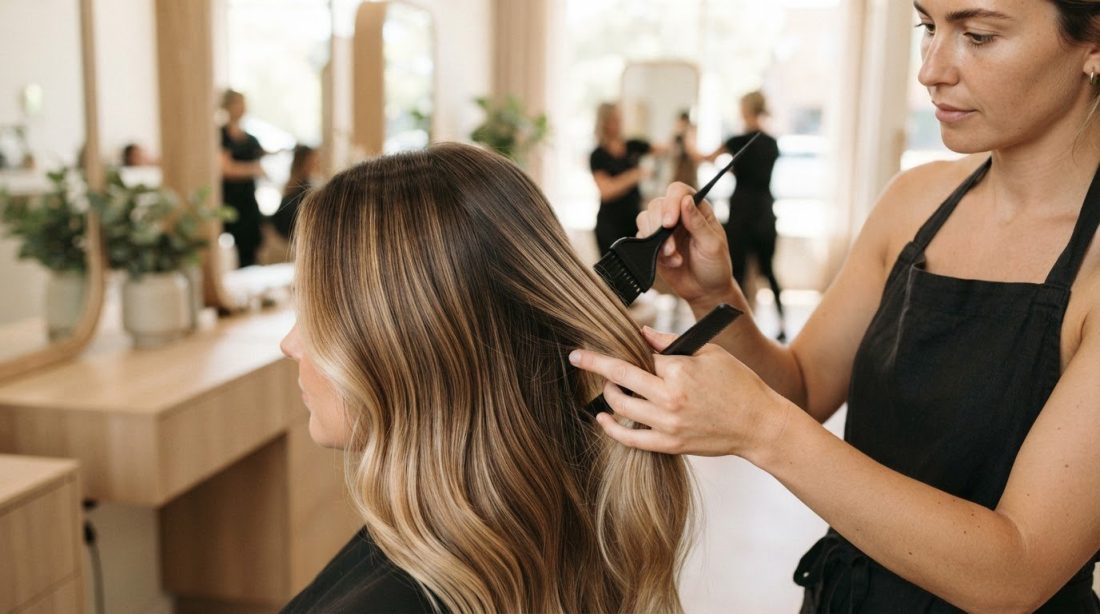
What Is a Root Melt? A Simple Guide to Blended Roots
What if the softest-looking colour isn’t about hiding your roots, but blending them into the rest of your hair? If you’ve been wondering what is a root melt, you’re not alone. Root melt, root smudge and root shadow can sound like names for the same thing, even though they generally describe different effects.
A root melt places a darker shade at the roots and blends it into lighter sections, creating a gradual transition rather than a sharp line. It can give colour a more lived-in feel, but the result depends on your existing colour, the contrast you want and how you’d like your hair to grow out. There’s no single formula or fixed salon schedule that suits everyone.
This guide explains the technique in plain English, compares root melts with root smudges and root shadows, and explores how the colour may grow out. You’ll also find practical details to bring into a personalised colour conversation, from your natural root shade and current highlights to the level of contrast and upkeep you prefer.
Key Takeaways
- Learn what is a root melt and how it can create a softer transition between roots and lighter lengths.
- See how root melts, root smudges and root shadows differ in the effect they create.
- Understand how the contrast between your root shade and lengths can shape the look of the blend.
- Use a simple checklist to prepare for a colour conversation, including what to share about your current colour, preferred upkeep and reference images.
- Explore a personalised colour conversation with Shampoo Avenue’s family of stylists, an innovative, inclusive, real people team.
What Is a Root Melt? How This Colour Technique Softens the Root Transition
If you’re asking what is a root melt, it’s a colour technique that blends the root area into lighter or otherwise different-coloured lengths. Rather than leaving a distinct line where one shade ends and another begins, the colour transitions gradually from the roots down through the hair. The precise blend depends on your starting colour, existing highlights and how the colour is placed.
Picture a darker root shade meeting highlighted lengths. In a blended result, the change looks gradual, with the shades appearing to flow into each other. The root colour may be close to your natural shade or chosen to create more contrast. The aim is a connected overall look, not a single fixed colour pattern.
The visual effect also depends on the colours already in your hair. Existing highlights may be fine and close together, or brighter and more defined. The root area may be natural, coloured or a mix of both. These details shape how noticeable the transition appears. For broader context on how colour techniques create different effects, see this overview of Hair coloring.
What does a root melt look like?
A root melt softens the boundary between roots and lengths, so your eye follows a gradual shift in shade rather than stopping at a clear band. In highlighted hair, this can connect the deeper root area with lighter pieces through the lengths. A more obvious band can also be a deliberate look, creating stronger, more defined contrast.
Who might consider a root melt?
You might consider this approach if you’d like your roots to connect more softly with existing highlights or other lighter lengths. It isn’t only for blonde hair: blending a root shade into different-coloured lengths can be adapted to different starting colours and colour goals. Whether it suits you depends on your current colour, the contrast you want and the overall look you’re after.
Think about the effect you want when your hair is worn naturally and when it’s styled. A close match between the root shade and lengths may create a more understated transition, while greater contrast can make the shift more noticeable, even when blended. Neither is automatically better. Choose the degree of distinction that feels right to you.
Existing highlights matter, too. Their placement and brightness influence where the transition is visible and how it sits alongside your root colour. That’s why a root melt isn’t a standard formula that produces the same result on everyone. A personalised colour conversation can take your current hair and desired finish into account. Be ready to explain whether you prefer a subtle flow between shades or a more defined change that still feels connected.
How a Root Melt Creates a Blended Effect Through the Hair
A root melt creates a visual connection between the root shade and the colours through the lengths. The transition can appear soft or more defined, depending on the difference between those shades and where lighter or darker pieces sit. It shapes how the colours meet; it isn’t a fixed formula that looks the same on everyone.
The final appearance of a root melt depends on your starting colour and how colour is placed through the hair. For example, a small difference between the root area and lighter lengths can make the change feel subtle. Stronger contrast can make the shift easier to see, even when the boundary is blended. Neither effect is automatically better; it depends on the look you want.
Highlights and lowlights can add another layer of dimension. Highlights create lighter pieces, while lowlights introduce darker pieces among lighter hair. They contribute to the overall pattern, but they aren’t the root melt itself. Root blending is about the transition near the roots; highlights and lowlights affect the variation you see through the lengths. Colour choices also relate to foundational ideas such as tone and depth, explored in Understanding Hair Color Theory.
Why the starting colour matters
Your natural roots are only part of the picture. Existing colour, the position and brightness of highlights, and any darker pieces all influence how a blend may read. The same named technique can look quite different on hair with subtle highlights than on hair with brighter, more noticeable sections. Share what’s currently in your hair and the contrast you’re drawn to, rather than assuming one root depth suits everyone.
How root blending relates to highlights and balayage
Root blending describes the transition near the roots; balayage describes an approach to placing colour through the hair. The techniques can be used together, but the terms don’t mean the same thing. Highlights may also sit within either colour plan, adding lighter sections that shape the finished look. If you’re exploring a softer, dimensional blonde, consider how the root transition fits the broader lived-in blonde look you have in mind.
For a useful colour conversation, bring a reference image and point out what appeals to you: perhaps the softness at the roots, the brightness through the lengths or the amount of contrast. A personalised discussion can connect those preferences with your existing colour. Explore personalised colour services as a starting point for considering how a blended result could suit your hair.
Root Melt vs Root Smudge vs Root Shadow: What Is the Difference?
Root melt, root smudge and root shadow all describe ways of working with colour near the roots, but the terms don’t always mean exactly the same thing from one colourist to another. Generally, a root melt describes a blended transition into the lengths, a root smudge suggests a softened root colour effect, and a root shadow puts more emphasis on a darker-looking root area.
Use the names as helpful starting points, not strict definitions. Salon terminology and methods can overlap, so the clearest guide is the result you want to see. This comparison can help you explain the look you have in mind:
| Term | General visual emphasis | Question to discuss with your colourist |
|---|---|---|
| Root melt | A blended transition between the root area and the lengths. | How soft or noticeable would I like the change in colour to look? |
| Root smudge | A softer root colour effect that helps blur the point where lighter colour begins. | Am I after a subtle softening at the roots? |
| Root shadow | A more evident, darker-looking root effect that adds definition. | How much darker or more defined do I want the root area to appear? |
Root melt and root smudge: how do they differ?
Broadly, a melt focuses on how the root shade flows into the lengths, while a smudge describes a softer effect around the root area. Some salons use the terms in similar ways, so don’t rely on the label alone. You could say, “I’d like the lighter pieces to blend into my roots without a strong line,” then show a reference image that captures the result you have in mind.
That description gives a colourist something specific to work with: the amount of root definition you like, how gradual you want the transition and how the lighter sections should connect. It also leaves room to consider your starting shade and existing highlights, rather than assuming a technique name guarantees a particular finish.
Root shadow, root tap and balayage: related but distinct terms
A root shadow refers to a root-focused effect with more visible depth, though its exact meaning can vary between colourists. Root tap is another term for working with colour at the roots, but it doesn’t have one fixed depth or formula everywhere. Balayage is different: it describes a highlighting or colour-placement approach, not the root transition itself. A colour plan may combine balayage with root blending, but the terms describe separate parts of the result.
So, if you’re asking what is a root melt compared with these alternatives, focus on the effect you want: a flowing blend, a softly blurred root or a more defined shadow. Bring images and point to the details you like, such as how noticeable the root area is or where the lighter colour appears to begin. A shared visual reference can make terminology much less confusing.
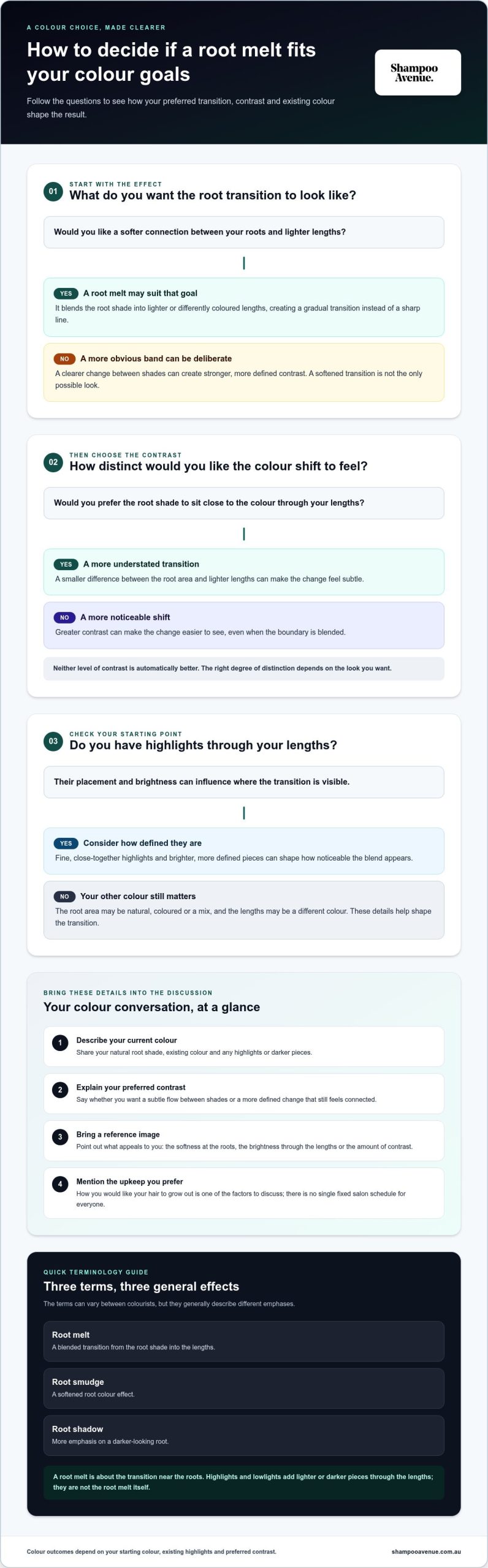
What to Consider Before Choosing a Root Melt
Knowing what is a root melt gives you a starting point, but choosing the right result is about how the blend will work with your own hair. Before a colour conversation, take stock of your current colour and decide how much definition you want at the roots. A few clear preferences can help turn “soft and natural” into a more useful description.
Use this checklist to organise your thoughts:
- Describe your current colour. Note your natural root shade, any previous colour and where your highlights or lighter pieces sit. These details give context to your goal.
- Choose the kind of transition you like. Are you after a subtle connection between roots and lengths, visible depth at the roots or stronger contrast between shades?
- Consider the overall colour you want. Think about the tone and placement you’re drawn to, as well as how the root area should relate to your existing highlights.
- Be honest about upkeep. Consider how often you’d ideally like to refresh your colour and how you feel about visible regrowth. A blended look doesn’t mean maintenance-free hair.
Questions to help describe your colour goal
Reference images can help you explain what words alone might not. Choose clear photos that show the root area and lengths, then point out exactly what appeals to you: the shade, the softness of the transition, the brightness of the highlights or where the colour sits. It’s just as useful to say what you don’t like, such as a root area that looks too dark or a contrast that feels too strong.
Photos are inspiration, not a promise of an identical result. Your starting colour, existing highlights and colour history all contribute to the result. Discuss how the look you like could translate to your hair, rather than expecting a reference image to act as an exact template. For broader context, a luxury hair colour guide can help you explore the range of colour transformations, while a hair colour aftercare guide covers care after your service.
Set realistic expectations for grow-out and upkeep
How a root melt grows out depends on the colour, its placement and your natural regrowth, as well as how much definition you prefer to see. The transition may feel softer to you, but that doesn’t set a fixed schedule between appointments. Talk through what you’re comfortable maintaining and how you’d like the colour to look as it changes over time. A personalised colour conversation at Shampoo Avenue can help you shape your preferences into a considered colour goal.
Make Your Root Melt Feel Personal with Shampoo Avenue
A blended-root look is more than a technique name. You might be drawn to a gentle connection between your natural roots and existing lighter pieces, or a more noticeable shift in depth through the hair. At Shampoo Avenue, luxury colour services are personalised around the look you want and the colour you already have, so the conversation can start with your goals rather than a one-size-fits-all formula.
A colour conversation shaped around your goals
Bring reference images if you have them, and talk about the details you like. Is it the softness at the roots, the overall tone or the way the lighter colour sits through the lengths? Mention your current colour and highlights, too. Those details help shape a realistic conversation about how you’d like the root-to-length transition to look.
It’s fine if you’re still finding the words. If you’ve been wondering what is a root melt, you’ve already got a useful starting point: a way to describe a blended transition. From there, explain whether you want the root area to feel subtle, defined or somewhere in between. The family of stylists at Shampoo Avenue brings a welcoming, personalised approach to colour, with room for your preferences and the individuality of your hair.
There’s no need to arrive with every technical term sorted. A clear picture of what you like, what you’d rather avoid and how your current colour fits into your goal can make the discussion more useful. Your colour direction can be considered in context, including how the root area connects with existing highlights and the overall look you’re aiming for.
Explore colour care with a values-led salon
Shampoo Avenue is a salon for innovative, inclusive, real people, with an approach that puts personal colour goals and a welcoming experience at the heart of the conversation. Its colour work uses professional, premium hair care and hair colour products guided by a strong commitment to sustainability and quality.
Understanding the technique is one part of choosing a colour direction; feeling comfortable discussing what you want is another. Whether you’re considering a root melt alongside a broader colour transformation or a lived-in blonde look, your starting colour and preferences help guide the conversation. The aim is to explore a result that feels considered for you, without assuming one technique or reference image suits everyone.
Ready to talk through the transition you have in mind? Explore Shampoo Avenue’s luxury colour services and start a personalised colour conversation.
Take the Next Step Towards Colour That Feels Like You
Your colour doesn’t need to fit a trend or match someone else’s reference photo. Use what you’ve learnt about what is a root melt to focus on the transition you’d feel most comfortable wearing, then bring that preference into a personalised colour conversation. Even a simple description, such as wanting your roots to feel softer or more defined, can help you begin.
At Shampoo Avenue, colour services are personalised, with pricing shaped by the time, products and tools used. You can explore your ideas with a welcoming family of stylists and find an approach that feels right for you.
Ready to take that first step? Explore Shampoo Avenue’s colour services and start imagining a colour direction that feels like your own.
Frequently Asked Questions
What is a root melt in hair colouring?
A root melt is a hair-colouring technique that blends the root shade into a different colour through the lengths. The transition can be tailored to the existing colour and the effect you want, rather than following one standard formula. If you’re asking what is a root melt because you’ve seen the term beside a colour photo, look at how the roots connect to the lighter or darker sections to understand the intended finish.
Is a root melt the same as a root smudge?
Not necessarily. A root melt generally refers to blending the root shade into the lengths, while a root smudge often describes softening the root area or the point where lighter colour begins. Some colourists use these labels in similar ways, so the terminology alone may not explain the planned result. Focus your colour conversation on how defined you want the roots to look.
How long does a root melt last?
There isn’t one set timeframe for how long a root melt will look the way you want. Your natural regrowth, the contrast between your roots and lengths, and your personal preference for a fresh-looking colour all affect when you may want a refresh. Someone comfortable with visible root change may choose differently from someone who prefers a consistently polished look. Discuss upkeep as part of planning your colour.
Can you get a root melt on dark hair?
Yes, a root melt can be considered on dark hair when the colour through the lengths differs from the root area. The result depends on your current shade and the colour contrast you’re aiming for, so it doesn’t have to mean choosing a particular lighter or darker root. If your hair is a deep brunette with lighter pieces, for example, talk about whether you want those pieces to stand out or feel more connected to the root colour.
Does a root melt make highlights look more natural?
It can make the connection between highlights and the root area appear softer, which may suit a more blended overall look. “Natural” can mean different things, though: you might want fine highlights that sit close to your own colour, or brighter sections with a softened root transition. Describe the balance you prefer. A root melt changes how the root area relates to the highlights, rather than changing the highlights themselves.
What is the difference between a root melt and balayage?
A root melt refers to blending colour around the roots and into the lengths. Balayage describes a way of placing colour through the hair, often to create variation or lighter sections. They can be part of the same colour plan, but they name different aspects of the look. For example, balayage may create the lighter pieces, while root blending shapes how those pieces connect visually with the root area.
Will a root melt cover grey hair?
A root melt isn’t automatically the same as grey coverage. Its main purpose is to blend colour around the roots, while the approach to grey depends on the amount and pattern of grey and your preferred finish. If you want greys softened or blended rather than fully concealed, mention that specifically. Shampoo Avenue’s grey blending and natural colour services can be discussed in relation to your existing colour and overall goal.
What should I bring to a root melt consultation?
Bring a few clear photos that show the root area and lengths, plus examples of what you like and what you’d avoid. It can also help to describe your recent colour history, such as previous highlights or all-over colour, so the stylist understands your starting point. If you don’t have reference photos, that’s fine. A plain-language description of your preferred contrast and how you wear your hair is useful too.