

Signs of an Unhealthy Scalp: Symptoms and What They May Mean
The signs of an unhealthy scalp can include excessive oil or dryness, persistent itching, redness, soreness, flakes, broken skin or sores, and unusual hair thinning or shedding. Losing up to 100 strands of hair daily can be normal, so a change in your usual pattern matters more than a single day’s count. These symptoms can have different causes, and flakes don’t always mean dandruff.
It’s easy to focus on what you can see in your hair, but scalp discomfort or changes at the roots can offer useful clues, too. This guide explains what common symptoms may mean, how flaking and dandruff fit in, and why a comfortable, balanced scalp supports healthy-looking hair.
You’ll also find practical ways to care for your scalp and guidance on when ongoing or sudden changes call for professional attention. Start with the symptoms you’ve noticed, then consider how long they’ve lasted and whether they’re getting worse.
Key Takeaways
- Look for changes such as persistent itching, redness, soreness, excess oil, dryness, flakes or broken skin, and note whether they’re getting worse.
- Flakes can have different causes, from dryness or product build-up to scalp conditions, so pay attention to how long they persist and what else you notice.
- Sun exposure, irritating products and tight hairstyles can affect scalp comfort. Gentle care and less tension may help reduce irritation.
- Losing up to 100 strands of hair daily can be normal; sudden, patchy or ongoing shedding deserves medical assessment.
- Scalp health supports healthy-looking hair, but a scalp concern and hair breakage aren’t always the same problem.
1. Why Does Scalp Health Matter for Healthy Hair?
Your scalp contains about 100,000 hair follicles, and each one supports a growing hair. Healthy scalp skin helps create a suitable environment for those follicles, while ongoing irritation or inflammation may affect scalp comfort and hair condition. A change at the roots can indicate a scalp concern, but it doesn’t identify the cause by itself.
Natural scalp oil, called sebum, helps protect the skin and hair. Too little may leave the scalp dry; excess oil can contribute to greasy roots and build-up. Hair follicles also move through growth, transition and resting phases, so shedding is part of their natural cycle. Losing up to 100 strands daily can be normal.
Look at the pattern, not just the number of hairs in your brush. Persistent thinning, sudden substantial shedding or patchy loss can be associated with scalp conditions and weakened follicles. Ongoing or marked hair loss may also relate to an underlying health issue. A doctor or dermatologist can assess these changes, especially if hair loss appears alongside redness, soreness or broken skin.
Hair breakage differs from shedding at the follicle: it happens along the hair shaft. Heat styling, chemical processing, friction and inadequate conditioning can contribute to breakage, making hair look thinner without the same process occurring at its roots. Tight ponytails, buns, braids and extensions can pull on the scalp. Repeated tension may inflame follicles and lead to traction alopecia in affected areas.
Small habit changes can reduce avoidable irritation. Choose looser styles, limit frequent heat-tool use and handle wet hair gently, as it can be more vulnerable to friction. Avoid going to bed with wet hair: a warm, moist scalp environment can encourage bacterial and fungal components to thrive. These steps support scalp care, but they don’t diagnose or treat every cause of hair loss.
Omega-3 supplement findings are specific to the studies described, not a general guarantee of regrowth. Women with self-perceived thinning who took fish oil reported increased hair growth and strength after 90 days. In another study, women with female pattern hair loss taking a supplement containing omega-3, omega-6 and antioxidants experienced increased hair density and decreased hair loss after 6 months. These results don’t establish that supplements suit everyone.
As a practical first step, track when shedding or thinning began and note any accompanying scalp symptoms. If hair loss is sudden, substantial, patchy or persistent, arrange a medical assessment rather than relying on scalp-care changes alone. A healthy scalp supports hair wellness, while identifying the cause helps guide the next step.
2. Flaking and dandruff
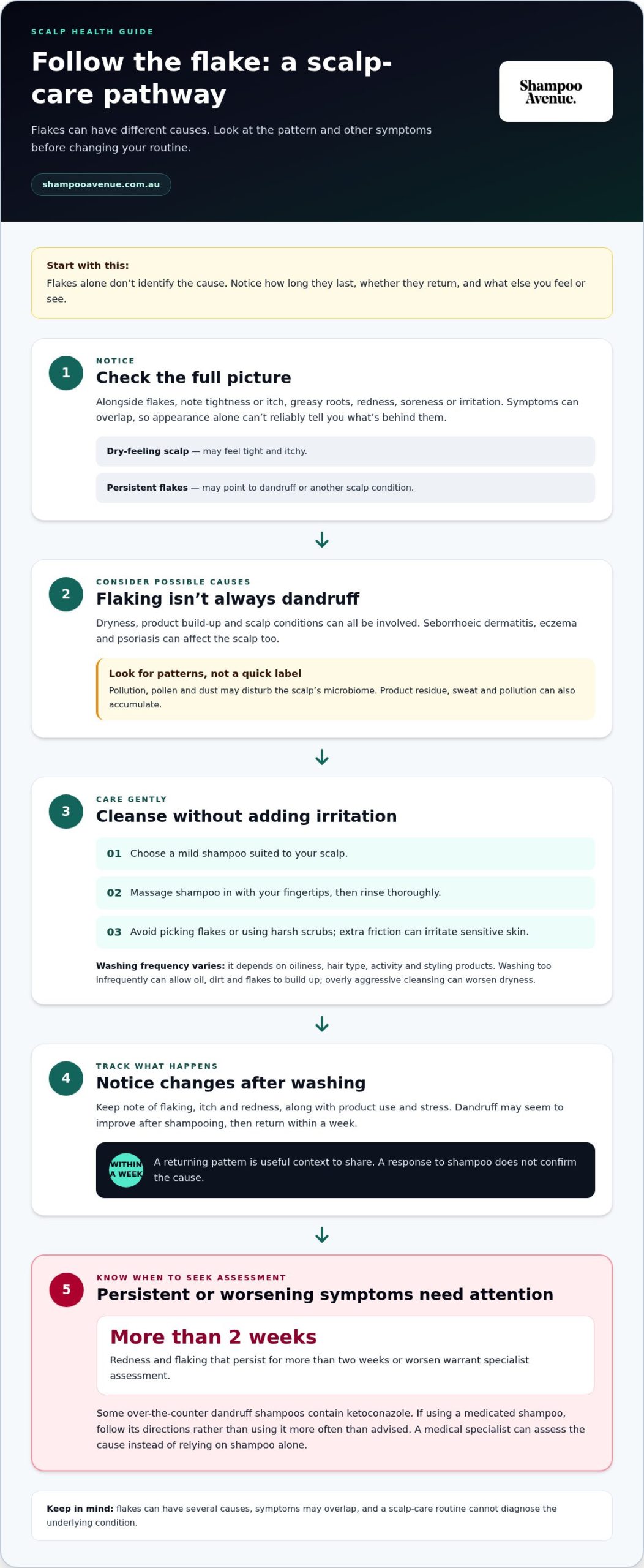
Flakes can result from a dry scalp, product build-up or a scalp condition, so their presence alone doesn’t identify the cause. Dryness may bring tightness and itch, while persistent dandruff can occur with an unbalanced scalp. Symptoms can overlap, and redness or soreness adds useful context. Notice whether flaking changes after washing or returns soon afterwards.
How can you tell the difference between dandruff and a dry scalp? Dryness often comes with a tight, dry-feeling scalp, while persistent flakes may point to dandruff or another scalp condition. Because symptoms overlap, appearance alone can’t reliably identify the cause.
Seborrhoeic dermatitis is one condition that can affect the scalp and cause flaking. Eczema and psoriasis can also affect this area, so ongoing flakes don’t always respond to the same approach. Dandruff that seems to improve after shampooing may return within a week. If flakes keep coming back, note any accompanying itch, greasy roots, redness or irritation instead of repeatedly changing products.
The scalp’s microbiome is its community of microorganisms. Air pollutants, pollen and dust can disturb its balance and contribute to itching or increased dandruff. Product residue, sweat and pollution can also accumulate on the scalp. Infrequent washing may allow oil, dirt and flakes to build up, while overly aggressive cleansing can worsen dryness. The goal is a routine suited to your scalp, not simply washing more or scrubbing harder.
Try a gentle washing routine: massage shampoo into your scalp with your fingertips, then rinse thoroughly. Choose a mild shampoo suited to your scalp. How often to wash depends on oiliness, hair type, activity and styling products. Avoid picking at flakes or using harsh scrubs, as extra friction can irritate sensitive skin. Note changes in flaking, itch and redness, along with product use and stress, to describe the pattern clearly.
Some over-the-counter dandruff shampoos contain ketoconazole, and medicated shampoos can help manage flaking, oiliness or fungal growth in scalp conditions. Follow product directions rather than using a treatment more often than advised. A response to shampoo doesn’t confirm the cause. Redness and flaking that persist for more than two weeks or worsen warrant specialist assessment. A medical specialist can diagnose the cause rather than relying on shampoo alone.
Persistent flaking can be frustrating, especially when products offer only short-lived relief. A tailored scalp-care approach can help make routine and comfort part of the conversation; explore scalp health and hair wellness care.
3. Sun exposure and environmental irritants
Australia’s outdoor conditions make scalp exposure easy to overlook, especially along a parting or around the hairline. Prolonged ultraviolet (UV) exposure can damage the scalp’s skin barrier, causing dryness, sunburn, inflammation and irritation. In some cases, UV-related damage may contribute to scarring-related hair loss or thinning. A tender, red part after time outside deserves attention, particularly if discomfort continues.
Protect exposed areas by seeking shade and wearing a hat during outdoor activities. Check whether your part, crown or hairline remains uncovered when your hat is on. These simple steps reduce direct sun exposure to those areas. If your scalp is sunburnt, avoid harsh scrubs or strongly fragranced products, which can add to irritation.
Environmental irritants can affect scalp comfort in different ways. Air pollutants, pollen and dust may contribute to itching and increased dandruff, while sweat and styling-product residue can accumulate at the roots. After a dusty walk or sweaty workout, wash your scalp gently if it feels uncomfortable. Massage shampoo in with your fingertips, then rinse thoroughly rather than scraping at the skin.
Scalp sensitivity may feel like stinging, soreness or discomfort during washing and styling. Frequent itching can indicate dryness, irritation or build-up, but the sensation alone doesn’t reveal its cause. Fragranced products, essential oils and harsh scrubs may aggravate mild irritation for some people. Try a shampoo with minimal added fragrance, pause newly introduced products and avoid aggressive scratching while you observe any changes.
Persistent itching needs more attention than a brief itch after exercise or product use. Scratching can create wounds, giving infection an entry point. If itching lasts longer than two to three weeks, consider seeing a dermatologist. Note when symptoms began, whether redness or flakes appear, and which products or activities seem to trigger them. These details help describe the pattern clearly.
Head lice can also cause scalp irritation and itching. Itching by itself doesn’t establish that lice are present, so avoid assuming the cause or repeatedly applying products without a clear reason. Consider what else has changed, such as a new shampoo, recent sun exposure or a dusty environment. A persistent or worsening reaction calls for appropriate assessment rather than more scratching.
Keep washing gently while your scalp feels sensitive. Use a mild shampoo suited to your scalp, rinse it well and stop using products that appear to worsen irritation. Avoid tight styles if they pull on sore areas, and let your scalp settle before trying extra treatments. If sun-related redness, itching or discomfort persists, seek medical advice. Scalp sensitivity can have several causes that need different care.
4. What are the signs of an unhealthy scalp?
Roots that look greasy soon after washing can indicate that your scalp is producing excess oil. This natural oil, sebum, helps protect the scalp skin and hair. The concern is a noticeable change, such as roots becoming oily much faster than usual or a persistent greasy feel. Oiliness alone doesn’t identify an underlying scalp condition.
Excess sebum can make hair look flat and clump into separated strands, especially around the part and hairline. It may also contribute to clogged follicles and scalp odour when oil and sweat accumulate. Notice where the greasiness appears, how soon it returns after washing, and whether itching, flakes or redness occur alongside it.
Washing frequency depends on scalp oiliness, hair type, physical activity, styling products and personal needs. For some people, washing every one to two days may help manage oily roots. Focus shampoo on the scalp, massage gently with your fingertips and rinse thoroughly. Conditioner usually belongs on the mid-lengths and ends, unless its directions say otherwise.
Frequent, aggressive washing or strong cleansing formulas can strip moisture and irritate the scalp, while infrequent washing may allow oil and product residue to build up. Aim for a routine that leaves your scalp comfortable and hair clean, rather than following a fixed schedule. If shampoo leaves your scalp tight, itchy or sore, consider switching to a gentler formula.
Heavy styling products can add residue and contribute to a greasy feel or scalp odour. Use less product near the roots, and wash after sweat or styling build-up when needed. Avoid scratching or harsh scrubbing; gentle fingertip massage can clean the scalp without unnecessary friction. These simple steps support scalp health while helping you spot changes.
Track how quickly oil returns and whether other symptoms develop. For example, note if greasy roots occur with persistent itching, flakes, redness, soreness or hair shedding. A continuing combination of symptoms may need more than a change in washing habits. Sudden or ongoing hair loss should be assessed by a doctor or dermatologist, since scalp oiliness doesn’t explain every cause.
5. Signs and symptoms of an unhealthy scalp
Scalp itching, redness, flakes or soreness can indicate dryness, irritation, product build-up or a scalp condition. These symptoms don’t identify the cause on their own, so consider how long they last and whether they appear together.
Common signs of an unhealthy scalp include persistent itching, irritation, soreness, redness, excessive oil, dryness, flakes, dandruff, broken skin and sores. For example, tightness with dry flakes can feel different from greasy roots accompanied by redness. A healthy scalp has natural oil without noticeable build-up, dirt, debris, flakes or ongoing discomfort. Changes from your usual pattern matter, especially if several symptoms develop at once.
Dryness can make your scalp feel tight, itchy or flaky, while excess oil can leave roots greasy. Product residue, sweat and environmental irritants can add to discomfort. Note where symptoms occur, such as along your part, hairline or crown, and whether a new shampoo or styling product came before them. This simple record can help you describe changes clearly instead of repeatedly switching products.
Look closely at what appears to be hair loss. Normal shedding can reach up to 100 strands daily, but broken hairs are different: they snap along the hair shaft rather than falling from the follicle. Heat styling, chemical processing, friction and inadequate conditioning can contribute to breakage. Sudden, substantial or patchy shedding needs medical assessment, especially if it occurs with sores or inflamed areas.
Timing matters. Persistent scalp itching lasting longer than two to three weeks is a reason to consider seeing a dermatologist. Noticeable shedding that continues for more than a month warrants assessment by a healthcare provider. Sudden, substantial, patchy or persistent hair shedding should be assessed by a doctor or dermatologist. Write down when symptoms started and whether they’re worsening, then share those details during your appointment.
Healthy-looking hair depends on more than visible scalp symptoms. Hair follicles naturally cycle through growth, transition and rest, and a healthy scalp doesn’t make hair grow dramatically faster than its natural rate. Focus on gentle washing, avoiding tight styles that pull at the roots, and limiting irritating products. If broken skin, sores or worsening redness appear, seek appropriate medical assessment rather than picking or scrubbing the area.
Shampoo Avenue: Luxury Hair Colour Transformations
Shampoo Avenue offers Scalp Health & Hair Wellness Treatments for people wanting to give scalp comfort more attention as part of their hair-care routine. If dryness, build-up or irritation is affecting how your hair feels, a focused salon treatment can complement gentle home care. Persistent itching, sores or sudden hair loss need medical assessment, as a salon treatment isn’t a diagnosis or substitute for healthcare. Once any medical concerns have been addressed, scalp-focused care can sit alongside your broader hair goals, whether that’s maintaining a comfortable scalp or exploring colour. Shampoo Avenue also offers Luxury Hair Colour Transformations, Lived-In Luxury Blonde Services, and Grey Blending & Natural Colour. For a warm, considered next step, contact Shampoo Avenue.
Make your next step a considered one
Your scalp doesn’t need to feel uncomfortable before it deserves attention. If you’ve noticed a change, use what you’ve observed to guide a thoughtful next step: keep scalp care gentle and seek medical advice for persistent or concerning symptoms. For your hair goals, choose care that respects both your scalp and the look you want.
Shampoo Avenue offers Luxury Hair Colour Transformations, Lived-In Luxury Blonde Services and Grey Blending & Natural Colour, alongside scalp-focused care. Whether you’re considering a fresh colour direction or looking for support with scalp wellness, a conversation can help you explore a suitable salon service. Salon care is not a substitute for medical assessment of scalp conditions.
Contact Shampoo Avenue about scalp care and take a considered step towards feeling more comfortable with your hair and scalp.
Frequently Asked Questions
What are the signs of an unhealthy scalp?
Signs of an unhealthy scalp can include persistent itching, redness, soreness, dryness, excess oil, flakes, sores or changes in shedding. A cluster matters more than one isolated symptom: new flakes alongside tenderness differ from familiar mild oiliness. Note when symptoms began, where they appear and whether a new product or styling habit came first. These details make the pattern easier to describe.
Why Does Scalp Health Matter for Healthy Hair?
A comfortable scalp supports the skin and follicles from which hair grows, but it won’t make hair grow faster than its natural rate. Natural sebum helps protect the scalp and hair, while irritation or build-up can affect comfort and appearance. If your hair seems dull or thinner, consider both scalp symptoms and hair-shaft breakage. They can have different causes and call for different next steps.
What Does a Healthy Scalp Look and Feel Like?
A healthy scalp generally feels comfortable and has natural oil without noticeable build-up, flakes, redness or persistent itching. It doesn’t need to feel completely dry or squeaky clean. For a simple check, look along your part and hairline in good light, then notice whether washing or styling causes soreness. Compare what you see and feel with your usual baseline, rather than someone else’s scalp.
When Should You See a Healthcare Professional?
Seek medical assessment for sudden, substantial, patchy or persistent hair shedding. Arrange advice if noticeable shedding lasts more than a month, or persistent itching continues beyond two to three weeks. Redness and flaking that persist for more than two weeks or worsen also need specialist attention. Broken skin, sores or worsening discomfort are further reasons to seek care instead of repeatedly changing shampoos or scratching the area.
What are common signs of an unhealthy scalp?
Common symptoms include oiliness, dryness, itching, irritation, soreness, redness, flakes, dandruff, sores and broken skin. Hair changes can include thinning, shedding or breakage, so check whether strands appear to come from the root or snap along their length. Keep a brief note of symptom changes and products used. This can help distinguish a short-lived reaction after styling from an ongoing concern.
What scalp symptoms can indicate psoriasis, eczema, or seborrhoeic dermatitis?
Flaking, itching, redness and irritation can occur with scalp conditions such as psoriasis, eczema or seborrhoeic dermatitis. Those symptoms overlap, so their appearance alone can’t reliably tell you which condition is present. Notice whether symptoms persist, worsen or return after washing, and record any soreness or broken skin. A medical professional can assess the scalp and identify the cause before treatment is chosen.
Can scalp hair loss or broken hairs be signs of a scalp condition?
Yes, hair loss or breakage can occur alongside scalp concerns, but they’re different changes. Shedding involves hairs coming from follicles, while breakage happens along the hair shaft; heat styling, chemical processing and friction can contribute to breakage. Sudden, patchy or substantial shedding needs medical assessment. If you’re unsure, note whether you see shorter snapped pieces or a change in shedding from the roots.
What causes an unhealthy scalp, including product buildup, infection, and allergies?
Scalp symptoms can relate to product residue, sweat, pollution, infrequent washing, harsh cleansing or a reaction to a hair product or medication. Fungal scalp infections can spread if left untreated and don’t resolve on their own. Itching or flakes alone can’t confirm an infection or allergy. If a reaction follows a new product or symptoms persist, a dermatologist can assess the cause and advise what action to take.