

Round Brush vs Hot Brush: Which Styling Tool to Choose
A hot brush isn’t automatically gentler: both tools use heat, and technique matters. In the round brush vs hot brush for styling comparison, a traditional round brush works with a separate hair dryer, while a hot brush heats and shapes hair in one tool. A hot air brush can also dry and style damp hair.
It makes sense to weigh up convenience, finish and hair health before choosing. The right tool depends on your hair’s length and condition, the style you’re after, and whether you’re working with damp or dry hair.
Here, you’ll learn what each brush can do, how to create volume and a smooth or bouncy finish, and how to use a hot brush thoughtfully. We’ll also cover heat protectant, temperature choices and the differences between heated round brushes and hot air brushes, so you can choose a manageable styling routine that suits your hair.
Key Takeaways
- Choose a heated round brush for dry hair, or a blow-dryer brush to dry and style damp hair at once.
- Match brush size to your hair length and desired finish: smaller brushes suit shorter hair and tighter curls, while larger ones create looser waves in longer hair.
- Use heat protectant, and choose a lower heat setting if your hair is fine or damaged.
- For a bouncy blowout, a hot round brush can lift roots and shape the ends; the best tool depends on your hair and the finish you want.
What is the difference between a heated round brush and a blow dryer brush?
For beginners, the round brush vs hot brush for styling choice often comes down to whether using a brush and hair dryer separately feels manageable. Prices in Australia vary by brand and features, including whether a brush uses heated airflow or a heated barrel.
Hot brush choices by hair type
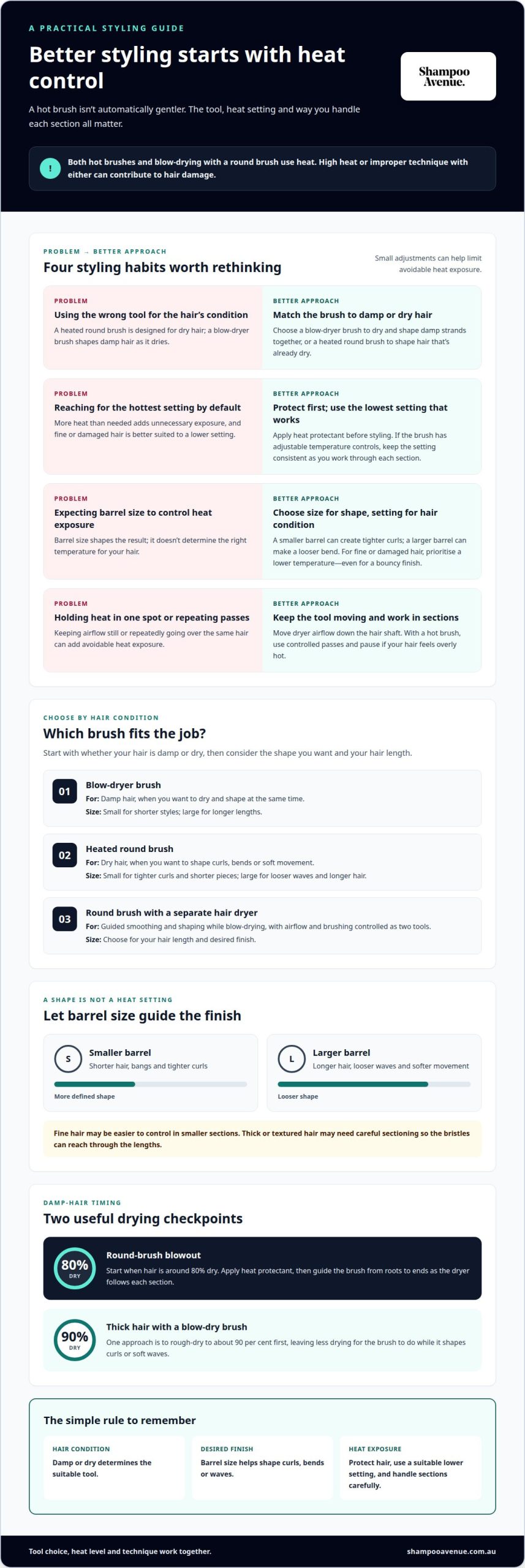
A blow-dryer brush uses warm airflow to dry and shape damp hair; a heated round brush shapes dry hair with a warmed barrel. Choose a barrel size that suits your hair length and desired shape. Small barrels suit short hair, bangs and tighter curls. Larger barrels give longer hair more room to wrap around them, making looser waves easier to create. For fine hair, a smaller brush can make sections easier to control. Thick or textured hair may need careful sectioning so the bristles can reach through the lengths. Some hot brushes offer ionic technology, but it doesn’t replace choosing a suitable size and brush type.
Heated round brushes on dry hair
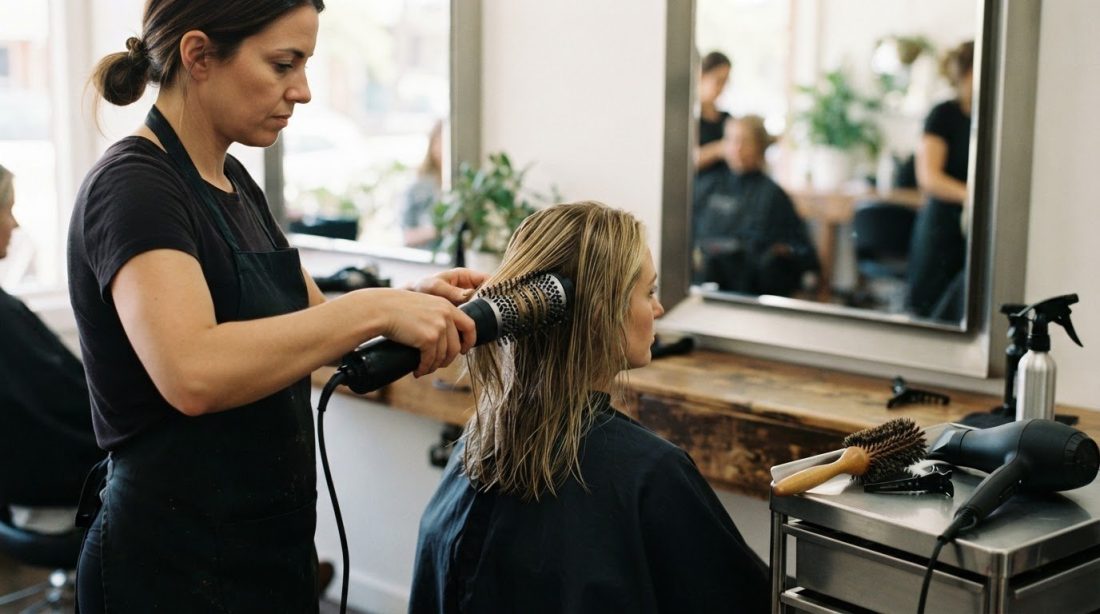
A heated round brush is designed for dry hair, unlike a blow-dryer brush, which shapes damp strands as it dries them. Choose a section small enough to wrap comfortably around the barrel. Roll the brush towards the roots for lift, or shape the ends for a curl or bend. A smaller barrel can define shorter pieces; a larger one creates softer movement through longer hair. In a round brush vs hot brush for styling comparison, the deciding point is whether you need to dry and shape damp hair together or style hair that’s already dry.
A traditional round brush also requires a separate hair dryer, giving you control over airflow and brushing as two tools. The table compares the main options:
| Tool | Hair condition | Useful for | Brush size |
|---|---|---|---|
| Blow-dryer brush | Damp hair | Drying and shaping together | Small for shorter styles; large for longer lengths |
| Heated round brush | Dry hair | Shaping curls and bends | Small for tighter curls; large for looser waves |
| Round brush with hair dryer | Hair being blow-dried | Guided smoothing and shaping | Choose for hair length and desired finish |
Choose a tool that suits your hair’s current condition and the finish you want.
Are hot brushes good for your hair?
Hot brushes can style hair effectively, but heat exposure and technique matter. They don’t inherently cause less damage than using a hair dryer and round brush. High heat or improper use with either tool can contribute to damage.
Heat settings and temperature control
Heat settings let you adjust the tool to your hair’s needs. Fine or damaged hair is better suited to a lower setting, while choosing the hottest option by default adds unnecessary heat exposure. Apply heat protectant before styling, then use the lowest setting that shapes your hair. If your brush has adjustable temperature controls, keep the setting consistent as you work through each section.
Barrel size and temperature settings
Barrel size affects the shape you create, while the temperature setting controls heat exposure. A smaller barrel can make a tighter curl; a larger barrel can shape a looser bend. Neither size determines the right heat setting. For fine or damaged hair, prioritise a lower temperature, even when using a larger barrel for a bouncy finish. Work in sections and avoid repeated passes over the same hair.
Hot brush and blow-dryer heat damage
A hot brush isn’t automatically gentler than blow-drying with a round brush. A round brush itself doesn’t inherently damage hair, but improper technique, especially high heat during blow-drying, can contribute to damage. A hot brush also exposes hair to heat, so use heat protectant and a lower setting for fine or damaged hair. The tool alone doesn’t determine the effect; heat level and handling matter.
After blow-drying with a round brush, use the hair dryer’s cool setting to help set the style. Keep airflow moving down the hair shaft rather than holding it in one spot. With a hot brush, use controlled passes and pause if your hair feels overly hot. These adjustments can help you shape a smooth or bouncy finish while limiting avoidable heat exposure.
Blow-drying, straightening, curling and adding volume
The right tool depends on the finish you want: smooth and straight, curled or lifted at the roots. Hair’s dampness also matters, especially when blow-drying and straightening.
Blow-drying and straightening
For a round-brush blowout, start when hair is around 80% dry and apply heat protectant before blow-drying. Direct the hair dryer down the hair shaft while moving the brush from roots to ends. This guides drying and shaping together, helping create a smooth finish. A straightening brush is different: use it only on completely dry hair, moving through sections to smooth them rather than creating a round-brush bend.
Curling and adding volume
A hot round brush can lift hair at the roots and create a bouncy blowout finish. To add movement, shape the lengths around the barrel, then release each section without pulling it straight. For thick hair, one approach is to rough-dry to about 90 per cent before using a blow-dry brush. This leaves less drying for the brush to do while it shapes curls or soft waves.
Volume, smoothness and blowout styling
For a smoother blowout, move the brush from roots to ends as the dryer follows each section. For more volume, lift hair away from the scalp at the roots before guiding the lengths around the brush. A hot brush may reduce styling time, though the result depends on hair type, dampness and the finish you’re creating. Curly hair, for example, may need careful sectioning to shape the lengths evenly.
Heated round brush styling
A heated round brush shapes dry hair with its warmed barrel and bristles. A round brush used with a hair dryer instead combines brushing and airflow, giving you control over drying direction and tension.
To style with a round brush and hair dryer, start with hair around 80% dry, then apply heat protectant. Work through manageable sections, guiding the dryer down the hair shaft as the brush moves from roots to ends.
- Divide hair into sections so the brush can shape each layer evenly.
- Place the brush beneath a section near its roots, keeping the dryer directed along the hair.
- Move both tools steadily towards the ends, turning the brush to create a bend or lift.
- Repeat section by section, adjusting the brush angle for a smoother or fuller finish.
For thick hair, smaller sections help airflow and bristles reach through the layers. Keep the motion gentle, and avoid pulling hard against the scalp or holding hot airflow in one place.
For a smooth blowout or root volume with a hot brush, start with dry hair and apply heat protectant to each section before styling. Choose a lower setting for fine or damaged hair, then guide the brush through each section with controlled passes. Lift at the roots for volume; follow the hair’s length for a smoother finish. After a blowout, use a hair dryer’s cool setting to help set the shape.
The key difference is the heat source: a dryer and round brush let you direct airflow as you work, while a heated round brush applies heat through its barrel. With either method, use sections the bristles can grip comfortably and keep the tool moving. If your hair feels too hot, pause before continuing. For thick hair, steady sectioning is more useful than trying to shape large sections at once.
Shampoo Avenue
Shampoo Avenue can help you choose a styling approach that suits your hair and the finish you want. Its Hair Styling & Blow Dry Services are a professional option when you’d like a smooth blowout or help shaping your style. If frequent heat styling has left your hair feeling stressed, Hair Treatments and Hair Repair Treatments can support a broader hair wellness routine.
For colour-treated hair, Luxury Hair Colour Transformations, Lived-In Luxury Blonde Services, and Grey Blending & Natural Colour can help you create a considered look alongside your styling routine. If you’re unsure which finish or care approach suits your hair, talk through your goals and concerns with the team.
Please contact Shampoo Avenue to discuss your hair styling needs.
Make your styling routine your own
Let the finish you enjoy guide your next step, rather than choosing a tool simply because it’s popular. Your round brush vs hot brush for styling decision can also change with your haircut, texture and the time you want to spend getting ready. Notice which styles feel comfortable to create and how your hair responds, then build a routine around what works for you.
If your styling choices are part of a broader hair refresh, Shampoo Avenue offers Luxury Hair Colour Transformations, Lived-In Luxury Blonde Services, and Grey Blending & Natural Colour. A considered colour direction can help you feel more at home with the look you create every day.
For personalised guidance on your hair and styling goals, contact Shampoo Avenue for styling advice. Start with the finish you want, and take the next step with confidence.
Frequently Asked Questions
What is the difference between a round brush and a hot brush?
A traditional round brush is unheated and works alongside a separate hair dryer, while a hot brush applies heat through the tool. Some hot brushes blow warm air; others use a heated barrel on dry hair. Check which type you have before styling, because its design determines whether it’s suited to damp or dry hair.
How does a round brush blowout compare with styling using a heated hot brush?
A round-brush blowout gives you separate control of the brush and dryer, so you can direct airflow and adjust brush tension as you work. A heated hot brush means you don’t have to manage a separate dryer, which can make touch-ups easier. For example, use a blowout to shape a whole style, or a heated brush to refresh a dry fringe.
Which hair types and lengths suit a round brush or hot brush best?
Brush size and how easily you can handle each section help determine the best fit. A short bob or fringe is easier to shape with a smaller barrel, while longer layers can wrap around a larger one. For dense hair, divide the lengths into sections the brush can grip comfortably. This helps you shape each area without forcing hair around the tool.
Can you use a hot brush on wet or damp hair, or must hair be dry?
It depends on the type of hot brush: a blow-dryer brush can style damp hair, but a heated round brush is for dry hair. Don’t assume every tool labelled “hot brush” can dry wet strands. Check whether it blows air or heats a solid barrel, then start with hair at the appropriate dryness for that design.
Which tool is better for volume, curls, smoothing, or reducing frizz?
For root lift and a bouncy blowout, a hot round brush can shape the roots and lengths together. A smaller barrel gives tighter bends, while a larger one creates looser movement. For a smoother finish, a round brush and dryer let you guide airflow down the hair. Frizz control also depends on technique and hair condition, not just the tool.