

Natural Looking Highlights: How to Choose a Soft, Seamless Result
What if brighter hair didn’t mean going much lighter all over? Natural looking highlights are usually about thoughtful placement and a gentle contrast with your starting shade, not simply choosing the palest colour. If you’re worried about obvious stripes, stark regrowth or highlights that feel too light, that hesitation makes sense. The right result should feel like it belongs with your hair.
This article will help you understand how your natural colour, highlight shades and placement work together to create a softer, more seamless finish. You’ll explore how subtle face-framing pieces or dimension through the lengths can change the overall effect, and why your hair’s starting shade matters when choosing a realistic colour direction. We’ll also cover what to discuss during personalised salon colour planning, so you can share what you like, how much contrast feels comfortable and how you want your colour to grow out. A considered approach can help you work towards highlights that feel bright, wearable and distinctly yours.
Key Takeaways
- Natural looking highlights depend on the balance between your starting shade, colour contrast and where brightness is placed.
- Fine, distributed highlights and brighter face-framing sections create different effects, so consider which feels right for you.
- Explore gentle colour directions for blonde, brunette and red hair to find ideas that suit your base.
- Prepare for your colour consultation by describing your preferred brightness, placement and how noticeable you’d like the result to be.
- Shampoo Avenue tailors luxury colour transformations to individual hair needs, with natural colour and lived-in blonde expertise to guide your direction.
What makes natural looking highlights feel believable?
Want a little more brightness without stark lines or a stripey effect? That balance comes from treating your natural colour as part of the result, rather than trying to cover it with a lighter shade. The same highlight colour can look soft on one person and conspicuous on another because hair colour, placement and contrast all shape what the eye notices.
Natural looking highlights are lighter sections placed and toned to complement your starting shade, creating dimension that blends with the rest of your hair. There’s no single formula: the aim is a believable relationship between the lighter pieces and your base colour, tailored to the look you want. An overview of hair-colouring techniques explains how methods such as highlighting and lowlighting create different effects.
How do natural-looking highlights differ from obvious streaks?
Individual strands tend to stand out more when they’re much lighter than the surrounding hair, especially if they’re placed in clearly separated sections. Softer-looking colour usually has a more gradual contrast, with lighter pieces positioned so they sit naturally among the base shade. The effect depends on your hair and the colour plan, so the same placement won’t look identical on everyone.
That doesn’t make bold highlights wrong. Distinct, high-contrast pieces can be a deliberate style choice; a more blended finish simply suits someone seeking quieter dimension. Consider how visible you’d like the change to be in everyday light, not just in a salon photo.
What creates brightness without losing your base colour?
Selected lighter sections can catch the light and make the overall hair appear brighter without turning every strand into a different colour. For example, a few lighter pieces around the face may create a noticeable lift there, while finer sections distributed through the hair can make the change feel more even. Placement guides the eye, while the chosen shade sets the level of contrast.
Keeping a believable connection to your starting shade helps the lighter pieces feel integrated, rather than like a separate layer. That connection might come from choosing a softer shift in tone or leaving enough of your base visible between highlights. Gentle contrast creates a softer visual blend, while stronger contrast makes each lighter section more distinct.
Think of the result as dimension, not a single new colour. Your natural base still plays a part in the finished look, and the balance can be adjusted to suit your preference for brightness. During personalised colour planning, describe what you’d like to notice first: an overall sunlit impression, a little lift around the face, or more visible pieces through the lengths. These details give your stylist a clearer picture of what “natural” means to you.
How placement and colour technique shape a natural highlight result
Placement decides where the eye sees brightness first. A few lighter sections near the face can make the front feel brighter, while highlights spread through the lengths create a more even shift in dimension. How visible that change feels also depends on the contrast between each lighter piece and the hair around it. Think about the effect you want before settling on a technique: a soft overall lift, brightness concentrated at the front, or more visible contrast.
These common placement choices can help you describe the look you have in mind:
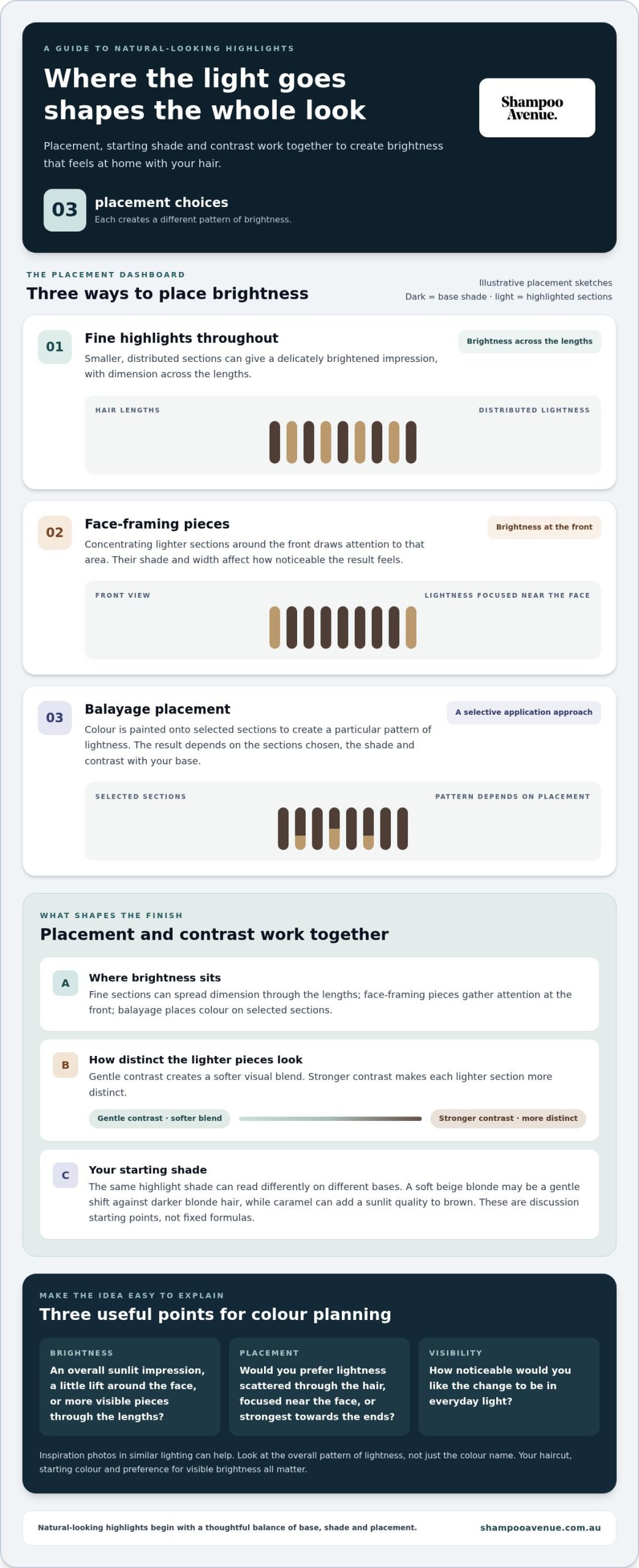
- Fine highlights throughout: Smaller, more distributed sections can give the hair a delicately brightened impression, with dimension across the lengths.
- Face-framing pieces: Concentrating lighter sections around the front draws attention to that area. The effect can be subtle or more noticeable, depending on their shade and width.
- Balayage placement: Colour is painted onto selected sections to create a particular pattern of lightness. Balayage is one approach to placement, not another name for every natural-looking highlight.
None is automatically the right choice. Your haircut, starting colour and preference for visible brightness all matter. A stylist can tailor the placement as part of a personalised colour plan, rather than treating a technique name as a promise of a particular finish.
Fine highlights, face-framing pieces and balayage
Fine highlights can disperse brightness through the hair, while face-framing sections gather it around the front. Balayage describes an application approach that can be used to place lightness selectively; its result depends on the sections chosen, the shade and the contrast with your base. If you like more than one effect, you can describe where you want brightness to show and how strong you’d like it to appear.
For a useful reference point, compare inspiration photos in similar lighting and look at the overall pattern, not just the colour name. Is the lightness scattered, focused near the face or strongest towards the ends? Those observations make it easier to explain your preference without needing to know technical terminology.
Why the starting shade matters
The same highlight shade won’t read the same way on every base. A soft beige blonde may look like a gentle shift against darker blonde hair, yet create more noticeable contrast on brunette hair. Warm caramel can add a sunlit quality to brown, while coppery or golden notes may sit comfortably with some red bases. These are starting points for discussion, not fixed formulas; the result depends on your individual colour and the look you’re after.
A highlight shade is only part of the picture: your starting colour determines how softly or boldly that shade stands out. That’s why a colour plan should consider both tone and placement. Bringing photos that show brightness you like, and examples that feel too strong, can help clarify the difference.
Shampoo Avenue tailors luxury colour transformations to individual hair needs, with natural colour and lived-in blonde expertise to inform your direction. If you’re considering a softer, wearable change, explore personalised hair colour planning as a way to shape the conversation around your base, preferred placement and desired contrast.
Natural highlights compared: choosing a look for your hair colour
Your starting colour gives you a useful first direction, but it doesn’t dictate one ideal highlight shade. The aim is to find a level of brightness and a tone that feel harmonious with your base and with the change you want to see. Use the examples below as inspiration for a conversation, not as a fixed formula or a promise of what can be achieved in one session.
Natural-looking highlights for blonde, brunette and red hair
Think about both warmth and contrast. A warmer-looking shade can bring a golden, sunlit impression, while a cooler-looking tone may feel more muted. How either reads depends on your existing colour and the amount of contrast you prefer. These gentle directions are starting points only; individual hair needs and colour history shape the final plan.
| Starting shade | Gentle colour directions to discuss | Possible visual effect |
|---|---|---|
| Blonde | Soft beige, creamy or slightly golden tones | Adds variation within a lighter base. A closer tone can keep the shift understated, while a brighter one may create more visible dimension. |
| Brunette | Subtle caramel, honey or lighter brown tones | Can bring warmth and movement to a deeper base. Keeping the difference modest may help the highlights feel integrated rather than sharply defined. |
| Red | Gentle copper, golden or warm blonde accents | Can add a soft play of light that works with the warmth in the base; a stronger contrast may make the lighter sections stand out more. |
Use the table to narrow down the feeling you’re drawn to, then consider how noticeable you want the change to be. For example, a brunette interested in caramel could choose a very close shift for quiet dimension or a brighter one for more obvious ribbons of light. Neither is inherently more natural. The balance of shade, placement and contrast makes the difference.
Also be open to adjusting your inspiration. A photo can help show whether you like warmth, brightness or a particular distribution of colour, but your hair may respond differently depending on its starting shade and individual condition. A personalised colour plan helps translate the idea into a direction that makes sense for your hair.
When subtle highlights meet grey blending
If visible grey is part of your starting point, your goal may be to soften the difference between grey and pigmented hair, rather than simply add brightness. That calls for a distinct colour conversation. Shampoo Avenue offers grey blending and natural colour services tailored to individual hair needs. For more detail on this approach, explore the grey blending guide.
How to plan natural-looking highlights around your hair and lifestyle
A clear colour consultation helps turn “I want it natural” into a plan your stylist can shape around your hair and routine. Think about what you want to see, what you’d rather avoid and how much time you’re comfortable giving colour upkeep. You don’t need technical terms. A few clear preferences and an honest picture of your hair history can make the conversation more useful.
What to bring and explain at a colour consultation
Before your appointment, gather a small set of reference images that show the brightness and placement you like. Include a look that feels too strong, if you have one. Share previous salon colour and at-home colour, along with anything relevant about your hair’s current condition. Mention what you enjoy about your shade now and what you’d like to change.
- Choose your brightness. Decide whether you’re after a gentle lift, a sunlit impression or a more noticeable change. Say if there’s a point where the colour would feel too light.
- Describe the placement. Would you prefer brightness around your face, scattered through the lengths or focused in particular areas? Reference images can help show the difference.
- Share your colour history. Explain previous colour services, including at-home colour, and when you last coloured your hair if you remember. This gives your stylist useful context for planning.
- Talk about your hair and routine. Describe your hair’s condition and how often you’d realistically like to visit the salon. Discussing both helps align the colour plan with your needs.
Be specific about what you like and dislike in your current shade. Perhaps you enjoy its warmth but want more dimension, or you like the depth but would prefer a brighter frame around your face. These details help make the aim for natural looking highlights personal, rather than relying on a broad description that can mean different things to different people.
How to balance the look with upkeep
Placement and contrast can affect how regrowth is perceived. Brightness concentrated near the roots may make new growth more noticeable, while a softer transition can create a more blended impression as your hair grows. The best balance depends on the look you want and your natural base, so discuss how visible you’re comfortable with regrowth being.
Be realistic about salon visits. If you prefer a lower-maintenance routine, say so before settling on a colour direction; your stylist can factor that preference into the placement and contrast. You can also plan how to care for coloured hair between visits with this hair colour aftercare guidance.
Ready to turn your preferences into a considered colour plan? Book a personalised colour consultation with Shampoo Avenue and discuss a result tailored to your hair and lifestyle.
A personalised salon approach to natural-looking highlights
Inspiration is a helpful starting point, not a template. At Shampoo Avenue, luxury colour transformations are tailored to individual hair needs, so a stylist can use the look you’re drawn to as a guide while considering your own starting shade, colour history and hair condition. The aim is to shape a considered direction together, rather than promise an exact copy of a photograph.
From inspiration images to a considered colour plan
Bring images that show what appeals to you, then talk through the details: is it the brightness, the placement or the overall softness? Your stylist can discuss how those elements might translate to your hair, including where lighter sections could sit and how noticeable you’d like them to be. Sharing what you want to maintain, as well as what you hope to change, helps keep the plan grounded in your preferences.
Hair history matters, too. Previous salon colour or at-home colour, along with your hair’s current condition, provides useful context for planning a personalised transformation. Be open about your routine and upkeep preferences, so the direction can reflect not only your inspiration but what feels wearable for you. The final colour plan is individual; a reference image can guide the conversation without setting an expectation of an identical result.
Shampoo Avenue’s natural colour expertise and lived-in blonde services offer different directions for clients seeking a softer-looking result. Natural colour may be relevant if you want subtle dimension that works with your existing shade, while lived-in blonde expertise is suited to exploring a blonde direction with a more relaxed feel. Your stylist can help shape the conversation around the look you’re after, rather than treating these options as interchangeable.
Keeping the result feeling cared for
A thoughtful colour plan considers hair condition alongside the desired shade and placement. Shampoo Avenue also offers hair wellness and repair treatments as part of its wider approach to individual hair needs. Professional salon products are available through the salon’s haircare offering. For a broader look at salon colour transformations, explore the luxury hair colour guide.
Natural looking highlights aren’t defined by one shade or technique. They’re the result of a colour direction that feels considered for your hair, your preferences and the level of upkeep that suits your life. A collaborative plan can help bring those pieces together while keeping expectations realistic and personal.
Ready to explore a colour direction shaped around your hair? Explore Shampoo Avenue’s colour services.
Take your next step towards colour that feels like you
Before choosing a colour direction, consider what you’d love to notice when you catch your reflection: a little more light around your face, added dimension through your hair or a softer overall change. That picture can help you explain what natural looking highlights mean to you, without needing to arrive with a technical plan or a perfect reference image.
Keep your preferences open to discussion, too. Your starting shade, hair history and everyday routine all help shape a realistic approach, and it’s fine to begin with a subtle change and build on the conversation from there. The most useful plan is one that feels comfortable for your hair and for you.
Shampoo Avenue’s colour services are shaped around individual needs, with professional Davines haircare available as part of the salon’s offering. If you’re ready to explore a colour direction that feels personal and wearable, Explore personalised colour services at Shampoo Avenue.
Bring your ideas, share what matters to you and take the next step with confidence.
Frequently Asked Questions
Can natural-looking highlights work on previously coloured hair?
Yes, natural looking highlights can be planned for previously coloured hair, but the colour history affects what may be achievable. For example, permanent colour, old lightened sections and at-home dye can leave different tones through the lengths. Tell your stylist what you’ve used and roughly when, even if you’re unsure of the exact product. This context helps them assess your hair and plan an approach that takes its current condition into account.
Are natural-looking highlights suitable for curly hair?
Yes, highlights can be tailored for curly hair. Because curls create their own pattern of light and shadow, colour placement may look different when the hair is worn naturally than when it’s stretched or straightened. Share how you usually style your curls and whether you want brightness to show around your face or throughout the shape. That helps your stylist consider how the colour will sit with the way you wear your hair.
How long does a highlights appointment take?
There isn’t one set appointment time for highlights. The time depends on the amount of hair being coloured, the placement and the steps needed to reach your chosen direction. A few selected sections may involve a different process from a more extensive colour transformation. During your colour planning, describe the look you’re considering and your hair’s history so your stylist can explain what the appointment involves and give you a realistic time expectation.
Will highlights damage my hair?
Lightening can affect hair condition, so highlights shouldn’t be treated as risk-free. The impact depends on factors such as your hair’s current condition, previous colour and how much lightening is involved. Be upfront about dryness, breakage or earlier chemical services before colour is planned. Your stylist can consider your hair’s needs and discuss whether hair wellness or repair treatments may be useful as part of your broader care.
How often do natural-looking highlights need refreshing?
Refresh timing varies with placement, contrast, hair growth and how noticeable you want new growth to be. As a general guide, highlights are commonly refreshed every 8 to 12 weeks, while a lower-maintenance balayage look may stretch to 12 to 16 weeks. These are broad intervals, not a schedule you have to follow. Discuss your preferred salon-visit routine so the colour plan suits the upkeep you’re comfortable with.
Can highlights blend with grey hair?
Highlights can form part of a colour plan for hair with visible grey, but blending grey is a distinct goal from simply adding brightness. The right direction depends on how much grey you have, where it appears and whether you want to soften or embrace the contrast. Shampoo Avenue offers grey blending and natural colour services tailored to individual hair needs, allowing the plan to reflect your starting point and preferences.
What should I show my stylist if I want subtle highlights?
Bring a few reference images that show the level of brightness and placement you like, plus one example that feels too bold if you have one. Choose pictures where the hair colour is easy to see, and point out what catches your eye, such as fine brightness through the lengths or lightness near the face. Mention what you like and dislike about your current shade, and share any previous salon or at-home colour.