

Long Layered Haircut Inspiration: Find a Shape That Feels Like You
What if the best layers aren’t the most dramatic ones, but the ones that move with your hair and fit your everyday routine? Finding long layered haircut inspiration can be exciting, but a photo can’t show exactly how a cut will sit on fine, thick, wavy or curly hair, or how much fullness it may take away.
It’s understandable to want more movement while keeping the length you love, without taking on a complicated styling routine. The right shape depends on where the layers start, how softly they blend and how much change you’re comfortable with.
Explore ideas for subtle, face-framing and more defined layers, considering different lengths, textures and styling habits. You’ll also find ways to explain what you like to your hairdresser, from keeping the ends full to adding movement around your face. Bring a few references, then make them your own with a clear conversation about your hair and the look you want.
Key Takeaways
- Explore long layered haircut inspiration, from barely-there movement to more noticeable face-framing shape.
- Compare how layers may work with straight, wavy, curly, finer and fuller hair, and what to discuss with your hairdresser.
- Choose a shape by considering your natural texture and how much time you want to spend styling.
- Separate the haircut you’re asking for from the polished blow-dry or curls shown in a reference photo.
- Prepare clear notes on length, movement, face-framing and upkeep so your hairdresser can adapt your ideas to your hair.
Long layered haircut inspiration: what layers can change
Keeping your length doesn’t mean your hair has to feel one-note. Layers can add softness around the face, movement through the ends or more shape through the lengths, while keeping the overall outline long. The result depends on your texture, density, natural movement and how you style your hair day to day.
Long layers are shorter sections blended into longer lengths to add shape and movement while preserving the hair’s overall length. That’s a useful starting point, not a promise of one particular finish. The placement, spacing and visibility of the shorter sections all affect the result. For a foundational overview of what layered hair is, see the general definition before comparing specific haircut references.
What do long layers look like?
Gradual shorter sections can help long hair move rather than fall as one solid shape. With subtle internal layers, the change may be hard to see when your hair is still, but more noticeable as it moves. More defined layers create clearer changes in length and a stronger, more textured silhouette.
A reference photo shows a finished style, not a guaranteed cut outcome. Texture, density, styling and even the way the photo is taken influence what you see. Look closely at where the shortest pieces sit and how the ends appear: are the layers softly blended, or are the changes in length easy to see? Those details are often more useful than the style name.
Why choose layers without going short?
Layers can change the shape of long hair without taking away the length of its perimeter. If your hair feels heavy or hangs in a straight outline, carefully placed shorter sections may add movement through the lengths. If you want a gentler change, subtle layers can create softness without making the cut look dramatically different.
Face-framing pieces offer another option. Shorter sections around the face can blend into longer lengths while keeping the back and ends long. The effect depends on where those pieces begin and how they connect to the rest of the cut, so don’t assume that chin-length sections in a photo will suit your preferences or hair as-is.
Bring a few references to your hairdresser and point out what you like in each: the overall length, movement or shape around the face. Then explain what you want to keep, such as fullness through the ends. A collaborative consultation can help clarify how much layering to add and where to place it, based on your hair and the finish you have in mind.
Long layered haircut ideas, from soft movement to face-framing shape
Useful long layered haircut inspiration helps you name the effect you’re drawn to, rather than simply saving a style you like. Compare the outline, where the layers begin and how much definition you can see. These options can be adapted to your hair and routine, rather than copied exactly.
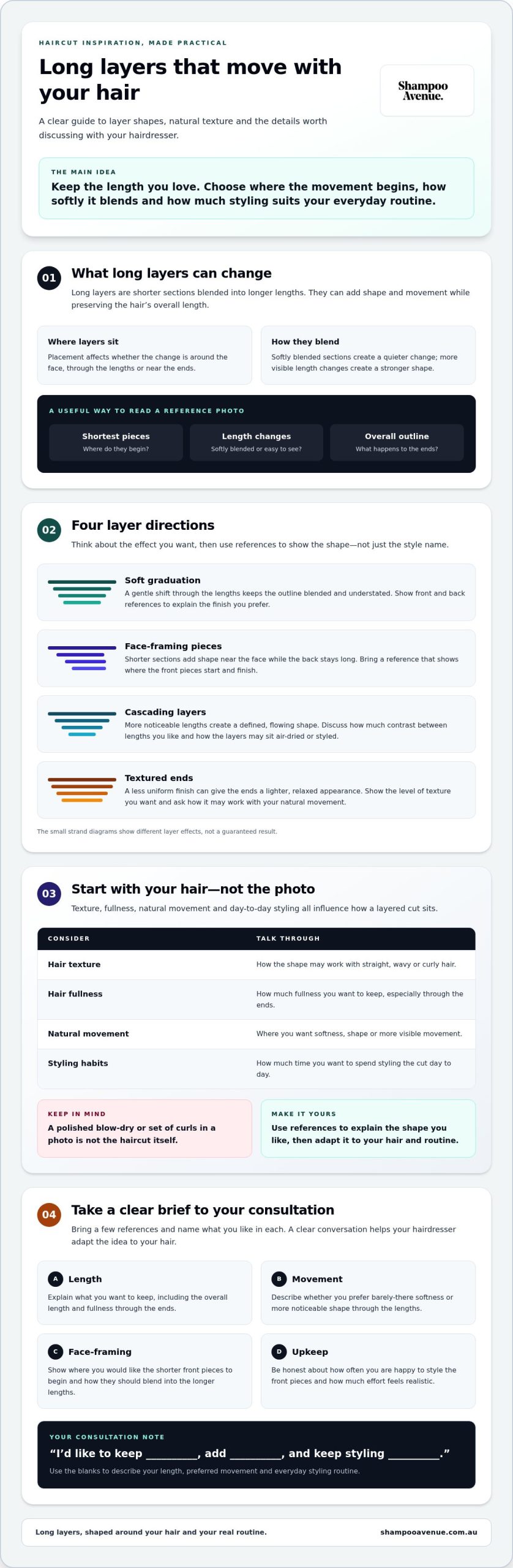
At a glance: soft graduation keeps the outline blended; face-framing pieces add shape near the front; cascading layers create more visible movement; textured ends bring a lighter, less uniform finish.
- Soft graduation: A gentle shift through the lengths keeps the shape understated. Show front and back references that capture the subtle finish you prefer, and discuss how often you’d like the outline refreshed.
- Face-framing pieces: Shorter sections create shape near the face while the back stays long. Bring references showing where the front pieces start and finish, and discuss how often you’re happy to style them.
- Cascading layers: More noticeable lengths create a defined, flowing shape. Ask how the layers may sit when air-dried or styled, and show how much contrast between lengths you like.
- Textured ends: A less uniform finish can give the ends a lighter, more relaxed appearance. Show the level of texture you want and ask how it may work with your natural movement.
Subtle long layers for a softer outline
With gentle graduation, the overall silhouette stays long and continuous while the shorter sections blend quietly into the rest. This can suit someone who wants movement without an obvious stepped effect, although the finish varies with hair texture and fullness. Bring front and back references to your consultation so your hairdresser can see both the framing and the overall shape you’re after.
Face-framing layers and curtain fringe
Shorter front sections can soften the outline around your face and blend into longer lengths at the back. Curtain fringe is an optional addition, not a requirement. It creates a more noticeable front shape and may call for extra styling to sit as you like. Before deciding, talk through your preferred face-framing length and how much daily styling feels realistic.
Save references that show the shape you like from more than one angle, and be ready to explain what you’d keep or change. A personalised conversation about women’s haircuts and styling can help turn those preferences into a cut suited to your hair and routine. Explore haircut and styling services as a starting point for that conversation.
Which long layered haircut suits your hair texture and fullness?
Texture is only part of the picture. Your current length, natural movement and preferred amount of fullness also affect how layers may sit. A long, soft shape can look airy on one person and more defined on another, even when the reference cut is similar.
The same long-layer reference can look different across hair types because texture, density and styling all change how its shape falls. Use the comparison below to identify questions worth raising, rather than treating it as a set of rules.
| Hair type | What to consider |
|---|---|
| Straight | Layers may show clearly as they move. Discuss how blended or defined you want the outline to look. |
| Wavy | Natural bends can add movement between layers. Consider how the shape looks with your usual air-dried or styled finish. |
| Curly | Curls influence where shorter sections sit and how the overall shape forms. Talk through your curl pattern and everyday routine. |
| Finer | Subtle placement may help retain a fuller-looking outline. Ask how the layers could affect the appearance of your ends. |
| Fuller | Layer placement can be tailored to shape and manage bulk. Discuss which areas you want to feel lighter and which you’d like to keep full. |
Long layers for straight, fine or fuller hair
On finer hair, shorter sections placed with care may add shape without making the ends look too sparse, but the outcome depends on your hair and the cut. If your hair is fuller, your hairdresser can assess where layering might create a more balanced outline or reduce a heavy feel. Ask directly: “How will this affect my ends and the fullness of my shape?”
Long layers for wavy or curly hair
Waves and curls have their own movement, so a layer that looks long when hair is straight may sit differently in its natural pattern. Before the cut, explain how your hair behaves and whether you usually wear it air-dried, diffused or styled smooth. That context helps your hairdresser adapt the reference to how you actually wear your hair, rather than relying on a single finished look.
Bring long layered haircut inspiration that shows a texture close to yours, if possible, and point out the features you want to borrow. You might love the overall shape but prefer a softer front or fuller ends. A collaborative consultation can help balance those preferences with your length and natural movement.
How to choose long layers you can style in real life
The most useful long layered haircut inspiration is a look you can picture wearing on an ordinary day, not only after a salon blow-dry. Before choosing, separate the haircut’s shape from the finish in the photo. Layers create the cut; round-brush volume, curls or a sleek finish may come from styling.
- Choose the shape you want. Decide whether you’re drawn to a soft outline, movement through the lengths or more shape around your face. Be clear about the length you want to keep.
- Factor in your natural texture. Think about how your hair usually falls when air-dried, as well as how it looks when styled. A reference with a similar texture can help you discuss a realistic result.
- Be honest about styling time. How often do you want to use heat tools? Are you comfortable styling shorter front sections, or would you rather keep them long enough to tuck away?
- Check the photo’s finish. Notice whether the look appears curled, blown out or smooth. Ask your hairdresser how the cut itself may sit with your usual styling method.
- Shortlist useful references. Choose photos with a similar starting length and fullness. Save front, side and back views where possible, and note what you like in each: the fringe, outline, movement or ends.
Match the inspiration to your everyday routine
A polished, heat-styled photo can show the layers clearly, but it may not reflect how the cut looks between styling sessions. Compare it with images of naturally textured hair, and tell your hairdresser what you’ll realistically do at home. If you rarely style your fringe, for example, discuss a longer face-framing section instead. A good reference starts a conversation, not a commitment to copy every detail.
Build a useful reference-photo shortlist
Bring a small selection rather than relying on one image. Point out the specific detail you want from each, such as the length from one photo and the softer outline from another. If you’re planning a colour change as well, talk about how the cut’s shape and colour can work together; explore precision women’s haircuts and colour as part of that conversation.
Quick reference check: Does the photo show a similar hair texture and length? Can you identify the cut separately from the styling? Would you be comfortable recreating the finish? What detail do you want your hairdresser to adapt?
Take your shortlist and routine notes into a collaborative haircut discussion. To explore women’s haircut and styling services, start with Shampoo Avenue.
Bring your long layered haircut inspiration to a salon consultation
Saved photos are a helpful starting point, but they can’t show exactly how a cut will fall on your hair. Your hairdresser can assess its texture, fullness and natural movement in person, then discuss how to adapt the reference. Think of the appointment as a shared plan, not a request to recreate someone else’s hair exactly.
What to ask before the first cut
Clear questions can help you understand the proposed shape before the scissors come out. Talk through the length you want to keep, where the shortest layers might sit and how much movement you’re after. If you’re considering fringe or shorter pieces around your face, ask what upkeep and styling they may need.
- Where will the shortest layers sit, and how will they blend into the rest?
- How much length will remain at the ends, and how might the outline change?
- How could the cut behave with my usual styling approach?
- Would the face-framing pieces or fringe need regular styling to sit as shown?
Be open about what you’ll do at home. If you prefer to air-dry your hair, say so; if you enjoy using heat tools, explain that too. This gives your hairdresser a clearer picture of the finish you’ll actually wear, rather than the look you only want for a special occasion.
Turn saved images into a shared plan
Bring a small, focused selection of photos. Choose references that explain the details you like, then point them out: perhaps one shows your preferred length, another the movement through the ends, and a third the way the front pieces frame the face. Sharing what you don’t want is useful too, such as a shorter fringe or less fullness at the ends.
Invite your hairdresser to talk through adjustments for your texture and fullness. A precision women’s haircut can be planned around your hair’s characteristics and preferences, but the reference remains a guide, not a guarantee of an identical result. Before agreeing, make sure you understand the intended length, layer placement and likely styling needs.
With a few clear preferences and an honest conversation about your routine, you can move past the reference-photo guessing and work towards a shape that feels personal. When you’re ready for tailored guidance, explore professional haircut and styling services at Shampoo Avenue.
Choose layers that feel like you
The right long layered haircut inspiration isn’t simply the photo you love most. It’s a shape that works with your hair’s texture and fullness, keeps the length you value and suits the time you want to spend styling.
As you narrow down your options, focus on where you want movement, how much face-framing feels comfortable and what you’d like to preserve through the ends. Bring a few references to your appointment, then talk them through with your hairdresser. They can assess your hair in person and adapt the ideas to your natural movement and everyday routine.
Shampoo Avenue offers precision women’s haircuts and styling, with professional premium haircare as part of the salon’s offering. For a collaborative conversation about a shape that fits your hair and preferences, explore personalised haircut and styling guidance.
Keep the details you love, stay open to a shape made for you, and enjoy finding a look that feels comfortable and distinctly your own.
Frequently Asked Questions
What is a long layered haircut?
A long layered haircut keeps your overall length while some sections are cut shorter and blended into longer pieces. Their placement can add movement, shape or face-framing detail, depending on the cut you choose. There isn’t one standard version. Bring a few reference photos and discuss your hair’s texture, fullness and usual styling routine with your hairdresser so you can adapt the look to your hair.
Are long layers good for fine hair?
Long layers can work for fine hair, but their placement and amount matter. A softer approach may help preserve the appearance of fullness, while heavier layering might leave the ends looking less full than you’d like. Ask your hairdresser how the planned shape could affect your ends and outline. Bring photos of your hair both styled and in its natural state, alongside references showing the finish you want.
Do long layers make hair look thinner?
They can change how fullness is distributed, but the effect depends on your starting density, length and how the layers are cut. If keeping a full-looking outline matters to you, say so before the haircut begins. Your hairdresser can explain the proposed amount and placement of layering, then discuss which details in your inspiration photos may translate to your hair. Ask how the shape could affect the ends.
Can you get long layers with curly or wavy hair?
Yes, long layers can be considered for wavy or curly hair, though your natural pattern affects how the finished shape sits. Bring references that resemble your own texture, and explain how you usually wear your hair, such as air-dried or styled. Discuss whether the cut should be planned around your natural movement and what, if any, styling you want to do at home. Your hairdresser can assess your hair in person.
How do I ask my hairdresser for long layers?
Bring a few clear photos and point out the details you like, such as the overall length, face-framing pieces or amount of movement. This long layered haircut inspiration gives you a starting point for explaining what you want, not a requirement to copy the photo exactly. Mention anything you’d like to avoid, including losing fullness. Ask where the shortest layers will sit and how the shape may work with your usual routine.
Do long layered haircuts need a lot of styling?
Not necessarily, but the effort depends on the chosen shape, your natural texture and the finish in your reference photo. A polished blow-dry may look quite different from the same cut air-dried. Before deciding, tell your hairdresser how much time you want to spend styling and whether you’re comfortable using heat tools or styling shorter front sections. Ask how the layers may fall on an ordinary day, without the photo’s salon finish.