

Humidity proof hair solutions for washing, conditioning and styling
A humidity-resistant finish starts with your wash routine, not a last-minute spray. The most useful humidity proof hair solutions combine gentle cleansing, conditioning, suitable styling products and everyday habits that help limit moisture-related frizz. When hair takes in moisture from the air, porous or dehydrated strands can react more noticeably.
If your style loses its shape on damp days, you’re not alone. Adding more product isn’t always the answer. Try a considered routine: avoid harsh, frequent shampooing, condition consistently and apply heat protection before blow-drying, straightening or curling.
Read on for practical ways to cleanse and condition, choose smoothing and styling products, and avoid habits that can make frizz worse. You’ll also learn how everyday choices affect your finish, so you can build a routine that suits your hair and feels manageable in Australia’s humid weather.
Key Takeaways
- Build a frizz-conscious wash routine with cleansing and conditioning choices that suit your hair.
- Spot everyday habits, including harsh over-washing and skipping conditioner, that can leave hair more prone to frizz.
- Use heat protection before heat styling, then choose finishing products to help manage humidity.
- Understand why porous or dehydrated hair may react more to moisture in the air, and what smoothing treatments can do.
1. Cleansing and conditioning for frizz control
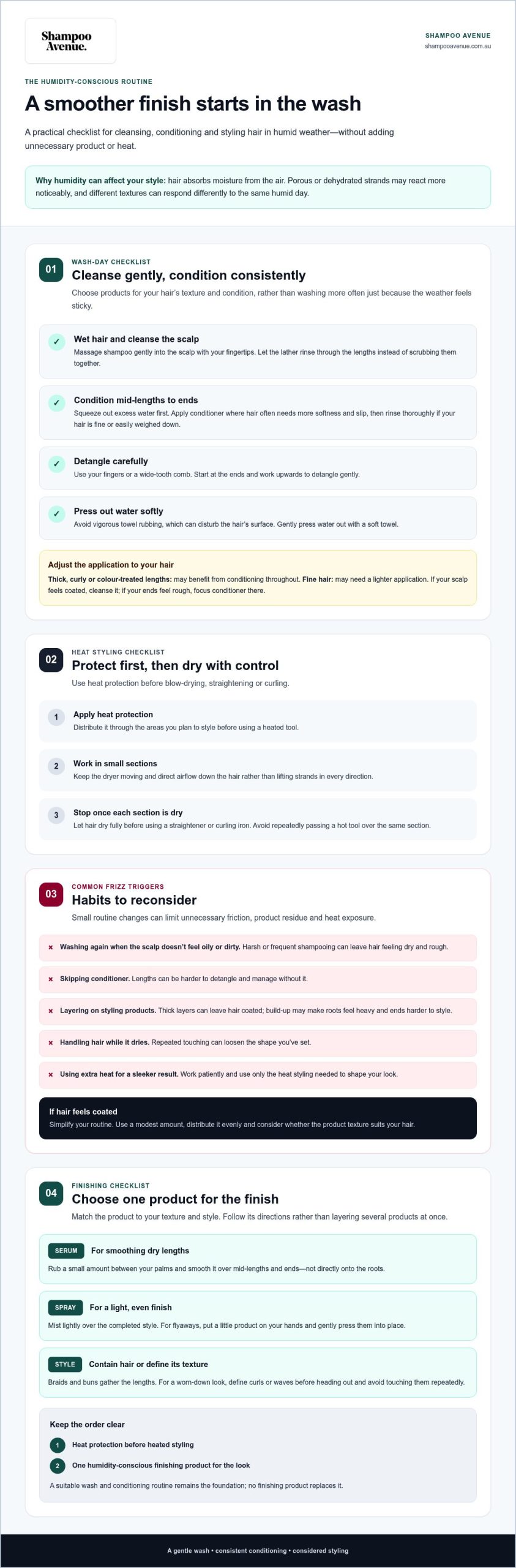
For humid Australian summers, practical humidity proof hair solutions begin with a gentle shampoo and consistent conditioning. This routine cleans away oil and product residue while helping reduce dryness that can contribute to frizz. Choose products for your hair’s texture and condition, rather than washing more often simply because the weather feels sticky.
Thoroughly wet your hair, then massage shampoo into your scalp with your fingertips. Let the lather rinse through the lengths rather than scrubbing them together. If your roots feel oily but your ends feel dry, focus cleansing on the scalp and avoid rubbing fragile ends. Rinse until your hair feels clean, without residue.
Squeeze out excess water before applying conditioner from mid-lengths to ends, where hair often needs more softness and slip. Gently detangle with your fingers or a wide-tooth comb, starting at the ends and working upwards. Rinse thoroughly if your hair is fine or easily weighed down.
Tailor the routine to your hair. Thick, curly or colour-treated lengths may benefit from conditioning throughout, while fine hair may need a lighter application. If your scalp feels coated, cleanse it; if your ends feel rough, focus conditioner there. Avoid vigorous towel rubbing, which can disturb the hair’s surface. Instead, gently press out water with a soft towel.
A routine built around humidity proof hair solutions also includes heat protection before blow-drying, straightening or curling. Dry in a controlled way, directing airflow down the hair rather than lifting strands in every direction. Follow this wash-day sequence:
- Wet hair and cleanse the scalp gently.
- Rinse, then condition mid-lengths and ends.
- Detangle carefully and rinse as needed.
- Apply heat protection before using a heated tool.
This order supports a smoother finish without extra shampooing or skipping conditioner.
2. Common mistakes that worsen frizz
To blow-dry and style in humid weather, apply heat protection first and work in small sections. Keep the dryer moving, direct airflow down the hair and stop once each section is dry.
Harsh or frequent shampooing can leave hair feeling dry and rough, making frizz harder to manage. Repeatedly shampooing to remove sweat or product can strip away softness from the lengths. Focus each wash on the scalp and let the lather rinse through the ends. Skipping conditioner can also leave lengths harder to detangle and manage.
Heat styling without preparation can undermine a smooth finish. Before blow-drying, straightening or curling, distribute heat protection through the areas you plan to style. Avoid repeatedly passing a hot tool over the same section in pursuit of a sleeker result. Work patiently and use only the heat styling needed to shape your look.
Watch for these habits in your routine:
- Washing again when the scalp doesn’t feel oily or dirty.
- Using a harsh cleanser when a gentler wash would do.
- Skipping conditioner because hair feels fine or gets weighed down.
- Applying styling products in thick layers, which can leave hair coated.
- Handling hair while it’s drying, which can loosen the shape you’ve set.
Product build-up can make roots feel heavy and ends harder to style. If that happens, simplify your routine rather than adding another finishing product. Use a modest amount, distribute it evenly and note whether the texture suits your hair. A cream that works through thick lengths may feel too heavy on fine strands.
For a defined finish, let your hair dry fully before using a straightener or curling iron. Keep your hands away while the style sets. These small changes can limit unnecessary friction, product residue and heat exposure, helping your chosen style sit more smoothly in humid conditions.
3. Finishing products to resist humidity
Braids, buns and other secured styles can help keep hair contained in humid weather. For a worn-down look, define curls or waves before heading out, then avoid touching them repeatedly.
Curly hair may benefit from a smoothing cream or serum applied sparingly through the lengths. Fine hair usually needs a lighter product to avoid a weighed-down finish. Thick hair can suit a richer cream, while colour-treated hair may need conditioning support alongside styling products.
For Australian shoppers, useful humidity-conscious product types include smoothing serums and styling sprays. Choose a formula suited to your hair’s texture, then follow its directions rather than layering several products at once.
Apply finishing products evenly. Rub a small amount of serum between your palms, then smooth it over the mid-lengths and ends, not directly onto the roots. For spray, hold the bottle away from your hair and mist lightly over the finished style. If flyaways appear, use a little product on your hands and gently press them into place.
- Serum: Smooth a small amount over dry lengths to finish a blow-dry or defined style.
- Styling spray: Mist over the completed look when you want a light, even finish.
- Conditioning products: Pair suitable shampoo and conditioner with your styling routine.
Apply heat protection before blow-drying, straightening or curling, then finish with one humidity-conscious styling product. This separates heat preparation from the product that shapes or smooths your look. If your hair feels coated, use less or simplify the layers next time.
Match your finish to your plans: a pinned bun gathers the lengths, while defined curls let natural texture do the work. A serum can smooth loose ends; a light spray can settle flyaways. No finishing product replaces a routine suited to your hair’s texture and condition.
4. Humidity-driven frizz and smoothing products
Frizz can occur when hair absorbs moisture from the air. Porous or dehydrated hair may react more noticeably, so the same humid day can affect different hair textures in different ways.
Humidity-focused ranges can include shampoo, conditioner, serum and styling spray. These products are designed to help protect hair from moisture; some describe a barrier around each strand to help keep unwanted humidity out. Match the format to your routine: use shampoo and conditioner during washing, then apply a serum or spray as directed.
In Australia, anti-frizz product prices vary with product type, size and retailer. Salon treatment pricing depends on the service and hair needs, with costs provided after a quote request.
Keratin smoothing treatments don’t all use the same formula, so the name alone can’t establish whether a treatment is safe or contains formaldehyde. Read the ingredient list and product directions before use, and don’t treat a smoothing claim as proof that formaldehyde concerns don’t apply.
Keep these practical checks in mind when selecting a formula:
- For porous or dry-feeling hair: prioritise conditioning support, then add a smoothing serum if it suits your finish.
- For fine hair: start with a light spray and avoid layering several rich products.
- For thicker lengths: distribute a cream or serum through the mid-lengths and ends.
- For any texture: follow the label and use only the amount needed.
Build a simple routine first. For example, pair a suitable conditioner with one finishing product rather than layering shampoo, serum, cream and spray without a clear purpose. If your hair feels coated or loses movement, reduce the amount or remove a layer. If dryness or frizz persists, consider whether your hair’s condition, porosity or styling habits need attention alongside product choice.
Skipping conditioner can make frizz harder to manage. Keep conditioning in your routine, adjusting the formula or amount to suit your hair.
Shampoo Avenue: Luxury Hair Colour Transformations
Shampoo Avenue offers Frizz Control & Smoothing Treatments for hair that needs more support than an at-home routine provides. Consider a salon treatment if humidity regularly disrupts your style or if dryness and frizz persist despite changes to your cleansing and styling habits.
For concerns related to colour or hair condition, the salon also offers Hair Treatments and Hair Repair Treatments, alongside Scalp Health & Hair Wellness Treatments. If you’re planning a colour change, Luxury Hair Colour Transformations, Lived-In Luxury Blonde Services, and Grey Blending & Natural Colour can help shape your hair plan.
Tell the team how your hair responds to humid weather and what finish you want. This gives them useful context to discuss an approach suited to your needs. Contact Shampoo Avenue to talk about your hair.
Make your routine work for you
Your hair needs can shift with your style, colour and daily routine. Treat your care plan as something to adjust, rather than adding products whenever humidity changes your finish. The most helpful humidity proof hair solutions are practical choices you can maintain and tailor as your hair’s needs change.
If you’re planning a colour refresh alongside your haircare, Shampoo Avenue offers Luxury Hair Colour Transformations, Lived-In Luxury Blonde Services, and Grey Blending & Natural Colour. These humidity proof hair solutions can complement a colour plan that reflects your style and hair goals.
Think about the finish you want, whether that’s smoother movement, a style that holds its shape or a colour that feels more like you. Ask Shampoo Avenue for haircare advice and explore humidity proof hair solutions that suit your routine.
Frequently Asked Questions
What hair products help prevent frizz in humid weather?
Look for products labelled for smoothing or frizz control, then choose a texture that suits your hair. Quality smoothing conditioners moisturise curly or frizzy hair and help restore elasticity. Gentle smoothing cleansers help manage rebellious strands, while specialised smoothing serums provide heat protection and help control styling. Follow each product’s directions for the best results.
How do anti-humidity sprays and serums work, and which ingredients should I look for?
Anti-humidity sprays and serums are designed to help shield hair from moisture and smooth the finished style. Some humidity-focused products create a protective barrier around each strand. There isn’t one ingredient to choose for every hair type; compare the product’s stated purpose and ingredients, then select a formula suited to your texture. A smoothing serum may help with styling, while heat protection is recommended before heat styling.
Do keratin or smoothing treatments protect hair from humidity, and how long do they last?
Smoothing treatments can help manage frizz, but their humidity resistance and longevity depend on the treatment formula, hair condition and aftercare. The word “keratin” alone doesn’t establish whether a formula contains specific active agents or how it should be used. Look at the specific treatment information for its ingredients, directions and expected duration, rather than assuming all keratin treatments work alike.