

How to Start Going Grey Naturally: A Gentle, Practical Guide
What if growing out your grey didn’t have to mean enduring a stark root line until the last traces of colour disappeared? If you’re wondering how to start going grey naturally, you have options beyond stopping colour overnight. Visible regrowth can feel confronting, and it’s understandable to worry that your hair might look uneven or neglected along the way.
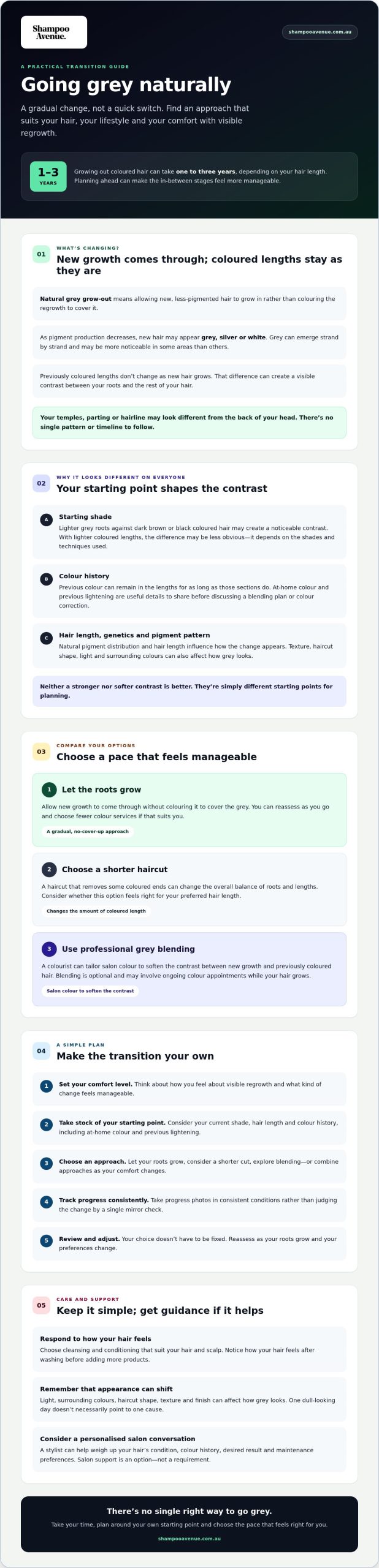
A natural grey grow-out is a gradual change, not a quick switch. Depending on your hair length, growing out coloured hair can take one to three years. Planning ahead can make the in-between stages feel more manageable. You might let your roots grow, choose salon blending to soften the contrast, or combine approaches as your comfort changes.
This guide explains what to expect, how to compare transition options and how to care for hair that may feel different as your natural colour comes through. It also covers simple ways to keep your grey looking fresh and intentional, without treating salon support as a must. Choose a pace that feels right for you.
Key Takeaways
- Learn how to start going grey naturally by setting a transition goal that reflects your comfort with visible regrowth.
- See how your starting shade, colour history and hair length can shape the look of your grow-out.
- Compare a full grow-out, a shorter haircut and professional blending to find an approach that suits your lifestyle.
- Use progress photos taken in consistent conditions to track the change, rather than judging it by a single mirror check.
- Consider personalised salon guidance if you want help weighing up your hair’s condition, desired result and maintenance preferences.
How to start going grey naturally: what the transition really involves
Seeing your roots come through can bring mixed feelings. You might feel ready for a change and still miss the familiar colour you’ve had for years. Hair can be closely tied to identity, so there’s no need to rush your decision or expect to love every stage straight away.
Going grey naturally means allowing new, less-pigmented hair to grow in and gradually replace the coloured lengths, rather than colouring the regrowth to cover it. The change happens over time, and its pace and pattern vary from person to person. Your hair length and colour history also affect how noticeable the transition feels, so there’s no single timeline to follow.
What happens as natural grey grows in?
Hair colour comes from pigment, including melanin, produced in the hair follicles. As pigment production decreases, new growth may appear grey, silver or white. For a straightforward explanation of how hair turns grey, see the overview of the biological process.
Previously coloured lengths don’t change as new hair grows. This can leave a visible contrast between your natural roots and the colour through the rest of your hair. Grey usually appears strand by strand and may be more noticeable in some areas than others. Your temples, parting or hairline might look different from the hair at the back of your head. There’s no need to expect every strand to change at once or follow a neat, even pattern.
Is going grey naturally the same as grey blending?
No. A natural grow-out means letting new growth come through without colouring it to cover the grey. Grey blending uses salon colour to soften the contrast between new growth and previously coloured hair. A colourist may tailor the approach to your starting shade and colour history.
Blending is optional, not a requirement. It may make the transition feel more comfortable if you’d rather avoid a sharp line of regrowth, but it can involve ongoing colour appointments while your hair grows. If you prefer fewer colour services, you could let your roots grow and reassess as you go. If you’re unsure, a salon consultation can help you discuss your goals, hair condition and comfort with visible regrowth before deciding. Start with the option that feels manageable for you.
Why grey grow-out looks different on every head of hair
There isn’t one standard grey pattern to aim for. Genetics and your natural distribution of pigment help shape where grey appears and how it comes through. Your starting colour, past salon or at-home colour, and hair length influence how noticeable the change looks. In short, regrowth varies because natural pigment patterns and the contrast with existing coloured lengths are individual.
Hair doesn’t change colour along its existing length as it grows. New growth comes through with its own level of pigment, while previously coloured hair remains until it’s cut off or gradually grown out. The genetics behind grey hair help explain why the timing and pattern can vary, but they can’t predict exactly how your own grow-out will look.
How do starting colour and colour history affect the grow-out?
If you’ve been colouring dark brown or black hair, lighter grey roots may create a noticeable contrast. With lighter coloured lengths, the difference may be less obvious, though it depends on the shades and techniques used. Neither result is better; they simply give you different starting points for planning.
Previous colour can remain in the lengths for as long as those sections do, so the transition may look different at the roots, mid-lengths and ends. Before considering colour correction or a blending plan, tell your stylist about your colour history, including at-home colour and any previous lightening. This helps them discuss options with your hair’s condition and your desired result in mind.
What can change the appearance of natural grey hair?
Grey can look brighter or more muted depending on the light, surrounding colours and haircut shape. A strong contrast between roots and lengths may make regrowth stand out, while a haircut that removes some coloured ends can change the overall balance. Hair texture and finish also affect how light reflects. A dull-looking day doesn’t necessarily point to one cause or mean your natural grey is destined to look flat.
Keep care simple and responsive. Choose cleansing and conditioning that suit your hair and scalp, then notice how your hair feels after washing before adding more products. If scalp comfort or your care routine is a concern, broader scalp-care guidance may help. Shampoo Avenue offers scalp health and hair wellness treatments that you could discuss as part of your how to start going grey naturally plan. For a personalised conversation about colour history and changing hair needs, explore hair and scalp care at Shampoo Avenue.
Choose a natural grey transition that suits your comfort level
There’s no single right way to move towards your natural grey. Think about what matters most to you: keeping your current length, reducing the contrast sooner or having less colour upkeep. Your preference can change as your roots grow in, so your first choice doesn’t have to lock you into one plan.
| Approach | Who may prefer it | Key trade-offs |
|---|---|---|
| Full grow-out | People comfortable letting natural regrowth come through without salon colour to blend it. | Fewer colour services may be needed, but the contrast between roots and coloured lengths can remain visible as the hair grows. |
| Shorter haircut | People open to changing their length and keen to remove some coloured ends sooner. | Cutting can speed up the removal of coloured sections, but it means choosing a shorter style. It’s entirely optional. |
| Professional blending | People who’d like to soften the visual line between natural roots and coloured lengths. | It can make the change feel more gradual, but may involve colour appointments and ongoing upkeep. |
Can you grow grey out without cutting your hair short?
Yes. You can keep your length while new growth gradually replaces the coloured sections. Regular trims are a choice, not a rule. Have them if they suit the shape you want or help you gradually remove coloured ends. Keeping your length may mean living with contrasting roots and lengths for longer, but that doesn’t make your transition any less valid. Choose a pace that feels comfortable.
When might salon-assisted grey blending feel helpful?
Blending may suit you if a strong root line feels difficult to manage, but it isn’t a necessary step. A consultation can help you talk through your colour history, hair condition, desired result and preferred level of maintenance before deciding whether colour is right for you.
Shampoo Avenue offers grey blending and natural colour services as optional support during a transition. You could ask about an approach that fits your starting point, or choose to grow your grey out without salon colour. If you’re weighing up how to start going grey naturally, begin with the option whose trade-offs feel manageable now. You can reassess as your hair changes.
A practical step-by-step plan for starting your natural grey grow-out
A little planning can make the first stages feel less like guesswork. If you’re deciding how to start going grey naturally, use these steps as a flexible starting point, not a strict set of rules.
- Set a personal goal. Decide what matters most: keeping your length, seeing less contrast, reducing colour appointments or finding out how your natural shade looks. You don’t need every detail worked out.
- Review your colour history. Note what colour you’ve used, how often you’ve coloured your hair and whether you’ve used at-home colour. This gives you a clearer picture of what remains in the lengths.
- Choose a transition approach. You could allow regrowth to come through, adjust your haircut or explore professional blending. Pick the option that feels manageable now.
- Track progress and reassess. Take photos in consistent lighting and from similar angles every so often. Gradual changes can be hard to see in a familiar mirror, while photos may give you a clearer sense of how the roots and lengths are changing.
Your transition plan can change as your hair grows and your comfort shifts. You might begin with a full grow-out, then decide later that a trim or colour blending would help. Small, non-colour changes can also make the in-between feel more intentional: try a different parting, adjust how you style your hair or ask for a haircut that works with your current length and shape.
What should you discuss before stopping colour appointments?
Before changing your colour routine, write down what products or salon colour you’ve used, how frequently you’ve used them and whether home colour is part of the picture. Consider your preferred length, how you feel about visible roots and any upcoming commitments that might affect your timing. If you’re thinking about colour removal or a corrective treatment, seek professional advice first. Your colour history and hair condition can affect which options are appropriate.
How can you care for hair during the grow-out?
Keep care consistent, but let your hair and scalp guide the routine. Choose cleansing and conditioning that suit how your hair feels, and don’t assume one product routine works for everyone. Haircare can support the condition and appearance of your hair, but it can’t change the natural rate or pattern of greying. For coloured lengths, refer to a hair colour aftercare guide for relevant maintenance advice.
If you’d like personalised support while weighing up your options, discuss grey blending and natural colour with Shampoo Avenue. Salon guidance is optional; your plan should work for you.
Going grey naturally: when to seek personalised salon guidance
You can grow out your natural grey without professional help, but a conversation with a stylist may be useful if your colour history is complex, you’re concerned about breakage or you’re unsure which approach suits your hair. For example, several layers of colour or previous lightening can make it harder to predict how existing lengths may respond to further colour work. A stylist can consider your hair’s condition, the result you’d like and the level of maintenance that feels realistic for you.
Support is a choice, not a requirement. If you’re comfortable with visible regrowth, you can continue your gradual grow-out independently and revisit your plan as your hair changes. If you’d prefer help weighing up the options, a consultation gives you space to ask questions before deciding on any service.
What can a grey-transition consultation help you decide?
You can discuss whether to let your colour grow out, adjust your haircut to remove some coloured lengths or explore grey blending to soften the contrast. Ask what each option could mean for your existing colour, hair condition and future upkeep. Reference photos can help communicate the level of contrast you like, whether that’s a subtle blend or a more visible shift towards natural grey.
Be open about what you’ve used on your hair, including at-home colour, and share any concerns about its condition. There’s no need to arrive with a finished plan. A useful discussion should help you understand the trade-offs, not pressure you into a particular result.
What is a comfortable next step if you want support?
If you’re still working out how to start going grey naturally, write down your questions before speaking with a stylist. You might ask how grey blending could work with your starting colour, what maintenance it may involve and whether simply growing out your colour suits your goals. Clear, personal advice can help you make a considered choice while keeping the final decision in your hands.
Shampoo Avenue offers natural colour and grey blending services for people who want salon support as they explore their options. You can learn more about the services, then decide whether they fit your plans. There’s no one pace or approach you need to follow. Explore Shampoo Avenue when you feel ready.
Take your next step towards natural grey
Going grey is a gradual change shaped by your natural growth, colour history and preferred hairstyle. There’s no single timeline or transition method you need to follow. You can let your roots grow, adjust your haircut if it suits you or consider blending to soften the contrast.
If you’re deciding how to start going grey naturally, focus on what feels manageable now. Keep an eye on your progress, care for your hair according to its needs and give yourself room to reassess. Salon guidance can help if you’re unsure about your colour history, hair condition or maintenance options, but growing out your grey independently is a valid choice too.
Shampoo Avenue offers grey blending and natural colour services, along with hair wellness and repair treatments. If personalised support would help, explore Shampoo Avenue’s grey blending and natural colour services and discuss which options fit your goals. Take it at your own pace. Your natural grey journey is yours to shape.
Frequently Asked Questions
How long does it take to go grey naturally?
Growing out coloured hair can take around one to three years, depending on your hair length and how quickly you choose to trim away the coloured sections. The New Knew’s 2026 guide notes that a shoulder-length style can take approximately two years to fully transition. These are estimates, not deadlines: your growth, colour history and chosen haircut all affect how long the change feels.
Can I go grey naturally without cutting my hair?
Yes, you can keep your length while your natural roots grow in and the coloured hair gradually moves towards the ends. You don’t have to cut your hair short to embrace your grey. Regular trims are optional and can help maintain your preferred shape or gradually remove coloured ends. Keeping more length may mean living with a visible difference between roots and lengths for longer.
Is grey blending the same as going grey naturally?
No. Going grey naturally means letting your new growth come through without colouring it to cover the grey. Grey blending uses salon colour to soften the contrast between natural regrowth and previously coloured lengths. It can be an optional way to make the transition feel more gradual, but may involve further colour appointments. You can also grow out your grey without blending.
What is the easiest way to transition to grey hair?
The easiest approach is the one that feels manageable for your hair, routine and comfort with visible roots. If you’re deciding how to start going grey naturally, consider growing it out, changing your haircut or asking about professional blending. Think about your colour history and preferred maintenance before choosing. You can start with one approach and reassess as your roots come through.
Will my hair texture change when I go grey?
Your hair may feel or behave differently as grey grows in, but the experience varies. Grey hair can feel drier or coarser for some people, while lighting, styling and the contrast with coloured lengths can also affect how it looks. Notice what your hair and scalp need rather than assuming there’s one cause or a universal routine. Choose cleansing and conditioning that suit its current condition.
Can I use home colour while growing out my grey?
You can use home colour, but it will add colour to new growth and may change the contrast you’re trying to grow out. The result can also be harder to predict if you have previous colour on the lengths. Before applying colour, consider your goal and colour history. If you’re unsure, or thinking about removing colour or correcting an uneven result, seek personalised advice first.
How do I make grey roots look more intentional?
Small styling choices can help you feel more comfortable with regrowth. Try changing your parting, styling your hair with a different finish or asking for a haircut that works with the contrast between roots and lengths. If you’d like a softer transition, salon grey blending is another option. You don’t need to hide your roots or colour them for your grow-out to feel considered.