

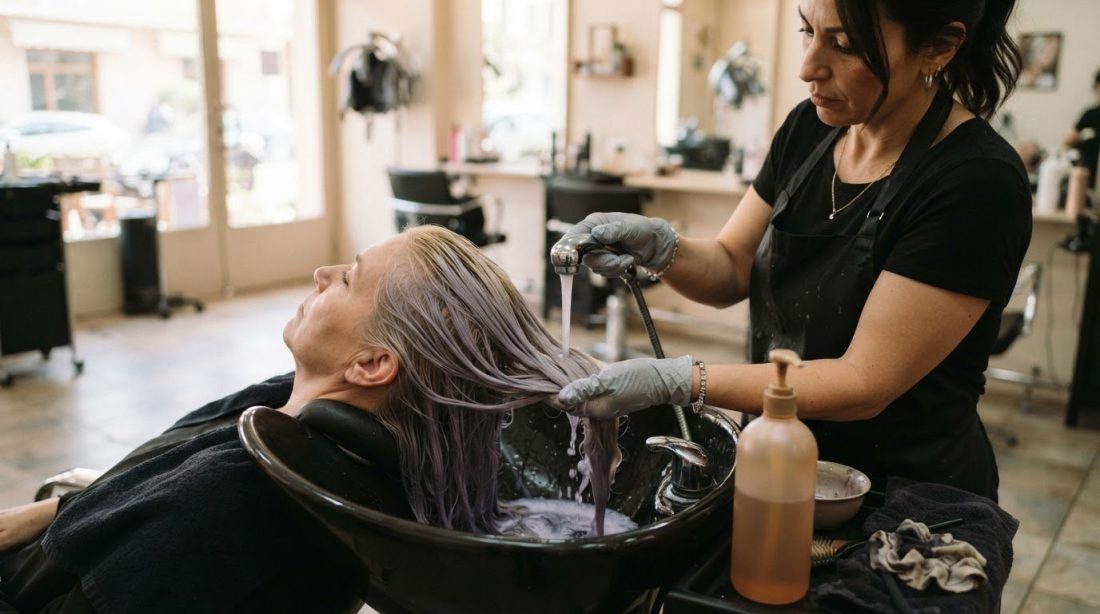
How to Fix Over-Toned Hair and Remove Purple or Grey Staining
Using more purple shampoo can leave blonde hair looking purple or grey rather than fresh and cool. If your colour has developed a dull cast, fixing over toned purple or grey hair starts with assessing how strong the staining is and what caused it.
It’s easy to reach for more toning shampoo when yellow tones show through, but purple shampoo is designed to neutralise yellow, not every warm shade. For most blondes, using it once a week or less often is a sensible guide; after colour is dyed and toned, wait 2-3 weeks before using purple shampoo or conditioner. This article explains the signs of over-toning, how professionals approach mild residue versus heavier staining, and how to avoid repeating the problem. You’ll also learn when a salon colour correction is a better fit than adding another toning product at home.
Key Takeaways
- Look for a dull purple or grey cast, then match the removal approach to how lightly or heavily the colour has stained.
- Light residue may respond to clarifying shampoo, while deeper staining calls for a more considered professional colour-removal approach.
- Avoid harsh kitchen remedies such as dish soap and lemon juice; they can be rough on hair and scalp.
- Use purple shampoo sparingly and seek professional guidance to tailor toning and colour care to your blonde hair.
How Do You Know if Hair is Over-Toned?
Purple shampoo residue can fade as it gradually washes out. A purple or grey cast, especially on pale blonde sections, may indicate excess pigment rather than the cool blonde you wanted.
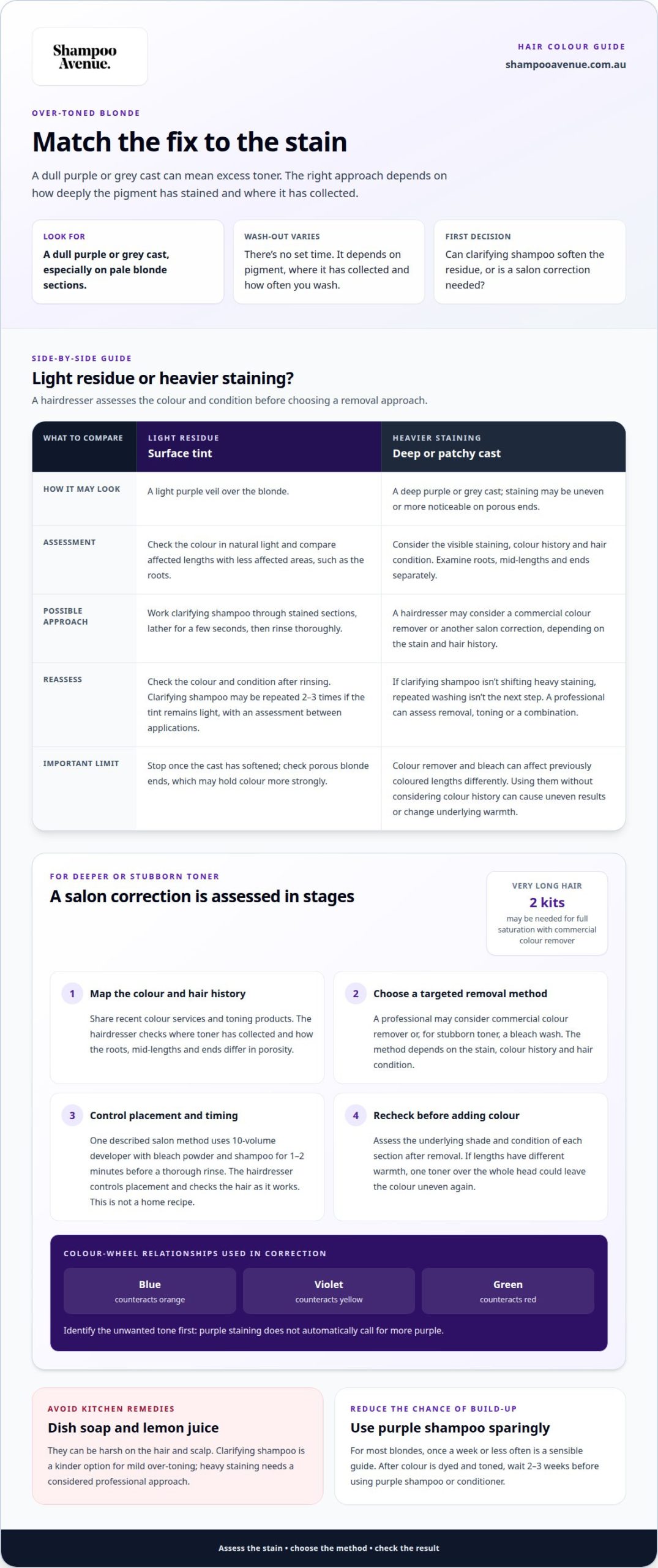
There’s no set wash-out time. It depends on how much pigment has stained the hair, where it has collected and how often you wash. For light staining, a hairdresser may use clarifying shampoo to help fade the excess pigment.
- Assess the colour first. A hairdresser looks at the staining in natural light and compares the lengths with less affected areas, such as the roots. This helps distinguish a light purple veil from deeper grey staining and shows whether clarifying shampoo is a suitable first step.
- Apply clarifying shampoo selectively. For light residue, the hairdresser works clarifying shampoo through the stained sections and lathers it for a few seconds before rinsing thoroughly. The short lathering step helps lift surface tint without automatically moving to a stronger colour-removal method.
- Reassess before repeating. After rinsing, the hairdresser checks the colour and condition while the hair is wet. If the purple tint remains light, clarifying shampoo can be repeated 2-3 times to help remove it. The result is assessed between applications, rather than repeating the wash without checking.
- Stop when the staining has softened. A hairdresser checks whether the grey or purple cast has faded evenly, including on porous blonde ends that may hold colour more strongly. If clarifying shampoo isn’t shifting heavy staining, repeated washing isn’t the next step. The hairdresser can then consider a more suitable professional removal approach.
These steps help match the approach to the visible staining. When fixing over toned purple or grey hair, the key question is whether clarifying shampoo can soften the residue or whether a different correction is needed.
Professional colour removal for heavily stained hair
With a deep purple or grey cast, a hairdresser assesses the staining, colour history and hair condition before choosing a removal method. The aim is to lift excess pigment carefully, then address any unwanted warmth.
-
How a hairdresser assesses toner staining and unwanted tones
Bring details of your recent colour services and toning products to your appointment. A hairdresser uses this history, along with the visible staining, to decide whether a commercial colour remover or another salon correction is suitable. In colour correction, opposing tones neutralise one another: blue counteracts orange, violet counteracts yellow, and green counteracts red.
These colour-wheel relationships help guide a correction, but the unwanted tone needs to be identified first. Purple staining does not automatically call for more purple. A hairdresser considers where the toner has collected and chooses a method for that staining rather than applying a counter-colour blindly. Very long hair may need two kits of commercial colour remover for full saturation.
-
Consider remover risks and hairdresser help
See a hairdresser for heavy or patchy staining, or if clarifying shampoo hasn’t shifted the cast. Colour remover and bleach can affect previously coloured hair differently along the lengths. Using them without considering your colour history can lead to an uneven result or change the underlying warmth. A salon assessment helps determine whether removal, toning or a combination is appropriate.
Professional colour-removal products used in Australia include commercial colour removers; a hairdresser may also consider a bleach wash for stubborn toner. One described salon method uses 10-volume developer with bleach powder and shampoo, left on for 1-2 minutes before a thorough rinse. This isn’t a home recipe: a hairdresser controls placement and checks the hair as the treatment works. There’s no single product name that suits every case; the choice depends on the stain and hair history.
For a tailored salon correction, professional colour transformations can address heavy staining and unwanted tones.
Professional approaches to removing toner without dish soap or lemon juice
A hairdresser can choose a controlled salon approach instead of kitchen remedies. The right method depends on where the toner has collected and how evenly your hair absorbs colour.
- Map the staining and porosity. A hairdresser examines the roots, mid-lengths and ends separately. For example, porous blonde ends may absorb more purple pigment than less porous roots, creating a grey cast at the tips while the rest looks brighter. This uneven uptake matters because one removal approach may not suit every section.
- Avoid stripping remedies that aren’t made for hair. Dish soap and lemon juice are sometimes suggested for toner staining, but they can be harsh on the hair and scalp. Clarifying shampoo is a kinder option for mild over-toning. A hairdresser avoids treating dishwashing liquid or lemon juice as a substitute for a salon colour correction.
- Select a professional removal method. The hairdresser considers the toner’s depth, colour history and porosity before selecting a suitable product or treatment. A heavily stained, porous end may need a different approach from a lightly tinted root area. Working in sections allows the professional to target uneven staining rather than stripping the whole head in the same way.
- Reassess before adding more colour. After removing excess toner, the hairdresser checks the underlying shade and the condition of each section. If the lengths have different levels of warmth, adding one toner across the entire head could leave the colour uneven again. The next colour step should follow the result of the removal, not cover it automatically.
How a hairdresser can help prevent excessive purple shampoo build-up
Purple shampoo is designed to neutralise yellow, not every warm shade. A hairdresser can tailor your routine to your blonde, helping you avoid a purple or grey cast from over-toning.
- Wait after a fresh colour service. After blonde hair is dyed and toned, wait 2-3 weeks before using purple shampoo or conditioner. This gives the new colour time before you add more toning pigment. A hairdresser can suggest when it makes sense to start, based on the colour result and your hair’s needs.
- Use it sparingly. For most blondes, once per week or less often is a useful guide. Purple shampoo is intended to neutralise yellow tones. More frequent use can deposit extra violet pigment, especially where lighter sections absorb colour readily, and leave blonde looking dull or grey.
- Match the product to the unwanted tone. Ask a hairdresser to identify whether your colour looks yellow, orange or red before choosing a toning product. Purple shampoo targets yellow; using it on orange or red tones may make warm orange tones appear warmer. Adding more purple isn’t the answer to every brassy result.
- Review the routine as your colour changes. A hairdresser can consider how your blonde looks between visits and whether purple shampoo is still needed. If the yellow cast has eased but the ends look smoky, reduce or pause the purple product rather than applying it automatically. Keep the routine responsive to the actual shade.
- Schedule colour checks. Wella Professionals recommends returning to the salon every six to eight weeks to have colour checked and, if needed, topped up. A professional review can help distinguish fading colour from excess toning pigment and guide the next care step.
For a routine suited to your colour, get professional advice on purple shampoo before adding another toning wash.
Shampoo Avenue: Grey Blending & Natural Colour
Shampoo Avenue offers Grey Blending & Natural Colour for a softer, more balanced approach to colour. If purple or grey staining remains after toning, or your blonde looks uneven, a professional colour assessment can help determine the next step. Luxury Hair Colour Transformations are another option when the colour needs broader correction, while Professional Haircare Products can support your routine afterwards.
Tell your hairdresser which products you’ve used and where the staining appears, such as mainly at the ends or throughout the lengths. This gives them useful context to discuss your colour goals and suitable care. For help with over-toned colour, contact Shampoo Avenue to talk about your hair and the result you’d like.
Choose a colour plan that feels right for you
Fixing over-toned purple or grey hair can be an opportunity to rethink your desired colour, rather than simply remove the cast and repeat the same routine. Consider whether you’d prefer a softer blonde, a more natural blend or a clearer plan for managing toning between salon visits. Sharing your colour history and what you want to change gives your hairdresser a useful starting point.
Shampoo Avenue offers Luxury Hair Colour Transformations, Lived-In Luxury Blonde Services and Grey Blending & Natural Colour. These services can help shape a result around your preferred look, whether you’re moving towards a lived-in blonde or blending grey more naturally. Start the conversation with your hair as it is now and the finish you’d like.
Discuss your colour goals with Shampoo Avenue and take the next step towards a look that feels more like you.
Frequently Asked Questions
How can a hairdresser fix purple toner that has made blonde hair too purple?
A hairdresser first identifies where the purple is strongest, such as around the face or through the ends. This pattern helps guide a targeted correction instead of treating every section the same way. The aim is to soften the unwanted cast while keeping the blonde balanced. Mention your recent toning products and the shade you want, so the colour plan reflects your hair and preferences.
How can a hairdresser safely remove grey or silver toner from hair?
A hairdresser assesses your colour history and hair condition before choosing a removal approach. Grey or silver staining can sit differently across previously coloured lengths, so the stylist considers each area rather than assuming one method will suit your whole head. This is especially useful if the colour looks patchy or has changed after multiple salon services. The correction can then be planned around your existing blonde.
How can a hairdresser remove toner while minimising hair damage?
A hairdresser can avoid unnecessary processing by considering your hair’s condition and colour history before selecting a method. Instead of layering removal treatments without reassessing, the stylist can review the result between stages and adjust the plan. After colour correction, suitable hair and repair treatments can support your care routine. Share any previous lightening or colour services, as that history helps guide the approach.
Can a hairdresser use clarifying shampoo to remove purple or grey hair toner?
Yes. A hairdresser can use clarifying shampoo to help fade light purple residue. It is less suited to heavy, clearly visible staining, which may need a different professional colour-removal approach. After rinsing, the hairdresser can assess whether the cast has softened and whether further correction is appropriate. Clarifying shampoo won’t explain why the toner looks grey, so the stylist also considers your underlying blonde and colour history.
How to wash out toner at home without damaging hair
For light purple residue, use clarifying shampoo, lathering it for a few seconds before rinsing thoroughly. Reassess the colour and condition before repeating; it can be repeated 2-3 times. Avoid dish soap and lemon juice, which can be harsh on hair and scalp.