

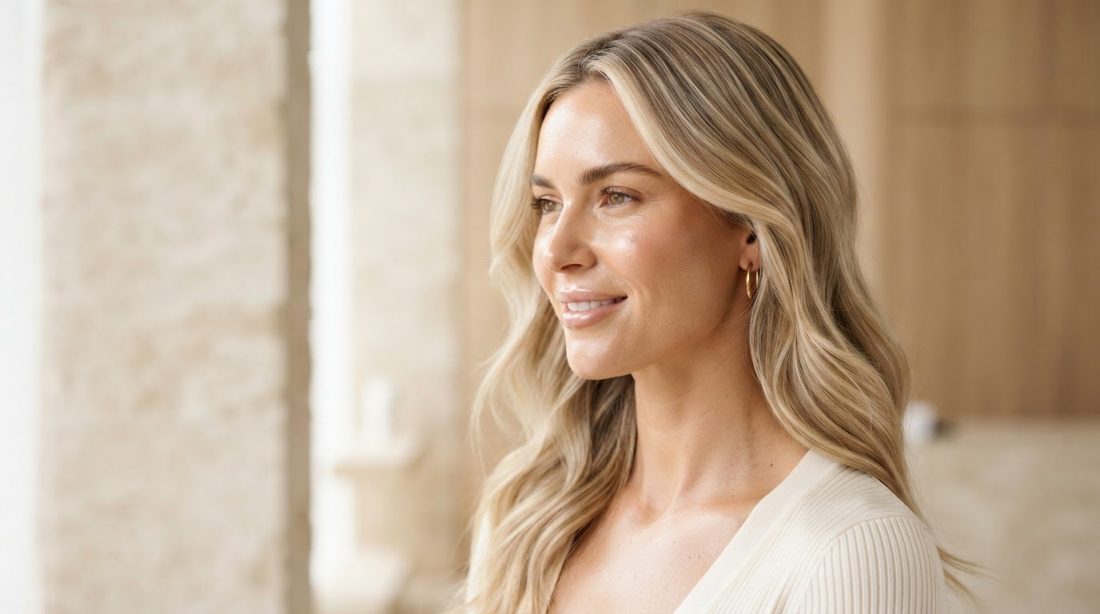
How to Add Dimension to Blonde Hair: A Practical Guide
What if your blonde doesn’t need to be darker or lighter to look more interesting? If you’re wondering how to add dimension to blonde hair, the answer often lies in balancing tones and placing them thoughtfully, rather than changing your colour completely. Blonde can look flat when it reads as one even shade, or when an inspiration photo feels a long way from your current colour. A useful plan works with what you already have and suits the upkeep you’re comfortable with.
This guide explains how lighter pieces, deeper tones and their placement create contrast and visual movement. Compare highlights, lowlights, balayage and root blending, then use practical prompts to explain your starting colour, preferred contrast and maintenance preferences to your colourist.
At Shampoo Avenue, our family of stylists take a personalised, collaborative approach to luxury colour transformations and lived-in blonde. We’re innovative, inclusive, real people, and use premium, sustainable hair care and hair colour formulations designed to protect your locks. Explore the options and feel more confident choosing a blonde that still feels like you.
Key Takeaways
- Understand how depth, tone and colour placement create variation while keeping blonde as the overall impression.
- Compare common colour techniques by the effect they may create and what to discuss before choosing one.
- Adding depth does not necessarily mean making your whole head of hair look darker.
- Prepare for an appointment by describing your current blonde, preferred contrast and ideal overall look.
- Explore how to add dimension to blonde hair in a way that reflects your colour goals and preferred level of upkeep.
What does dimension in blonde hair actually mean?
Dimension in blonde hair is visible variation in depth, tone or colour placement that gives the hair contrast and visual movement. Instead of one consistent shade from roots to ends, the colour has lighter and deeper areas that become noticeable as the hair moves or catches the light.
That variation doesn’t mean you have to give up your overall blonde look. Think of a plain sheet of paper beside a lightly shaded drawing: both can be pale, but small shifts in tone make the drawing feel less uniform. Blonde can work the same way. A few deeper pieces among lighter sections may add depth while blonde remains the dominant impression.
So, if you’re exploring how to add dimension to blonde hair, focus on the balance between contrast and placement, not simply on going darker or lighter. The effect depends on your starting colour, the tones already in your hair and where any new colour is placed.
How contrast and placement change the look of blonde hair
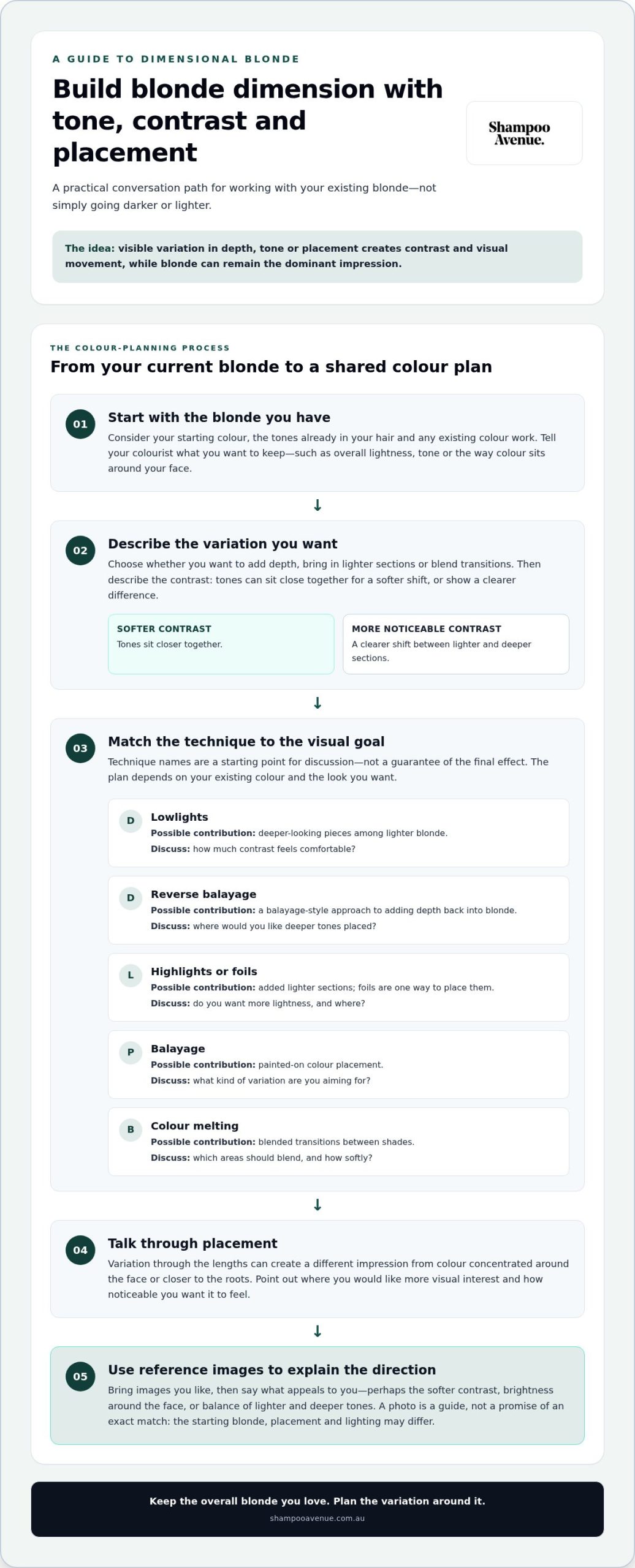
Contrast comes from the visible difference between lighter and deeper sections. It can be soft, with tones that sit close together, or more noticeable, with a clearer shift between them. Neither approach is automatically better. Decide how much variation you want to see, then explain that preference to your colourist.
Placement influences where the eye notices that variation. Colour through the lengths may create a different impression from colour concentrated around the face or closer to the roots. A colourist can consider how your current blonde is distributed, where you’d like more visual interest and how new tones might sit alongside it. The same placement won’t look identical on everyone, because the starting colour and existing colour work matter too.
Why “more dimension” can mean different things to different blondes
For one person, “more dimension” might mean a subtle shift that makes an even blonde feel less uniform. Another may want a clearer interplay of lighter and deeper sections. There’s no single setting for dimension, and asking for “more” without describing the look you want can leave room for different interpretations.
Use inspiration images to show a direction, not to expect an exact match. The hair in a photo may begin with a different blonde, have different placement or be shown in particular lighting. Bring images you like, then point out what appeals to you: perhaps the softer contrast, brightness around the face or balance of lighter and deeper tones.
Before your colour conversation, name what you want to keep about your current blonde. Is it the overall lightness, the tone or the way the colour sits around your face? Then describe what feels missing. These details help shape a shared idea of dimension around your existing colour, rather than replacing it with a look that doesn’t feel like you.
Which colour techniques can add dimension to blonde hair?
There isn’t one technique that suits every blonde. A colourist may consider adding deeper-looking pieces, placing lighter sections or blending transitions between tones, depending on your existing colour and the contrast you want. These options aren’t interchangeable: the same technique can be planned differently to suit your starting point and the overall impression you’re after.
Technique choice depends on your desired contrast and your existing colour. Use that as a starting point for a conversation about what you’d like to keep, where you want variation and how noticeable you want it to feel.
Lowlights and reverse balayage for added depth
Lowlights introduce deeper-looking sections among lighter blonde, while reverse balayage describes using a balayage-style approach to add depth back into blonde. Your colourist can discuss how much contrast you want and where deeper pieces could sit in relation to your existing light sections. Rather than asking for a technique by name alone, describe the balance you’re hoping to see. For example, say whether you want a few areas to look deeper or a more even mix of light and depth.
Highlights, foils and colour melting for tonal variation
Highlights add lighter pieces, and foils are one way to place those pieces. Balayage is another option, often discussed when considering painted-on lightness. Colour melting means blending shades so the transitions between them appear more gradual. Each approach can contribute differently, so the plan needs to account for your current blonde and the look you want. The technique name alone can’t determine the final effect.
Here’s a quick comparison to help you describe your preferences:
Technique | Possible visual contribution | Discussion point
Lowlights | Deeper-looking pieces among lighter blonde | How much contrast feels comfortable?
Reverse balayage | A balayage-style approach to adding depth | Where would you like deeper tones placed?
Highlights or foils | Added lighter sections | Do you want more lightness, and where?
Balayage | Painted-on colour placement | What kind of variation are you aiming for?
Colour melting | Blended transitions between shades | Which areas should blend, and how softly?
It can help to separate two goals: adding depth and refreshing or adding lightness. If your blonde already feels bright but uniform, you might want to discuss deeper pieces. If you’d rather retain depth while bringing attention to lighter sections, highlights or foils may be part of the conversation. A colourist can consider how these choices work with the colour already in your hair. The technique name alone can’t determine the final effect.
Bring an inspiration image if you have one, then point to the detail you like: the contrast, the placement or the softness of the transitions. At Shampoo Avenue, a collaborative colour conversation can help shape a personalised direction for your blonde. Explore personalised blonde colour services as you consider which approach feels right.
Will adding dimension make blonde hair look too dark?
Not necessarily. Adding dimension can mean introducing some deeper-looking pieces while keeping plenty of blonde visible. It doesn’t automatically mean changing your whole head to a darker shade. The overall impression depends on the balance of tones, where they’re placed and how they work with your current colour. Dimensional blondes can look quite different from one another.
If you love your brightness, say so clearly. Rather than describing your goal only as “more depth”, explain which parts of your blonde you want to preserve and how much contrast you’re comfortable seeing. That gives your colourist a clearer starting point for planning a personalised colour direction.
How to keep the blonde feeling bright while adding contrast
Before your appointment, identify the blonde you most want to keep. Is it the lightness through the ends, brightness around your face or an even feel across the lengths? Then describe where you’d be open to seeing variation. Placement and the balance between lighter and deeper tones are useful discussion points, not guarantees of a particular result.
You might say, “I want to keep the overall brightness, but I’d like a little more contrast through these areas.” A clear description like that helps your colourist understand the priority behind your request. If you’re unsure how much contrast feels right, say so. That uncertainty is useful context for the conversation.
How to use inspiration photos without expecting an exact copy
Bring images that show the contrast and overall feel you’re drawn to. Point out what you like: perhaps the blonde still looks prominent, or the deeper pieces are noticeable without dominating. The detail matters more than the name of a trend. A reference photo can communicate a preference, but it can’t show exactly how the same placement will translate onto your existing colour.
Your starting blonde and the requested placement both shape how a reference is interpreted. Two photos labelled with the same colour trend may show different levels of brightness or contrast. Use them to guide discussion, then consider the result you want on your own hair. A look that suits another person’s base colour may need a different approach to feel right for you.
It can help to bring a current photo of your hair as well as your inspiration. Talk through what feels non-negotiable, what you’re open to changing and whether you prefer a subtle shift or a more visible difference. This keeps the conversation centred on your preferences rather than a trend alone. If a softer, lived-in look appeals, the lived-in blonde guide offers another way to think about your overall blonde direction.
Ultimately, how to add dimension to blonde hair without losing the brightness you love is a planning conversation. Be specific about the blonde you want to keep, the contrast you’re comfortable with and where you’d like the colour to make a difference. Your colourist can consider those preferences alongside your existing colour, rather than treating “dimension” as a result that looks the same on everyone.
How to plan a dimensional blonde colour appointment
A useful colour appointment starts with a clear picture of what you enjoy about your blonde and what you’d like to adjust. You don’t need to arrive knowing the name of a technique. Use this sequence to organise your thoughts and make the conversation collaborative.
- Describe your current blonde. Explain how your colour looks now, including the areas that feel bright, deeper or more uniform. Mention what you like and want to keep, such as lightness through the ends or brightness around your face. If you’ve had previous colour work, share what you know about it. This gives your colourist helpful context for discussing a personalised plan.
- Pinpoint what you’d like to change. Try everyday descriptions rather than technical terms. You might want a little more contrast, a softer transition between shades or variation in a particular area. Be just as clear about what you don’t want. For example, say if you’re keen to keep an overall bright blonde impression or prefer the change to feel subtle.
- Bring a few reference photos. Choose images that show the depth, tone or placement you’re drawn to, and explain what catches your eye in each one. Photos are conversation starters, not fixed specifications: the person in the image may have different existing colour, and the placement may translate differently on your hair. Use references to communicate a direction, then work together to make it personal.
- Talk through contrast and placement. Describe whether you want the variation to be barely noticeable or more defined, and where you’d like it to show. Your colourist can discuss how those preferences relate to your starting blonde and possible colour approaches. If you’re uncertain, say so. You can explore options without committing to a trend or technique before you understand how it fits your goals.
- Include upkeep in the plan. Think about how much maintenance feels realistic for your routine, then bring that into the colour conversation. Your preferred level of upkeep can help guide the overall direction, but there isn’t one appointment schedule that suits everyone. Ask what care the proposed colour plan may involve, and consider the hair colour aftercare guide for further preparation.
Before settling on a direction, summarise the plan in your own words: what you want to preserve, how much contrast you’d like and the overall impression you’re aiming for. That shared understanding can keep the conversation focused on your priorities. For more context on planning a salon transformation, explore this luxury hair colour guide.
At Shampoo Avenue, colour planning is a collaborative conversation shaped around the blonde you want to keep and the dimension you’d like to add. Plan your dimensional blonde colour appointment with our family of stylists.
Create a dimensional blonde with Shampoo Avenue
Knowing the options is a helpful start. The next step is shaping them around your own hair: the blonde you want to keep, the contrast you’re comfortable with and the overall feeling you’d like your colour to have. You don’t need to arrive with a technique already chosen. A thoughtful colour plan starts with listening and a shared understanding of your priorities.
A colour conversation shaped around your blonde
At Shampoo Avenue, personalised luxury colour transformations and lived-in blonde services begin with your individual starting point. Talk about what you enjoy in your current blonde, what feels flat or unfinished, and what you’d like to see more of. Your colour history and hair concerns can inform the discussion, while your preferences guide the direction. A photo can help explain the feeling you’re after, but your own blonde anchors the plan.
Some clients want to retain an overall bright impression and introduce only a gentle shift in depth. Others are open to more visible variation. Neither preference is the default. Your colour conversation can explore where contrast might sit, how noticeable you’d like it to feel and what you’d rather preserve. The aim is a considered direction, not a promise based on a trend or technique name.
Our family of stylists approach colour with care and collaboration. We’re innovative, inclusive, real people, and believe a good conversation should feel welcoming, not intimidating. Bring your questions, inspiration and the parts you’re unsure about. Together, those details can help clarify what “more dimensional” means to you.
Take the next step towards a more dimensional blonde
Think of your colour plan as a balance between the blonde you love and the variation you’d like to explore. If upkeep matters to you, include that in the conversation too. A personalised approach makes room for your preferences and concerns, rather than assuming every blonde wants the same level of brightness, contrast or change.
Shampoo Avenue uses Davines, a family owned hair care and hair colour brand guided by the principle of #sustainablebeauty. It’s part of the thoughtful approach behind our colour work, alongside care for your individual goals and the blonde you want to keep.
If you’re ready to explore how to add dimension to blonde hair in a way that feels personal, take a look at Shampoo Avenue’s luxury colour transformations and lived-in blonde services. Start with a conversation about the look you want to maintain and the dimension you’d like to bring into it.
Take the next step towards a blonde that feels like you
You don’t have to decide on every detail before exploring a change. Start with one simple thought: what would you like to feel when you see your hair in the mirror? More movement, a softer blend or a touch of contrast can each point towards a different colour direction. Let that feeling guide your next conversation, rather than feeling pressure to copy a look exactly.
Learning how to add dimension to blonde hair is about finding an approach that respects your individual starting point and what you want to keep. At Shampoo Avenue, personalised luxury colour transformations and lived-in blonde services are shaped through conversation with an inclusive family of stylists. We use professional Davines products, from a family owned hair care and hair colour brand guided by the principle of #sustainablebeauty.
Ready to explore a direction that feels right for you? Explore personalised blonde colour services with Shampoo Avenue. Your next blonde chapter can begin with a conversation and still feel completely your own.
Frequently Asked Questions
What does it mean to add dimension to blonde hair?
It means creating noticeable variation within your blonde so the colour doesn’t read as one uniform shade. For example, you might want a little more depth through the lengths while keeping your preferred overall blonde impression. If you’re considering how to add dimension to blonde hair, describe the areas you’d like to look less even and what you’d still like to recognise about your current colour.
Can you add dimension to blonde hair without making it darker?
Yes. Adding dimension doesn’t automatically mean taking your whole head darker. You could talk about maintaining a bright overall look while exploring changes to particular sections. For example, if you love the lightness around your face, make that a priority in the discussion. Your colourist can consider how lighter and deeper-looking areas might work with your existing blonde, without treating one inspiration photo as a guaranteed result.
What techniques add dimension to blonde hair?
Options your colourist may discuss include lowlights, reverse balayage, highlights, foils, balayage and colour melting. The terms describe different approaches, not identical results. To narrow them down, start with the effect you’re after: more depth, added lightness or a softer transition between shades. Then discuss how your current colour and preferred placement may influence the plan before settling on a technique.
Are lowlights or highlights better for blonde dimension?
Neither is automatically better. It depends on whether you’d like more depth, more lightness or a combination. Lowlights may be discussed when you want deeper-looking sections, while highlights or foils can be considered for lighter pieces. If you’re undecided, bring images that show different levels of contrast and point out what appeals to you. That gives your colourist a clearer sense of your preference than choosing a technique by name alone.
Will adding dimension to blonde hair require more maintenance?
It may, but upkeep depends on your existing colour, the plan chosen and how you want the result to look over time. Before deciding, explain how often you’d realistically like to refresh your colour and whether visible regrowth would bother you. Your colourist can discuss how the proposed placement may affect upkeep. There’s no single refresh schedule that suits every blonde, so make your routine part of the planning conversation.
How do I ask my hairdresser for more dimension in blonde hair?
Try saying, “My blonde feels a bit uniform, and I’d like to explore some contrast while keeping the overall look light.” Then mention what you want to preserve, such as brightness through the ends, and share a couple of images that show the feeling you like. You don’t need salon terminology. Clear preferences about contrast, placement and upkeep give your colourist practical starting points for a personalised discussion.