

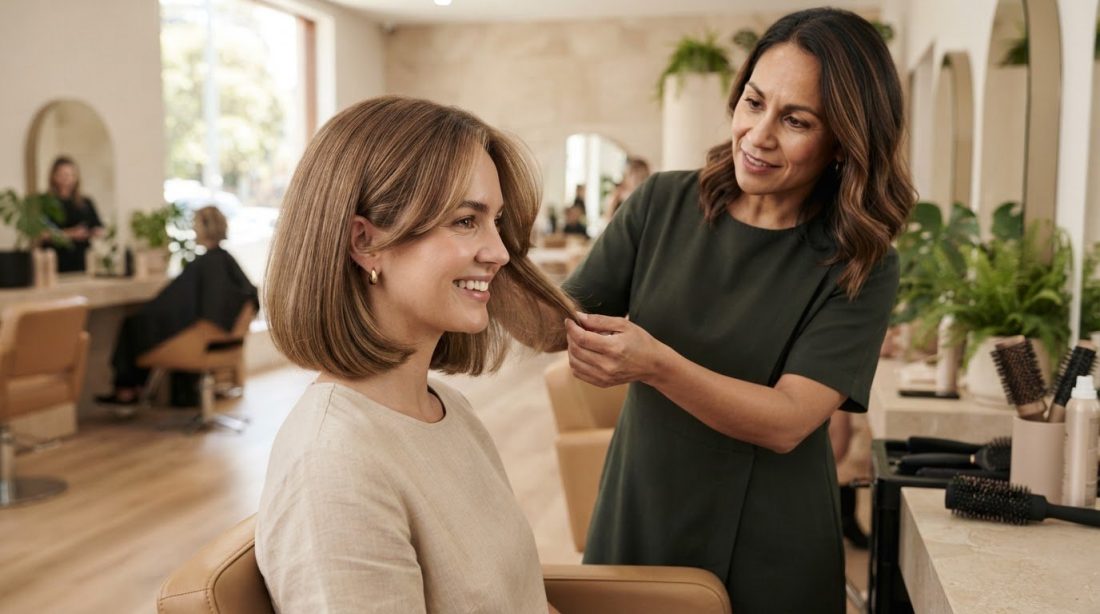
Haircuts to Make Thin Hair Look Thicker: Find Your Best Shape
The cut that looks fullest in a photo might fight your natural texture or daily routine. A blunt edge can give fine ends a stronger outline, while too many layers may leave them looking sparse. Finding the right shape matters more than following a trend.
If you’re weighing up haircuts to make thin hair look thicker, it’s understandable to wonder whether to keep your length, add a fringe or go shorter. A haircut won’t change your hair’s actual density, but the right silhouette can create the impression of fuller hair. This guide compares shapes for different lengths and textures, with practical considerations if you prefer low-fuss styling.
At Shampoo Avenue, our family of stylists takes an innovative, inclusive, real people approach to women’s haircuts and styling. A personalised haircut conversation connects the shape you want with your natural texture and routine. We’ll look at blunt perimeters, strategic layers, fringes and shorter cuts, plus ways to describe your goals before you commit to a change.
Key Takeaways
- Learn how blunt ends, graduated shapes and strategic layers affect a cut’s visual weight, without assuming one approach suits everyone.
- Compare haircuts to make thin hair look thicker, from bobs and pixies to longer face-framing shapes, and consider the styling each may involve.
- Use simple steps to explain your concerns, share useful reference photos and discuss your day-to-day styling routine.
- Consider how a shorter shape may change the way your hair sits and what you’re comfortable doing to style it.
- See how Shampoo Avenue’s family of stylists brings an innovative, inclusive, real people approach to a personalised haircut conversation.
What makes thin hair look thicker after a haircut?
A haircut can change your hair’s outline, movement and balance, which affects how full it appears. It can’t alter the number of strands or make individual strands physically thicker. Instead, a fuller-looking shape manages visual weight: where the ends sit, how much hair gathers along the perimeter and where shorter pieces create movement. That’s why haircuts to make thin hair look thicker are best chosen for your hair as it is, not an idealised picture of density.
Fine hair or thin hair: what is the difference?
Fine hair describes the thickness of each strand; low-density hair describes having fewer strands across the scalp. These are different things, though they can overlap. You might have fine strands and plenty of them, fine strands with less overall coverage, or thicker strands that are more widely spaced. The word “thin” is often used casually for either concern, so describe what you notice rather than relying on a label.
Think about what you see and feel: do the ends look wispy, does your ponytail feel small, or does your hair lie close to your head? Those details give your stylist a more useful starting point than a broad description alone. They also help distinguish between wanting more body through the shape and wanting a stronger-looking outline at the ends.
How haircut shape creates an impression of fullness
A clean, defined baseline can make the ends look more substantial because the hair finishes along a clearer line. On longer hair, that might mean keeping the perimeter relatively solid rather than removing too much weight. A blunt edge isn’t automatically right for everyone, though. A graduated shape can add structure, while carefully placed layers may encourage movement or lift where you want it.
Layer placement matters. If lots of length is removed from the outer edges, the perimeter may look lighter or more scattered, particularly when the ends are already fine. By contrast, shorter pieces placed internally or around the crown can add movement without making every section appear shorter. The balance depends on your texture, length and preferred finish. Hair that naturally bends or waves may show movement differently from straight hair. A shape that looks full after a salon blow-dry may also take more effort to recreate at home.
Cut and styling work together: parting, direction and finish can all change how a shape sits. For a broad overview of hair styling techniques, consider how arranging the hair can influence its overall appearance. Before choosing a cut, picture the result on an ordinary day, not only when it’s freshly styled.
- To keep the ends looking weighty: discuss a defined perimeter and how much length you’re comfortable losing.
- To add movement: talk through where layers could sit while preserving the outline.
- To make styling manageable: describe how you usually wear your hair and how much time you want to spend on it.
Which haircut details add the most visual weight?
Start with the details, not the name of a trend. Two bobs can have very different effects: one may keep a strong outline, while another removes weight through graduation and layers. The best balance depends on the finish you like and how your hair naturally sits. The perimeter and layer placement matter as much as the haircut name. That’s a useful point to bring into a salon conversation.
Blunt bobs, lobs and defined ends
A blunt bob creates a compact outline, with the ends finishing around the jaw or neck. A lob keeps more length, often offering extra ways to tie or tuck the hair while retaining a defined baseline. Neither is automatically fuller-looking for everyone. A stylist can adapt the edge and length to your texture, how your hair falls and whether you prefer a crisp or softer finish.
With a defined perimeter, the ends form a more continuous line. A graduated shape, where the back is shorter than the front, changes the silhouette and redistributes weight rather than simply adding it. If you like movement, ask how the graduation will look from the side and back, not just in a front-facing reference photo.
Layers, pixies and fringe: where shape changes
Layers can give the shape movement, especially around the face or crown, while a relatively solid perimeter keeps more visual weight at the ends. Face-framing pieces don’t have to mean layers throughout. A pixie makes a more noticeable shift in length and may suit someone who enjoys styling a shorter shape. A fringe changes the outline around the face and may need its own styling attention.
Think about your usual finish before choosing either. A fringe may sit differently with a natural wave than when blow-dried smooth, and a short cut can feel quite different from longer hair in day-to-day styling. Bring that into the discussion rather than assuming the cut will create lift on its own.
Haircuts to make thin hair look thicker are about choosing where to keep a stronger outline and where to allow movement. A few practical questions can help narrow down the options:
- Want a stronger-looking edge? Ask to compare a blunt outline with a softer, graduated one at your preferred length.
- Want movement around your face? Discuss a small amount of face-framing before adding layers throughout.
- Considering a pixie or fringe? Talk through how you like to style your hair on an ordinary day.
A haircut can change appearance, not actual hair density. If you’re concerned about a change in your hair, Mayo Clinic’s overview of causes of hair loss offers health context beyond styling. For the cut itself, a personalised conversation about your texture and routine can help turn inspiration into a workable shape. Explore women’s haircuts and styling at Shampoo Avenue.
How do popular haircuts compare for fine or thin hair?
A style name is only a starting point. The same cut can sit differently depending on your natural texture, how much length you keep and whether you usually air-dry or style your hair. Use this comparison to narrow down what you’d like to discuss, not as a promise that a particular cut will look the same on everyone.
| Style | Suitable starting point | Styling consideration |
|---|---|---|
| Blunt bob | You’re open to a shorter length and a defined outline. | Consider how the length sits with your natural texture and preferred finish. |
| Lob | You’d like to retain more length while refreshing the shape. | Think about how you wear it loose, tied back or tucked away. |
| Graduated bob | You like a shaped silhouette, with the back shorter than the front. | Ask how the graduation will look from the side and back, as well as the front. |
| Pixie | You’re keen to explore a distinctly shorter style. | Consider whether you’re comfortable maintaining its shape and styling it day to day. |
| Long face-framing options | You want to keep length while changing the shape around your face. | Discuss how much framing you want without adding layers throughout. |
Short and medium cuts: bob, graduated bob and pixie
A bob often keeps a clearer outline, while a graduated bob changes the silhouette with a shorter back and longer front. A pixie takes off more length and can feel like a fresh reset, but consider how often you like to revisit a short shape. Look at your hair both air-dried and styled: its natural bend, wave or straight fall can change the way each outline sits.
Longer cuts: lob, clavicut and face-framing layers
A lob or clavicut, which generally sits around the collarbone, can preserve some length while giving the ends a cleaner shape. If you want a visible change without layering the whole cut, face-framing pieces can create definition at the front. Longer hair can carry more visual weight, so consider whether you prefer that feel or want a lighter outline. Your styling habits matter too: a shape you wear loose may need different framing from one you often tie back.
For haircuts to make thin hair look thicker, use the table to identify a length and outline that feel realistic for you, then fine-tune the details with your stylist. Bring photos that show the shape from more than one angle, and explain what you like about them. If you love the front pieces in one image but the overall length in another, say so. Combining those preferences can lead to a more personal conversation about a cut that works with your texture and routine.
What should you ask for to get a haircut that looks fuller?
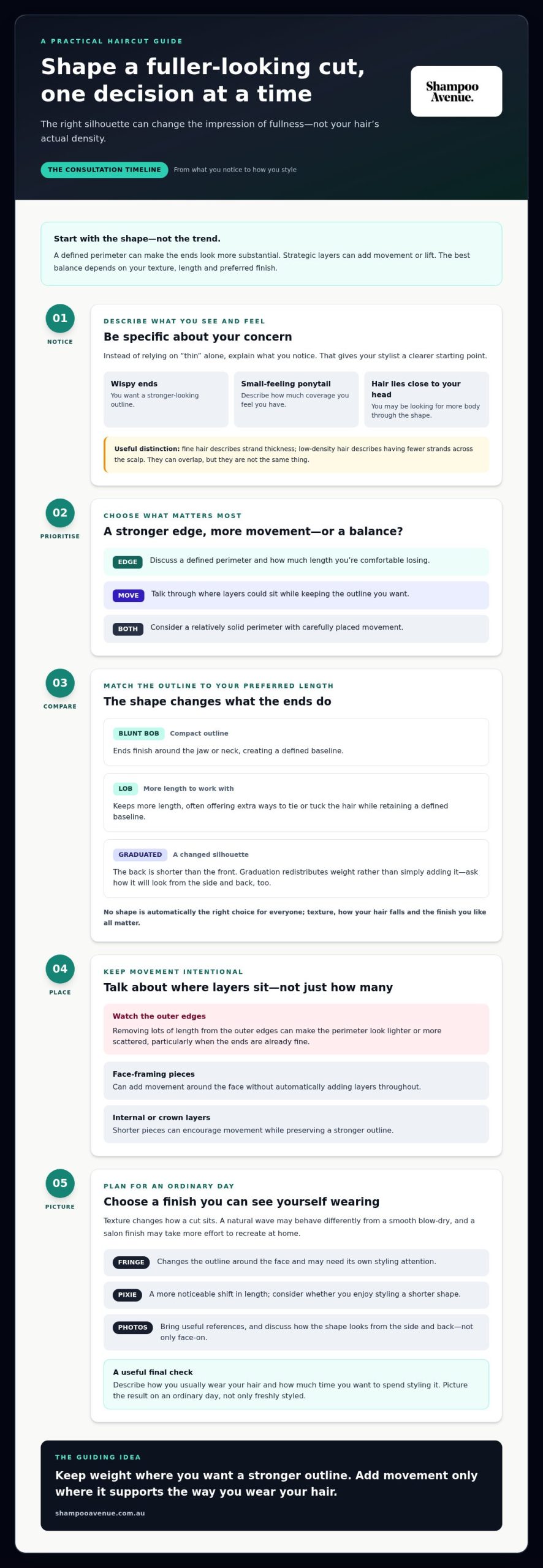
A clear salon conversation doesn’t need technical terms or the name of a trending cut. Start with what you notice, then describe how you’d like your hair to look and feel. For haircuts to make thin hair look thicker, connect the goal with your natural texture, preferred length and everyday styling habits.
Try this simple sequence before your appointment:
- Describe your concern. Explain what you see, such as ends that feel wispy, a shape that falls flat or a front section you’d like to soften. Say what you want to change without feeling you need to label your hair.
- Show useful references. Bring photos that show the outline and finish you like. Point out what appeals to you in each one, whether it’s the length, the way the ends sit or a little movement around the face.
- Talk through your routine. Share how you usually wear your hair, where you part it, whether you air-dry or style it, and how much time and which tools you typically use.
- Agree on the shape. Discuss the preferred length, perimeter and any layers or fringe before the cut begins. Check that you’re both picturing the same result.
How to explain the result you want
Be specific about the effect, not just the trend. You might say, “I’d like the outline to look fuller, with some movement around my face, but I don’t want to lose substantial length.” Or, “I’m after a shape that feels lighter around the front while keeping the ends looking solid.” Share what you’d rather avoid, too. Before the cut starts, make sure the planned shape and finish feel right to you.
How to make the shape work with your routine
Your usual styling habits are useful information, not a test you need to pass. Mention whether you often use a dryer, brush or other styling tools, or prefer to let your hair dry naturally. A shape should make sense with the way your texture sits and the time you want to spend styling. A cut alone can’t change actual hair density. Product choices are a separate conversation, so keep the haircut goal clear first.
If your questions extend beyond the cut to broader hair-care context, Shampoo Avenue’s scalp health and hair wellness guide explores that subject separately. Shampoo Avenue offers precision women’s haircuts and styling through a personalised conversation with a family of stylists, bringing an innovative, inclusive, real people approach to understanding what you want from your hair. Explore a personalised haircut conversation and share the shape, texture and routine you have in mind.
How Shampoo Avenue personalises a haircut for a fuller-looking finish
A haircut that feels right is about more than choosing a reference photo or asking for a particular trend. Shampoo Avenue offers precision women’s haircuts and styling through a personalised approach, shaping the conversation around your texture, preferred length and day-to-day routine. A cut can influence the way your hair’s outline and movement appear, but it doesn’t change your actual hair density or guarantee a particular finish.
A haircut conversation built around your hair
Bring photos that show details you like, such as the length, the line at the ends or the way the front pieces sit. Your stylist can use those preferences to guide a discussion about what may suit your own hair. If you like the outline in one image and the face-framing in another, point that out. It gives you both a clearer starting point than relying on a style name alone.
Talk through how your hair behaves, too. Does it sit straight, bend or wave when left to dry? Where do you usually part it? Do you want to keep most of your length, or are you open to a shorter shape? Sharing how much time you like to spend styling helps connect the desired silhouette with a finish that feels practical for everyday life.
Before the cut begins, take a moment to agree on the shape: the intended length, how solid or soft you want the outline, and where any layers or face-framing should sit. Clear expectations help keep the conversation collaborative and grounded in what you want to see when you leave the salon and style your hair at home.
A welcoming salon experience with considered haircare
Shampoo Avenue is a fun and fresh family of stylists, with an innovative, inclusive, real people approach. The salon aims to create a warm setting where you can explain what you like, what you’d rather avoid and how you want your hair to fit into your routine. You don’t need salon terminology. A few honest details and reference images can help get the conversation going.
Haircare is part of the salon setting, too. Shampoo Avenue uses professional haircare ranges selected for their quality and performance. The focus of your salon experience is on sustainable beauty practices and premium formulations that care for your locks. This commitment to quality is a standard of care, not a promise that a haircut or product will create extra density. The focus of your haircut conversation remains the shape, texture and finish you’re looking for.
If you’re exploring haircuts to make thin hair look thicker, bring your ideas and routine into a personalised conversation about a shape that feels like you. Explore Shampoo Avenue’s haircut and styling services and discuss the cut that could suit your hair and everyday habits.
Choose a shape that feels like you
Your next cut doesn’t need to be a dramatic change to feel fresh. Start with one detail you’d like to shift, whether that’s the outline, the length or how your hair frames your face. Knowing what you want to keep is just as useful as knowing what you’d like to change.
Use your reference photos as conversation starters, not a script. Talk through how you wear your hair on a typical day and what feels manageable, then leave room to shape the idea around your own texture. That’s a more personal way to approach haircuts to make thin hair look thicker than choosing a popular style and hoping it fits.
At Shampoo Avenue, a welcoming conversation can help turn your preferences into a considered haircut plan. Explore Shampoo Avenue’s haircut and styling services and take the next step towards a shape that suits your hair and routine.
Frequently Asked Questions
Can fine hair look thick with the right haircut?
Yes, a suitable cut can make fine hair appear more substantial, though it won’t change the thickness of individual strands. For example, if your ends seem see-through when your hair is long, a more compact length may give the outline a stronger appearance. The best choice depends on how your hair falls and how you like to wear it. A stylist can help translate “fuller” into a shape that feels achievable for you.
Is a blunt cut always best for thin hair?
No, a blunt cut isn’t the right answer for every head of hair. It can suit someone who wants a clean, even-looking edge, while a softer or graduated shape may feel more natural for someone who likes movement. Consider how your hair behaves at the nape and around the sides, not just how a blunt cut looks in a photo. Ask to compare options at the length you’re considering.
Can a fringe make fine hair look fuller?
A fringe can change the balance around your face, but it doesn’t automatically make the rest of your hair look fuller. The amount of hair used for the fringe matters: taking more from the sides may leave those areas feeling less covered. If you’re interested, discuss a lighter fringe or a side-swept option and how it will sit with your usual part. Think about whether you’re happy to style it regularly.
Do I have to cut my hair short to make it look thicker?
No, you can keep longer hair and still adjust its shape. A trim that removes sparse-looking ends may help the outline feel tidier, while a longer cut can retain the versatility you enjoy. The trade-off is that length can pull hair down, so the finish may sit closer to your head. Tell your stylist what length you want to preserve and what you’d like to change, even if it’s only a small adjustment.
Can curly hair have a haircut that looks fuller?
Yes. Curly hair can be shaped with its natural spring and shrinkage in mind, since its dry length and silhouette may differ from how it looks wet. Discuss how you usually wear your curls, including whether you diffuse, air-dry or stretch them. If possible, explain which areas you’d like to keep defined and where you want more shape. A cut should be planned around your real curl pattern, rather than a straightened reference alone.
How often should I trim a haircut designed to look fuller?
There isn’t one trim schedule that suits every cut. A short shape or fringe may feel different as it grows out than a longer style, and your preference for a crisp outline can affect when you want a tidy-up. Notice when the ends stop sitting the way you like or styling takes more effort. At your appointment, ask what kind of grow-out to expect and choose a maintenance rhythm that fits your routine.
Can hair colour make a haircut look fuller?
Colour can add visual contrast and help different sections of a cut stand out, but it doesn’t increase strand thickness or hair density. The effect depends on your starting colour, chosen tones and how the colour works with the haircut’s shape. If you’re considering a colour change, explain whether you want a subtle shift or more visible contrast, and discuss how it will complement your cut before deciding on a plan.