

Hair toner: what it does and how long salon color lasts
A toner can change your hair colour without making it lighter. The question of what a hair toner is and what it does has a practical answer: it deposits colour to adjust the tone, such as softening unwanted yellow or orange after lightening. A salon demi-permanent toner typically lasts 4-8 weeks as it gradually fades.
If your blonde looks brassy or your colour feels too warm or too cool, it’s natural to wonder whether toner is the fix. This guide explains what hair toner does, what it can and can’t change, how long salon results last, and which colours and hair types may suit it. You’ll also learn how toner differs from purple shampoo, so you can understand what each can do for your colour.
Key Takeaways
- Violet and blue pigments target different unwanted tones, so the right choice depends on the colour you want to soften.
- Salon toner processing typically takes five to 20 minutes; your hair’s condition and the result you’re after shape the service.
- Toner can add dimension to brunette or red hair and soften the contrast between grey and pigmented hair, but it won’t fully cover grey.
- Learn how lived-in blonde and grey blending services can help tailor colour to your hair and the look you want.
What is hair toner?
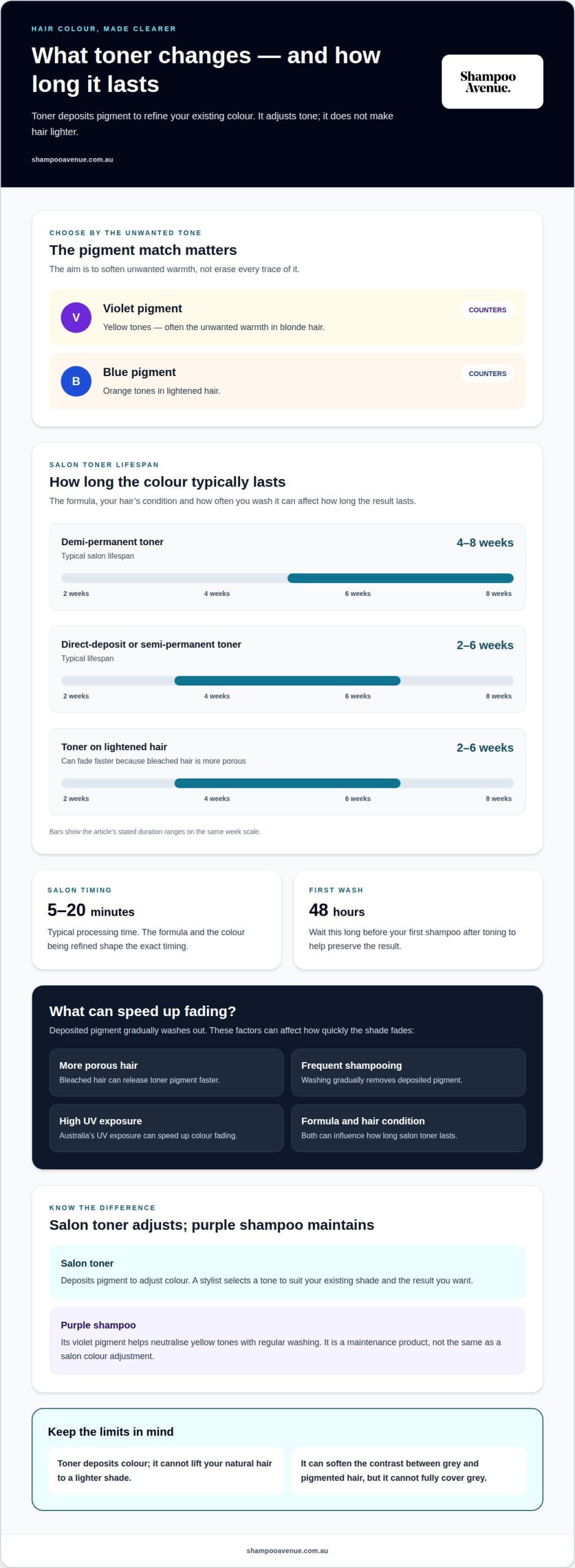
To understand what hair toner is and what it does, start with its purpose: toner adjusts colour tone rather than making hair lighter. Violet pigment, for example, can soften yellow in blonde hair, while blue pigment targets orange.
Underlying tone changes
Toner deposits pigment to shift the underlying tone and change how your existing hair colour looks. It can help personalise blonde shades after lightening or make a freshly coloured result feel warmer or cooler.
This distinction matters if you want a brighter blonde. Toner can reduce brightness, but it can’t lift hair to a lighter shade. The starting colour can affect the result.
Brassy and yellow tones
Brassy or yellow tones can appear as colour-treatment pigment fades, or after exposure to air pollution, hard water, sun and pool chemicals. In Australia, UV exposure can also accelerate colour fading.
These changes can make blonde hair look warmer than intended. For example, a lightened section may still look orange rather than pale blonde if underlying warmth remains. Knowing whether the unwanted tone is yellow or orange helps explain which pigment may be used.
Neutralising unwanted tones
Neutralising means using a complementary pigment to soften an unwanted shade. Violet pigment counteracts yellow, while blue pigment counteracts orange in lightened hair.
A violet toner may suit blonde hair with yellow tones, while a blue-based option may address orange warmth. The aim is to correct the tone, not erase every trace of warmth. Purple shampoo is formulated to neutralise yellow between appointments, while toner adjusts colour by depositing pigment.
Effects on natural hair colour
Toner deposits colour but doesn’t lift or remove existing colour, so it can’t make natural hair lighter. It may add a visible tone, however. On dark brown hair, toner can create subtle warm or cool richness.
The main risk is an unwanted colour result, such as hair looking too dark or ashy. Toner isn’t a lightening step, and applying it to hair that hasn’t been pre-lightened or coloured won’t produce the intended correction. Because it deposits pigment rather than lifting colour, toner doesn’t make the natural base lighter. The visible effect depends on the hair’s starting colour.
How long does a professional toner last after your salon visit?
A salon toner’s lifespan depends on its formula, your hair’s condition and how often you wash it. Demi-permanent toner typically lasts 4-8 weeks, while direct-deposit or semi-permanent toner typically lasts 2-6 weeks.
Salon application and processing
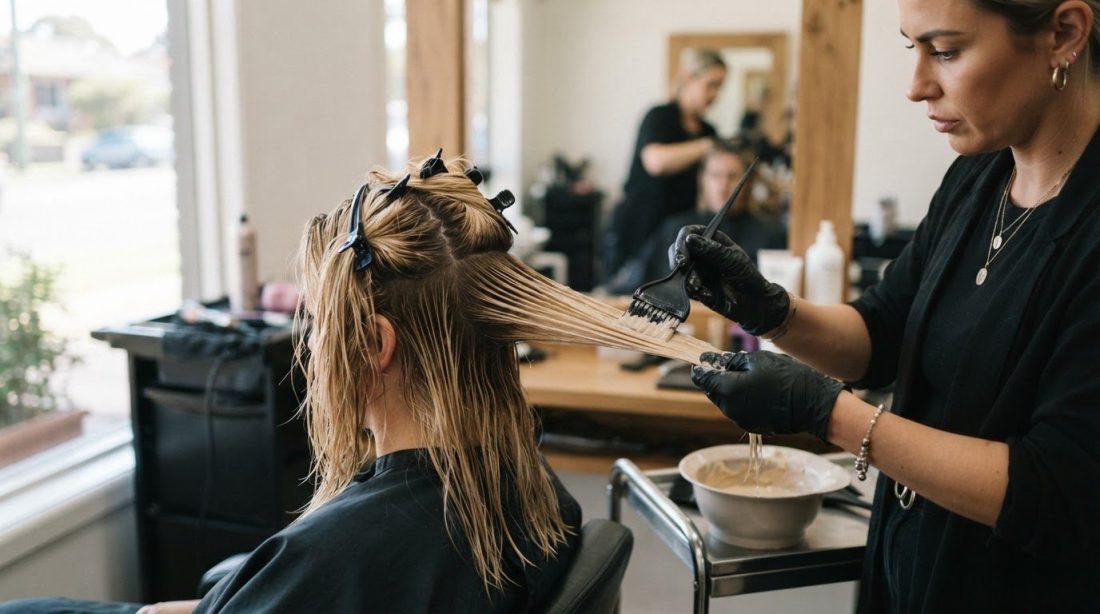
At a salon, toner is usually applied to damp hair after lightening or colouring. The stylist selects a tone to complement the result, then shampoos the hair after processing.
Processing typically takes five to 20 minutes. The exact timing depends on the formula and the colour being refined. For example, a stylist may use a toner to soften warmth in blonde highlights or create a silver finish.
How long the colour lasts
Bleached hair can release toner pigment faster because it is more porous, so toner may last 2-6 weeks on lightened hair. Australia’s high UV exposure can also speed up colour fading, while frequent shampooing gradually washes out deposited pigment.
To help preserve the result, wait 48 hours before your first shampoo after toning. After that, washing less often can reduce how frequently colour is exposed to shampoo. A toner refresh may fit between larger colour appointments, depending on how quickly your shade fades and how fresh you want it to look.
Salon toner versus at-home products
Professional salon toners contain a higher concentration of pigment than at-home toning products and should be used by a stylist. The stylist can select and apply a tone to suit your existing colour, whether the goal is to soften warmth or refine brunette highlights.
Purple shampoo is another option. Its violet pigment helps counter yellow tones with regular washing, but it isn’t the same as a salon toner. If you want a silver or bright blonde shade, the distinction matters: shampoo maintains tone, while salon toner adjusts it.
Choose professional haircare products that support your colour routine, including between salon visits.
Toner suitability for different hair types and colours
Toner can suit blonde, brunette and red hair when the aim is to refine the existing colour. The right shade depends on the unwanted tone and the colour underneath. For example, violet toning may help a blonde with yellow tones, while orange warmth calls for a different pigment. Toning won’t lighten hair, so the starting shade determines how visible the result can be.
Hair toners include demi-permanent and semi-permanent colour, as well as direct-deposit formulas. Each deposits tone rather than lifting the existing colour. A salon formula can refresh lightened hair or personalise a brunette result with subtle warm or cool richness. For at-home maintenance, purple shampoo is formulated to help neutralise unwanted brassy tones in blonde and grey hair with repeated washes. It’s a maintenance product, not a substitute for every salon colour adjustment.
Grey hair can also suit toning, especially when the goal is a softer transition between grey and brown hair. Toner can blend the contrast and create a reflective, dimensional effect, but it can’t fully cover grey. Unlike solid coverage, the result retains variation between pigmented and grey strands.
Pastel shades need a suitable light base to show clearly. They generally involve two steps: lightening, followed by a toner overlay. This matters if you’re considering delicate pink or lilac, because toner alone won’t create a pale base from darker hair. You can also discuss brighter blonde as a colour goal, since toner may reduce brightness rather than increase it.
For a natural-looking result, match the toner to both the underlying shade and the finish you want. Violet can counter yellow; blue can counter orange. The balance between those tones helps determine whether the finished colour reads cool, warm or neutral, while the hair’s existing depth limits how much the shade can shift.
What hair toner is and how it works
Hair toner is demi-permanent or semi-permanent colour used to refine a shade after hair has been lightened or coloured. Toner is generally described as sitting near the hair’s surface, though how it behaves can vary. That’s why a stylist can use toner to adjust blonde hair or soften unwanted brassy tones without treating it as a lightening step.
The process depends on the colour underneath. Human hair contains two types of pigment, eumelanin and pheomelanin, which contribute to its natural depth and warmth. Lightening can reveal underlying tones, so coloured hair may look yellow or orange even after a blonde service. Toner adds a chosen tone over that base, helping refine the visible result rather than remove the underlying pigment.
How is toner different from hair dye? Toner deposits or adjusts tone, while hair dye can be used for broader colour changes. Toner doesn’t lift hair or make it lighter, and it can’t remove existing colour. For example, a stylist may use toner after lightening to refine a blonde shade, but a darker starting colour needs lightening before a pale result is possible.
The takeaway is simple: toner changes how an existing colour reads, not its depth. A violet overlay can refine yellow blonde, while a pastel colour generally needs two stages: lightening, then a toner overlay. Toner may also add shine, softness and a more blended look to lines left by bleach. Its effect depends on the base shade and the pigment selected, so the same formula won’t create an identical result on every head of hair.
If you’re considering a colour change, talk through your hair colour goals and the result you’d like to see.
Shampoo Avenue: Luxury Hair Colour Transformations
Shampoo Avenue can help shape a colour plan if you want to refine blonde, transform your colour or blend grey with a natural-looking finish. Its Luxury Hair Colour Transformations, Lived-In Luxury Blonde Services, and Grey Blending & Natural Colour support different goals, from refreshed blonde tones to softer contrast between grey and pigmented hair.
A stylist considers your existing colour and the finish you want when shaping your service. If your hair needs support beyond colour, Scalp Health & Hair Wellness Treatments can also support scalp and hair wellness.
Bring your colour goals and any concerns about your hair’s condition to the conversation. Contact Shampoo Avenue to discuss the colour result you’d like to achieve.
Choose a colour direction that feels like you
Your next colour decision can start with the feeling you want your hair to create: softer, cooler, brighter or more natural. Understanding what hair toner is and what it does gives you useful language to describe that direction, but your preferences matter just as much as the technical details.
Before your next colour appointment, think about how much change feels right and what you’d like to keep. You might want to retain warmth, soften contrast or move towards a more polished blonde. Sharing those priorities helps shape a colour conversation around your everyday style and the result you want to live with.
Shampoo Avenue offers colour services suited to different goals, from transformative changes to more blended finishes. If you’re ready to talk through your ideas, contact Shampoo Avenue about hair toner. A clear sense of what you like is a great place to begin.
Frequently Asked Questions
Can I remove toner at home if it’s too dark or too ashy?
You can let the result soften gradually with normal washes. If toner looks too dark or ashy, two or three washes may noticeably soften it during the first week. Avoid applying another toner to counteract it, as extra pigment can create a different unwanted shade. If the colour still feels wrong after washing, a stylist can assess which adjustment suits your hair.
How are toners applied?
In a salon, toner is commonly applied to damp hair after lightening or colouring. It processes for five to 20 minutes, depending on the formula and desired result, then the hair is shampooed. For example, a stylist may apply different amounts across highlighted sections to refine the overall finish. At-home glosses and toners follow their own product instructions, including application and timing.
Toner vs toning shampoo vs purple shampoo: which do you actually need?
A salon toner adjusts the overall colour result after a colour service. Purple shampoo is a toning shampoo that helps maintain blonde or grey hair by counteracting yellow tones during washing. If your colour needs a broader adjustment, shampoo may not create the same result as a salon application. The best fit depends on whether you want a refresh or ongoing maintenance.
How do I maintain my toner?
Wait 48 hours after toning before your first shampoo, giving the colour molecules time to settle. After that, washing less often means fewer wash cycles affecting the colour. Use a toning shampoo only when its pigment suits your hair’s unwanted warmth. For example, purple shampoo is designed to target yellow tones, so it won’t address every colour concern.
How does it work?
Toner works by adding pigment that changes how your existing hair colour appears. Think of it as a colour filter over the shade you already have: it can refine warmth or coolness, but won’t lift the base. For instance, toner can adjust the finish of lightened sections without turning darker hair into a lighter blonde.
Is a toner only for blondes?
No. Toner can also suit brunettes and redheads when the aim is to soften unwanted brassy tones or personalise the shade. On dark brown hair, an all-over toner can create subtle warm or cool richness. It can also blend the contrast between grey and pigmented hair, although it won’t fully cover grey strands.