

Hair Goals for Your 30s: Guide to Healthy, Personal Hair
What if the best hair goals for your 30s have less to do with your age and more to do with what your hair needs now? Changes in texture, dryness, density or colour can happen around this stage, but there’s no universal timetable. Genetics, hormones, health and everyday habits can all influence how your hair looks and feels.
If your hair feels different, you’re not imagining it. And wanting a fresh look doesn’t mean signing up for a complicated routine or chasing every trend. The aim is to understand your hair as it is today, then choose goals that feel realistic for your lifestyle and personal style.
This guide will help you focus on scalp comfort and hair condition, weigh up colour and styling options, and build a manageable routine without getting lost in conflicting advice. We’ll cover practical ways to work with your hair, from gentler everyday habits to considered changes such as a tailored cut, grey blending or a treatment. Your hair can change, and your goals can change with it.
Key Takeaways
- Set hair goals for your 30s around what you want your hair to do and how much upkeep fits your life.
- Notice changes without assuming they’re caused by age alone. Routines and personal circumstances can also play a part.
- Compare the upkeep involved in styling, colour, grey blending and scalp care before choosing your next priority.
- Start with one concern, keep your routine simple and review how your hair and scalp respond.
- A tailored conversation about a cut, colour or treatment can help turn your priorities into a realistic plan.
Hair goals for your 30s start with what your hair needs now
Your hair priorities can shift as your routine, preferences and personal style change. Maybe you want to spend less time styling in the morning, feel more comfortable with your scalp or try a colour that feels more like you. There’s no single milestone you need to reach because you’ve turned 30.
Think of a hair goal as a specific, realistic outcome that matters to you. The best hair goals for your 30s respond to your hair as it is now, rather than an age-based rule about how it should look or what care it needs.
What does a realistic hair goal look like?
A useful goal is personal and observable. “Make my hair easier to style before work” is clearer than “have better hair”; “make my scalp feel more comfortable” gives you something specific to notice. Start by asking yourself:
- What feels good about my hair at the moment?
- What feels difficult or takes more effort than I’d like?
- What would I like to change, and how much upkeep suits my life?
Then separate an outcome goal from a routine goal. A new colour or a different cut is an outcome; handling your hair more gently or using heat tools less often is a routine change. You don’t need to tackle everything at once. Choose one priority, give it attention, and see whether it makes a difference before adding another.
Do hair needs automatically change in your 30s?
No two people experience the same hair changes on the same schedule. Texture, density and colour can be influenced by individual factors, while styling habits and personal circumstances may also affect how hair looks and feels. Age alone does not prescribe a haircare routine. The hair growth cycle describes how hair grows and sheds over time, but it doesn’t establish that a particular change is inevitable at a particular age.
Small differences in how your hair behaves may simply be a prompt to review your routine. Persistent or sudden changes, ongoing scalp discomfort, or hair loss that concerns you are different: a salon can help with hair and scalp care, but a health professional is the right person to assess a medical concern.
Keep your starting point simple. Notice what your hair and scalp are like now, what you’d genuinely like to improve, and what level of care feels manageable. That gives you a clearer basis for choosing a styling habit, colour change or treatment, without turning your age into a checklist.
Understand hair changes in your 30s without relying on age-based myths
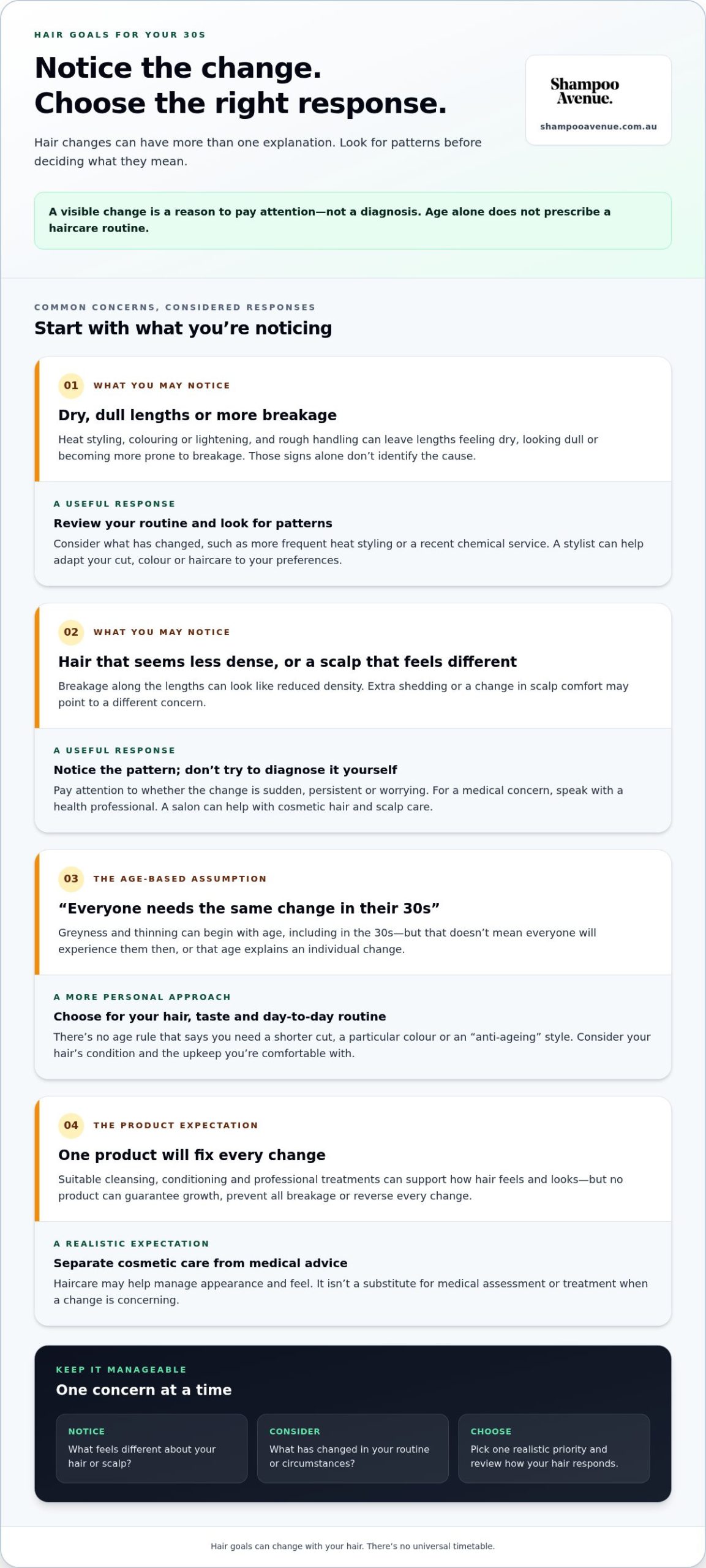
A change in how your hair looks or behaves can have more than one explanation. Styling habits, chemical services and personal circumstances may all play a part, so notice what’s changed before deciding what it means. Heat styling, colouring or lightening, and rough handling can leave lengths feeling dry, looking dull or becoming more prone to breakage. Those signs alone don’t identify the cause.
For example, breakage along the lengths can look like reduced density, while extra shedding or a change in scalp comfort may point to a different concern. A visible change is a reason to pay attention, not a diagnosis. MedlinePlus explains that greying and thinning can begin with age, including in the 30s, but that doesn’t mean everyone will experience them then, or that age explains a change in any one person.
How can you tell what your hair is asking for?
Look for patterns rather than judging your hair by one frustrating day. Over time, note whether it’s become harder to manage, whether you’re seeing more breakage, whether your scalp feels less comfortable, or whether colour needs more upkeep than you’d like. Consider what’s changed in your routine, too, such as more frequent heat styling or a recent chemical service.
If a change is sudden, persistent or worrying, speak with a health professional rather than trying to diagnose it yourself. A stylist can help you consider cosmetic factors and adapt your cut, colour or haircare to your preferences, but medical concerns need health advice.
Which 30s hair myths are worth leaving behind?
There’s no age rule that says you need a shorter cut, a particular colour or an “anti-ageing” style. Choose what suits your taste, hair condition and day-to-day routine. Your goals should reflect you, not a decade-based checklist.
Be realistic about what haircare products can do, too. Suitable cleansing, conditioning and professional treatments can support the feel and appearance of your hair, but no product can guarantee growth, prevent all breakage or reverse every change. Cosmetic care may help manage how hair looks and feels; it isn’t a substitute for medical assessment or treatment.
Once you’ve noticed what’s bothering you, a tailored salon conversation can help you explore practical options for your hair. You can discuss your hair goals with a stylist and shape a plan around your hair, preferences and desired upkeep.
Choose hair goals for your 30s by priority, not by trend
Once you’ve identified what you’d like to change, weigh the result against your hair’s current condition and the time you want to spend maintaining it. A goal that looks appealing but feels like a chore may not suit your everyday life. The most useful goal is one you can maintain comfortably.
Use this comparison to narrow your options. Upkeep varies with your hair, chosen result and routine, so treat the table as a starting point rather than a fixed schedule.
| Goal | Likely upkeep | Questions to consider |
|---|---|---|
| Easier styling | Regular styling habits and a cut that works with your usual routine | How much time do I want to spend getting ready? |
| Colour refresh | Care and maintenance suited to the colour result you choose | Am I after a subtle change or a more noticeable transformation? |
| Grey blending | Ongoing care tailored to how softly or visibly you want grey to sit | Do I want to blend greys, embrace them or explore a natural-colour approach? |
| Scalp comfort | A consistent, suitable care routine and attention to how your scalp responds | What feels uncomfortable, and when does it tend to happen? |
| Less avoidable damage | Gentler handling and thoughtful use of heated tools | Which daily habit could I realistically adjust? |
Should your goal be hair health, a new look or easier upkeep?
There’s no need to rank care above a style change, or the other way around. If your priority is comfort or reducing damage, start with habits and care that support your hair’s condition. If you’re ready for a fresh look, a cut or colour can be the focus. Lived-in colour and grey blending are options to discuss with a stylist, not one-size-fits-all answers. For a bigger change, consider the result you want alongside what a luxury hair colour transformation involves.
How do you set a goal that fits your actual routine?
Be honest about your mornings and maintenance preferences. Would you style your hair most days, or do you need it to fall into place with minimal effort? Are you comfortable maintaining a colour result, or would a softer approach suit you better? A trend can spark an idea, but it can’t guarantee the look will suit your hair or habits.
Choose one achievable change and decide how you’ll tell whether it’s working, such as easier styling or a more comfortable-feeling scalp. For everyday care ideas, the American Academy of Dermatology’s healthy hair care tips cover gentle washing, conditioning and protecting your hair. Keep your goal practical, then adjust it to suit your experience.
Build a simple routine around your hair goals in your 30s
A routine works best when it supports one clear priority, rather than adding steps for the sake of it. More products don’t automatically mean better results. Start with a simple four-step process and adjust based on how your hair and scalp respond.
- Identify one concern. Choose what matters most right now, such as scalp comfort, easier styling or reducing avoidable damage.
- Simplify your care. Build around suitable cleansing and conditioning, gentle detangling and heat protection whenever you use heated tools.
- Track comfort. Notice how your scalp feels and whether your hair is manageable between washes and styling.
- Review the result. If your routine isn’t supporting your goal, change one thing at a time rather than overhauling everything.
What belongs in a manageable weekly hair routine?
Keep the basics repeatable: cleanse your scalp in a way that suits your hair, condition as needed, and detangle carefully rather than pulling through knots. If you use a hairdryer or heated styling tool, protect your hair from heat and consider whether you can reduce how often or how hot you style it. Masks and other treatments may suit particular hair concerns, but they aren’t an age-based requirement. If scalp comfort is your priority, explore tailored scalp health and hair wellness support.
How can you maintain a colour or repair goal?
After a colour or repair service, follow the tailored professional advice you’re given, including guidance on cleansing, conditioning and styling. Your needs can depend on your hair’s condition and the result you’re maintaining, so avoid assuming one aftercare routine suits everyone. Keep the approach manageable: focus on the care that supports your goal, and add extra steps only if they have a clear purpose.
For colour, think beyond the salon result. Consider how you want it to look as it grows out and how much upkeep feels comfortable. For repair, notice whether your hair feels easier to handle over time, without expecting a product to fix every concern. These practical hair goals for your 30s are easier to maintain when the routine fits your real life.
If you’d like a routine shaped around your hair and scalp priorities, explore personalised hair and scalp care at Shampoo Avenue.
Make your hair goals for your 30s personal with expert support
Your priorities, comfort and preferred level of upkeep matter more than an age-based rule. A stylist can help turn a broad idea, such as “I want my hair to feel easier to manage”, into options that fit your current hair and daily routine. That might mean a considered colour change, a precision cut, grey blending or a treatment focused on scalp comfort or hair condition.
What should you discuss when planning a hair change?
Share what you’d like to achieve, what currently feels challenging and how much time you want to spend on styling and maintenance. Reference images can help show the colours or shapes you’re drawn to, but stay open to adapting the inspiration to your hair’s condition and the upkeep you’re comfortable with. A thoughtful plan balances the look you want with how you’ll care for it day to day.
When can a salon treatment support your goal?
Different services suit different priorities. A tailored colour transformation can support a fresh change, grey blending can soften the contrast of greys, and a precision haircut can shape a style around your preferences. Scalp and hair wellness treatments may be relevant if comfort or condition is your focus. The right choice depends on your goal, rather than your age.
At Shampoo Avenue, personalised colour, cuts and treatments are considered alongside individual hair concerns. Professional haircare is part of the salon’s approach, keeping care connected to your hair’s needs rather than a one-size-fits-all routine.
Bring your ideas, everyday habits and the things you’d like to change. Together, these details can guide a realistic plan that feels personal and manageable. Explore Shampoo Avenue’s personalised hair services to find an approach shaped around your goals.
Choose a hair plan that feels like you
Your hair doesn’t need to follow a rulebook for turning 30. The most useful hair goals for your 30s start with what you want from your hair now, whether that’s a routine that feels easier, a change in colour or more attention to scalp comfort. Pick one priority, keep the upkeep realistic and notice how your hair responds.
Personal guidance can help connect your preferred look with your hair’s condition and the care it needs. At Shampoo Avenue, tailored colour transformations, lived-in blonde services and grey blending sit alongside hair wellness services and professional Davines products, bringing style and care together around individual concerns.
Ready to explore a considered next step? Explore Shampoo Avenue’s personalised hair services and find an approach that suits your hair, routine and personal style. Your goals can be practical, personal and entirely your own.
Frequently Asked Questions
Is it normal for your hair to change in your 30s?
Yes, hair can change in your 30s, but the experience varies from person to person. Age alone can’t identify why your hair looks or feels different. Styling habits, personal circumstances and health may all influence manageability, texture or shedding. Notice whether a change continues rather than judging by one difficult day. If it persists, appears suddenly or concerns you, seek medical advice instead of trying to diagnose the cause yourself.
Can your hair become thinner in your 30s?
Yes, some people notice a change in hair density in their 30s, while others don’t. Thinning isn’t automatically caused by age, and a cosmetic product can’t promise to restore density. If you notice a difference, note when it began and whether it is continuing or changing. Seek qualified medical advice if the change is sudden, persistent or worrying, rather than relying on products or self-diagnosis to explain it.
What are realistic hair goals for your 30s?
Realistic hair goals are specific changes that suit your preferences and routine. You might aim for easier styling, a colour that matches the upkeep you want, more comfortable scalp care or less avoidable heat damage. Choose one priority based on your hair as it is now, then review how it feels and functions. Hair goals for your 30s don’t need to follow a decade-based checklist or the latest trend.
How often should you wash your hair in your 30s?
There isn’t one washing schedule that suits everyone. Hair type, scalp comfort, activity and styling habits can all shape what feels right, so adjust based on how your scalp and lengths respond. If your scalp feels uncomfortable, consider whether your cleansing routine suits your needs rather than following someone else’s timetable. For persistent irritation or discomfort, seek professional advice instead of repeatedly changing products without understanding the issue.
Should you change your haircare routine after turning 30?
No, turning 30 doesn’t automatically mean you need new products or extra steps. Review whether your current routine supports scalp comfort, manageable hair and the look you want. If something isn’t working, make one change at a time so you can notice how your hair responds. Keep products purposeful, and be wary of promises to guarantee growth or reverse every change. A simple routine that suits your needs can be more useful than a crowded shelf.
Can you colour your hair in your 30s without a high-maintenance routine?
Yes, you can colour your hair without choosing a high-maintenance result, but upkeep depends on your starting colour, the finish you want and how it grows out. Lived-in colour or grey blending may be options to discuss with a stylist, though neither guarantees minimal maintenance for everyone. Talk through the initial look as well as ongoing care, so your colour choice feels realistic for your routine.
What should you do if your hair suddenly starts shedding more?
Take sudden or persistent shedding seriously, but don’t assume you know the cause. Note when it began and any other changes you’ve noticed, then seek advice from a qualified health professional for assessment. Avoid trying to diagnose it from online advice or relying on a salon product to address a medical cause. Salon treatments and cosmetic care may support hair’s appearance, but they can’t replace appropriate medical advice or treatment.