

Growing Out Solid Hair Colour Gracefully: A Gentle Transition Guide
What if growing out solid hair colour gracefully isn’t about hiding every new root, but making the change feel intentional? The contrast between natural regrowth and coloured lengths can be hard to ignore, especially when you’re unsure whether to wait it out or soften the line. If your hair already feels fragile, more processing may not seem like the right answer.
A graceful grow-out is a transition plan, not a single colour appointment. You can compare a low-intervention grow-out with options such as colour blending, while keeping your hair’s condition and your preferred upkeep in view. This guide explains why the transition can feel challenging, compares practical ways to manage the contrast and outlines how to plan around your natural roots. Start by deciding what you want the finished look to be, then choose a pace that feels wearable.
Key Takeaways
- Understand why all-over colour can leave a visible grow-out line as natural roots emerge.
- Compare growing out, softening the contrast and blending grey to find an approach that suits your patience and upkeep preferences.
- For growing out solid hair colour gracefully, start with a clear goal and a realistic plan for your colour history and hair condition.
- Gather details of your current and previous colour before planning further colour work.
- Explore how tailored colour support, natural colour services and grey blending may help make the transition feel more like you.
Why growing out solid hair colour can feel so noticeable
Solid hair colour creates an all-over result, so the lengths may look quite different from your natural roots as they appear. The greater the shade difference, the more defined the boundary between new growth and coloured hair can seem. Dark lengths against lighter roots, for instance, may create strong contrast, while lighter lengths can make naturally darker roots stand out.
The experience depends on your starting shade, the colour applied over time, how quickly your roots grow and the finish you want. Previous colour can remain visible well beyond the roots: hair grows from the scalp, but the lengths don’t turn back into your natural shade. The type of colour used affects how it behaves over time; the science behind hair coloring offers a useful overview of different dye types and processes.
What creates the line between natural roots and coloured lengths?
New growth is your natural hair emerging from the scalp. The mid-lengths and ends are older sections that may still hold one or more previous colours. As the roots grow, the boundary between these areas moves further down the hair. A sharp difference in shade can make that boundary look like a defined band. Even if the contrast is softer, earlier colour may remain visible until those lengths are trimmed or coloured again.
What does a graceful colour grow-out mean?
A graceful grow-out doesn’t require every strand to match straight away. It’s a planned, wearable change that lets you choose whether to leave the colour alone, soften the contrast or gradually move towards natural grey. Returning to your natural colour doesn’t mean you have to choose grey. Your natural shade may be grey, another colour or a blend of tones. You decide what feels right.
A graceful grow-out is a colour transition that feels comfortable to wear while your natural roots and existing lengths find their place together.
Growing out solid hair colour gracefully is less about meeting a fixed standard and more about choosing a pace and look that suit you. You might be happy to let the difference show, or prefer a softer visual change. Neither choice is a failure to “go natural”. It’s simply a different way to make the transition your own.
How solid hair colour grows out, from roots to ends
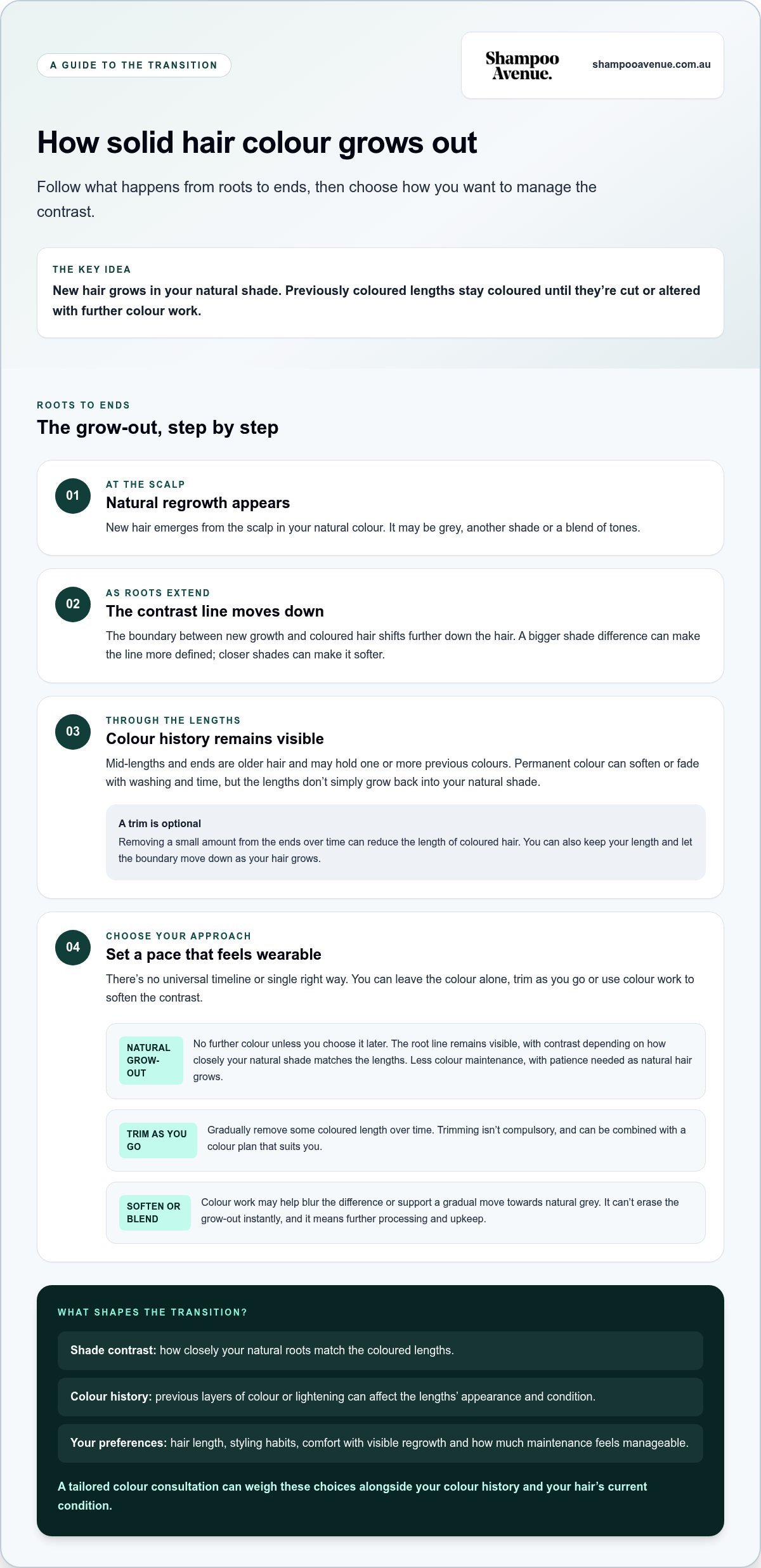
A grow-out happens gradually, but the hair itself doesn’t change shade from root to tip. New hair emerges from the scalp in your natural colour, while the mid-lengths and ends retain their colour history. As the roots extend, the contrast line moves further down the hair and the coloured section becomes shorter in proportion to the whole length.
Natural regrowth is new hair from the scalp; previously coloured lengths stay coloured until they’re cut or altered with further colour work.
What happens to permanent colour as natural hair grows?
Permanent colour can soften or fade with washing and time, but the lengths won’t simply grow back into your natural shade. Their appearance depends on the colour applied and any colour work done since. If you’re considering further processing, the American Cancer Society’s information on hair dye safety and health considerations can help you make informed choices. A stylist can also consider your hair’s current condition when discussing colour options.
Trims offer another gradual option. Removing a small amount from the ends over time can reduce the length of coloured hair, particularly if your hair is already due for a cut. Trimming isn’t compulsory. You can keep your length and let the boundary move down as your hair grows, or combine occasional trims with a colour plan that suits you.
Why can the grow-out look different from one person to another?
Start by looking at the contrast. If your natural roots are close in shade to the colour through your lengths, the boundary may appear softer. A larger difference can make the root line more defined. Neither is a problem to fix; it simply affects how visible the transition feels to you.
Your colour history matters, too. Several layers of colour, lightening or previous changes can affect the condition and appearance of the lengths, which shapes the options for changing them. Hair length influences how much coloured hair remains, while styling habits can make the contrast more or less noticeable. Consider how often you wear your hair tied back, whether you’re comfortable seeing regrowth and how much maintenance feels manageable.
There’s no universal timeline. Growing out solid hair colour gracefully can mean letting your hair grow with minimal intervention, trimming as you go or planning a softer transition. A tailored colour consultation can help you weigh those choices alongside your colour history and hair condition. If you’d like support mapping out the next steps, explore personalised hair colour support.
Grow it out, soften the line or blend grey: compare your options
There isn’t one right way to move on from solid colour. You can let your natural roots grow without adding colour, soften the contrast with a blending approach or make a more gradual colour transition with professional support. The best fit depends on your starting shade, colour history, hair condition and how comfortable you feel with visible regrowth.
A visible grow-out phase can be softened, but it can’t be erased instantly. Colour work may help blur the difference, but it also means more processing and upkeep. Use this comparison as a starting point, not a promise of a particular result.
| Option | Visual contrast | Further colour processing | Upkeep and patience |
|---|---|---|---|
| Natural grow-out | The root line remains visible, with contrast depending on how closely your natural shade matches the lengths. | None, unless you choose colour work later. | Less colour maintenance, but patience is needed while natural hair grows and coloured lengths remain. |
| Subtle blending | May soften a distinct boundary or add dimension; the change depends on your existing shades. | May involve fine highlights or other tailored colour work. | Can need follow-up maintenance, while the transition continues to take time. |
| Gradual colour transition | Aims to bring the lengths closer to your natural shade or create a softer overall change. | Usually involves planned colour adjustments; the approach depends on colour history and hair condition. | May involve ongoing salon visits and patience as the look develops. |
Is it better to grow out colour or blend it?
Growing out without new colour is the least colour-active route. It avoids adding another colour process, but leaves you to decide how you feel about the visible transition. Blending can make the contrast feel gentler, though it introduces additional colour work and may require upkeep. If low maintenance matters most, growing out may suit you. If a strong root line bothers you, a tailored blend may be worth considering.
Can highlights or demi-permanent colour soften solid-colour regrowth?
Fine highlights, including babylights, may break up a stark line when they suit your starting shade and colour history. A colour professional may also consider demi-permanent colour to adjust the tone between roots and lengths. These are tools, not guaranteed fixes. Their suitability depends on your hair and the finish you want. Growing out solid hair colour gracefully means choosing a workable balance between visible regrowth, further processing and the upkeep you’re happy to maintain.
How to plan a gentler grow-out and care for your hair
A flexible plan helps you make choices with your hair, not against it. Start with these four steps, then adjust as your roots and preferences change.
- Define your goal. Decide whether you want to grow out without new colour, soften the contrast or move towards natural grey. Think about how visible regrowth feels to you and how much salon upkeep suits your routine.
- Gather your colour history. Note your current shade and any previous colour, including at-home applications, lightening or changes made in the salon. Photos can help show how the colour has shifted over time. These details give a colour professional a clearer picture when planning further work.
- Choose an approach. A salon colour consultation can consider your natural roots, coloured lengths, hair condition and preferred upkeep together. You might leave the colour untouched, discuss a softer blend or consider trims to gradually remove coloured ends. Trims are optional, not a requirement.
- Review and adjust. Check in with yourself as the roots grow. If your comfort level or desired finish changes, revisit the plan rather than feeling locked into your first choice.
For day-to-day care, handle coloured lengths gently and use home care suited to your hair’s needs. Styling can help the transition feel more intentional: a change of part, soft waves or a simple up-style may shift attention across the hair, though none will erase the root line. For more ideas on maintaining coloured hair, read our hair colour aftercare guide.
How can you make the transition easier between salon visits?
Choose styling that feels like you, rather than trying to conceal every sign of regrowth. Gentle handling and suitable home care can help support the condition of coloured lengths while your plan unfolds. If you’re weighing up a colour change, our guide to professional hair colour transformations offers broader context on salon colour options.
When should you reassess your grow-out plan?
Revisit your approach if the contrast starts to feel uncomfortable, your end goal shifts or your hair condition changes. Before adding colour or lightening existing lengths, consider their current condition as part of the decision. Scalp comfort matters, too; explore our scalp health guide for more on hair and scalp wellbeing.
Growing out solid hair colour gracefully is an ongoing process, and support can make the next step clearer. Plan a personalised colour consultation around your roots, colour history and preferred upkeep.
How personalised colour support can make growing out easier
A transition doesn’t need to follow a set formula. At Shampoo Avenue, a personalised colour consultation can shape a plan around your natural roots, existing colour and the finish you want. That may mean letting your colour grow out, softening the contrast or moving towards natural grey. The aim is to choose an approach that feels wearable and works with your preferred level of upkeep.
What can a personalised colour plan take into account?
Your current shade is only part of the picture. Previous colour work, the pattern of your natural regrowth, your hair’s condition and how often you’d like to maintain your colour can all influence the options. Bringing photos or notes about earlier colour applications can help make that history clearer.
From there, Shampoo Avenue can tailor luxury colour services to your desired pace and finish. A plan might focus on preserving your natural roots, creating a softer transition through the lengths or adjusting as your preferences change. You don’t need to commit to a fixed timeline or particular look before understanding what suits your hair.
Could grey blending suit your natural-colour transition?
If you’d like to incorporate natural grey, grey blending may offer a softer alternative to treating every grey strand as something to cover. The approach depends on your existing colour, where and how your grey is growing through, and the overall look you’re after. A colour consultation can help you explore whether this direction fits your goals and maintenance preferences.
For more detail on this approach, read the grey blending guide. It can help you consider how natural grey might become part of your transition rather than a line to conceal.
Ongoing care matters, too. Professional haircare, along with hair wellness and repair treatments, can support care for your scalp and coloured lengths as your plan develops. The right routine depends on your hair’s needs, so keep its condition in the conversation as you consider any further colour work.
Growing out solid hair colour gracefully is personal, and you don’t have to settle on every detail at once. If you’re ready to explore an approach shaped around your roots, colour history and goals, explore personalised colour care at Shampoo Avenue.
Choose a grow-out plan that feels like you
Growing out solid hair colour gracefully isn’t about forcing an instant match. Natural regrowth and coloured lengths change at different rates, so a wearable transition may mean growing it out untouched, softening the contrast or exploring grey blending. Your colour history, hair condition and preferred upkeep can help shape the direction.
Start with a clear goal, then stay open to adjusting the plan as your roots grow or your preferences shift. A tailored colour consultation can help you understand your options and choose an approach that respects both your hair and your personal style.
At Shampoo Avenue, luxury colour transformations and grey blending are supported by professional Davines haircare and hair wellness treatments as part of considered ongoing care. Ready to explore a transition plan shaped around you? Explore personalised colour care at Shampoo Avenue.
Take it at your own pace. Your next chapter in colour can feel considered, comfortable and entirely your own.
Frequently Asked Questions
How long does it take to grow out solid hair colour?
It depends on your hair length, growth and how much coloured hair you want to remove or keep. Hair grows from the roots, so the natural section gradually gets longer while the coloured lengths remain. A short style may lose its coloured ends sooner than long hair, particularly if you choose regular trims. There’s no single timeline for growing out solid hair colour gracefully, so plan around your preferred look and pace.
Can you grow out permanent hair colour without colouring it again?
Yes. You can stop applying colour and let your natural roots grow in. The previously coloured lengths won’t return to your natural shade by themselves, so they’ll remain visible until they’re cut off or altered with further colour work. You can trim the ends gradually if that suits your style, but trims aren’t essential. Gentle handling and suitable home care can help support the condition of the coloured lengths during the transition.
Will growing out solid hair colour leave a harsh line?
It can, particularly if your natural root shade differs noticeably from the colour through your lengths. A smaller shade difference may look softer, while a strong contrast can create a more defined boundary as the roots grow. You don’t have to cover it straight away: you can let the line move down, adjust your styling or explore colour blending. The right approach depends on your comfort with visible regrowth and desired upkeep.
Can highlights blend solid-colour regrowth?
Fine highlights, such as babylights, may help break up a stark line when they suit your starting shade, colour history and hair condition. They add further colour work, though, and can’t promise an exact blend or remove the contrast instantly. A colour professional can consider whether highlights fit your transition goals and discuss how they may affect future upkeep. If your hair is already fragile, its condition should be part of that conversation.
Is grey blending the same as growing out solid hair colour?
No. Growing out solid colour means letting natural roots emerge while the previously coloured lengths remain. Grey blending is a colour approach that works with natural grey, rather than necessarily aiming to cover every strand. It may suit someone who wants grey to become part of a softer transition, but the approach depends on the existing colour, grey pattern and desired look. Shampoo Avenue offers grey blending and natural colour services tailored to individual goals.
What happens if I change my mind during the grow-out?
You can reassess your plan as your roots grow or your preferred finish changes. You might continue growing it out, add a softer blend, consider grey blending or discuss a different colour direction. Before further colour work, review your colour history and the condition of your hair, especially if lightening is being considered. A personalised colour consultation at Shampoo Avenue can help you weigh the options without locking you into a fixed timeline.