


Fixing a Bad Haircut While It Grows Out: A Practical Guide
What if the best first step in fixing a bad haircut while it grows out is to put the scissors down? When the length or shape isn’t what you asked for, it’s understandable to want to trim it yourself and make things feel right again. But a quick, panicked cut can remove length and leave you with a harder shape to manage.
You don’t have to love every stage of the grow-out. A few considered styling changes can make your current cut feel more intentional while you give it time to gain length. If the shape still bothers you, a careful professional reshape may restore balance without trying to recreate the original cut straight away.
This practical guide covers what to do first, which at-home styling approaches can help with awkward lengths, and what to avoid while your hair grows. You’ll also learn when precision haircutting and styling can make the in-between stage easier to live with. Small, thoughtful adjustments can make a difference, so there’s no need to reach for the scissors in a rush.
Key Takeaways
- Pinpoint whether length, layers, fringe, balance or damage is the real concern before deciding on a fix.
- Understand why different sections can look uneven as a haircut grows out, even when your hair is gaining length.
- Explore low-commitment styling options for softening an awkward shape, and learn when cutting may remove more length than you want.
- Use a simple grow-out plan to track the shape, practise styling and protect your hair’s condition without expecting products to speed up growth.
- See how fixing a bad haircut while it grows out may include a considered professional reshape, guided by what you want to keep.
Bad haircut growing out? Start by working out what is bothering you
An unexpected haircut can feel confronting, especially when the length or shape is far from what you pictured. Before making another change, identify whether the concern is the length, balance, layers, fringe, styling or the condition of the hair itself. Each points to a different next step, and separating them can help you avoid cutting more than you intended.
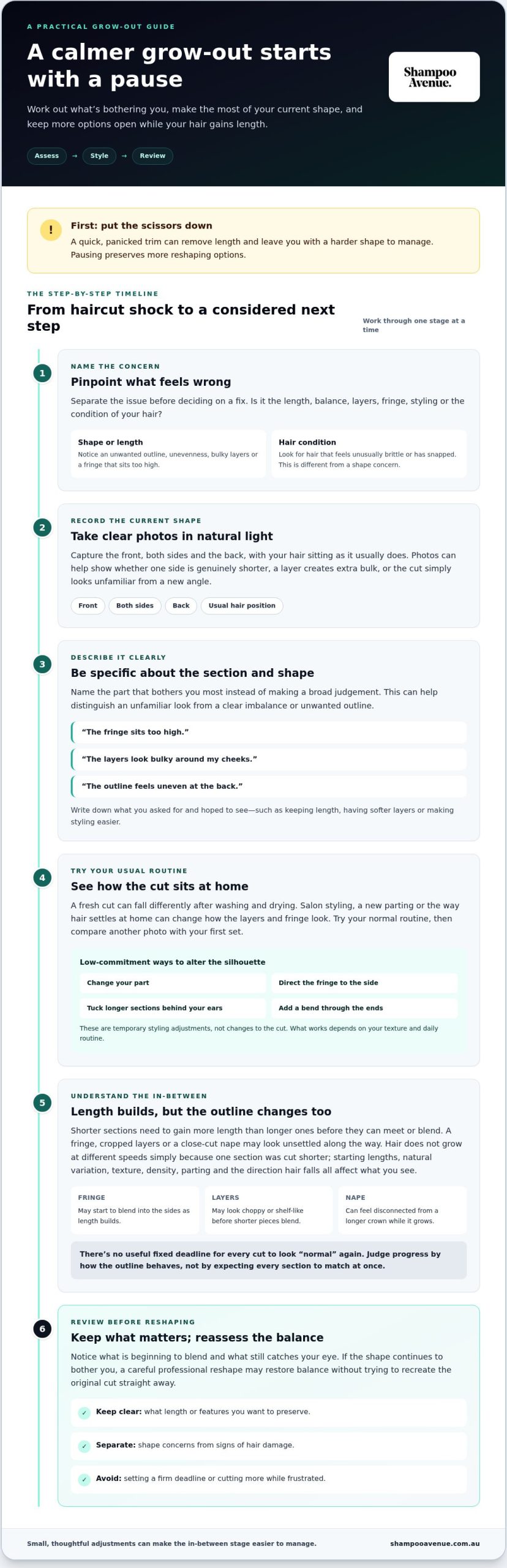
Take clear photos in natural light before changing anything. Capture the front, both sides and the back, with your hair sitting as it usually does. The images can help you see whether one side is genuinely shorter, a layer is creating extra bulk, or the cut simply looks unfamiliar from a new angle. They’re also useful when explaining the shape you’d like to change.
Hair gains length gradually, but not at the same pace for everyone. Growth happens at the follicle, and individual hair follows a hair follicle and growth cycle. Your starting lengths also differ across the head, so shorter sections may take longer to sit alongside longer ones. Avoid setting a firm deadline for the cut to look “normal” again.
How to describe what feels wrong with the haircut
Be specific. Instead of “I hate it”, try “the fringe sits too high”, “the layers look bulky around my cheeks” or “the outline feels uneven at the back”. Name the section, length or shape that bothers you most. This helps distinguish a cut that feels unfamiliar from one with a clear imbalance or an unwanted outline.
Write down what you asked for and what you hoped to see. Did you want to keep length, have softer layers or make styling easier? Comparing the request with the result can clarify whether the issue is the cut itself or the way it’s been dried and styled. Look, too, for signs of damage, such as hair that feels unusually brittle or has snapped. A shape concern and a condition concern aren’t the same thing.
Why waiting briefly can prevent a second haircut regret
A fresh cut can sit differently once you’ve washed and dried it at home. Salon styling, a new parting or the way the hair settles after washing can change how layers and the fringe fall. Try your usual routine before deciding the shape needs another cut. If possible, take another photo after styling it yourself and compare the outline with your first set.
Resist scissors or clippers while frustration is running high. A small snip can change how neighbouring sections sit, and removing more length may limit your reshaping options. Pausing before making another change preserves more options. Give yourself time to assess the cut calmly. Fixing a bad haircut while it grows out starts with knowing what you want to keep, not rushing to remove more.
How hair grows out: what changes as an awkward haircut gains length
A haircut grow-out is the gradual change in a cut’s shape as hair gains length. The scissors set the starting outline, but they don’t determine how every section will sit months later. A short fringe, cropped layers or a close-cut nape need to gain more length than longer sections before they can meet or blend. That difference can make the shape feel unsettled, even as your hair grows normally.
Hair doesn’t emerge at different speeds simply because one section was cut shorter. The visual difference comes from the lengths each section started at, alongside natural variation in how hair grows and sits. Texture, density, a natural part and the direction hair falls can all affect what you notice in the mirror. That’s why a fixed timeline for a cut to look balanced again isn’t useful for everyone.
Why layers and short sections can look uneven for a while
Think of a layered cut as several lengths working together. As they gain length, shorter pieces may still sit well above the longer outline, so a layer can look choppy or create a shelf-like effect before it blends. A fringe may reach the eyes while the sides remain longer; a short nape may feel disconnected from a longer crown. These shifts reflect the original haircut’s shape, not automatically damage. Breakage or brittle-feeling strands are a separate condition concern.
Hair texture can make the transition more noticeable. A wave or curl may spring up differently in shorter sections, while straighter hair can show a sharper line between lengths. Compare the cut in its usual styling rather than judging it only when wet or freshly brushed, as those conditions can change how the outline appears.
What to expect during the in-between stages
As length builds, the silhouette changes. A fringe can start to blend into the sides, layers may feel less distinct, and the ends can shift from a compact outline to a softer one. Sometimes the cut seems briefly heavier on one side because the lengths now sit at different points around the face or shoulders. Growing out a cut changes its shape as well as its length.
Styling can alter that silhouette without removing length. Changing your part, directing the fringe to the side, tucking longer sections behind your ears or adding a bend through the ends may help sections sit together differently. These are temporary adjustments, not changes to the cut itself. What works depends on your texture and daily routine.
For fixing a bad haircut while it grows out, judge progress by how the outline behaves, rather than expecting every section to match at once. Notice what’s beginning to blend and what still catches your eye. If the changing shape is hard to assess, precision women’s haircuts and styling at Shampoo Avenue can help you consider realistic options for your current length.
What can you style, soften or reshape while a bad haircut grows out?
Styling changes how your hair looks today; cutting changes its length and shape. Start with reversible options if you’re unsure what will help. A different part or a small accessory can shift the overall impression without committing you to a new cut. If you’re fixing a bad haircut while it grows out, match the approach to the part that’s bothering you rather than trying every trick at once.
Low-commitment styling ideas for an awkward haircut
Choose a small adjustment that suits your concern. If the fringe feels too prominent, sweep it to the side or use a clip to keep it away from your face. If layers look bulky, try smoothing them closer to your head or tucking longer sections behind your ears. A headband or simple clip can also draw attention away from an uneven outline.
- Unwanted fringe: Change your part or pin the fringe loosely to one side.
- Bulky layers: Try a smoother finish, or gather longer sections into a loose style if they’re long enough.
- Uneven outline: Tuck one side behind your ear or use an accessory to create a more balanced look.
Ask your stylist to demonstrate options that suit your existing length and daily routine. Keep heat styling gentle and avoid repeatedly applying heat to force a shape to sit differently. Extensions aren’t a universal fix either; they take care and may not suit every cut, texture or preference. You don’t need extra tools or additions to make progress.
When a reshape may help more than simply waiting
If styling only disguises a shape that consistently bothers you, a careful reshape may improve balance. It can also mean removing some length, so be clear about what you want to retain before any cutting begins. At Shampoo Avenue, a stylist can assess how the sections sit and talk through realistic options for your current length, rather than promising to recreate the cut you originally wanted.
Describe the specific issue: perhaps one side feels heavier, the fringe doesn’t blend, or the outline looks blunt. Explain what you want your hair to do day to day, and which lengths you’re committed to keeping. Reference photos can help communicate the kind of finish you like, while your styling habits help keep the plan practical. The precision haircut guidance offers more context on considered haircutting.
There’s no single right choice. Temporary styling can give you breathing room; a reshape may suit you if a specific imbalance keeps getting in the way. Weigh the visible benefit against the length you’d give up, then choose the option that feels manageable for you.
A practical grow-out plan: protect the length and review the shape
A simple routine can help you see how the cut is changing without turning every mirror check into a decision about scissors. Pause before making another change, keep a record of the shape, practise one styling adjustment at a time and reassess after some time has passed. Hair grows gradually, so look for shifts in how the outline sits rather than expecting an overnight transformation.
Keep your hair in good general condition with care that suits its needs. Gentle handling and a routine that leaves your hair feeling comfortable can support the lengths you’re trying to retain, but no product can promise to make hair grow faster. If the ends feel damaged, brittle or prone to snapping, an individual assessment can help clarify whether the concern is condition, shape or both. For damaged-feeling lengths, this protein treatment and hair repair guidance explains more about repair-focused care.
A simple routine for the weeks ahead
Make the plan easy to follow. Take photos from the same angles and in similar lighting occasionally, rather than inspecting the cut every day. Choose one styling change, such as a new part or a different way to wear the fringe, and give yourself time to see whether it helps. If you change several things at once, it’s harder to tell what’s working.
Resist repeatedly trimming one section yourself. A small correction can alter the balance between neighbouring lengths, and repeated snipping may make it harder to keep the shape you’re aiming for. If something continues to bother you, note exactly what it is and bring that observation to a haircut and styling appointment.
How to decide whether to trim or keep growing
A tidy-up aims to refine the ends or soften the outline while retaining most of the current length. A reshape changes how sections sit together and may take more length from particular areas. Every trim trades some length for a change to the haircut’s outline. Before agreeing to a cut, be clear about what you’re willing to lose and what you want to preserve.
Split or fragile ends don’t call for the same response in every case. Their condition, how far the damage extends and your length goals all matter, so avoid treating a trim as an automatic requirement or refusing one at all costs. A stylist can assess the ends and explain the likely effect of tidying them compared with leaving them while you grow the cut out.
For fixing a bad haircut while it grows out, let your priorities guide the next step: keeping length, improving the outline or addressing damaged-feeling ends. Shampoo Avenue offers individual haircut and styling support to help you consider a practical plan for your current shape and goals.
When professional haircut and styling support can make the grow-out easier
A stylist can look at how the cut sits now, how its sections connect and what you hope to keep. That assessment can help separate a change that’s possible with styling from one that would need some length removed. It won’t reverse the original cut instantly, but it can clarify realistic options for making the current shape feel more balanced as it grows.
Precision women’s haircuts and styling can be useful during a grow-out, not just when you’re ready for a completely new look. The focus may be a considered adjustment to the outline, a more workable way to wear a fringe or styling guidance for the lengths you have. At Shampoo Avenue, the approach is tailored to your hair, the existing shape and what feels comfortable for you.
How to prepare for a haircut conversation
A clear conversation starts with specifics. Bring photos of your current cut from different angles, along with reference images that show the direction you like. The examples don’t need to be an exact match; they can help show whether you prefer a softer outline, more movement or a fringe that blends into the sides.
Explain which parts feel uncomfortable and what you’d like to retain. If keeping the overall length matters most, say so before discussing possible changes. Share how you usually style your hair, how much time you want to spend on it and whether you air-dry or use a dryer. These everyday details help shape a plan that’s practical beyond the salon chair.
What a considered reshape can and cannot do
A careful reshape may soften a harsh line or improve balance between sections. It can’t make short pieces instantly match longer ones, and some unevenness may need time to grow. Adjusting one area can also mean taking length from another, so the likely trade-off should be clear before you decide. Reference photos guide the conversation, but your result will reflect your own hair and its current cut.
Go in with a clear priority: retain as much length as possible, make a particular section easier to style or improve the overall outline. If the options involve a choice between those goals, you can decide what matters most. There’s no need to commit to a dramatic change just because you’re seeking professional advice.
For fixing a bad haircut while it grows out, an individual assessment can help turn uncertainty into a manageable plan. To explore tailored support, take a look at Shampoo Avenue’s haircut and styling services.
Give your next haircut a clear direction
The grow-out doesn’t need to be a waiting game or a series of quick fixes. Use this time to decide what you want your hair to feel like day to day: easy to style, softer around your face, or closer to the length you miss. That goal can guide your next step, whether you keep growing it or choose a measured reshape.
If you’re fixing a bad haircut while it grows out and would value a fresh perspective, Shampoo Avenue’s individual approach to haircutting and styling can help you explore what’s realistic for your current shape. Professional hair repair treatments and quality haircare products can also support your focus on hair condition as you care for the lengths you’re keeping.
Explore Shampoo Avenue’s haircut and styling services and decide what you’d like to retain before your next appointment. Start with a clear priority, then take the next step that feels right for your hair.
Frequently Asked Questions
Can a bad haircut be fixed without cutting it shorter?
Sometimes, styling changes can make a haircut feel more balanced without removing length. For example, adjusting your part may help disguise a fringe that sits awkwardly, while smoothing a bulky section can soften its appearance. Whether the shape itself can be adjusted without shortening any sections depends on how the hair falls. Avoid a quick home cut; a stylist can talk through options while keeping your length goals in mind.
How long does it take for a bad haircut to grow out?
There’s no single timeline for a haircut to grow out because hair growth and visible changes vary between people. The starting shape matters too: a short fringe or layer has further to go before it blends with longer sections than a slight difference at the ends. Rather than choosing a date to expect a certain result, take occasional photos in similar conditions to notice how the shape is changing.
Should I go back to the stylist after a bad haircut?
If you feel comfortable, an honest conversation with the stylist can help you understand what might be adjusted. Explain what you requested, what feels different and what you’d like to keep. Ask them to talk through the options before deciding whether to have another cut. There’s no need to agree on the spot; take time to consider whether the suggested change matches your priorities.
Can I fix an uneven haircut at home?
You can change how an uneven cut looks at home, but correcting its shape with scissors is risky. Removing length from one section may make the surrounding areas appear more uneven or limit future options. Try wearing your hair with a different part or using a clip to disguise the area first. If the imbalance is still noticeable in your usual style, book a professional assessment before attempting a bigger correction.
Will trimming my hair make it grow out faster?
No. A trim removes length from the ends; it doesn’t make hair grow faster from the scalp. It may make the outline look tidier, but that change involves a trade-off if you’re trying to retain length. Before trimming, decide whether improving the ends or keeping every possible centimetre matters more to you. If you’re unsure, discuss what a proposed tidy-up would change before choosing.
What should I do if I hate my new fringe?
Give the fringe a chance to sit in your usual routine before deciding what to change. After washing and drying it at home, try a side part or blend it gently into nearby sections with a clip. Avoid cutting it yourself, particularly if you’re upset with the result. If it still feels wrong, explain whether the length, thickness or way it falls bothers you, and say what you hope to retain.