

Champagne blonde hair ideas for every skin undertone
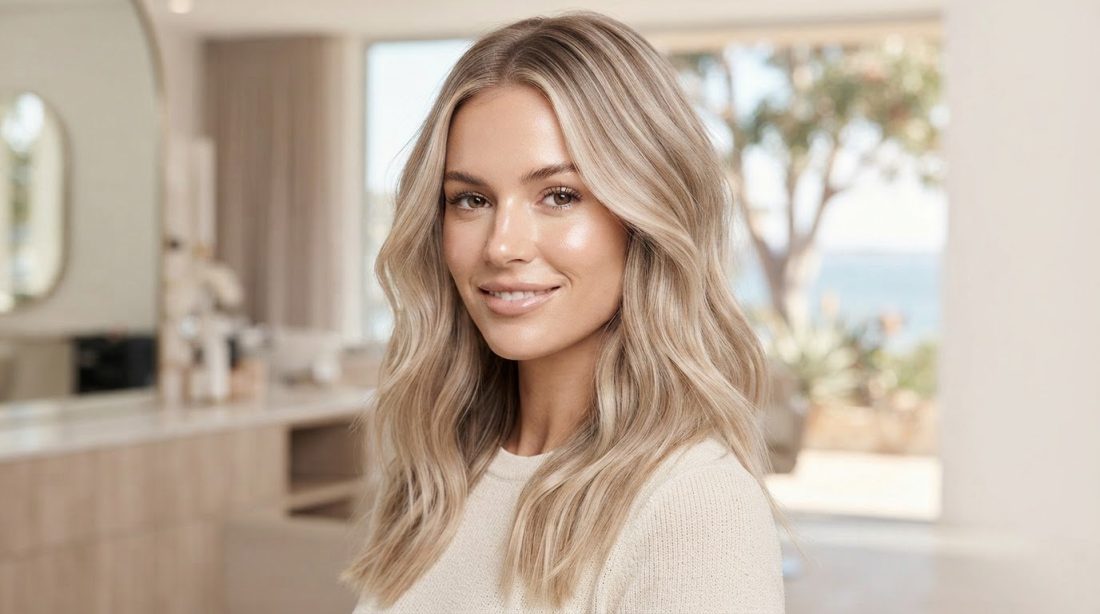
Champagne blonde isn’t simply a lighter blonde: it blends light beige, pale gold and pearl for a neutral-warm finish between yellow and ash. These champagne blonde hair ideas show how the balanced tone can suit different lengths, including short cuts and pixies, with the shade tailored to your skin undertone and natural colour. On short hair, the result can feel especially fresh, whether you prefer soft dimension or a brighter, all-over look.
If you love blonde’s softness but don’t want a shade that feels too warm or too cool, champagne blonde gives you room to personalise the balance. Explore how it differs from beige and ash blonde, then consider balayage, highlights, lowlights and short styles. Warm, cool and neutral undertones can also guide your shade choice, helping you take a clearer idea of your preferred finish into your next colour conversation.
Key Takeaways
- Champagne blonde balances beige, pale gold and pearl for a finish that sits between yellow and ashy.
- Balayage, a soft root or a root smudge can create a blended look that grows out more gently.
- Highlights add brightness, while lowlights and natural base colour help give blonde hair dimension.
- Choose golden or peach tones for warmth, and cooler or pastel-pink tones to complement cooler undertones.
- Short cuts and pixies can show off champagne blonde through carefully placed colour and contrast.
1. What Tone is Champagne Blonde?
Champagne blonde blends light beige, pale gold and pearl into a balanced blonde finish. Its undertones sit between distinctly yellow and cool, flat ash, so the result can feel softly warm without looking brassy. The shade can range from light to dark, making it adaptable to different starting colours and desired brightness.
Beige blonde is often described as ash with sandy hues, while champagne blonde brings in more golden or pearl notes. Ash blonde leans towards icy grey; champagne can include subtle pink or peach. These differences show in natural light: if a blonde looks too yellow, it may need a cooler toner, while an overly ashy finish may benefit from warmer beige or gold.
Your natural hair colour helps determine the route to champagne blonde. The shade can suit light brunettes and bronde hair, but moving from mid-brown to pale blonde is a bigger transformation than refining an existing blonde. A colourist considers your starting shade and hair condition, then plans the lift and tone. A major mid-brown-to-blonde change may take two salon appointments to help maintain hair integrity.
Champagne tones perform best on hair lightened to levels 8-10. At that lightness, pale gold, beige and pearl can show clearly; a darker base may need more lift before the champagne tone appears as intended. A consultation before the colour appointment helps match the shade to your natural colour, complexion and maintenance preferences.
Fair to medium skin with neutral or cool undertones is often considered a natural match for champagne blonde. Its neutral-to-slightly-warm balance can also work well with neutral-to-warm skin. Eye colour is a styling consideration, not a strict rule: a soft beige finish, for example, can create gentle contrast with dark brown eyes, while pearl tones can pick up the brightness of blue or green eyes.
You can colour your hair at home, but creating an even champagne blonde from darker hair is difficult. Uneven lightening can leave yellow patches, and repeated processing can compromise hair integrity; over-processing curly hair may also relax its curl pattern. Plan dramatic colour changes with a salon colourist.
To maintain the finish, choose shampoo formulated for colour-treated hair; sulfate-free shampoo can help minimise fading. Violet-toned toner or conditioner may help counter yellow, while a gloss or toner refresh restores the balance of beige, gold and pearl. Toner refreshes are recommended every 6-12 weeks to maintain vibrancy, depending on how the shade shifts between appointments.
2. Balayage and lived-in champagne blonde
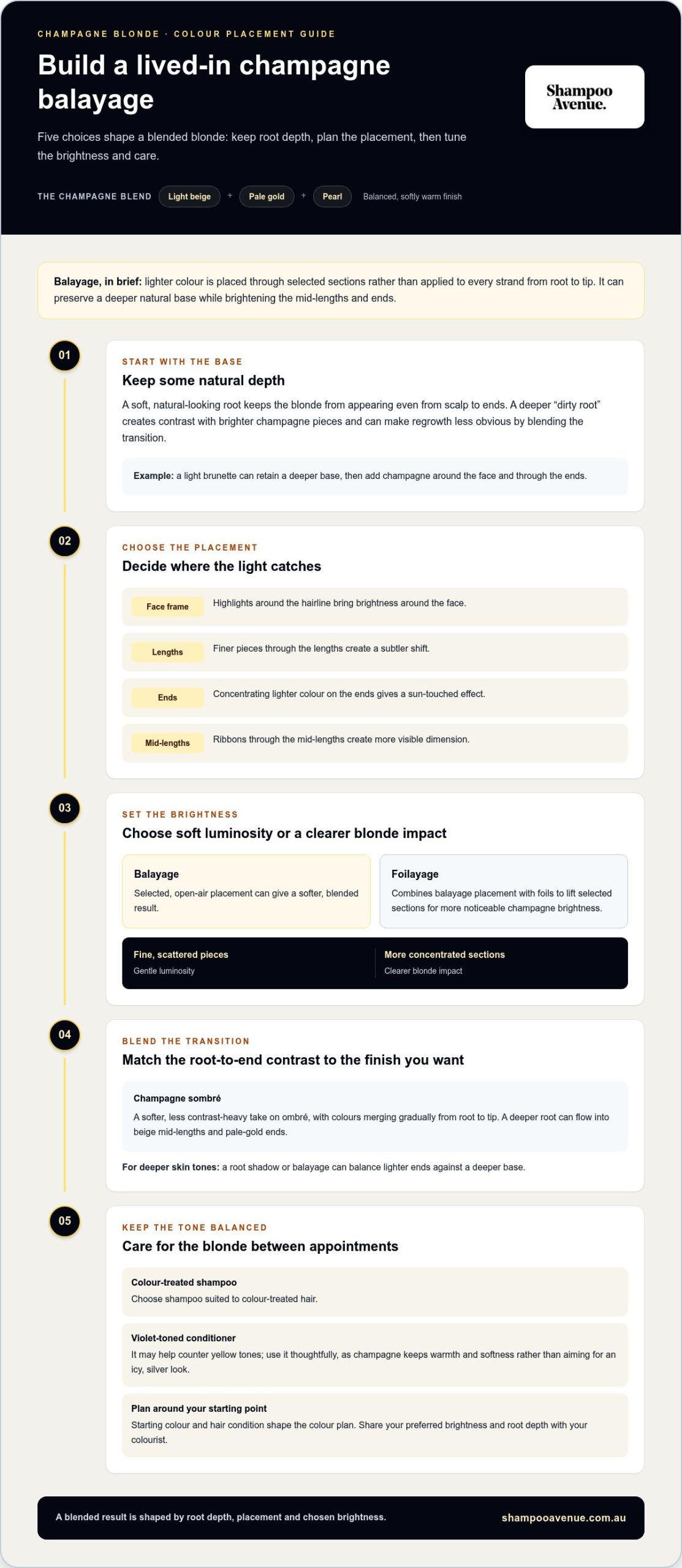
Champagne balayage places lighter colour through selected sections rather than colouring every strand from root to tip. The result can keep roots close to your natural shade while beige, pearl and pale-gold ribbons brighten the mid-lengths and ends. For example, a light brunette can retain a deeper base and add champagne pieces around the face and through the ends.
For a lived-in finish, ask for a soft, natural-looking root instead of an even blonde from scalp to ends. A “dirty root”, meaning a deeper root area, creates contrast with brighter champagne highlights. This approach can also make regrowth less obvious because the transition from natural colour to blonde is blended rather than sharply defined.
Placement changes the feel of balayage. Face-framing highlights bring brightness around the hairline, while finer pieces through the lengths create a subtler shift. Concentrating lighter colour on the ends gives a sun-touched effect; adding ribbons through the mid-lengths creates more visible dimension. Gradual placement suits anyone who wants blonde without losing the depth of their natural base.
For a brighter result, foilayage combines balayage placement with foils to lift selected sections. It can create more noticeable champagne brightness than softer, open-air balayage. The choice depends on the contrast you want: ask for fine, scattered pieces for gentle luminosity, or more concentrated sections for a clearer blonde impact. Your starting colour and hair condition also shape the colour plan.
Deeper skin tones can pair well with champagne blonde through a root shadow or balayage, balancing lighter ends against a deeper base. Champagne sombré offers another blended option. It is a softer, less contrast-heavy take on ombré, with multiple colours merging gradually from root to tip. For example, a deeper root can flow into beige mid-lengths and pale-gold ends.
Keep the tone looking fresh between colour appointments with care suited to blonde hair. Colour-treated shampoo helps care for blonde hair, while violet-toned conditioner may help counter yellow tones. Use it thoughtfully: champagne combines warmth and softness rather than aiming for an icy, silver look. At your appointment, share a clear example of your preferred brightness and root depth.
If you want a blended blonde with a natural-looking root, Lived-In Luxury Blonde Services can help shape the placement and tone around your starting colour and desired finish.
3. Champagne blonde highlights and lowlights
Champagne blonde highlights add brightness while preserving the base colour between lighter pieces. Fine highlights can soften a neutral brown base; wider ribbons create a brighter, more noticeable shift. Delicate pieces around the face can frame your features, while scattered highlights through the lengths add dimension. The champagne tone can lean towards pearl, beige or pale gold, depending on how much warmth you want.
Lowlights bring depth back into highlighted hair. Beige or slightly darker strands among blonde sections add contrast, so the finish doesn’t look like one flat shade. If your hair is already very light, a few lowlights close to your natural base can make champagne highlights stand out without adding brightness everywhere. The balance of light and dark pieces shapes the colour’s dimension.
Placement matters. A colourist can concentrate fine highlights near the hairline for soft framing, then place brighter sections through the top layer for visible sparkle. Keeping some natural base colour between highlights adds dimension without colouring every strand. Choose fine, blended pieces for an understated result, or ask for stronger contrast through the lengths for a brighter look.
A blended root can help the colour transition as your hair grows. A champagne shadow root starts near your natural shade and blends into lighter tips, while a gradual root smudge softens the line between darker roots and blonde lengths. Keeping the root close to your base and placing champagne highlights through the mid-lengths, for example, can make regrowth less pronounced than an even root-to-tip blonde.
Champagne highlights can show beautifully on curly hair, as colour catches across the curves and changing angles of each curl. Place lighter pieces where the curl pattern naturally lifts, such as around the face or through selected ends, rather than aiming for uniform brightness. Avoid over-processing: excessive lightening can cause curls to relax or straighten. Your colour plan should account for your curl pattern and hair condition.
Margot Robbie’s champagne blonde look is described with a soft root and warm blonde highlights. This combination keeps some depth at the base while bringing warmth through the lighter sections. For a brighter accent, Erika Jayne’s look uses soft baby blonde highlights a few times a year for an extra pop. These examples show how placement can change the effect without changing the whole colour.
Before your appointment, decide where you want the brightest pieces, how much natural root you’d like to keep, and whether you prefer warm or more neutral highlights. A photo showing the placement you like can help explain your desired finish. Mention your usual styling, too: curls, waves and straight styles reveal different sections, so placement should work with how you wear your hair day to day.
4. Champagne blonde shades for different skin undertones
Choose a champagne blonde undertone to complement your skin, rather than treating the shade as one fixed colour. Champagne can include soft golden, baby-pink or peach notes, and these small tonal shifts change how the finished colour sits against your complexion. Start by deciding whether you want more warmth, a softer pink cast or a balanced neutral-to-warm effect.
For warm skin undertones, peachy champagne can echo your complexion’s natural warmth. Champagne honey is another option, described as a warm shade that suits almost any skin tone. For a lighter effect, ask for pale gold through the lengths with a peach reflection, rather than a strongly golden finish from root to tip.
Cool undertones can pair with champagne blonde that leans towards cool or pastel pink. This keeps the result soft without making it overly golden. For example, a pearl-beige base with a delicate pink cast can feel more harmonious than a strongly honeyed blonde. Ask for a subtle pink tone if you want a natural-looking finish.
Neutral skin undertones offer flexibility: a balanced champagne shade can sit between beige and pale gold. Neutral-to-slightly-warm champagne tones are especially suited to neutral-to-warm skin. If both warm and cool colours seem to suit your complexion, start with a neutral base and add a gentle golden or blush reflection through selected sections. This gives your colourist a clear direction without locking the whole look into one extreme.
For deeper skin tones, champagne blonde can be balanced with a root shadow or balayage. Keeping the root closer to your natural depth creates contrast, while lighter champagne through the mid-lengths and ends adds brightness. This placement lets you enjoy a lighter shade without making the overall colour feel disconnected from your complexion. Share a reference showing the root depth and blonde placement you like.
Before your colour appointment, compare shade references in natural daylight. Indoor lighting can make golden tones appear stronger or pink tones less noticeable, so check how the colour looks in more than one setting. Describe the effect you want, such as “peachy warmth” or “soft pink-beige”, rather than relying on the word champagne alone. A consultation can align that description with your natural hair colour and chosen placement.
Between salon visits, use shampoo formulated for colour-treated hair to care for your blonde. A sulfate-free option can help minimise colour fade, while violet-toned shampoo or conditioner may help counter yellow tones. Follow toning product directions: too much violet pigment can shift the balance away from the golden or blush reflection you chose. Keep your preferred shade reference handy when planning a refresh.
5. Champagne blonde on short hair and pixie cuts
Short hair gives champagne blonde a distinctive impact: each highlight sits close to the cut’s shape, making placement easy to see. On a pixie, lighter pieces through the longer top can add movement, while a slightly deeper root keeps the look connected to your natural colour. On a bob, brighter sections near the front can frame the face without making every strand equally light.
Start with the haircut you actually wear. A textured pixie often has varied lengths across the crown, so fine champagne highlights can pick up those layers. A sleek, close-cropped cut has fewer long sections to catch colour, making a soft all-over champagne tone or carefully placed accents more visible. Bring a photo of your cut styled as usual, not just a salon-finished reference.
For a brunette base, decide on the effect before choosing how much blonde to add. A few beige-gold pieces through a longer fringe create subtle contrast; brighter champagne highlights across the top make the change more noticeable. Keeping the sides closer to your natural shade gives the colour a deliberate shape instead of an even cap of blonde.
Pixie cuts also suit a soft root shadow. A root close to your natural shade can blend into lighter top sections, creating contrast without a hard line. This can help the short cut grow out with a more gradual transition. Ask for the root depth and lightest pieces to be considered together, especially around the hairline and fringe.
For cooler undertones, champagne highlights with a pearl or pastel-pink cast can soften brightness around the face. Warmer complexions may suit pale gold or peach notes. On short hair, a small tonal change can be more noticeable because the colour sits near the face; choose a finish that complements your skin rather than copying a shade from someone with a different complexion.
Curly pixies need placement that follows the curl pattern. Lighter accents on curls that naturally sit forward can show the shape, while darker sections underneath preserve depth. Avoid trying to make every curl equally blonde. Over-processing curly hair can cause curls to relax, so your hair’s condition and texture should guide how much lightening is planned.
Bring three details to your colour appointment: a photo of your current cut, an example of the champagne tone you like, and a clear preference for subtle or bright contrast. A dramatic brunette-to-blonde change may require two salon appointments to help maintain hair integrity. For a tailored colour plan for your shorter cut, plan your champagne blonde transformation.
Shampoo Avenue: Luxury Hair Colour Transformations
Shampoo Avenue offers Luxury Hair Colour Transformations for anyone considering a change to champagne blonde, from a brighter result to a softer, blended finish. Its Lived-In Luxury Blonde Services suit those seeking dimension and a more natural-looking root. The right approach depends on your starting colour, chosen tone and how you wear your hair, whether it’s a pixie cut or a longer style.
Bring a reference photo and describe the balance you like, such as pearl and beige or soft golden warmth. If you’re also considering natural colour or grey blending, those preferences can inform the overall colour plan. A thoughtful conversation helps connect your inspiration with a shade and placement that work together.
Contact Shampoo Avenue to discuss your champagne blonde colour goals.
Make your next colour choice your own
You don’t need to choose a finished shade from a photo as your next step. Instead, collect a few references that show what you like: the brightness, root depth, placement, or how the colour sits against your complexion. This gives you a practical starting point for discussing your current hair and the look you want to wear every day.
Champagne blonde hair ideas can also start a broader colour plan. Shampoo Avenue offers Luxury Hair Colour Transformations and Lived-In Luxury Blonde Services, and can connect your blonde direction with other colour goals, including Grey Blending & Natural Colour. Bring your inspiration and talk through the finish you’re drawn to.
Contact Shampoo Avenue for a champagne blonde consultation and take the next step towards a colour that feels like you.
Frequently Asked Questions
What Tone is Champagne Blonde?
Champagne blonde is a neutral-to-warm blonde that avoids looking strongly yellow or distinctly ashy. Its finish can shift with the mix of beige, pale gold, pearl, pink or peach tones. If you’re choosing between references, compare them in daylight and note whether you prefer a golden glow or a cooler, pink-leaning effect. That description gives you a clearer starting point than the shade name alone.
What is champagne blonde hair and what tones does it include?
Champagne blonde hair is a blended colour built from soft, light-reflecting tones rather than one flat hue. Beige keeps the result understated, pale gold adds warmth, and pearl can make it feel cooler. Some versions include a subtle baby-pink or peach cast. For a natural-looking finish, decide which note you want to notice most, then use that preference to guide the overall balance.
What are the best champagne blonde hair colour ideas for different hair lengths and textures?
Use champagne blonde hair ideas as visual starting points, then match colour placement to your hair’s shape and movement. On a pixie, lighter pieces on the longer top can show the cut’s texture; on a bob, face-framing accents can brighten the front. Long, straight hair can showcase blended ribbons, while curls catch colour differently across their curves. Share a photo of your usual hairstyle so the placement suits how you wear your hair.
What is the difference between champagne blonde, ash blonde, beige blonde and platinum blonde?
Champagne blonde balances warm and cool notes, while ash blonde is cooler and often has an icy-grey cast. Beige blonde tends towards sandy, muted tones. Platinum is a much paler, brighter blonde, with less of champagne’s soft golden or pink warmth. When comparing salon references, look at the root and overall contrast as well as the lightest pieces. Similar brightness can still feel different with another undertone.
Does champagne blonde suit different skin tones and undertones?
Yes, the shade can be adjusted to complement different skin tones. For warmer undertones, peach or honey notes can echo warmth; cooler undertones can pair with a softer pink or pearl cast. Neutral undertones have room to explore either direction. Compare reference photos beside your face in daylight. Neutral makeup tones can work across skin tones, while a cool-toned red lip suits cooler skin and a warm-toned red lip suits warmer skin.
What champagne blonde balayage, highlights and ombré styles are popular?
For champagne blonde hair ideas that grow out softly, consider balayage with a natural-looking root, delicate face-framing highlights, or a shadow root blended into lighter ends. Champagne sombré is a softer alternative to ombré, blending multiple colours with less contrast between root and tip. Choose finer placement for a subtle change or brighter sections for a more noticeable blonde effect. A reference photo can show your preferred contrast.
How do you maintain champagne blonde hair and prevent brassiness?
Use shampoo formulated for colour-treated hair, and consider a sulphate-free option to help minimise fading. Violet-toned toner or conditioner may help counter yellow tones, while a gloss or toner refresh can restore the balance as the shade changes. Toner refreshes are recommended every 6-12 weeks to maintain vibrancy. For bright colour, root touch-ups are recommended every six to eight weeks. Heat protectant and UV-protectant leave-ins can also help protect the colour during styling and sun exposure.
What shampoo, toner and home care products work best for champagne blonde hair in Australia?
Choose a colour-treated shampoo suited to your hair, and consider a sulphate-free formula to help minimise colour fade. Violet-toned toner or conditioner can help counter yellow tones, while preserving your chosen champagne balance. Heat protectant before styling and a UV-protectant leave-in can help protect colour. Shampoo Avenue offers a curated selection of professional haircare products to help maintain vibrant, beautiful blonde tones.