

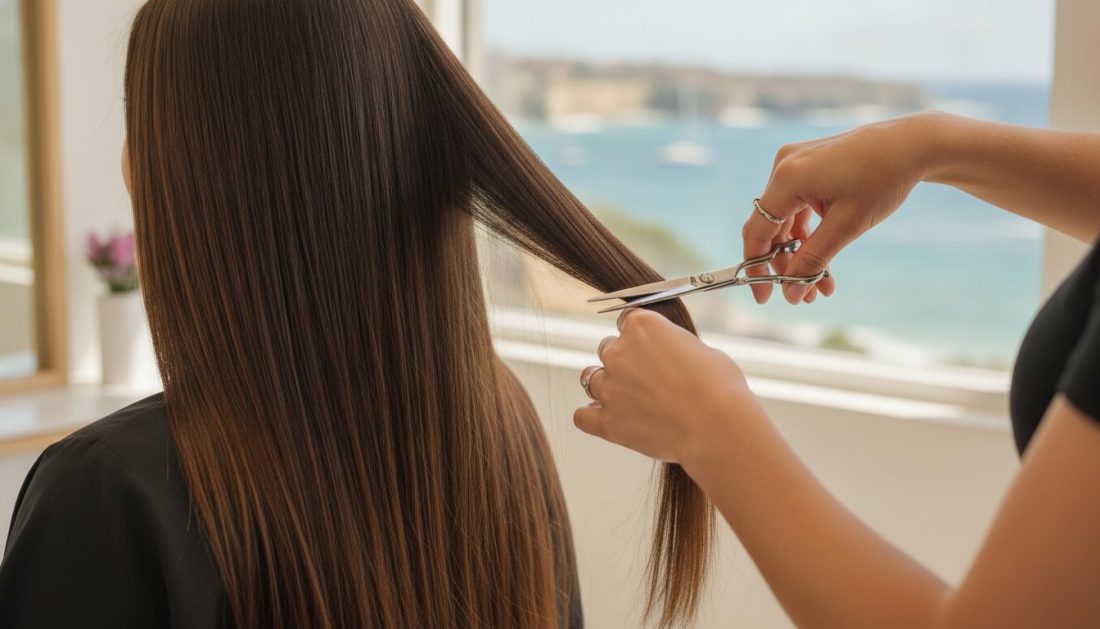
Hair Dusting vs Trim: Aussie Guide to Saving Your Length
Have you ever walked into a salon asking for a tiny centimetre off, only to leave feeling like you’ve lost months of hard-earned growth? It’s a common fear for anyone trying to reach their long-hair goals. You notice your ends getting that rough, velcro-like texture and the light no longer bounces off your colour, yet you’re terrified of the shears. We get that protective feeling over every single strand.
The good news is that you don’t have to choose between health and length. This guide breaks down the precise differences between hair dusting vs trim for split ends so you can make an informed choice at your next appointment. We promise to show you how to banish those frayed tips while keeping your length exactly where you want it.
We’ll explore the surgical precision of dusting, which targets only the damaged bits, and compare it to the structural reset of a traditional trim. You’ll also learn how to identify which technique suits your specific hair wellness needs and how to maintain that smooth, luxury finish at home. Let’s ensure your next salon visit feels like a win for your length, not a sacrifice.
Key Takeaways
- Learn how unique Australian stressors like UV exposure and salt water impact your hair cuticle and how to spot early signs of fraying.
- Discover why hair dusting is the ultimate “invisible” length-saver for those wanting to remove damage without losing a single centimetre of growth.
- Understand the functional differences of hair dusting vs trim for split ends so you can choose between a millimetre-perfect tidy or a structural reset.
- Master professional diagnostic tests, such as the “See-Through” factor check, to accurately assess your hair’s health before your next salon visit.
- Explore how a wellness-first approach, combining precision cutting with professional repair treatments, ensures your ends stay sealed and healthy for longer.
Understanding the Split End Dilemma: Why Your Ends Fray
Split ends aren’t just a cosmetic nuisance; they’re a structural failure of the hair fibre. When the protective outer layer, known as the cuticle, is stripped away, the inner cortex is left exposed. This leads to the characteristic fraying we all dread. In Australia, our lifestyle often accelerates this process. The harsh UV rays in Sydney or Perth, combined with regular dips in salt water and frequent heat styling, create a perfect storm for damage. If you don’t address these frayed tips early, the split literally travels up the hair shaft. This turns a minor issue into a major break that eventually requires a significant chop. Understanding the nuances of hair dusting vs trim for split ends starts with recognising that your hair is a delicate fabric that needs constant protection.
The Science of Trichoptilosis
Scientifically known as trichoptilosis, split ends occur when the protein bonds within the hair weaken and snap. This protein loss leads to the internal structure failing, resulting in various types of damage. You might notice classic Y-splits where the hair divides in two, tapers where the end looks thin and translucent, or even tiny knots common in curly textures. To combat this at the source, mastering protein treatment for hair is essential for reinforcing those internal bonds before the split even begins. Without this structural integrity, your hair loses its elasticity and its ability to hold onto moisture.
How Split Ends Sabotage Your Style
Have you ever noticed your hair feeling like velcro when you try to brush it? That’s the rough cuticle of split ends catching on healthy strands, causing more tangles and unnecessary breakage. For those with a luxury lived-in blonde, split ends are particularly cruel. They scatter light rather than reflecting it, making your fresh colour look dull, muddy, and frizzy instead of vibrant. Frayed ends disrupt the clean lines of a professional style, causing the silhouette of a precision haircut to lose its sharp, intentional finish.
When you ignore these tiny fractures, you’re essentially allowing your hair to unravel like a loose thread on a jumper. The longer you wait, the further the damage climbs, making it impossible to maintain a healthy look without sacrificing your length. Deciding between hair dusting vs trim for split ends depends on how far that damage has progressed and what your ultimate hair wellness goals are for the season.
What is Hair Dusting? The Invisible Length-Saver
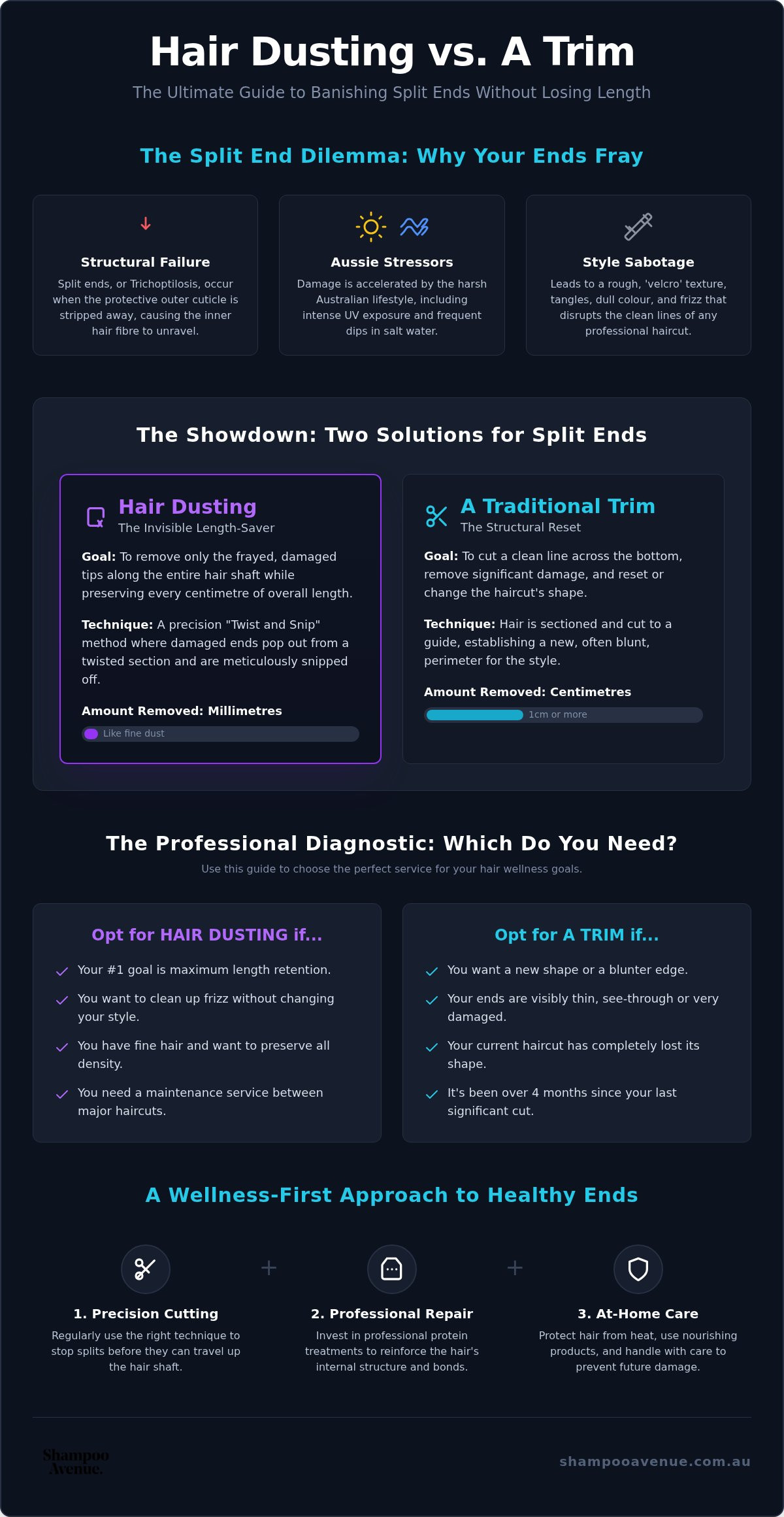
Hair dusting is a specialised technique designed to remove damaged tips without sacrificing a single centimetre of your overall length. While a traditional trim focuses on the bottom edge of your hair, dusting addresses the “halo” of split ends that often pop out along the entire hair shaft. When you compare hair dusting vs trim for split ends, the most significant difference is the “millimetre mindset.” Your stylist isn’t looking to change your shape; they’re looking to clean up the fabric of your hair. This makes it a maintenance service rather than a structural reshape, allowing you to keep your hard-earned length while restoring a smooth, healthy finish.
The “Twist and Snip” Technique
To perform a proper dusting, your stylist will divide your hair into small, manageable sections. By tightly twisting these sections, the damaged ends pop out away from the healthy hair, making them easy to identify and remove. This process requires incredible precision and ultra-sharp professional shears. Using dull scissors or, heaven forbid, kitchen shears would only crush the hair cuticle and create more splits. Proper salon lighting is also essential because the hair being removed is so fine it literally looks like dust falling to the floor. It’s a meticulous process that takes time, but the result is a silky texture that doesn’t feel shorter.
Who is the Ideal Candidate for Dusting?
This technique is perfect for anyone on a dedicated growth journey. If you find yourself avoiding the salon because you’re terrified of losing your length, dusting is your solution. It’s also a game-changer for fine-haired individuals. Since dusting doesn’t remove the baseline density, your hair stays looking thick and full. For Australians, it’s the ideal way to refresh “summer hair” that has been battered by salt water and UV rays. If you’re ready to refresh your look without losing your length, our experts can guide you through a tailored women’s haircut and styling session to restore your hair’s natural shine.
Dusting allows you to maintain the integrity of your style between major appointments. It’s the professional way to manage wear and tear without the emotional trauma of a big chop. By focusing on these tiny imperfections, you ensure that your hair remains a smooth canvas for your colour and styling. This approach treats your hair as a long-term investment, prioritising wellness over a quick fix.
Hair Dusting vs Trim: A Side-by-Side Comparison
Choosing between hair dusting vs trim for split ends depends on your current hair health and your long-term goals. While dusting is a surgical strike against damage, a trim is a structural reset. One keeps you on the path to Rapunzel-like length, while the other ensures your hair doesn’t look thin and straggly at the baseline. It’s a delicate balance between the centimetre you want to keep and the health you need to maintain for a luxury finish.
- Primary Goal: Dusting is purely about length preservation and surface smoothing. Trimming focuses on the structural integrity of the haircut and maintaining a healthy, thick baseline.
- Time Investment: A thorough dusting session can actually take longer than a standard trim. This is because your stylist must meticulously work through small sections of hair to identify and snip individual split ends along the entire shaft.
- Frequency: We suggest booking a dusting every 6 to 8 weeks if you’re actively growing your hair. A traditional trim is usually better suited for every 10 to 12 weeks, depending on how quickly your specific style loses its shape.
When to Choose a Traditional Trim
Sometimes, your hair needs more than a surface clean. If your ends have become translucent or “see-through,” you’ve likely lost the density required to keep your style looking intentional. A traditional cut is essential for maintaining the sharp lines of a bob or the balanced bounce of a layered look. Without that structural reset, your hair can start to look neglected rather than just long. Our approach to women’s haircuts and styling ensures that we only remove the damaged fibres that are compromising your hair’s health, leaving the rest of your length intact and vibrant.
The Hybrid Approach: The Best of Both Worlds
For many of our clients, the most effective solution is a combination of both techniques. We might perform a structural trim on the very bottom to thicken the perimeter while using dusting throughout the layers to catch those pesky flyaway splits. This hybrid method is particularly effective for supporting the seamless, low-maintenance look of a lived-in blonde specialist Phillip Island result. It allows your bespoke colour to shine through a smooth, light-reflective surface without sacrificing the overall length you’ve worked so hard to achieve. A stylist might recommend a hybrid service to ensure your ends remain structurally sound while your mid-lengths stay free from the friction that leads to further breakage.
The Professional Diagnostic: Which One Do You Actually Need?
Determining the winner in the hair dusting vs trim for split ends debate requires an honest look at your current strands. You don’t need a degree in trichology to perform a basic audit at home. Start with the “End-to-Root” texture test. Gently slide your fingers from the ends up towards the mid-lengths. If you feel a rough, sandpapery texture before you reach the roots, you’re likely dealing with surface splits that dusting can solve. This simple check helps you identify damage that often hides within the body of your hair.
Next, assess the “See-Through” factor. Stand in front of a well-lit mirror with a white towel or wall behind your hair. If the bottom few centimetres look translucent or sparse compared to the rest of your mane, you’ve lost significant density. In this case, dusting will only remove the frayed bits, but it won’t fix the ragged silhouette. You’ll need a trim to restore that healthy, thick appearance. Finally, evaluate your styling goals. If you’re purely focused on growth, dusting is your best friend. If you want to maintain a specific shape, a trim is mandatory.
The Texture and Density Audit
When your hair reaches its “breakage point,” the ends start to look like a frayed rope. Dusting is a brilliant maintenance tool, but it cannot replace the structural support of a traditional cut once the hair has thinned out. If you’ve been avoiding the salon for six months, chances are you need a trim to reset your baseline before you can transition back to a dusting-only schedule. Identifying where your hair starts to lose its “bulk” is the key to knowing when to stop dusting and start trimming.
Lifestyle and Maintenance Reality Check
Your daily routine plays a huge role in how your hair behaves. Do you use a heat styler every morning? Do you spend your weekends at the beach? High heat and salt water accelerate protein loss, making your hair more prone to splitting. To grow truly resilient hair, you must look at the source. Prioritising scalp health ensures that the new growth emerging is strong, elastic, and resistant to the elements. This foundation reduces the frequency of both dusting and trimming over time.
Ultimately, the best way to decide is to consult with a professional who views your hair through a wellness lens. We can help you map out a long-term plan that balances your desire for length with the necessity of health. If you’re unsure which path to take, book a session for women’s haircuts and styling and let our experts perform a precision diagnostic for you.
Prevention and Care: Ensuring Your Ends Stay Sealed
Protecting your investment requires a mix of professional expertise and mindful daily habits. Think of your hair as a long-term project. Small, consistent actions like using a dedicated UV protectant before heading to the beach or switching to a silk pillowcase can significantly reduce mechanical friction. These small shifts prevent the “velcro effect” where damaged ends catch on healthy strands, causing a chain reaction of breakage that eventually forces you back into the stylist’s chair for a more substantial cut.
The Davines Difference: Sustainable Strength
We choose Davines because their sustainable philosophy aligns with our commitment to hair integrity and ethical beauty. These professional repair treatments don’t simply coat the hair in silicone; they fortify the shaft from within using high-quality, natural ingredients. Using conscious creative products ensures that your hair remains resilient against daily stressors while supporting your environmental values. This internal strength is especially vital for maintaining the vibrancy and shine of your colour. You can find more detailed tips on this in our guide to hair colour aftercare, which explores how to protect your luxury investment between salon visits.
At-Home Rituals for Smooth Ends
Your at-home habits are just as important as your professional salon visits. We often suggest a “No-Heat” challenge to our clients who are struggling with persistent breakage. By reducing your reliance on hot tools, you give your hair cuticle a chance to recover and remain smooth. Integrating a regular protein treatment hair ritual is another vital step for anyone serious about length. These treatments replenish the lost keratin that keeps your strands strong and elastic, preventing the splits before they even begin to form. To find the perfect maintenance plan for your unique hair journey, organise a consultation with our experts today.
Embrace Your Longest, Healthiest Hair Yet
Understanding the nuances of hair dusting vs trim for split ends is the first step toward a routine that actually works for your specific hair goals. Whether you choose the surgical precision of dusting to save every millimetre or a structural trim to restore density, the focus remains on long-term hair wellness. By combining these professional techniques with sustainable Davines care at home, you can finally move past the cycle of breakage and big chops. You deserve a style that feels thick, smooth, and vibrant from root to tip.
Our team consists of specialists in high-end colour transformations who are committed to sustainable hair wellness. We use expert precision cutting to support your growth journey, ensuring your hair looks as luxurious as it feels. Don’t let frayed ends hold your style back any longer. Book your luxury hair wellness consultation today and let’s design a maintenance plan that honours your length. Your dream hair is well within reach, and we’re here to help you protect every single strand with the care it deserves.
Frequently Asked Questions
Will hair dusting make my hair thinner?
No, hair dusting actually helps your hair look thicker over time. Unlike some thinning techniques that remove bulk, dusting only targets the individual frayed ends that sit on the surface of your hair. By removing these damaged bits, you eliminate the frizz and “flyaways” that make hair look ragged. Your baseline density remains untouched, so your hair stays full and healthy while feeling significantly smoother to the touch.
Can I do hair dusting at home with my own scissors?
We strongly recommend against DIY dusting. Household scissors, even sharp ones, aren’t precise enough for this delicate task. They often crush the hair cuticle instead of slicing it, which leads to immediate new split ends. Professional stylists use ultra-sharp shears and specific salon lighting to see the “dust” they are removing. Attempting this yourself often results in uneven patches or accidental length loss that requires a professional fix.
How much length is actually removed during a hair dusting session?
A true dusting removes only a millimetre or two of damage from each strand. It’s an “invisible” service designed to keep your hard-earned length exactly where it is. Think of it as a micro-tidy for the fabric of your hair rather than a change to your silhouette. You’ll notice the difference in how your hair feels and reflects light, but your overall length will remain virtually the same when you leave the chair.
How often should I get a hair dusting vs a full trim?
For those focused on maximum growth, a dusting every 6 to 8 weeks is ideal for keeping damage at bay. A traditional trim is usually better suited for every 10 to 12 weeks to maintain the structural shape of your style. Balancing hair dusting vs trim for split ends ensures that you’re constantly removing micro-damage while allowing your hair to reach new lengths without looking thin or neglected at the bottom.
Does hair dusting help my hair grow faster?
Dusting doesn’t change how fast your hair grows from the scalp, but it’s the best way to retain the length you’ve gained. By snipping off split ends before they have a chance to travel up the hair shaft, you prevent the snapping that makes it feel like your hair has stopped growing. It’s all about preservation. When you stop the breakage, you finally get to see the results of your monthly growth.
Is hair dusting suitable for all hair types, including curly hair?
Yes, dusting is a fantastic option for all hair textures, especially curls and coils. Curly hair is naturally more prone to dryness and “fairy knots,” which can lead to tangles and further breakage. Dusting allows a stylist to remove these tiny knots and frayed tips without disrupting your natural curl pattern or losing your bounce. It’s a gentle way to maintain curly hair wellness while keeping every centimetre of your natural shape.
What happens if I never trim or dust my split ends?
If you ignore split ends, the damage will eventually “creep” up the hair fibre. A tiny split at the tip will continue to tear the strand all the way to the mid-lengths, leading to significant breakage. This makes your hair look thin, dull, and frizzy. Eventually, you’ll be forced to cut off five or ten centimetres of unhealthy hair instead of the tiny millimetres that a regular dusting would have managed.
How do I tell my hairdresser I want a dusting, not a trim?
The best approach is to be specific about your growth goals. Tell your stylist you want a “surface clean” to remove split ends along the shaft without losing any length from the bottom. Most professionals are familiar with the hair dusting vs trim for split ends distinction. You can even point out the rough, “velcro” texture you’ve noticed. Clear communication ensures your stylist knows you’re prioritising length preservation over a structural reshape.