

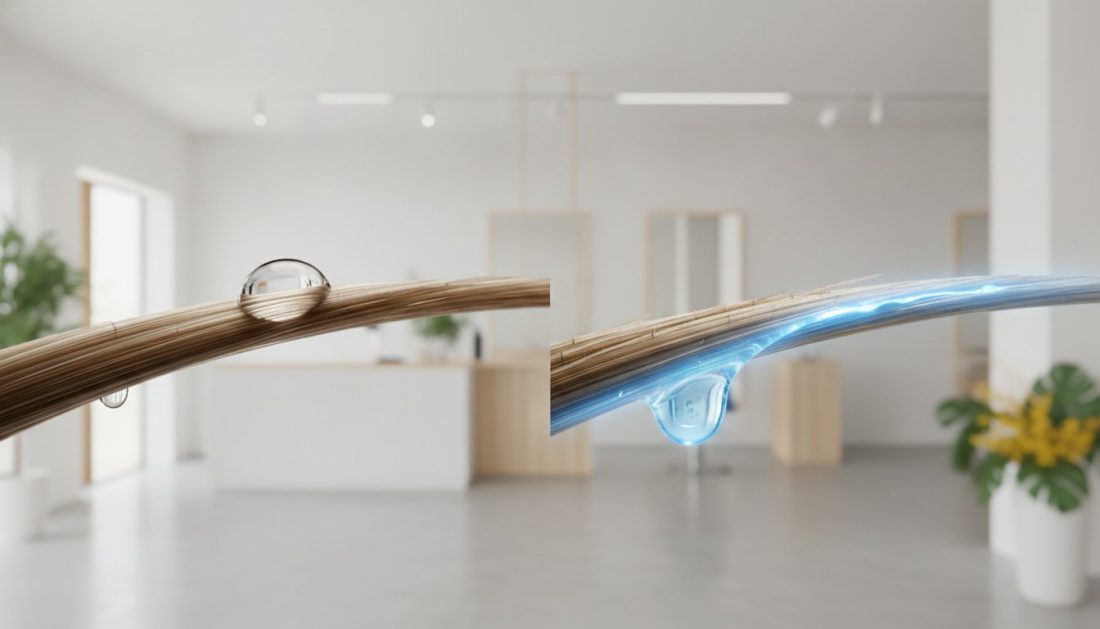
What is Hair Porosity? The Essential Guide to Understanding Your Hair’s Health
What if the reason your expensive hair oils aren’t working has nothing to do with the oil itself, but with how your hair “breathes”? It’s a common struggle; you invest in luxury treatments, yet your hair takes forever to dry or your fresh salon colour seems to wash down the drain within weeks. To solve these frustrations, you first need to ask: what is hair porosity? This simple biological trait is the gatekeeper of your hair’s health, determining exactly how much moisture your strands can absorb and, more importantly, how much they can keep.
We understand how disheartening it feels when your hair doesn’t reflect the care you put into it. That’s why we’ve created this guide to help you master the science of your unique strands. You’ll discover how to tailor your daily routine for vibrant colour and lasting hydration that doesn’t feel heavy or greasy. We’ll walk you through the different porosity levels, explain why products like Davines OI All In One Milk are game-changers for porosity management, and show you how to choose the right professional care to keep your hair looking fresh and healthy between salon visits.
Key Takeaways
- Learn the science behind your strands and finally understand what is hair porosity so you can stop guessing which products your hair actually needs.
- Identify whether you have low, medium, or high porosity by looking at your cuticle layer and how it interacts with moisture and colour.
- Discover why the common “float test” might be leading you astray and learn more reliable, tactile ways to check your hair’s health at home.
- Master specific techniques for your hair type, from using warm water for low porosity to choosing targeted hair repair treatments for high porosity hair.
- See how customising your routine with professional Davines products can keep your salon colour vibrant and your hair feeling light and hydrated.
What is Hair Porosity? Decoding the Science of Your Strands
When we talk about hair health, we often focus on split ends or shine, but there’s a deeper biological factor at play that dictates how your hair behaves every single day. So, what is hair porosity? Simply put, hair porosity refers to your hair’s ability to absorb and hold onto moisture. It’s the reason why some people can walk through a light mist and end up with a halo of frizz, while others find their hair takes an entire afternoon to dry after a swim.
To understand this concept, you need to look at the hair cuticle, which is the outermost layer of the hair shaft. Think of the cuticle as the protective shingles on a roof. When these shingles lay flat and tight, they protect the internal structure and keep moisture locked inside. If those shingles are lifted, missing, or naturally spaced apart, moisture can rush in easily, but it escapes just as quickly, leaving the hair feeling parched and brittle.
The Anatomy of a Hair Strand
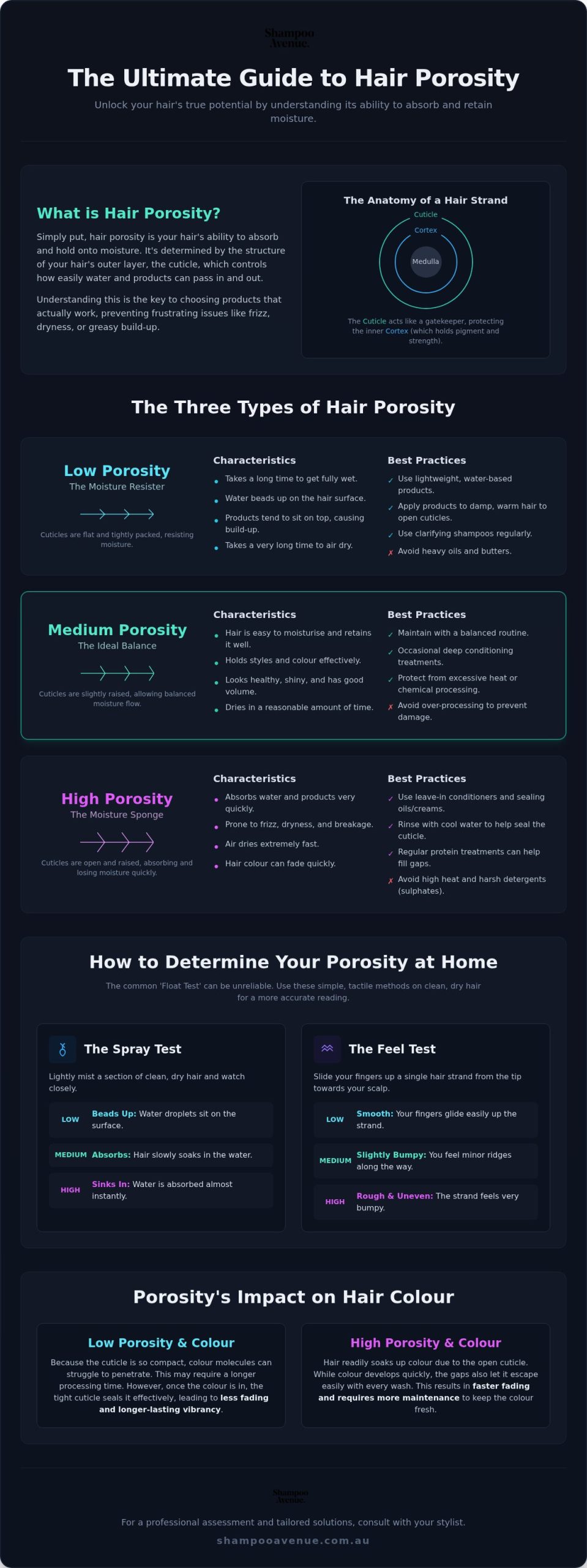
Each strand of your hair is a complex structure made of three distinct layers. At the very centre is the medulla, a soft core that isn’t always present in finer hair types. Surrounding that is the cortex, which houses your hair’s pigment and provides its strength. Finally, the cuticle acts as the gatekeeper. Within these layers, keratin proteins and lipids work together to maintain a healthy barrier, ensuring your hair remains resilient against daily wear and tear.
Why Porosity Matters for Your Hair Routine
Understanding your porosity level is the secret to choosing products that actually work rather than just sitting on the surface. If your hair has low porosity, rich oils might simply coat the strand and feel greasy because the “gate” is closed. Conversely, high porosity hair might “drink” up a moisturiser but still feel dry ten minutes later because it lacks the seal to keep that hydration in. This balance is also a vital component of long-term scalp health, as product build-up from poorly matched routines can lead to irritation and dullness.
Ultimately, porosity dictates your hair’s elasticity and strength. When you know how your hair handles water and product, you can stop fighting against its natural tendencies and start providing the specific nourishment it craves for that effortless, lived-in look.
The Three Types of Hair Porosity: Low, Medium, and High
While we’ve explored the basic science, identifying where you sit on the spectrum is the real game-changer for your daily routine. There isn’t a “good” or “bad” type, but each requires a vastly different approach to maintenance. When you Determine Your Hair’s Porosity, you stop fighting your hair and start working with its natural rhythm. Generally, we categorise hair into three groups: low, medium, and high.
Medium porosity is often called the “Goldilocks” state. The cuticle is slightly raised, allowing just enough moisture to enter while keeping it locked inside. It’s resilient, holds styles well, and takes colour beautifully. However, most people find themselves on either end of the spectrum, often due to genetics or the cumulative effect of styling. If you’re unsure where your strands sit, our team at Shampoo Avenue can provide a professional assessment during your next colour service.
Low Porosity: The Moisture Resister
If you’ve ever noticed water beading on the surface of your hair like rain on a freshly waxed car, you likely have low porosity. Because the cuticle layers are so tightly bound, they act as a fortress. While this means your hair is great at holding onto moisture once it’s inside, getting it there is the struggle. You might find that products feel heavy or greasy, simply sitting on top of the hair shaft rather than sinking in. This leads to rapid product build-up, which can leave your hair looking dull despite your best efforts. For low porosity strands, heavy butters and thick oils are the enemy; they only add to the weight without providing any real nourishment.
High Porosity: The Moisture Sieve
On the flip side, high porosity hair is like a sponge with too many holes. The cuticle is raised or even damaged, meaning moisture rushes in easily but evaporates almost instantly. This is where the “flash drying” phenomenon happens; your hair feels soaked in the shower but is parched and frizzy by the time you’ve finished your morning coffee. High porosity is often a result of environmental stress or chemical services. For instance, achieving those beautiful lived-in blonde transformations involves opening the cuticle, which naturally increases porosity.
The biggest challenge for high porosity hair is “colour bleed.” Because the gate is always open, pigment escapes every time you wash, leading to rapid fading. Understanding what is hair porosity is the first step in stopping this cycle. Without the right sealing products, your hair will always feel brittle and prone to tangled hair and breakage. Knowing what is hair porosity allows you to choose specialised repair treatments that fill those gaps, mimic a healthy cuticle, and keep your luxury colour looking fresh for weeks longer. A Davines NOUNOU shampoo review reveals exactly how a restorative, colour-safe cleanser can help high porosity hair retain its elasticity and vibrancy between salon visits.
How to Determine Your Hair Porosity: Tests and Professional Insight
Once you understand the basic mechanics of how your hair “breathes,” the next step is figuring out where your own strands sit on the spectrum. You’ve likely seen the viral “Float Test” on social media. It suggests dropping a clean strand of hair into a glass of water to see if it sinks or swims. While it’s a fun experiment, it’s often misleading. To truly answer the question of what is hair porosity for your specific mane, you need a mix of tactile observation and professional expertise.
Beyond the glass of water, you can try the “Slip and Slide” test. Take a single strand of hair and slide your fingers from the end up toward the scalp. If it feels smooth, your cuticles are likely tight and low in porosity. If it feels bumpy or rough, you’re likely feeling the raised edges of a high-porosity cuticle. Another quick check is the “Spray Bottle” test. Mist a section of dry, clean hair with water. If the droplets sit on the surface like morning dew on a leaf, you’re looking at low porosity. If the water vanishes instantly into the strand, your hair is highly porous.
The Flaws of DIY Testing
The biggest issue with home tests is that they rarely account for external variables. For the float test to have any chance of accuracy, you must use “naked” hair. This means hair that has been freshly washed with a clarifying shampoo and has zero conditioner, leave-in product, or natural oils on it. Even a tiny bit of silicone from a serum can create enough surface tension to make high-porosity hair float, giving you a completely false result.
It’s also common to have multiple porosity levels on one head. Your roots, being newer and closer to the scalp’s natural oils, might have low porosity, while your ends have become highly porous due to the Australian sun or salt water exposure. This “zonal porosity” is why one-size-fits-all DIY tests often leave people feeling more confused than when they started.
What a Professional Stylist Looks For
At Shampoo Avenue, we take a more holistic approach. A professional assessment is the only way to be 100% certain of your hair’s health. We use a “wet stretch” test to check for internal strength and elasticity. Healthy hair should stretch and return to its original length; if it snaps instantly or stays stretched out like wet spaghetti, we know the internal cortex is compromised.
We also look closely at your history of luxury hair colour and heat styling. Chemical transformations and mechanical stress physically alter the cuticle’s state over time. By observing visual cues like shine, texture, and how the hair reacts to professional backwash treatments, we can accurately determine what is hair porosity for you. This allows us to curate a routine that addresses your roots and ends differently, ensuring your hair remains balanced, vibrant, and resilient.
Managing Porosity for Vibrant Colour and Hair Wellness
Once you’ve identified your hair’s unique personality through testing, the real magic happens in how you adjust your daily habits. Managing your strands isn’t about changing their nature, but about providing the right environment for them to thrive. Whether you are dealing with the stubborn “closed gates” of low porosity or the “open sieve” of high porosity, your routine should focus on balance. Understanding what is hair porosity allows you to stop wasting money on heavy masks that just slide off or lightweight sprays that disappear into thin air.
For those with low porosity hair, the goal is to coax the cuticle open. Use warm water when washing to gently lift those tightly bound shingles, allowing moisture to actually penetrate the shaft. Stick to lightweight, humectant-rich products like aloe vera or honey; these draw moisture in without leaving a greasy film. High porosity hair requires the opposite approach. You need to fill the structural gaps with a targeted protein treatment hair can actually use to rebuild its strength. Following up with acidic rinses or pH-balanced sealants helps “shut the gate,” trapping that much-needed hydration and protein inside. This is also essential for preventing tangled hair, as raised cuticles are far more likely to snag and knot together without proper sealing care.
The Role of Clarifying Shampoo
Regardless of your type, every head of hair benefits from a regular reset. For low porosity hair, a clarifying shampoo is essential to strip away the stubborn film of product build-up that prevents moisture from entering. If you have high porosity hair, you still need clarification to remove minerals from Australian tap water or salt from a weekend at the beach, though you should opt for a gentler formula to avoid further lifting the cuticle. A clarifying shampoo should be used once a fortnight to maintain a clean canvas. This simple step ensures that your luxury treatments aren’t just sitting on top of old debris.
Porosity and the Lived-In Blonde
If you’re a fan of the lived-in blonde look, porosity management is your best friend for longevity. High porosity is often the culprit behind blonde hair looking “ashy” or “muddy” shortly after a salon visit; the hair absorbs too much toner in some spots and none in others. By using sealants and oils to trap colour molecules, you prevent that rapid fading that often plagues porous hair. Protecting your hair colour aftercare investment starts with knowing what is hair porosity and treating it with the respect it deserves.
Ready to transform your routine with products that actually sink in? Explore our range of professional solutions at Shampoo Avenue and give your hair the specific care it’s been asking for.
The Shampoo Avenue Approach: Tailored Solutions with Davines
At Shampoo Avenue, our philosophy is rooted in the idea that luxury and wellness should go hand in hand. We don’t just look at the surface of your hair; we dive deep into its biological needs to ensure every treatment we provide is as restorative as it is beautiful. This is why we’ve chosen to partner with Davines. Their focus on sustainable science and professional-grade ingredients allows us to treat your strands with the respect they deserve, moving away from the “one size fits all” mentality that often leads to frustration. By understanding what is hair porosity in the context of your specific lifestyle, we can curate a routine that actually delivers on its promises.
Davines Heroes for Every Porosity
Finding the right products is often the hardest part of managing your hair’s health. Davines OI All In One Milk is a genuine miracle worker for those dealing with the tangles and dullness of high porosity hair. It provides intense shine and heat protection while remaining lightweight enough not to weigh down finer strands. We also utilise targeted Davines masks during our salon treatments to deliver a concentrated dose of either protein or moisture, depending on what your cuticles are lacking. The benefit of using these professional-grade, pH-balanced products at home is that they help maintain the results of your salon visit, keeping the “gate” of your hair shaft exactly where it needs to be. For colour-treated hair that feels brittle and thirsty after chemical services, our Davines NOUNOU shampoo review explains how this restorative cleanser works to rebuild natural elasticity and protect your luxury colour investment.
Booking Your Hair Wellness Consultation
Your journey to balanced hair starts with a conversation. During a professional porosity and scalp health assessment at our centre, we look at the history of your hair, from your favourite styling tools to your recent colour transformations. We use this data to answer the question of what is hair porosity for you specifically, which then forms the foundation of your bespoke colour plan. Whether you’re after a lived-in blonde or a deep, natural brunette, knowing how your hair absorbs pigment ensures the result is vibrant and long-lasting. We invite you to join our community of conscious creatives and experience a friendly, expert approach to high-end haircare. Book your consultation today and let’s work together to bring your hair back to its most vibrant, healthy state.
Embrace the Future of Your Hair Wellness
Mastering the science of your strands is the ultimate shortcut to a routine that actually delivers results. You’ve discovered that understanding what is hair porosity is about more than just moisture; it’s the foundation for keeping your lived-in blonde vibrant and your scalp healthy. By moving away from generic products and focusing on the specific needs of your cuticle, you’re choosing a path of long-term repair and resilience. It’s time to stop fighting your hair’s natural tendencies and start providing the specialised nourishment it craves.
At Shampoo Avenue, we’re passionate about this journey toward better hair health. As an exclusive Davines professional salon, we combine sustainable, ethical hair wellness with our expertise as specialists in lived-in blonde and colour repair. We don’t believe in guesswork when it comes to your luxury investment. Book your luxury hair wellness transformation at Shampoo Avenue today. Let’s work together to create a bespoke plan that leaves your hair feeling as incredible as it looks. You deserve hair that reflects your unique beauty every single day.
Frequently Asked Questions
Can hair porosity change over time?
Yes, hair porosity is not a permanent state and can change significantly due to your lifestyle and hair history. While your genetic starting point is fixed, factors like chemical treatments, heat styling, and even the harsh Australian sun can alter the cuticle. Understanding what is hair porosity helps you track these changes, allowing you to adjust your routine as your hair’s needs evolve over the years.
Is high porosity hair always damaged hair?
High porosity isn’t always a synonym for damage, though the two are often closely linked. Some hair types are naturally more porous from birth, especially certain curly textures. However, most high porosity we see in the salon results from the cuticle being lifted or worn away by external stressors. It simply means the “gate” of the hair is stuck open, requiring extra care to keep moisture inside.
What is the best way to moisturise low porosity hair?
The best way to moisturise low porosity strands is to use warmth and lightweight, water-based products. Because the cuticle is so tightly packed, you need warm water to gently coax it open before applying your conditioner or treatment. Avoid heavy oils and thick butters; they can’t get past the barrier and will only leave your hair feeling greasy and weighed down by product build-up.
How does salt water affect my hair’s porosity?
Salt water acts as an alkaline agent that physically swells the hair shaft and forces the cuticle to lift. This is why your hair often feels rough and “crunchy” after a day at the beach. Constant exposure can eventually compromise the cuticle’s ability to lay flat, leading to a permanent increase in porosity and a loss of the hair’s natural ability to retain hydration.
Should I use a protein treatment if I have high porosity hair?
Protein treatments are vital for high porosity hair because they fill the microscopic gaps in the hair shaft. Think of it as patching the holes in a leaky bucket. By reinforcing the structure, you help your hair hold onto moisture and pigment much more effectively. This is a core part of what is hair porosity management for anyone with lightened or chemically treated hair.
Does cold water really close the hair cuticle?
Cold water can encourage the cuticle to lay flatter, but it isn’t a magic fix for porosity issues. While a cool rinse at the end of your shower can add a bit of shine and reduce frizz, it won’t physically “close” a damaged or naturally raised cuticle. It is a helpful finishing touch, but the pH-balanced products you use are far more important for sealing in hydration.
Can I have different porosity levels on the same strand?
It’s incredibly common to have multiple porosity levels on a single strand of hair. Your roots are fresh and typically have lower porosity, while your ends have endured months or years of weathering and styling. This is why we often recommend different techniques, like focusing heavier masks on the ends while keeping lightweight, humectant-rich products near the scalp to avoid lankness.
How often should I use a clarifying shampoo for my porosity type?
We generally suggest a clarifying reset once a fortnight for most hair types to maintain a healthy canvas. If you have low porosity hair, this prevents the product film that blocks moisture from entering. For high porosity hair, a gentle clarifying wash removes salt and mineral deposits. Just ensure you follow up with a professional repair treatment to replenish the hair after a deep clean.