

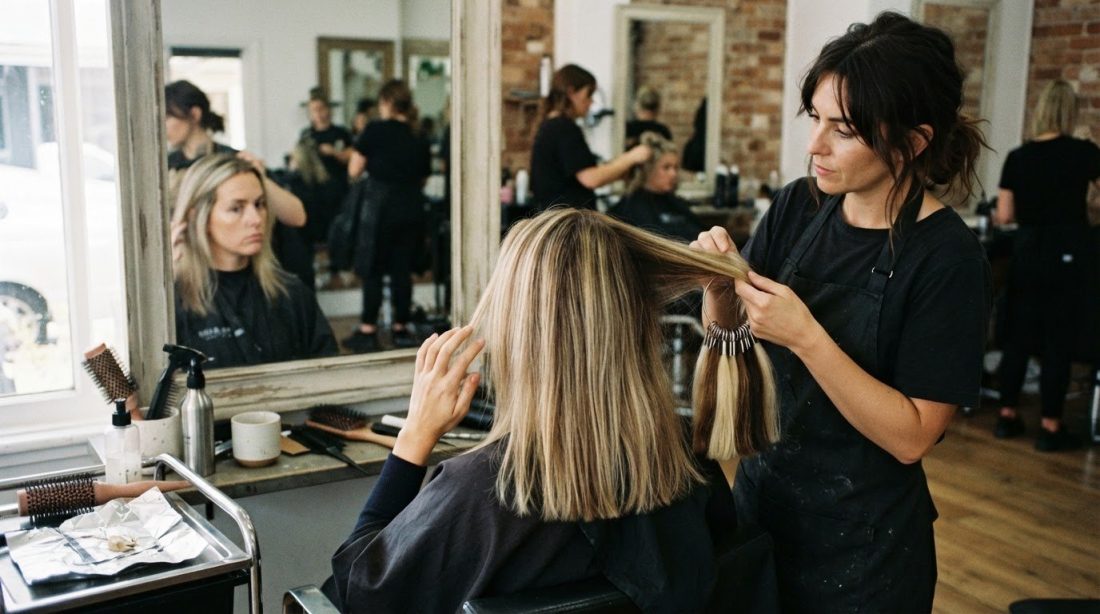
4 ways to talk with your stylist about colour correction
A clear, calm conversation is the best place to start when your hair colour feels wrong. If you’re wondering what to do when you hate your hair colour, tell your stylist what looks off, what you hoped for and what you’d like to see instead. Bring reference photos that show the direction you prefer. The clearer you are about the difference, the easier it is to discuss a practical next step.
It’s frustrating when the shade, tone or placement doesn’t feel like you, especially after imagining the result. You don’t need technical terms or a fix in mind. Your stylist can help identify what’s happening and discuss an approach that takes your hair’s history and condition into account.
Make the conversation more useful by explaining what you notice, how you like to wear your hair and what colour services or products you’ve used. Then discuss a plan together. You’ll also learn what colour correction can involve, why a result may look different than expected, and how root stretches and lowlights can create a softer, more balanced finish.
Key Takeaways
- Colour correction can address unwanted tone, unevenness or depth, but the right approach depends on your hair’s condition and colour history.
- Lighting, fading and previous colour products can all affect how your shade looks. Notice what seems off before discussing a change.
- Root stretches and lowlights can help soften colour transitions and add dimension when they suit the result you want.
- Explain what you dislike, share reference photos and discuss your stylist’s plan before deciding on the next step.
1. What is colour correction?
Colour correction is professional work that changes an unwanted result, rather than simply applying another shade. It may neutralise warmth, soften uneven tones, blend regrowth, adjust colour that looks too dark or light, or add depth to a flat blonde. A colourist may use a gloss to shift the tone or take a more involved approach when colour build-up or uneven bands need attention.
In Australia, raise an unsatisfactory salon service with the salon and ask what remedy it can offer. Explain the result you agreed on and how the finished colour differs. If you’ve just left an appointment unhappy, take a day to adjust, then contact the stylist promptly with specific details and clear photos.
Avoid chemical colour correction at home. Layering colour remover, bleach or another dye over the result can make a later correction harder and may add processing stress. A professional can assess your clean, dry hair in natural light, review its colour history and discuss an approach before starting. Depending on what your hair has already been through, a colourist may advise waiting a few days or longer.
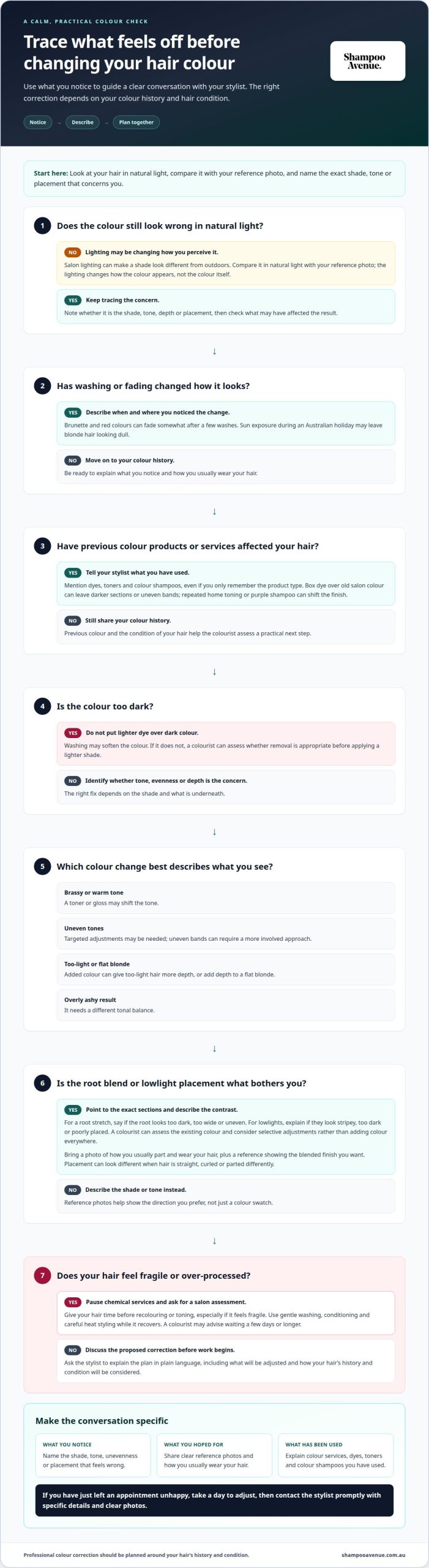
If your colour looks too dark, washing may soften it. If it doesn’t, a colourist can assess whether removal is appropriate before applying a lighter shade. Don’t simply put lighter dye over dark colour. Brassiness may call for a toner or gloss, while uneven tones may need targeted adjustments. Too-light hair can gain depth through added colour; an overly ashy result needs a different tonal balance. The right fix depends on the shade and what’s underneath.
After colour removal, give your hair time before recolouring or toning, especially if it feels fragile. If your hair feels over-processed, pause chemical services and use gentle washing, conditioning and careful heat styling while it recovers. Ask for a salon assessment before another colour service, especially if your hair feels unusually fragile. That appointment lets the stylist consider its condition and plan a correction that avoids unnecessary processing.
2. Common causes of unwanted hair colour
Salon lighting can make a fresh shade look different from how it appears outdoors. Before deciding the result is wrong, look at your hair in natural light and compare it with your reference photo. A cool-toned brunette may appear deeper under warm salon lights, while blonde pieces can look brighter near a window. The lighting changes how you perceive the colour, not the colour itself.
Washing can shift the finish, too. Even one shampoo may change how a shade looks after you leave the salon. Brunette and red colours can fade somewhat after a few washes, while sun exposure during an Australian holiday may leave blonde hair looking dull. Notice whether the concern is a new tone, fading or simply a different appearance in daylight. Those details help explain what feels off.
Previous products can affect how colour takes. For example, layers of box dye over old salon colour may leave darker sections or uneven bands. Repeated home toning or purple shampoo can shift the finish away from your preferred shade, especially if product builds up. Trying to change colour again too quickly adds another variable. Tell your stylist which dyes, toners and colour shampoos you’ve used, even if you only remember the product type.
Sometimes the shade is sound, but the contrast or placement doesn’t suit how you wear your hair. A root stretch may look more obvious when you part your hair differently, while lowlights can seem stronger when straight styling exposes their placement. Share a photo of your usual style and point to the exact sections that bother you. For colour choices shaped by old dye, fading or a changed blonde tone, professional colour transformations can help you discuss a more considered direction.
3. Fixing unwanted root stretches and lowlights
A root stretch blends colour at the roots into lighter lengths, creating a softer grow-out. If the transition looks like a harsh band, the issue may be its placement, depth or contrast with your natural colour. For example, a dark root against bright blonde ends can look abrupt when the blend starts too low. A colourist assesses the root area and existing lengths before deciding where to soften the transition.
Be specific about what bothers you. Point out whether the root looks too dark, too wide or uneven on one side. Share a photo showing how you usually part and wear your hair, because a root stretch can sit differently when your hair falls straight than when it’s curled. Your usual styling helps the colourist see which sections need attention and where a smoother blend matters most.
Lowlights add darker pieces through lighter hair, creating depth and breaking up an overly bright or flat result. If they look stripey, too dark or poorly placed, adding more colour everywhere may make the overall shade heavier. A colourist can assess the existing highlights and lowlights, then consider whether selective adjustments could soften the contrast. For example, a few deeper pieces near pale blonde sections may create dimension, while a heavy band near the face may need a different plan.
Bring photos that show the finish you want, not just a colour swatch. A picture of soft, blended roots or subtle lowlights gives the colourist a clearer reference for placement and contrast. Explain your previous colour services and any home toning, since existing pigment can affect how a correction develops. The discussion should cover your goal, hair condition and the order of any proposed work. That way, you’ll understand whether the change focuses on the root blend, lowlight placement or both.
Ask the colourist to explain the proposed adjustment in plain language before work begins. If the plan is to soften a strong root stretch, clarify how it will connect with your lighter lengths. If the lowlights feel too prominent, discuss whether the goal is to reduce contrast or change their placement. These details help keep the correction focused on the parts you want changed.
4. Listening to a stylist’s professional advice
Start with what you can see and feel. Tell your colourist calmly whether the shade looks too warm, too dark or uneven, and point to the sections that concern you. “The ends look too flat beside my roots” gives a clearer starting point than “I hate it”. If you’re deciding what to do when you hate your hair colour, contact your stylist promptly and include photos taken in natural light.
Bring reference photos showing the colour you wanted, plus examples of how you usually wear your hair. A shade can look different when your hair is straight, curled or tied back. Explain your routine and how often you’re comfortable maintaining the colour. This helps your stylist discuss a finish that suits both your preferred look and upkeep.
During the consultation, your colourist should review your colour history and assess your hair’s condition and porosity. They can also look for colour build-up, uneven tones or banding. Mention previous salon services, box dye, toners and purple shampoo. These details help explain why sections may respond differently and inform the approach. Knowing what to do when you hate your hair colour also means understanding what has already been applied.
Before any correction begins, agree on the target shade and the change that matters most. Ask the stylist to explain the proposed steps, likely timeline and maintenance needs. For example, a correction might focus on softening a warm band rather than changing every section. Listen to the professional recommendation, then raise any concerns. A collaborative conversation helps you understand the plan before colour is applied.
Your feeling about the result matters, and a respectful stylist should hear it without becoming combative. If the suggested plan differs from your reference, ask how it addresses your concern and what trade-offs it involves. Clear answers help you decide whether you’re comfortable proceeding. To talk through a colour concern with a stylist, get in touch and share what you’d like to change.
Shampoo Avenue: Women’s Haircuts & Styling
Shampoo Avenue can help you talk through a colour result that doesn’t feel right and consider a thoughtful next step. If you’re concerned about uneven tone, unwanted warmth or a root blend that feels too strong, a Luxury Hair Colour Transformation can address your desired direction while taking your colour history and hair condition into account. For blonde hair, Lived-In Luxury Blonde Services focus on a softer, blended look. Women’s Haircuts & Styling can also help you explore how a different shape or finish changes the way your colour sits.
Bring reference photos and describe what you’d like to change. Together, you can discuss an approach that suits your hair and the way you like to wear it. Contact Shampoo Avenue to talk through your colour concerns.
Choose a colour plan that feels right for you
If you’re deciding what to do when you hate your hair colour, your next step can be a conversation, not another at-home colour product. Describe clearly what feels wrong and what you’d like to see instead. From there, you can discuss a realistic direction that respects your hair’s history, condition and the way you want to wear it.
Shampoo Avenue offers Luxury Hair Colour Transformations, Lived-In Luxury Blonde Services, and Grey Blending & Natural Colour. These services support different goals, from refining a blonde result to finding a softer, more natural-looking blend. Share your concerns and the look you have in mind, then discuss an approach that could suit you.
Contact Shampoo Avenue to discuss your colour concerns. A thoughtful conversation is a positive place to begin, and you can move forward with a clearer sense of your options.
Frequently Asked Questions
How do I tell my stylist that my colour looks off?
Describe the specific part you’d like changed, using plain language. For example, say the ends look too flat or the face-framing pieces feel brighter than expected. A photo taken in daylight can help show the difference. You can also explain what you like about the result, so your stylist knows what to preserve while discussing adjustments.
Need help figuring it out?
Shampoo Avenue can help you put your colour concerns into words and discuss possible next steps. You might be unsure whether the issue is tone, depth or placement; describe what catches your eye and how you usually style your hair. That context gives the conversation a practical starting point. Contact Shampoo Avenue to discuss your concerns.
What is colour correction?
Colour correction is a salon colour service designed to adjust a result that doesn’t match your desired look. For example, a colourist might refine a too-warm tone, soften a strong contrast or address uneven colour left by earlier dye. The work can range from a subtle tonal change to a more involved plan, depending on your colour history and the finish you want.
Can you remove unwanted hair dye at home, and which methods are safest?
Avoid chemical colour correction at home, including colour remover, bleach or another dye. If a recent shade looks too dark, ordinary washing may soften it, but it isn’t a guaranteed fix. Home chemical treatments can leave a more complicated result to correct. For a noticeable colour change, pause and discuss your dye history with a colourist before applying another product.
What are the risks of using colour removers, bleach or box dye to fix hair colour?
Another chemical product adds processing to hair that has already been coloured, and the result may be uneven or harder to correct. Box dye can also build up over existing salon colour, while bleach may affect previously treated sections differently. Before choosing a chemical fix, consider what products are already on your hair and whether the lengths feel fragile.
When should you see a professional hairdresser or colour correction specialist?
See a professional when the result has strong bands, patchy sections, unwanted warmth or a major difference from the colour you agreed on. A salon assessment is also a sensible next step after overlapping dye or repeated home toning. Bring your colour history and reference images, and explain which areas concern you. This helps the colourist consider your goal alongside your hair’s condition.