

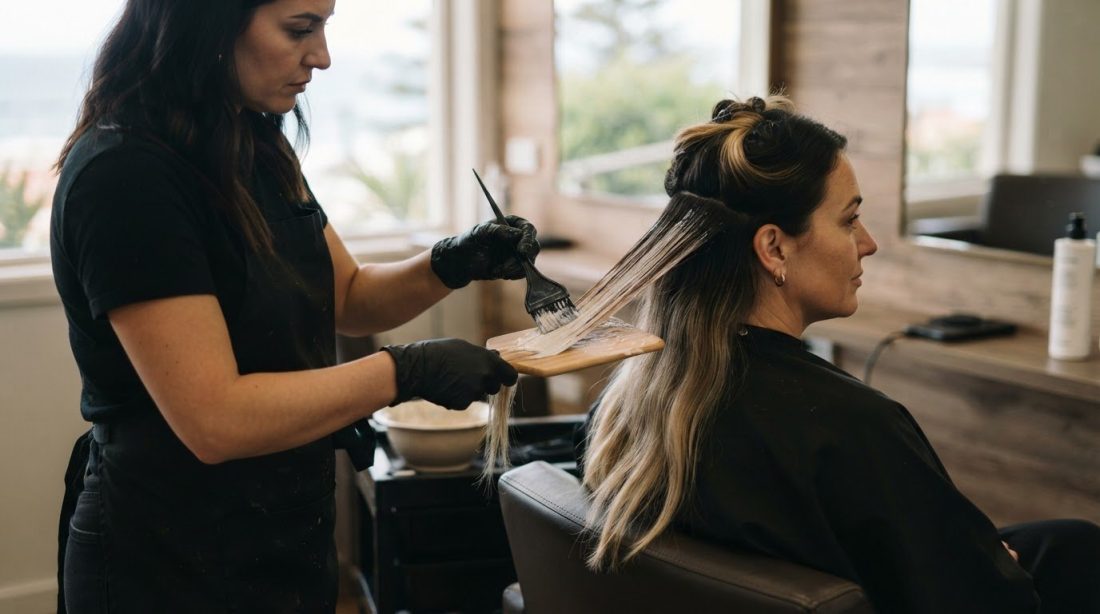
4 Ways to Plan Bleaching and Support Hair Health
The healthiest route to blonde may be a slower one. Maintaining hair health during lightening starts with a stylist assessing your current colour and hair condition, then planning a gradual lift when needed. Leave 6 to 8 weeks between lightening sessions to give your hair time between appointments.
Before a major colour change, consider your hair’s condition. Lightening can affect its structure, so the approach matters as much as the shade you want.
Learn how to plan a lightening service, choose a stylist who understands your colour history and use bond-building treatments when they suit your hair’s needs. We’ll also look at how to space out bleach sessions and care for your hair between appointments, so you can make informed decisions about your blonde journey.
Key Takeaways
- Share your colour history, including any at-home box colour, so your stylist can assess your hair before planning a lift.
- Bring shade references and be open to a staged approach, especially if your hair is naturally dark or has been coloured.
- Bond-building treatments can support hair that’s already damaged during bleaching, while changes in texture or breakage are signs to pause.
- Prepare with conditioning suited to your hair’s needs, and let its condition guide the timing of future lightening.
1. Can I lighten my hair without damaging it?
Yes, a colourist can plan lightening to limit damage, but bleaching cannot be called damage-free. Over-bleaching can damage the structure of hair strands and the hair follicle. Risk depends partly on existing condition, previous colour and whether bleach overlaps hair that’s already been lightened.
Before choosing an approach, a colourist assesses your hair’s condition, texture and colour history. Share every previous colour service, especially at-home box colour, because artificial pigment can affect how your hair lifts. The colourist also considers dryness, breakage and previously lightened sections, then plans the application to avoid overlap.
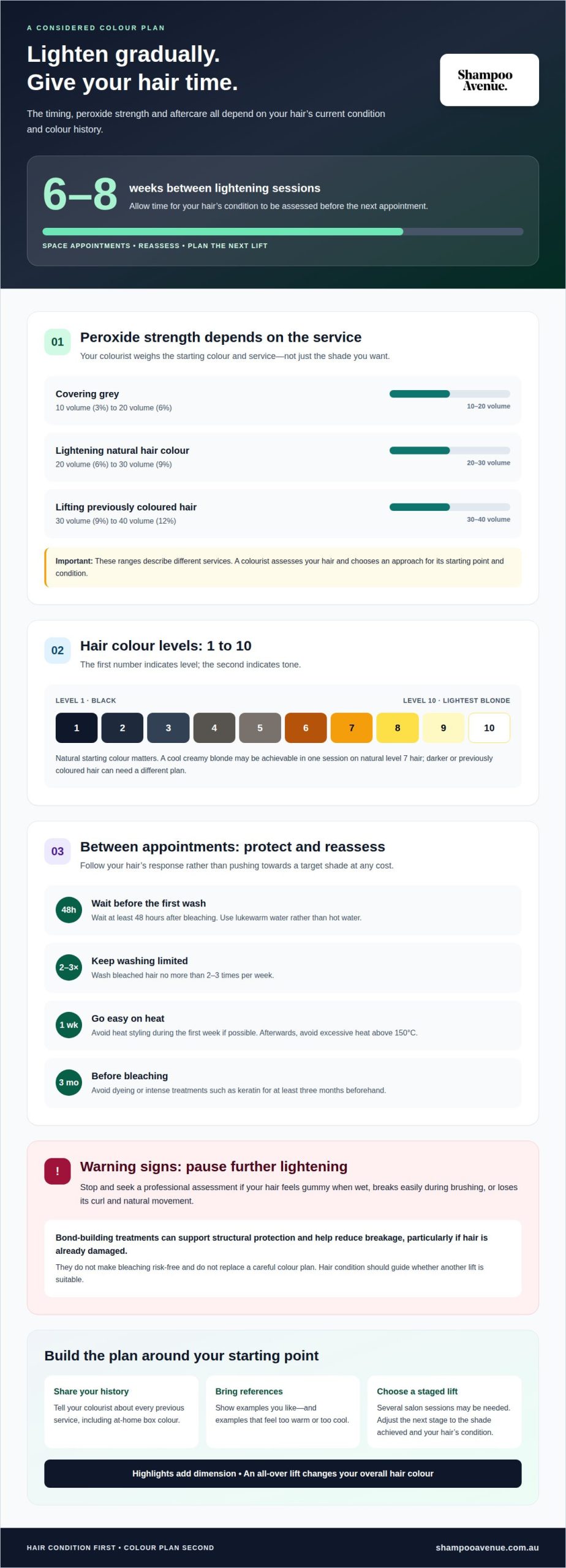
Hydrogen peroxide strength varies with the colour service. For covering grey, the range is 10 volume (3%) to 20 volume (6%). For lightening natural hair colour, it’s 20 volume (6%) to 30 volume (9%). Lifting previously coloured hair uses 30 volume (9%) to 40 volume (12%). The colourist weighs the starting colour and service, rather than choosing strength based only on the target shade.
Natural starting colour matters, too. A cool creamy blonde may be achievable in one session on natural level 7 hair, while darker or previously coloured hair can need a different plan. Lightening can alter texture over time: curly ends may become straighter as strands dry, while naturally straight hair may gain volume from a rougher cuticle. Avoid dyeing or intense treatments such as keratin for at least three months before bleaching.
2. Choosing a stylist and gradually lightening hair
A considered lightening plan starts with both the blonde you want and your hair’s current condition. Bring reference photos, including examples that feel too warm or too cool. They help your colourist clarify the result you want, rather than relying on descriptions such as “bright” or “natural”.
Placement matters as much as tone. Highlights add dimension without turning every strand blonde, while an all-over lift changes your overall hair colour. Your colourist can explain how each option may look with your current shade and regrowth, then tailor the plan to your starting point.
The timing depends on your hair’s condition and current colour. Lightening may take several salon sessions, and major changes are often better spread across appointments than attempted in one marathon session. If your hair is naturally very dark, a gradual lift can be a more considered approach than aiming for bright blonde in one visit.
Previously dyed dark brown hair may need several appointments to reach a cool, creamy blonde. Your colourist can plan each stage around how your hair responds, the shade achieved and its condition before progressing. This allows adjustments at the next appointment instead of pushing towards the final colour at any cost.
A colourist also considers how the result fits your routine. Your washing habits, preferred styling and desired colour upkeep can all shape placement and finish. For example, a softer, lived-in blonde may suit you if you want a more blended look as your roots grow.
Use your consultation to align on the target, likely stages and maintenance approach. Clear references and an honest discussion of your colour history help the stylist build a practical plan. For a softer blonde direction, explore lived-in luxury blonde services as one possible approach.
3. Bond-building treatments during bleaching
A colourist may use a bond-building treatment during bleaching, particularly if your hair is already damaged. It supports structural protection and can help reduce breakage, but does not make bleaching risk-free. Your stylist considers your hair’s condition and the scale of the colour change before choosing an approach, especially for a dramatic lift.
Hair that feels gummy when wet, breaks easily during brushing or loses its curl and natural movement needs a break from bleaching. Pause further lightening if these changes appear. The first 48-72 hours after bleaching are important for recovery, so keep handling gentle and prioritise moisture in your aftercare.
Wait at least 48 hours before the first wash. Use lukewarm water, not hot, and wash bleached hair no more than 2-3 times per week. Avoid heat styling during the first week after bleaching if possible. After that, avoid excessive heat above 150°C, which can add stress to already lightened strands.
Heat, sun, chlorine and salt water can all challenge fragile, bleached hair. Limit heat styling and cover your hair in strong sun. After swimming, rinse with fresh water and condition your hair to help replenish moisture. Brush wet hair patiently from the ends, as it is more vulnerable when damp.
Bleach can roughen the cuticle, so aftercare should focus on gentle handling and your hair’s changing needs. A professional colourist can assess previous damage, plan product use during the service and monitor how your strands respond. This is especially valuable if you want a dramatic change or have noticed breakage, altered texture or reduced movement.
If you notice these warning signs, don’t continue bleaching to reach a target shade. Give your hair time and seek a professional assessment before planning another lightening service. A bond-building treatment’s effect depends on your hair’s starting condition. It supports care during bleaching, but does not replace a careful colour plan.
4. How Often Can You Bleach Your Hair?
Leave at least 6 to 8 weeks between lightening sessions. This gives your colourist time to assess your hair’s condition and plan the next appointment around its strength. Further lightening should target regrowth, not overlap strands that have already been bleached. The existing colour and your hair’s response help determine whether another lift is suitable.
Preparation starts before the salon visit. A deep-conditioning mask 1-2 weeks before bleaching can support moisture and elasticity. For medium-to-coarse hair, coconut oil applied 2-4 hours before bleaching may help reduce dryness by acting as a protective barrier. Your colourist can tailor preparation to your hair’s needs and the planned service.
After lightening, build a gentle routine with shampoo and conditioner suited to your hair. Hydrating masks can replenish moisture, and a weekly mask may help if bleached hair feels thirsty. Leave-in conditioner can soften dry ends and make them easier to manage. Choose products for your hair’s condition, then adjust if its texture or feel changes.
Purple shampoo can help keep blonde shades from looking too yellow or orange. Use it once every 4 washes, or when brassiness appears, and follow with conditioner. More frequent use isn’t automatically better for your routine; keep the overall focus on moisture and how your hair responds.
At the salon, the colourist rinses thoroughly and conditions hair after lightening. Restoring hair pH after colouring helps close the cuticle and lock in colour. A realistic appointment plan also accounts for regrowth, existing lightened lengths and ongoing conditioning, rather than repeatedly lifting the same strands. Plan your next colour appointment with a considered approach to hair care.
Shampoo Avenue: Scalp Health & Hair Wellness Treatments
Shampoo Avenue offers Scalp Health & Hair Wellness Treatments for people who need focused scalp or hair care alongside a lightening plan. If dryness, breakage or changing texture is making you reconsider your next bleach session, a hair wellness treatment can support a more considered approach.
For a colour change, Luxury Hair Colour Transformations bring colour planning and hair care together. Professional Haircare Products can also help you build an at-home routine suited to your hair’s needs, while Women’s Haircuts & Styling can refresh the shape around your new shade.
Choose a professional assessment when your hair feels different after lightening, or before planning another significant colour change. Contact Shampoo Avenue to discuss your hair and colour goals.
Shape a blonde plan around your hair
Your next colour decision doesn’t have to be all or nothing. Consider the look you want to live with, how it works with your natural colour and what level of upkeep feels manageable. These details give your stylist a useful starting point for a plan shaped around your hair, rather than a shade pursued at the expense of its condition.
There’s more than one way to explore lighter colour. Shampoo Avenue offers Luxury Hair Colour Transformations, Lived-In Luxury Blonde Services and Grey Blending & Natural Colour. A conversation about your goals can help match a colour direction with the care your hair needs along the way.
Thoughtful planning is at the heart of maintaining hair health during lightening. If you’re ready to talk through your next step, contact Shampoo Avenue for hair advice. Bring your ideas and questions, and start planning a colour direction that feels right for you.
Frequently Asked Questions
Can I lighten my hair without damaging it?
Lightening can be planned to limit damage, but bleaching can still weaken strands. Maintaining hair health during lightening starts with matching your colour goal to your hair’s current condition. For example, if your ends feel rough but your roots feel strong, your colourist can consider those areas separately. Share any changes you’ve noticed since your last colour appointment, not just the shade you hope to achieve.
How often can a colourist safely bleach your hair?
Leave at least 6 to 8 weeks between lightening sessions, then reassess your hair before another service. The calendar alone doesn’t determine readiness: strength, dryness and how the previous appointment affected your strands matter too. If your hair feels gummy when wet or breaks easily, postpone further bleaching and have its condition assessed before planning another lift.
How do I prepare for a professional hair bleaching or lightening service?
Prepare by giving your colourist an accurate history of your hair, including box colour and smoothing services. Avoid dyeing or intense treatments such as keratin for at least three months beforehand. A deep-conditioning mask 1-2 weeks before the appointment can support moisture and elasticity. Reducing heat-tool use in the weeks beforehand also helps limit extra stress on your hair.
How often can a colourist safely lighten hair or touch up roots?
Plan to leave at least 6 to 8 weeks between lightening appointments, with the next service focused on regrowth. Bleach should not overlap lengths that have already been lightened, as repeated processing adds stress. Your colourist can map the regrowth separately from lighter ends, then adjust the plan according to the hair’s condition and how much lift is needed.
Which bond-building treatments do colourists recommend for bleached hair in Australia?
If your hair is already damaged, a colourist can use a bond-building treatment during bleaching to support structural protection and reduce breakage. Choose a salon treatment suited to your hair’s condition and the lightening service, rather than relying on a product simply labelled “bond”. Follow its directions and monitor how your hair responds instead of adding several intensive treatments at once.
Which shampoo, conditioner and masks do colourists recommend for maintaining lightened hair?
For maintaining hair health during lightening, choose shampoo and conditioner to suit your hair’s needs, then prioritise hydration with a nourishing mask. Purple shampoo can help manage unwanted yellow or orange tones; use it when brassiness appears or around every fourth wash. Keep washing to 2-3 times per week at most, and adjust your routine if your hair feels dry or heavy.