

How to Start Going Blonde From Dark Brown and Estimate the Cost
Going blonde from dark brown is usually a gradual transformation, not a quick colour swap. The first stage of going blonde from dark brown is assessing your colour history and hair condition, then planning how to lighten it. Returning to blonde after brown dye can take around eight hours in the salon.
If you’re hoping for very light blonde in one appointment, it’s natural to wonder how long the change will take and what it might cost. Timing and cost depend on your starting shade, previous colour and target blonde, so a tailored plan matters as much as the colour itself.
This guide explains what happens at the start of a salon transformation, why some hair needs more than one lightening session, and how bleach-free and at-home options compare. It also covers factors that can affect appointment time and cost, with your hair’s condition in mind.
Key Takeaways
- Learn when a professional may use colour techniques without bleach, and why your colour history shapes the options.
- See which factors affect salon time and cost, so you can understand what goes into a tailored transformation plan.
- Understand how colour stripping and bleaching differ, and how hair condition helps guide the approach.
- If lightening needs multiple sessions, plan for recovery time between applications and build reparative care into your routine.
Professional options for going blonde without bleach
- Ask for an assessment of your colour history. A colourist can distinguish natural dark brown hair from hair coloured with a darker dye. High-lift colour may lighten uncoloured hair, but it won’t reliably lift artificial pigment. That difference shapes what a bleach-free plan can achieve.
- Discuss a gradual change. A colourist may use lighter pieces or a gloss to soften the overall look without aiming for an all-over blonde result. A gloss adds tone and shine; it doesn’t take dark brown hair several shades lighter.
- Set a realistic blonde target. Starting shade, previous colour and the desired finish affect the approach. Dark brown hair may show warm, yellow or orange tones as it lightens, so a softer bronde effect can be a more achievable interim result.
- Plan hair preparation and aftercare with your colourist. Before bleaching, they can assess your hair’s condition and discuss its colour history. Afterwards, follow their care guidance, including suitable conditioning treatments and gentle handling, to support hair that may feel dry after processing.
- Understand the strand test. A colourist applies the proposed formula to a small, discreet section first. The test shows how your hair responds, including the lift and tone it reaches, and helps guide the colour plan before a full application.
- Ask how toner will address warmth. Toner adjusts the appearance of blonde hair after lightening; the colourist selects a tone to suit the yellow or other warmth showing in your hair. Purple shampoo can help maintain cooler tones, and some people use it weekly.
- Keep at-home colour expectations modest. For box dye, the suggested shade is one to two shades lighter than your desired final shade. That guidance doesn’t make dark, previously coloured hair blonde in one step; a colourist can explain how a gradual professional plan differs.
Time and cost of salon colour transformations
- Plan around your colour history. Returning to blonde after brown dye can take around eight hours in the salon. Artificial pigment can make lightening more complex than working with natural dark brown hair, so the colourist plans around your existing colour and the blonde shades you want.
- Allow for a long appointment. One platinum appointment involved four hours of bleach processing. That example shows why a major lightening service can occupy much of the day, especially when the colourist needs to work carefully across the hair and refine the result.
- Consider whether the change needs multiple visits. One full lightening process took around six weeks, including two Cureplex treatments. A staged plan can spread the work over time, with hair condition and the distance between your current shade and target blonde shaping the schedule.
- Include follow-up appointments in your plans. After a brunette transformation, a first follow-up visit is likely about a month later. A second follow-up may be about a month after that. These appointments can help maintain the colour as it settles and address changes in tone.
- Ask what shapes the quote. The price depends on the case and is given after a quote request; factors include colour history, hair length and density, the amount of lightening required, and whether the plan needs more than one appointment. This helps distinguish a simple colour service from a complex correction.
- Budget for ongoing care as well as salon time. A blonde transformation may involve toner and suitable conditioner between visits. Ask how the care routine fits your target shades and appointment plan, rather than treating the initial colour as the only part of the process.
For a tailored salon colour plan, explore professional colour transformation options.
Should dark brown hair be bleached or colour-stripped before going blonde?
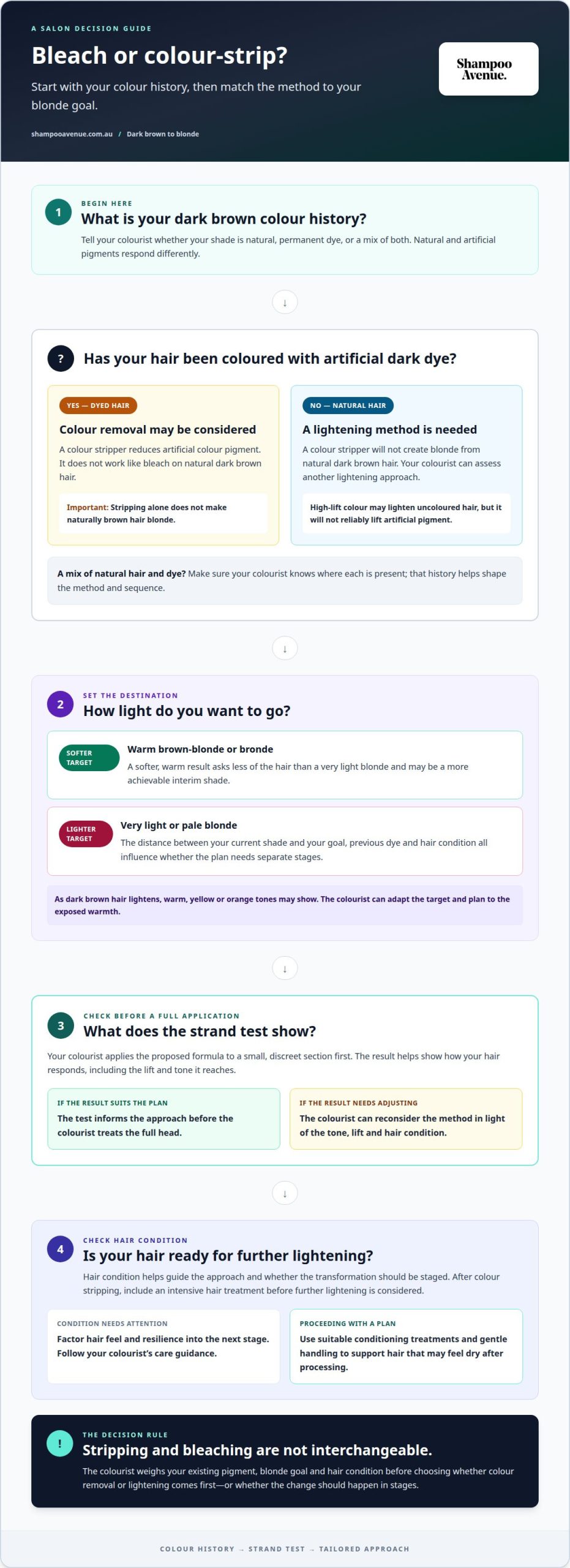
- Start with your colour history. Tell the colourist whether your dark brown shade is natural, permanent dye, or a mix of both. Artificial pigment and natural pigment respond differently, so this detail helps determine whether colour removal, lightening or a staged combination makes sense.
- Identify what colour stripping can do. A colour stripper is used to reduce artificial colour pigment; it doesn’t work like bleach on natural dark brown hair. If your hair is naturally brown, stripping alone won’t create blonde. The colourist considers another lightening method for that change.
- Match the method to your target. A soft, warm brown-blonde result asks less of the hair than a very light blonde. The desired shade, existing dye and hair condition all influence whether the plan uses colour removal, bleach, or separate stages.
- Use a strand test to inform the plan. Testing a discreet section shows how your hair responds to the proposed process. For previously coloured hair, the colourist can assess the result before treating the full head, then adjust the approach to suit the exposed warmth and condition.
- Let the colourist decide the sequence. Stripping and bleaching aren’t interchangeable steps, and applying both without considering the hair’s history can complicate the result. The professional weighs the existing pigment and the blonde goal before choosing whether removal or lightening comes first.
- Follow colour stripping with intensive care. After a colour-stripping treatment, use an intensive hair treatment as part of the process. Hair condition matters before any further lightening, so the colourist can factor its feel and resilience into the next stage.
- Keep the first result flexible. If dark brown hair reveals strong warmth, the colourist may choose a softer intermediate shade rather than pushing straight to pale blonde. A gradual plan can prioritise an even result while preserving options for later appointments.
- Don’t stack home processes between visits. Adding another colour remover or box dye can change the pigment the colourist needs to work with. Keep a clear record of previous colour applications, including approximate timing, to support a more informed salon plan.
How long should you wait between bleach sessions?
- Use four to six weeks as a general interval. When reaching your target blonde needs multiple bleach applications, wait at least four to six weeks between sessions. That pause gives the colourist time to assess how your hair has responded before planning further lightening.
- Allow a longer gap for a black-to-blonde change. At least six weeks between sessions is one recommendation for transitioning from black to blonde. A dark starting colour can require a staged plan, so the next appointment should account for both the lift achieved and your hair’s condition.
- Don’t treat two weeks as enough recovery time. One person reported hair damage after returning for another blonde treatment just two weeks after the first attempt. That experience illustrates why rushing to chase a lighter shade can carry a cost for hair condition.
- Let condition guide the next appointment. A colourist considers how your hair feels and looks after processing, alongside the lift already achieved. For example, hair that feels very dry may need more recovery time before highlights or another bleach application.
- Build care into the waiting period. Add a reparative hair mask to your weekly routine between sessions. This creates a regular care step while you wait, rather than using the gap to apply more lightener or unplanned colour.
- Reassess the result before booking the next stage. One person reported needing about 3-4 weeks before their hair was in good enough condition for highlights. That example isn’t a universal timetable; the colourist uses your hair’s response to guide the next step.
- Keep the target flexible. If your hair needs more time, a colourist can adjust the timing or plan a softer interim shade. The aim is to balance progress towards blonde with the condition of your hair, rather than forcing a particular result into one appointment.
Ready to plan a staged blonde transformation? Book your colour appointment.
Shampoo Avenue: Lived-In Luxury Blonde Services
Shampoo Avenue’s Lived-In Luxury Blonde Services can help plan a blonde transition around your starting colour and hair goals. For dark brown hair that needs gradual lightening, a tailored colour plan takes previous dye, your target blonde and your hair’s condition into account.
Choose this approach if you want a softer, lived-in blonde rather than a sudden all-over change. For a broader colour shift, Shampoo Avenue’s Luxury Hair Colour Transformations are another option. Scalp Health & Hair Wellness Treatments can also support a focus on scalp and hair wellbeing during your colour journey.
Bring your colour history and preferred blonde references to the conversation. These details help shape a plan that fits your starting point and desired finish. Contact Shampoo Avenue to discuss your blonde transformation.
Take the next step towards your blonde
The first stage of going blonde from dark brown is an opportunity to plan around your hair, not just a reference photo. Consider how light you want to go, how much change feels comfortable, and whether you prefer a softer, lived-in finish. These choices give your colourist a useful starting point for discussing the transformation.
Shampoo Avenue offers Lived-In Luxury Blonde Services and Luxury Hair Colour Transformations, as well as Grey Blending & Natural Colour. Share your colour history and the result you want, then plan an approach that suits your hair and personal style. If you’re still weighing up the options, a consultation can help turn your ideas into a considered next step.
Contact Shampoo Avenue for advice, and take the first step towards a blonde look that feels like you.
Frequently Asked Questions
How Long Does It Take To Go From Brown To Blonde?
Returning to blonde after brown dye can take around eight hours in the salon. That is appointment time, not necessarily the full calendar timeline: your colourist may plan separate visits to reach your target shade. Allow for consultation, colour application and finishing, and consider how follow-up appointments fit around your other commitments.
What is the first step in going blonde from dark brown hair?
The first stage of going blonde from dark brown is a colour assessment. Tell your colourist whether your brown is natural or dyed, and describe any previous colour treatments. Bring reference photos of blondes you like, including examples of how light or warm you’d be comfortable going. This gives you a practical starting point for a realistic plan.
How many bleaching sessions does it take to go from dark brown to blonde?
There isn’t one session count that suits every head of dark brown hair. The number depends on your desired level of blonde, the pigment already in your hair and how it responds during lightening. For example, a soft bronde goal requires a different amount of lift from a very pale blonde. Your colourist plans each stage around the result and hair condition.
What blonde shade is realistic after the first lightening session?
A warm, lighter brown or bronde can be a realistic first-stage target for dark brown hair. Lightening may reveal yellow, orange or copper warmth before the hair reaches a cooler blonde. Your colourist can use the tone revealed during lightening to plan the next stage, rather than treating the first appointment as a race to pale blonde.
How much does it cost to go from dark brown to blonde at an Australian salon?
The price depends on your individual colour plan. Factors include your colour history, hair length and density, how much pigment needs changing, and whether the transformation requires several appointments. Colour correction can involve a different approach from lightening untreated hair, so the quote should reflect the work involved.
Is it safer to go blonde at home or with a professional colourist?
For a major change from dark brown to blonde, a professional colourist is the more prudent option. They can assess your hair and colour history, test how a section responds, and adjust the plan as the colour develops. At-home products offer less personalised control, particularly if your hair has been dyed or you’re aiming for a much lighter result.