

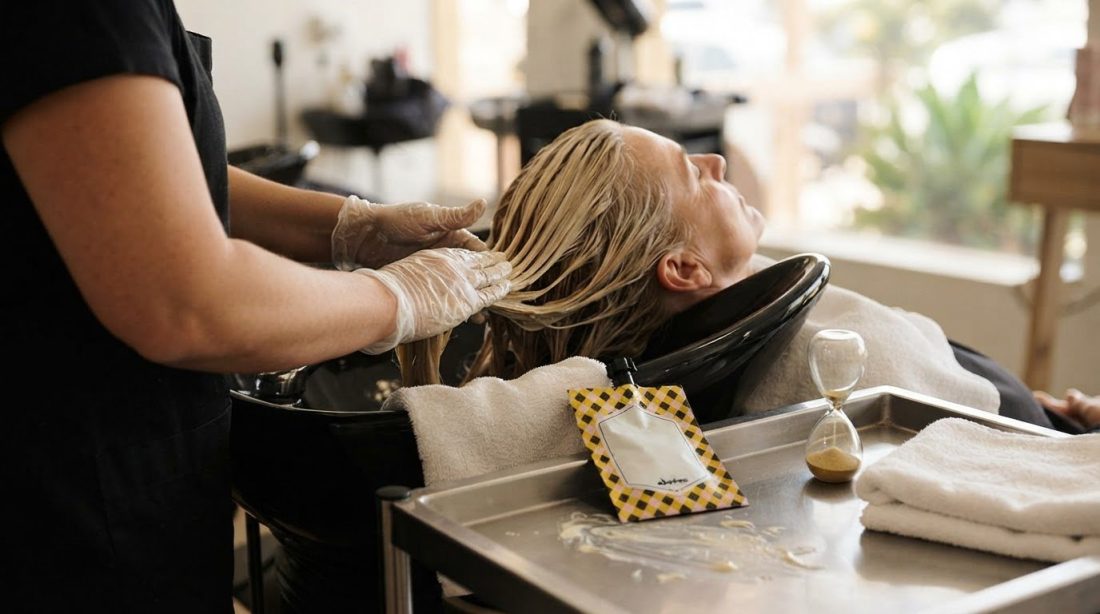
How to Choose How Long to Leave a Hair Mask On
More time isn’t always more treatment: you can leave a hair mask on too long. Quick masks generally need 1-5 minutes, deep-moisture masks 3-5 minutes and intense repair masks 5-10 minutes. Follow the product’s directions, as leaving a mask on longer can make hair feel heavy or greasy, and protein-rich formulas may leave it feeling brittle.
It’s tempting to let a mask sit for longer when your hair feels especially dry or damaged. Some intensive masks may be left on for 10-20 minutes, but a longer application isn’t right for every formula or hair type.
Here, you’ll learn how to choose a hair mask leave-on time, when a longer treatment may suit severely dry or damaged hair, and what signs suggest you’ve left a mask on too long. You’ll also find practical steps for applying and rinsing it to care for your hair without unnecessary buildup.
Key Takeaways
- Let the mask’s directions guide your timing, and factor in whether it’s a quick, hydrating or intensive repair formula.
- If your hair is severely dry or damaged, a longer application may suit it, but choose a mask intended for that use.
- Watch how your hair responds: extra time can leave it feeling heavy, greasy or brittle rather than more nourished.
- Apply the mask where your hair needs care most, then rinse it thoroughly to avoid unwanted residue.
How long should you leave a hair mask on for?
Most hair masks are designed for 3-10 minutes, but the product label sets the right time for its formula. Follow its directions rather than extending treatment because your hair feels dry. If your scalp stings, burns or becomes irritated, rinse the mask out and stop using it. Seek health advice if symptoms persist or are severe.
- Follow the stated processing time. Check the packaging before applying the mask and set a timer. A quick treatment may call for 1-5 minutes, while an intensive repair formula may need 5-10 minutes. Don’t assume every mask works better with extra time; leaving it on longer doesn’t necessarily increase its benefits.
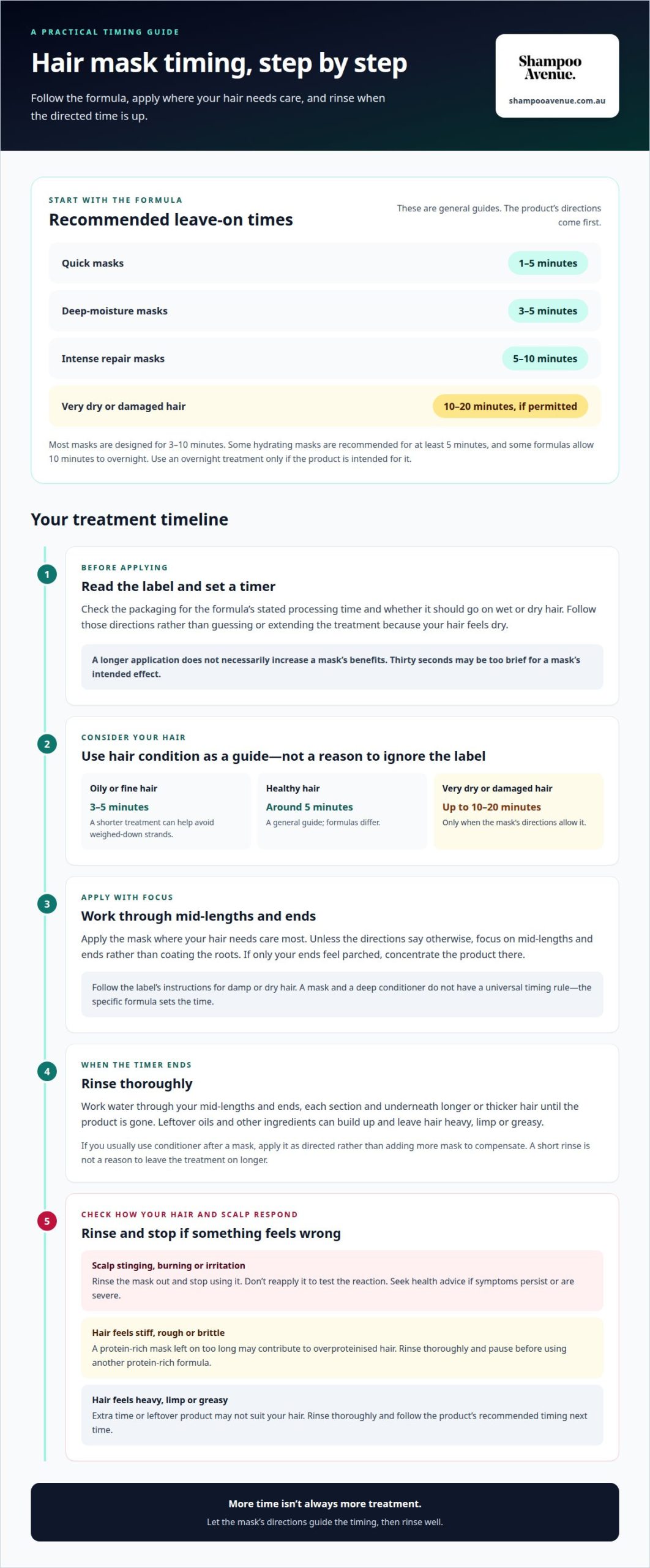
- Rinse thoroughly when the timer ends. Work water through your mid-lengths and ends until the product is gone. Leftover oils and other ingredients can build up, making hair feel heavy, limp or greasy. If you usually use conditioner after a mask, apply it as directed rather than adding more mask to compensate.
- Take extra care with protein formulas. Leaving a protein mask on beyond its recommended time may contribute to overproteinised hair, which can feel brittle. If your hair feels stiff or rough after treatment, rinse thoroughly and pause before using another protein-rich formula. More processing time isn’t a reliable fix for dryness.
- Respond to irritation straight away. Rinse off the product if your scalp becomes uncomfortable, then stop using that mask. Don’t reapply it to see whether the same reaction happens again. Persistent or severe irritation is a reason to seek health advice, rather than extending the treatment or layering on another product.
Longer application for severely dry or damaged hair
Hair condition can influence timing, but the mask’s directions come first. Use these steps to choose an application time that suits your hair type.
-
Adjust application time for hair condition
For dry or damaged hair, use the time on the label as your starting point. Some masks may be left on for up to 10 minutes, while a mask intended for very dry or damaged hair may allow 10-20 minutes. Check that the formula permits a longer application; don’t extend the time simply because your hair feels rough. Extra minutes don’t guarantee extra nourishment.
-
Consider hair type when timing application
For oily or fine hair, 3-5 minutes is generally enough. A shorter application can help avoid leaving fine strands weighed down by rich ingredients. Healthy hair can usually benefit from around five minutes. Treat these as general guides, not replacements for the product’s instructions, since formulas differ even when they target the same hair type.
- Apply the mask where it’s needed. Work it through the mid-lengths and ends, where dryness or damage often needs attention, rather than coating the roots. If only your ends feel parched, focus the product there instead of applying it across your scalp. Rinse when the recommended time is up, even if the rest of your hair feels healthy.
If dryness or damage persists despite following the label, tailored scalp health and hair wellness treatments can help address hair and scalp concerns alongside your at-home routine.
Recommended leave-in times for different hair masks
Match the application time to the mask’s purpose and directions. Apply it as instructed on the packaging, then rinse thoroughly when the time is up.
Hair masks and deep conditioners can serve similar purposes, but their names don’t set a universal timing rule. Follow the directions for the specific formula, whether it’s labelled a mask or a deep conditioner.
-
Choose a mask-specific leave-in time
Use the recommended time for the formula: quick masks generally take 1-5 minutes, deep-moisture masks 3-5 minutes, and intense repair masks 5-10 minutes. Moisturising and hydrating masks are recommended for at least 5 minutes, while some masks may allow 10 minutes to overnight. Don’t assume that a longer application brings more benefit; the product’s directions matter most.
-
Follow extended-wear directions
Leave a mask on overnight only if it’s intended for overnight use. These products may be designed to stay on for several hours, unlike a rinse-out mask with a short processing time. Check the packaging to see whether to apply it to wet or dry hair. Don’t turn a standard mask into an overnight treatment by simply leaving it on longer.
- Apply the product to the right length. Unless the directions say otherwise, focus the mask on mid-lengths and ends rather than roots, where it can leave hair greasy. For instance, smooth it through dry ends while avoiding the scalp. If the label calls for damp hair, apply it after washing; if it specifies dry hair, follow that instead.
- Rinse until the product is gone. Work water through each section, including underneath longer or thicker hair, so residue doesn’t remain. A short rinse may not be enough to remove the mask thoroughly, but that doesn’t mean you should extend the application time. Leave it on for the directed period, then rinse well.
How long to leave a hair mask on
Use the mask’s directions as your timing guide, then tailor your routine to your hair’s needs. These steps can help you decide how long to leave it on and how often to use it.
- Start with the formula’s instructions. Set a timer for the stated leave-in period rather than guessing. Hydrating masks are generally left on for at least five minutes, while other formulas may have shorter or longer directions. Thirty seconds may be too brief for a mask to have its intended effect, but extra time isn’t automatically better.
- Match how often you mask to your hair. Dry hair may suit a hydrating mask two or three times per week. For damaged or colour-treated hair, use one or two times per week as a guide. Fine or oily hair may need a mask once a week or less, as frequent conditioning can leave strands feeling weighed down.
- Keep the amount measured. Use the quantity directed on the packaging, and spread it through the mid-lengths and ends. Tripling the amount can leave the scalp greasy and hair weighed down. Adding more product or extending the leave-in time won’t necessarily improve the result.
- Consider colour-treated hair. Some masks contain plenty of oils, which can strip colour from coloured hair. If you colour your hair, choose a formula suited to your routine and follow its timing directions. Don’t leave an oil-rich mask on longer in the hope of protecting colour.
- Finish the routine with a thorough rinse. Work water through the full length of your hair until the mask is rinsed away. Conditioner after a mask can help seal in its benefits and balance hair’s pH. If you’re considering colour changes alongside your care routine, explore grey blending and natural colour.
Shampoo Avenue: Women’s Haircuts & Styling
Shampoo Avenue offers Women’s Haircuts & Styling to help you find a cut and routine that suit your hair. If masks leave your hair feeling heavy, brittle or difficult to manage, a stylist can help you consider how your haircut and care routine work together.
For colour-treated hair, Luxury Hair Colour Transformations and Lived-In Luxury Blonde Services offer ways to change or refresh your look. Professional Haircare Products can also support your at-home routine. Choose products according to your hair’s needs and follow their directions.
For help choosing a cut, styling approach or haircare routine, contact Shampoo Avenue.
Make your next hair-care choice with confidence
If you’re still wondering whether you can leave a hair mask on too long, let your hair’s response guide your next step. Notice whether it feels soft and manageable or unusually heavy, stiff or uncomfortable after rinsing. This can help you decide whether to change your routine instead of simply adding more product or time.
Bring your hair goals into the conversation, especially if you’re planning a colour change or want to work with your natural tones. Shampoo Avenue offers Luxury Hair Colour Transformations, Lived-In Luxury Blonde Services and Grey Blending & Natural Colour, with options for different looks and preferences.
A thoughtful routine should feel manageable and support the hair you want to wear. For advice tailored to your hair and plans, contact Shampoo Avenue for hair care advice. A simple conversation can help you take your next step with clarity.
Frequently Asked Questions
Can you leave a hair mask on too long?
Yes. Leaving a hair mask on beyond its recommended time can leave hair heavy, limp or greasy. Oils and proteins may build up, and protein-rich formulas can make hair feel brittle if overused or left on too long. If your hair feels coated after rinsing, wash out the residue thoroughly and follow the label’s timing next time.
How long should you leave a hair mask in your hair?
Use the time on the packaging, as different formulas have different processing periods. As a guide, quick masks generally take 1-5 minutes, deep-moisture masks 3-5 minutes and intense repair masks 5-10 minutes. For example, set a timer when applying a repair mask so you don’t lose track while showering.
What happens if you leave a hair mask on overnight?
An overnight mask designed for extended wear may be left on for several hours, following its directions. A rinse-out mask isn’t automatically suitable for sleeping in; leaving it on longer than directed can contribute to heaviness or product buildup. Check the label for overnight use, and protect your pillow if the instructions recommend it.
Can leaving a hair mask on too long cause dry or brittle hair?
Hair may feel brittle after a protein mask has been left on too long, but longer wear won’t affect every formula in the same way. Extra time can also leave strands weighed down rather than softer. If your hair feels stiff after rinsing, pause protein treatments and choose your next mask according to its directions and your hair’s needs.
Can protein hair masks cause damage if left on too long?
Leaving a protein-rich mask on beyond its recommended time may contribute to overproteinised hair, which can feel brittle. However, that doesn’t mean every protein mask will damage hair when used as directed. Stick to the product’s processing time, and avoid adding another protein treatment straight away if your strands already feel stiff or rough.
How do you use a hair mask according to the product instructions?
Read the label first, then follow its directions for application, timing and rinsing. Check whether the formula should go on wet or dry hair, and apply it to the specified areas. If the directions say to focus on mid-lengths and ends, keep it away from your roots. Set a timer, then rinse thoroughly when the time is up.