

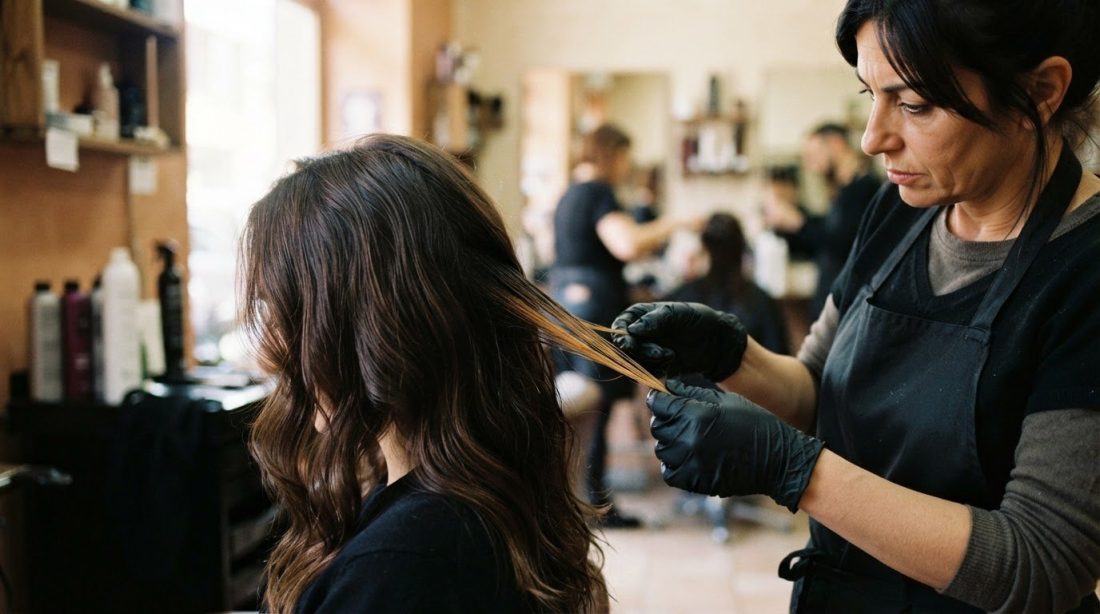
4 things to consider when going from brunette to blonde
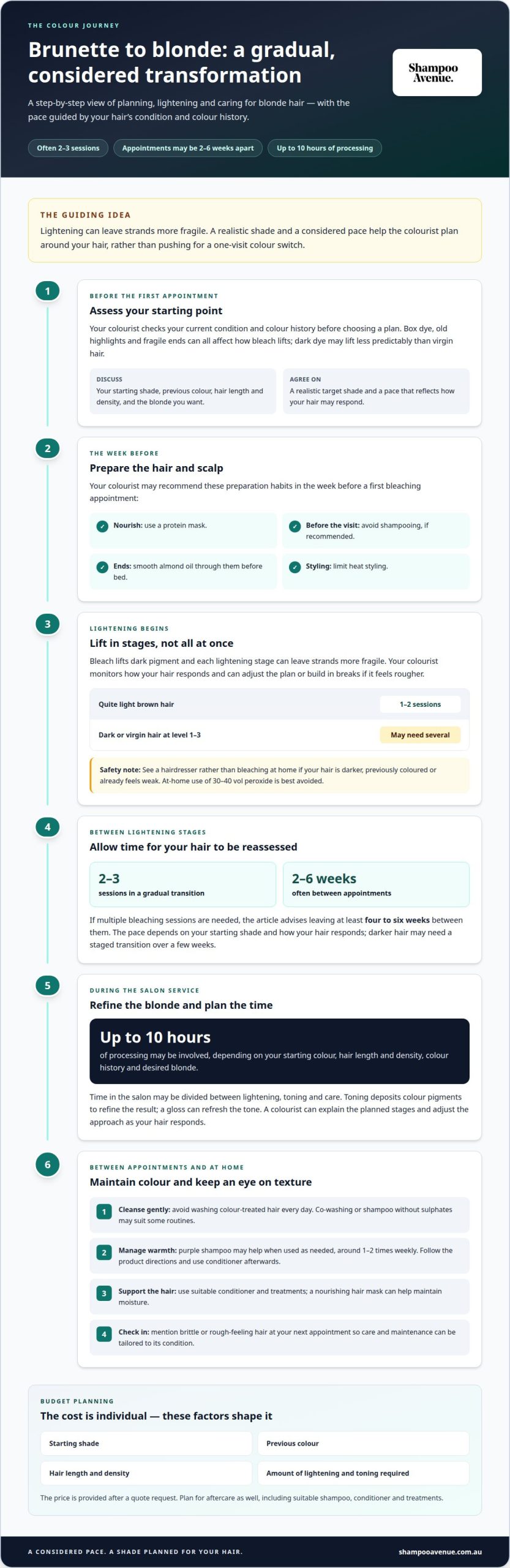
A brunette-to-blonde transformation is a process, not a one-visit colour switch. Going from brunette to blonde calls for thoughtful damage control: lightening can leave hair more fragile, and a deeper or previously coloured starting shade may need several stages. A gradual transition is often planned across 2-3 sessions, with 2-6 weeks between appointments.
It’s understandable to want a clear idea of the commitment before making the change. This guide explains what can affect hair condition, how long the colour journey may take, what shapes the cost, and how to care for blonde hair at home. The overall cost depends on your starting colour, colour history, hair length and density, and the amount of lightening involved; it’s provided after a quote request. You’ll also learn why an achievable shade and a considered pace can help support healthier-looking hair along the way.
Key Takeaways
- Ask your colourist to assess your hair’s condition and colour history before planning the lightening process.
- Be prepared for a gradual transition if your starting shade or previous colour means your hair needs a gentler approach.
- Understand how your starting colour, hair length and density, and the amount of lightening can shape the appointment time and cost.
- Learn which at-home care habits can help maintain blonde colour while supporting your hair’s condition.
How can a hairdresser help you maintain blonde hair at home?
A colourist starts by assessing your brown hair, previous colour and current condition. Box dye, old highlights and fragile ends can affect how bleach lifts, so the plan should reflect your hair’s history, not just a reference photo. The colourist can explain whether your goal suits a gradual transformation and which treatments may support your hair before lightening begins.
Preparation matters. During the week before a first bleaching appointment, a colourist may recommend a nourishing protein mask, avoiding shampoo before the visit, smoothing almond oil through the ends before bed and limiting heat styling. These steps help prepare the hair and scalp for the service. Bleach can disrupt the cuticle and affect keratin, so the colourist may also plan breaks between lightening stages if the hair feels rougher.
An assessment is especially useful for colour-treated brunettes. Dark dye can make lifting less predictable than virgin hair, while previously lightened sections may be more fragile. After bleaching, hair can feel drier, rougher or less smooth than before. A colourist can adjust the lightening plan and recommend conditioner or hair repair treatments suited to your hair’s condition, rather than treating every section alike.
Blonde maintenance also includes colour care. A salon colourist can use toning or a gloss to refresh blonde hair and soften brassy warmth, with the choice guided by the shade and its condition. At home, purple shampoo can help manage warmth when used as needed, around 1-2 times weekly. Follow the product directions, then use conditioner to help hair feel softer. Avoid washing colour-treated hair every day; gentler cleansing, including co-washing, may suit some routines. Ask your colourist to tailor the home-care plan to your hair’s texture and the blonde tone you’re maintaining.
2. How damaging is going from brunette to blonde?
Bleach lifts dark pigments, and each lightening stage can leave strands more fragile. A salon colourist should assess your hair’s colour history and condition before choosing a target shade. See a hairdresser rather than bleaching at home if your hair is darker, previously coloured or already feels weak. At-home use of 30-40 vol peroxide is best avoided.
The gentlest salon approach is to lift the colour in stages, with the pace guided by how your hair responds. Quite light brown hair may reach its target in one or two sessions, while dark or virgin hair at level 1-3 may need several. If multiple bleaching sessions are needed, leave at least four to six weeks between them. A gradual transition may involve 2-3 sessions, spaced 2-6 weeks apart.
There’s no single appointment time for every transformation. A brunette-to-blonde service can involve up to 10 hours of processing, depending on the starting colour, hair length and density, colour history and desired blonde. A colourist can explain the planned stages and how time in the salon may be divided between lightening, toning and care.
Budget for the full colour journey, not just the first session. Price depends on the case and is given after a quote request; the main factors include your starting shade, previous colour, hair length and density, and the work needed to reach your goal. Allow for aftercare too, such as suitable shampoo, conditioner and treatments that support your blonde hair routine.
During lightening, a colourist monitors how the strands respond and adjusts the plan rather than pushing darker hair towards blonde in one sitting. Toning deposits colour pigments to refine the result, while a gloss can refresh the tone. If you’re planning a careful colour transformation, professional blonde services can help map out the process around your hair’s condition and desired shade.
3. Time and cost of brunette-to-blonde colour transformation
For budgeting, the price depends on your individual case and is provided after a quote request. The main factors include your starting shade, colour history, hair length and density, and the amount of lightening and toning required. Include aftercare in your plans too: conditioner, suitable shampoo and treatments help support the hair between salon visits.
At home, avoid washing colour-treated hair every day. A gentler cleansing routine, such as co-washing or using a shampoo without sulphates, may suit your hair. Ask your colourist whether purple shampoo fits your blonde shade and how often to use it. It can help control warmth, but it isn’t a substitute for your colourist’s toning or glossing work.
Keep an eye on texture as well as colour. If your blonde feels brittle or rough, mention it at your next appointment so your colourist can tailor treatments and maintenance. A nourishing hair mask can help maintain moisture, while your colourist can advise how to balance cleansing, conditioning and colour care at home. A careful plan for managing damage when shifting from brunette to blonde can make the routine easier between visits.
4. Damage from brunette-to-blonde transformations
Bleach lightens brown hair by penetrating the hair shaft and breaking down its natural pigment. This process can affect the cuticle, the strand’s outer layer, as well as its inner structure. The more lift needed to achieve a much lighter blonde, the more carefully the colourist needs to manage the transformation. Dark hair may reveal warm underlying tones, including orange and yellow, before reaching the chosen shade.
Damage isn’t always obvious. Chemical changes can occur without visible breakage or lost ends, so hair that looks intact may still be affected. After lightening, strands may feel rougher or more fragile, especially when several sessions are needed. A colourist can assess your hair between stages and adjust the plan rather than pursuing a lighter result at any cost.
Consider dimension instead of an all-over platinum result. Highlights or balayage can retain darker pieces among lighter sections, creating light dimension without going fully blonde. This approach may suit someone who wants a softer shift while limiting how much hair is lightened. The colourist can map placement around your existing colour and discuss how much contrast you want to maintain.
Colour care can refine warmth, but it can’t reverse bleach damage. Purple shampoo may help manage yellow tones in blonde, treated hair; use it as directed and ask your colourist how it fits your shade. Orange warmth may need a different salon toning approach, so don’t assume purple shampoo will correct every brassy result. Avoid 30-40 vol peroxide for at-home lightening. The practical takeaway is to prioritise hair condition over speed, especially if your goal is a very light blonde. Plan a professional blonde transformation around your hair’s condition and the dimension you want.
Shampoo Avenue: Lived-In Luxury Blonde Services
Shampoo Avenue offers Lived-In Luxury Blonde Services for clients considering a softer, dimensional blonde rather than an all-over change. If you’re moving from brunette, bring reference photos and share your colour history, including previous dye or highlights. These details help shape a conversation about the blonde shades you want and the transformation involved.
For a broader colour change, Luxury Hair Colour Transformations are another relevant service. Frizz Control & Smoothing Treatments may also suit clients who want to manage frizz alongside their colour. Choose the service that best reflects your colour goals and hair concerns, then discuss your preferences with the team.
To talk through your blonde transformation, contact Shampoo Avenue.
Make your next colour choice with confidence
Shampoo Avenue offers Luxury Hair Colour Transformations and Lived-In Luxury Blonde Services to help shape your next move. If you’re also considering a softer approach to grey, Grey Blending & Natural Colour is another option to discuss. Start with a clear conversation about your priorities so the colour plan feels considered and personal.
Contact Shampoo Avenue for a consultation and talk through the colour direction that feels right for you. A thoughtful plan can make the change feel more manageable, one step at a time.
Frequently Asked Questions
How damaging is going from brunette to blonde?
Lightening can make hair more fragile, particularly when the starting colour is very dark or has been dyed before. The amount of lightening needed, previous chemical services and your hair’s current condition all affect the approach. A colourist can assess those factors and plan a shade that balances your blonde goal with the condition of your hair.
But wait, is it really possible to go blonde without bleach?
A small colour shift may be possible without bleach, but a substantial change from brunette to blonde generally requires lightening that removes dark pigment. The colourist considers your natural shade, colour history and desired result before choosing a method. For example, going from dark brown to a much paler blonde is a bigger lift than adding a few lighter pieces.
How long does it take to go from brown to blonde?
The timeline depends on your starting shade, previous colour and target blonde. A lighter brown base may take one or two appointments, while deep brunette or black hair can need a staged process over a few weeks. Salon time also varies with hair length, density and the colour work involved, so the full plan includes both appointment time and recovery between visits.
How damaging is it to go from brunette to blonde in one session?
One session can put more stress on hair if it requires a major lift, especially from a dark or previously coloured base. The colour may also remain warmer than your target because dark pigment can be difficult to lift in one appointment. A colourist assesses how your hair responds during the service and may choose a more gradual result to protect its condition.
How many salon sessions does it take to safely go brunette to blonde?
There isn’t one session count that suits every head of hair. A lighter brown starting shade may take one or two appointments, while darker or previously dyed hair often needs more gradual lightening. A colourist bases the plan on your desired shade, colour history and how your hair responds, then sets a pace that avoids pushing fragile strands too far.