

Root Smudge vs Root Tap: Choose Your Root Technique
More root colour doesn’t always mean a softer grow-out. Choosing between a root smudge and a root tap comes down to the depth and contrast you want. A root tap applies a small amount of colour close to the roots for a subtle, sun-kissed effect. A root smudge blends a darker shade further down the hair for a smoother transition. The terms are sometimes used interchangeably, so placement and finish matter more than the name.
If you’re weighing up your options, you may want to soften regrowth without losing the brightness you love. This guide explains how root tapping, root smudging and root melting differ, and how each can shape depth, contrast and grow-out.
Use the practical comparisons below to work out which effect best suits your colour goals. Whether you want to stay as blonde as possible or add a more lived-in blend, start with the finish you’d like to see.
Key Takeaways
- Compare how lightly each technique softens the root area, and how far colour is blended down the hair.
- Use the depth and contrast you want to guide your choice, from a subtle transition to a more lived-in effect.
- Consider how your preferred colour finish and grow-out shape the technique and your refresh plan.
- A colour expert can tailor the approach to your existing highlights, natural base and desired level of brightness.
What’s the Difference Between Root Melt, Root Smudge & Root Tap?
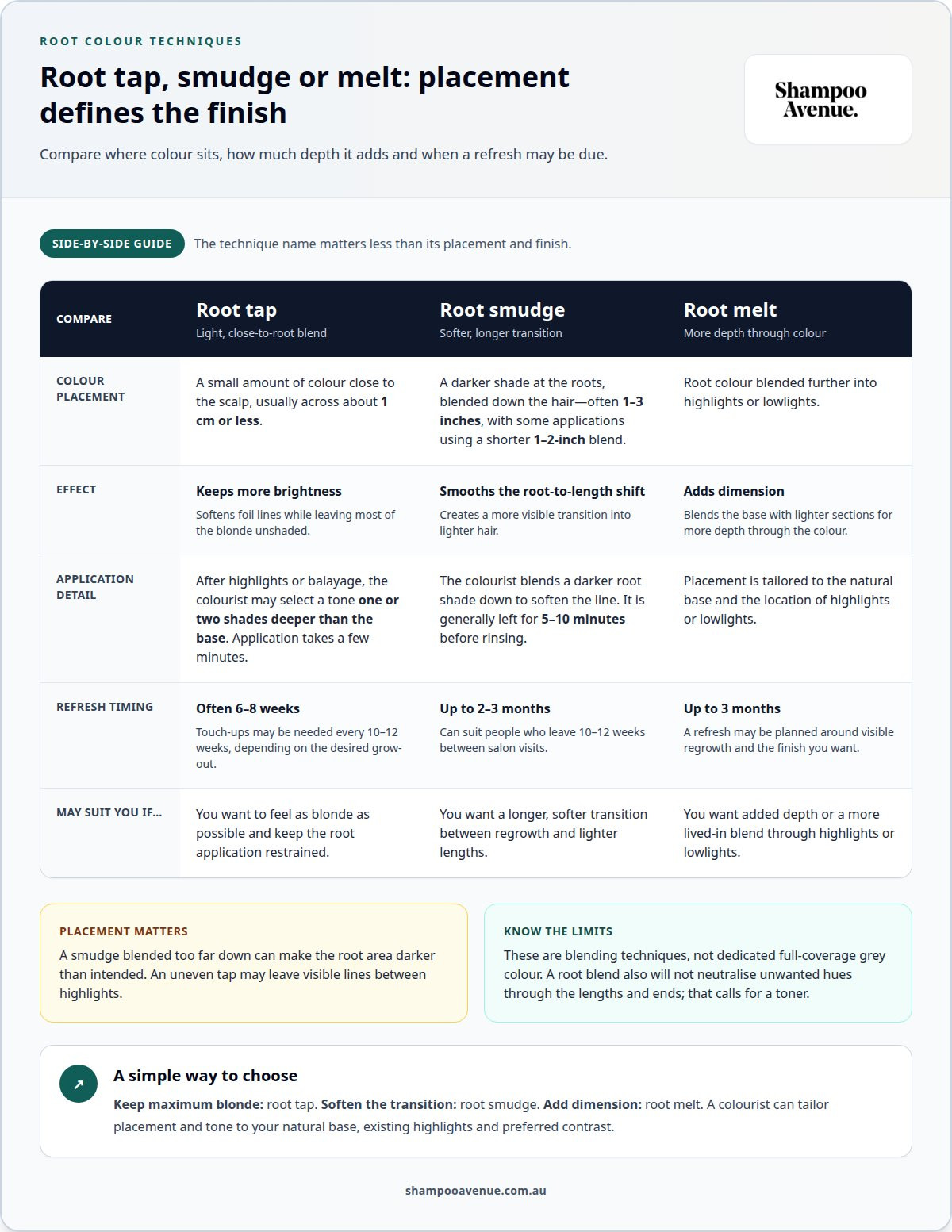
These techniques differ in placement, depth and how they blend regrowth with lighter lengths. A root tap adds a small amount of natural-looking colour at the roots. A root smudge uses a darker shade to soften the transition, while a root melt blends the root colour further into highlights or lowlights for added dimension.
For maintenance, a root smudge can last up to two to three months without a touch-up. Root smudging suits people who leave 10-12 weeks between salon visits. Root taps are often refreshed every six to eight weeks, though touch-ups may be needed every 10 to 12 weeks. A root melt can last up to three months before a refresh.
Can a root smudge or root tap cover grey hair? They can soften the contrast between grey regrowth and coloured lengths, but they’re blending techniques, not dedicated full-coverage colour. The result depends on colour placement and your grey pattern.
How should you maintain a root smudge or root tap at home? Follow your colourist’s care instructions and avoid applying root colour yourself, as this can change the blend. Plan refresh appointments around visible regrowth and the finish you want.
| Technique | Colour placement | Typical refresh timing | Grow-out effect |
|---|---|---|---|
| Root tap | Light application at the roots | Often six to eight weeks | Subtle, soft regrowth |
| Root smudge | Darker shade blended at the roots | Can last up to two to three months | Smoother transition into lighter hair |
| Root melt | Root colour blended with highlights or lowlights | Can last up to three months | More depth through the colour |
Choose a root tap for a light root blend, a smudge for a softer transition, or a melt for dimension through the lengths. Your preferred contrast and refresh rhythm can help guide the choice.
Root tapping vs root smudging: which root technique is best for you?
A root smudge blends colour further down the hair, while a root tap keeps the application close to the roots. Placement and timing determine how much contrast remains between your base and highlights.
Root smudge application
A colourist applies a darker shade at the roots, then blends it down to soften the line between regrowth and lighter lengths. The colour may extend 1-3 inches, creating a more visible transition than a root tap. Some applications use a shorter 1-2-inch blend. A root smudge is generally left for 5 to 10 minutes before rinsing, with the blend adjusted to suit the existing colour.
Root tap application
A root tap places colour close to the scalp, usually across about 1cm or less. After highlights or balayage, the colourist selects a tone one or two shades deeper than the base, then applies it precisely to soften foil lines without shading much of the blonde. Application takes a few minutes. Compared with a smudge, the tap covers less length, keeping the result lighter and the transition more subtle.
Technique risks and downsides
Both techniques depend on accurate placement and tone selection. A smudge taken too far down can make the root area look darker than intended, while an uneven tap may leave visible lines between highlights. Root tapping requires precise timing on pre-lightened hair, so leave it to a professional colourist. A root blend also won’t neutralise unwanted hues through the lengths and ends; that calls for a toner.
Choose a smudge if you want a longer, softer transition; choose a tap to keep the root application restrained and retain more brightness. Root tapping may need a touch-up every 10 to 12 weeks, depending on the desired grow-out. A colourist can shape a colour plan around your highlights and preferred level of contrast.
Choosing a technique with a colour expert
A colourist matches the technique to your base, existing highlights and preferred finish. A root tap suits someone who wants to feel as blonde as possible, while a root melt creates more depth between natural colour and lighter sections. The choice depends on how much contrast you want at the roots.
With bright blonde highlights, a tap can soften foil lines while keeping the root area light. A root melt may suit high-contrast blonde when you want a more lived-in transition. For brunette melts, blending the natural base with highlights or lowlights can add dimension without losing brightness through the lengths.
Seasonal changes can also shape your colour plan. For example, moving from summer blonde towards a deeper autumn finish may call for a root melt. Before choosing where to blend, a colourist considers your existing base, the placement of lighter pieces and the intended depth. This helps avoid creating more darkness than you want.
Root melting can blend colour, but it isn’t automatically a colour-correction service. If your existing colour is uneven, the colourist needs to assess where the differences sit and what finish you want. A root blend may soften the transition at the scalp, but it won’t necessarily correct unwanted colour through the lengths.
Use these points to guide the decision:
- Keep maximum blonde: choose a root tap for a softer, lighter root effect.
- Add depth: consider a root melt for dimension through highlights or lowlights.
- Shift seasonally: discuss a deeper blend when moving from bright summer blonde.
- Address uneven colour: identify the areas needing correction before selecting a blending technique.
Describe the effect you want, such as bright blonde with softened roots or a deeper brunette melt. This gives the colourist a practical starting point for tailoring the placement and tone.
Root depth and contrast
Depth describes how dark the root colour looks beside lighter lengths; contrast is the difference between them. A close match to your natural base creates a softer shift, while a darker root makes the change more noticeable. For example, blonde highlights beside a deeper base create stronger contrast than highlights beside a softly blended root.
A shadow root places darker colour directly at the roots to create depth, and it doesn’t require a full head of highlights. The shade can vary by up to 2 or 3 shades, depending on the contrast you want. For a more noticeable shadow, colour can be dropped 1-2 inches from the roots. This keeps the deeper area visible while leaving lighter lengths intact.
A root melt blends the natural base with highlights or lowlights, creating dimension across the transition. It can suit a lived-in look that keeps brightness lower down while adding depth near the crown. Taking darker colour slightly deeper through the crown increases contrast there. Placement matters: a subtle blend looks softer, while a deeper crown creates a more defined shadow effect.
Consider where you want the eye to notice the colour. A shadow root concentrates depth near the scalp; a root melt spreads the blend between the base and lighter sections. Neither effect is automatically better. The result works best when root depth suits the brightness, placement and tone of your existing colour.
- Low contrast: keep the root shade close to the natural base for a gentler transition.
- Visible root depth: consider a shadow root with a deeper shade placed at the scalp.
- Blended dimension: choose a root melt to connect the base with highlights or lowlights.
- More crown contrast: place the deeper blend slightly farther through the crown.
Choose the effect by deciding where you want depth to sit: at the roots, through the crown, or across the transition into lighter lengths.
Shampoo Avenue
Shampoo Avenue can help you choose a root technique to suit your colour, desired depth and regrowth preferences. If you’re deciding between a subtle root tap and a more blended effect, a colour conversation can take your existing highlights and preferred brightness into account.
For a brighter, lived-in finish, Shampoo Avenue’s Lived-In Luxury Blonde Services may suit your goals. Luxury Hair Colour Transformations and Grey Blending & Natural Colour offer options for different colour needs. The right direction depends on the result you want, whether that means keeping blonde lengths bright, blending grey or adding depth.
Ready to talk through your colour goals? Contact Shampoo Avenue.
Make your colour choice feel like yours
Before your appointment, think about the finish you want to live with, not just the result in a photo. If you’re weighing up root smudge vs root tap, bring a reference image and describe what appeals to you, such as the balance of light and dark or the overall softness. Your colourist can use those details to discuss an approach that suits your hair and goals.
Ready to explore your options? Contact Shampoo Avenue to discuss your colour. Take the next step with a clear idea of the look you’d love.
Frequently Asked Questions
Can I do a root tap at home?
Leave a root tap to a professional colourist because placement, tone and timing need to be precise on pre-lightened hair. At home, colour can overlap onto blonde sections or create a visible band, especially around the parting. A colourist can assess your existing highlights and natural base before applying colour, helping create an even finish suited to your intended look.
How long does this last?
How long the result looks fresh depends on your regrowth, the contrast between roots and lengths, and how softly the colour blends. For example, regrowth may stand out sooner against a bright, cool blonde than against a closer natural shade. Use changes at your part and hairline as practical cues for planning a refresh, rather than relying only on the calendar.
How much does a root tap cost?
A root tap’s price depends on the case and is given after a quote request. Factors include whether it’s added to highlighting, the amount of colour work needed, your existing colour and the finish being planned. If the appointment includes other colour services, those also affect the overall quote. This ties the estimate to the work involved rather than a generic figure.
Is root smudge blonde possible?
Yes, a root smudge can be used with blonde colour. It can soften the transition between natural roots and lighter pieces while keeping the blonde lengths visible. For example, someone with bright blonde highlights might prefer a softer root area without darkening the whole look. The colourist considers the existing blonde tone and desired root effect when planning the blend.
What are root taps, smudges and melts?
These are salon colour techniques that shape how the roots connect with the rest of your hair. A root tap keeps the colour application close to the scalp; a smudge creates a more blended transition; and a melt connects several tones for a more diffused finish. Since colourists may use these names differently, describe the placement and result you want, not just the technique name.
Which technique should you choose?
Choose based on your desired finish and how your current colour is placed. If you want to preserve a bright blonde look, a lighter root effect may suit you; for more dimension, consider a deeper blend. Bring a photo showing the contrast you like and explain what you’d change about your current colour. That gives your colourist a clear starting point for discussing options.