


Signs you need a new hairstylist and how to move on
One disappointing appointment doesn’t always mean it’s time to move on, but repeated problems can be clear signs you need a new hairstylist. If your stylist doesn’t listen, pressures you into cuts or products, or you regularly leave unhappy with the result, it’s reasonable to look for a better fit. You deserve to feel heard and comfortable in the chair.
Changing stylists can feel awkward, especially if you’ve seen the same person for years. Still, wanting a haircut or colour that suits you, a conversation that respects your preferences, and a professional appointment is entirely reasonable.
Here’s how to assess a salon, explain what you want, recognise pressure and decide whether it’s time to move on. You’ll also find practical, polite ways to end a long-term stylist relationship and make your next hair appointment feel like a fresh start.
Key Takeaways
- Look for patterns in salon reviews and notice whether the space and tools appear clean, rather than judging a salon by how busy it is.
- If you’re ready to leave a long-term stylist, a brief, kind note can help you part on good terms; you can also move on without giving a reason.
- Share your hair goals, concerns and usual styling routine so your stylist can recommend an approach that fits your hair and lifestyle.
- You can decline a cut or product recommendation that doesn’t feel right. Professional advice should guide your choices, not pressure you.
1. Considering a salon’s activity and reviews
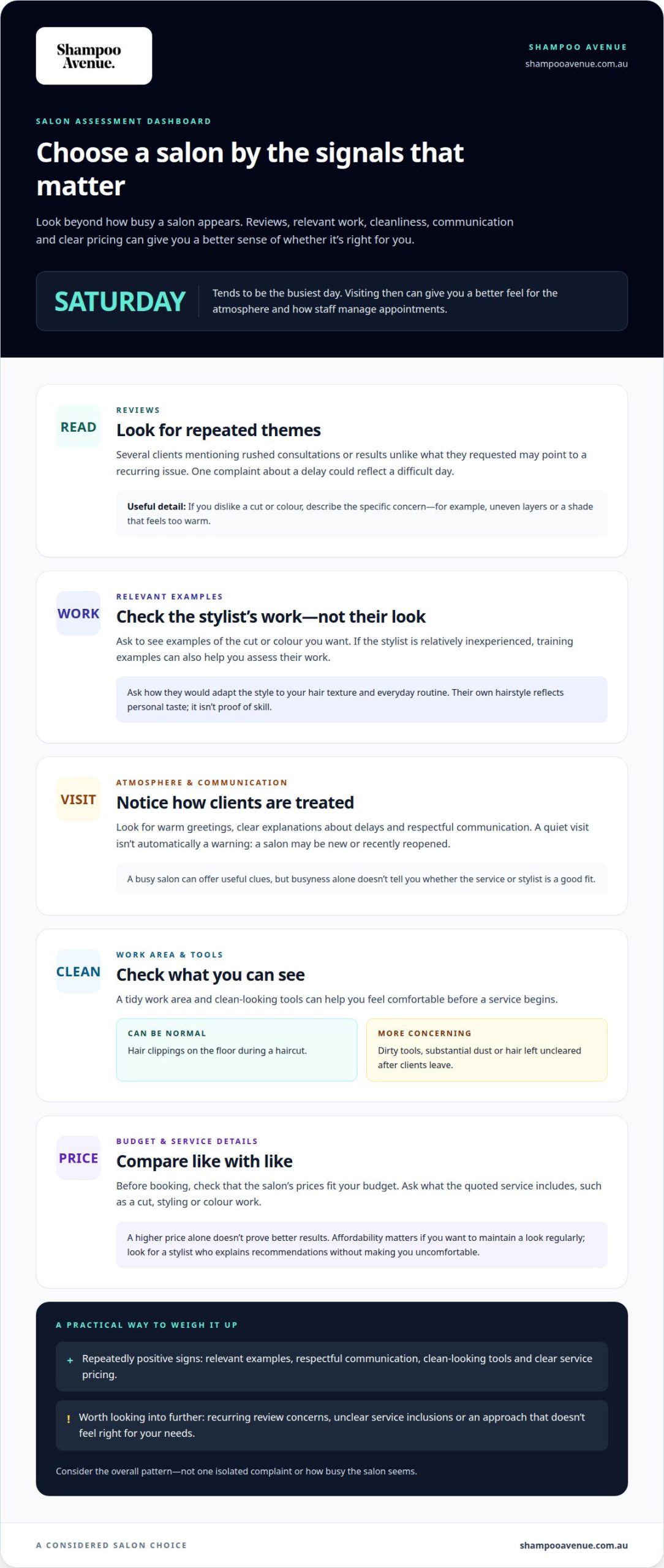
To find a reputable hairstylist in Australia, compare recent reviews, look for repeated themes and view examples of the stylist’s work. A stylist should be able to show previous work, including training examples if they’re relatively inexperienced. Then consider whether their approach and communication feel right for you.
A busy salon can offer useful clues, but a quiet visit isn’t automatically a warning. A salon that’s new or recently reopened may not yet have a steady flow of clients. Saturday tends to be the busiest day, so visiting then can give you a better sense of the atmosphere and how staff manage appointments. Notice whether they greet clients warmly, explain delays and speak respectfully.
Read reviews for patterns, not isolated complaints. Several clients describing rushed consultations or results that differ from what they requested may point to a recurring issue. One review about a delayed appointment could reflect a difficult day. If you’ve had a cut or colour you dislike, describe the specific concern, such as uneven layers or a shade that feels too warm. Repeated dissatisfaction is one of the signs you need a new hairstylist.
Check the salon’s cleanliness during your visit. Hair clippings on the floor during a haircut can be normal; dirty tools, substantial dust or hair left uncleared after clients leave are more concerning. A tidy work area and clean-looking tools can help you feel comfortable before a service begins.
Before booking, make sure the salon’s prices fit your budget. Ask what the quoted service includes, such as a cut, styling or colour work, so you can compare like with like. A higher price alone doesn’t prove better results, and affordability matters if you want to maintain a look regularly. Look for a stylist who listens to your budget and explains their recommendation without making you uncomfortable.
2. How to end a long-term stylist relationship politely
Before booking with a new hairstylist, ask whether they’ve worked with your requested cut or colour and can show relevant examples. Ask how they’d adapt the style to your hair texture and everyday routine, too. Their answers can help you understand their approach and decide whether it suits your needs.
Ending a long relationship can feel personal, especially if you’ve seen the same stylist for years. If you’d like to explain, keep it kind and straightforward: “Thank you for looking after my hair. I’m ready to try a different approach, so I’ll be changing salons.” A personal note and small gift can be a thoughtful way to acknowledge a relationship that mattered to you.
You don’t owe a detailed explanation if the relationship no longer feels right. If you feel your stylist doesn’t value you, you can simply stop booking appointments. If you prefer to talk, calmly name the issue, such as feeling unheard when you asked to keep your fringe longer. Their response can help you decide whether to continue or move on.
During a new-stylist consultation, describe your hair history, including recent boxed dye or other treatments, before discussing colour. Explain your usual routine, such as air-drying or using a straightener, so recommendations suit your real life. A stylist should look at your dry hair before shampooing to see its natural behaviour and condition. Their own hairstyle may reflect personal taste, but it isn’t proof of skill. Focus on relevant examples of their work, including training examples if they’re relatively inexperienced. For a fresh start, consider a new haircut and styling approach that aligns with your everyday habits.
3. Getting the hairstyle you want
Start by describing your goal, concerns and usual styling routine. For example, explain whether you air-dry your hair or use a straightener each morning. Your stylist can then recommend a cut that fits your hair texture, face shape and lifestyle. Bring reference photos and point out what you like in each one, such as the fringe, length or overall shape.
A good stylist listens before recommending a change. If your requested look may not work, they should explain why, whether it’s because of your hair type or uncertainty about the result. For instance, ask how a layered cut might sit with your natural curls. If the stylist lacks experience with your hair type or requested style, consider someone whose work shows the skills you need.
Changing stylists during a colour correction or treatment plan can disrupt continuity. A new stylist may not know the formulas, products, previous processes or how your hair responded. A different approach may also affect the colour result or overlap with earlier work. Share your colour and treatment history, including recent boxed dye, and describe how your hair felt after each appointment.
Be specific about the result you want and how much styling you’re willing to do. A polished blow-dry look, for example, may call for a different cut from a style you want to air-dry. Ask what daily styling the recommendation involves before agreeing. Assess the result when you leave and about a week later. Does the shape still work with your routine? Is styling manageable, and do you feel like yourself? If it misses the mark, explain what differs from the agreed goal in your next conversation.
4. Avoiding pressure about cuts and products
A stylist can recommend a cut that suits your hair texture, face shape and lifestyle, but the decision should remain yours. If you ask to keep your length, for example, you shouldn’t feel pushed into a dramatic crop. Ask what the stylist proposes and why. A clear explanation helps you weigh their advice against your preferences without feeling rushed into a change you didn’t request.
If a suggested style doesn’t feel right, try saying, “I’d rather keep my current length today.” You can also ask for a smaller adjustment, such as soft layers instead of a short fringe. A stylist who listens can discuss alternatives and explain how each option may sit with your hair. Repeatedly dismissing your preference or making you uncomfortable for saying no can be a reason to reconsider the relationship.
The same principle applies to products. A stylist may recommend shampoo suited to your needs, such as a thickening formula for fine hair or one designed for colour-treated hair. They should explain its purpose and let you decide whether it suits your routine and budget. A sales pitch that continues after you’ve declined, or claims that you must buy products to get a good result, can feel pressuring. You can say, “Thanks, I’ll think about it,” and move on with your appointment.
Keep the conversation practical. Tell the stylist what you want help with, such as frizz, colour care or maintaining a style at home. Ask how a product fits that goal, how you’d use it and whether your current routine could work. Then choose only what feels useful. If you prefer professional products, explore haircare options that fit your needs, without treating a recommendation as an obligation.
Shampoo Avenue
If you’re looking for hair advice that starts with your goals and concerns, Shampoo Avenue offers services including Luxury Hair Colour Transformations, Grey Blending & Natural Colour, and Scalp Health & Hair Wellness Treatments. You can discuss a colour change, blending grey or your scalp and hair wellness needs with the team.
Bring details that can guide the conversation: what you’d like to change, what hasn’t worked and how you usually care for your hair. This gives your stylist useful context for discussing an approach suited to your needs. If you’re considering a lived-in blonde look, Shampoo Avenue also offers Lived-In Luxury Blonde Services.
If you’d like to discuss your hair goals with Shampoo Avenue, get in touch.
Choose a hair relationship that feels right
Recognising the signs you need a new hairstylist can be the start of a more comfortable experience, not a reason to feel guilty. Let your next appointment reflect what matters to you: clear communication, confidence in the plan and hair care that fits your life. Take the time to decide what you want next, whether that means a subtle shift or a fresh direction.
Shampoo Avenue offers Luxury Hair Colour Transformations, Lived-In Luxury Blonde Services and Grey Blending & Natural Colour. If one suits your hair goals, share what you’d like to change and what you want to maintain. A thoughtful conversation can help you explore a direction that feels more like you.
Ready to take a fresh step? Contact Shampoo Avenue to talk about your hair goals. You deserve to feel comfortable and confident in your choice.
Frequently Asked Questions
What are the signs it’s time to find a new hairstylist?
It may be time to move on if appointments consistently leave you uneasy, ignored or unable to speak openly. Notice whether you feel comfortable raising a concern or asking for a change, rather than dreading the conversation. A good professional relationship should make it possible to discuss your preferences without embarrassment. If that trust is missing, choosing a different stylist is a reasonable next step.
How can you tell if a hairstylist isn’t listening to your needs?
A stylist who reflects your priorities before starting shows they’re listening. For instance, if you want to keep your length, ask them to confirm the plan before cutting. If they brush past your request, change the subject or start without agreeing on the shape, pause and restate what matters to you. Their response can show whether you’re working together.
What should you do if your haircut or colour is repeatedly disappointing?
Describe how the result differs from what you expected, using a clear example, such as a fringe that falls across your eyes or a colour that looks unlike your reference. Photos taken in similar lighting can help explain what you mean. Before agreeing to further work, ask what adjustment is possible and what it involves. If you no longer feel confident in the conversation, consider a new stylist.
How can you tell whether a bad haircut is a one-off or a pattern?
A one-off is more likely when the stylist acknowledges the mismatch, listens to your feedback and adjusts their approach next time. A pattern emerges when the same problem continues despite clear communication, such as repeatedly taking more length than you agreed. Keep a brief note of your request and the result after each appointment. It can help you judge whether the issue is recurring.