

How to Tone Hair Without Bleaching and Choose the Right Toner
You can tone your hair without bleaching, but toner won’t make your natural colour lighter. Purple shampoo can soften yellow tones in hair that’s already been lightened, while a gloss or deposit-only toner can refresh or adjust colour without lifting it. The right option depends on your starting shade and the result you want.
Purple shampoo may seem like the simplest fix because it’s designed to help keep brassy tones in check. But using a pigment that doesn’t suit your hair can leave the colour looking dull or uneven, so it helps to understand what each option can and can’t do.
This guide explains how purple shampoo tones bleached hair, how to choose an at-home gloss or toner, and when violet or blue-violet pigment may suit unwanted warmth. You’ll also learn what affects how long professional toner lasts and when a tailored colour service can help you achieve a more balanced result.
Key Takeaways
- Purple shampoo can help soften yellow tones in already-lightened hair, but it won’t lighten your natural colour.
- Consider your colour history and existing pigment before choosing a gloss or toner, as buildup can affect the result.
- Match the toning pigment to the unwanted warmth, and follow product instructions carefully when applying an at-home option.
- Learn what can influence professional toner’s staying power and how to help maintain a fresh-looking tone between colour visits.
Can you tone bleached hair with just purple shampoo?
You can tone your hair without bleaching, but the result depends on your starting colour. Purple shampoo can soften yellow tones in bleached blonde hair, but it won’t lighten natural brunette hair or remove artificial colour.
-
Assess hair colour, condition and toner risks
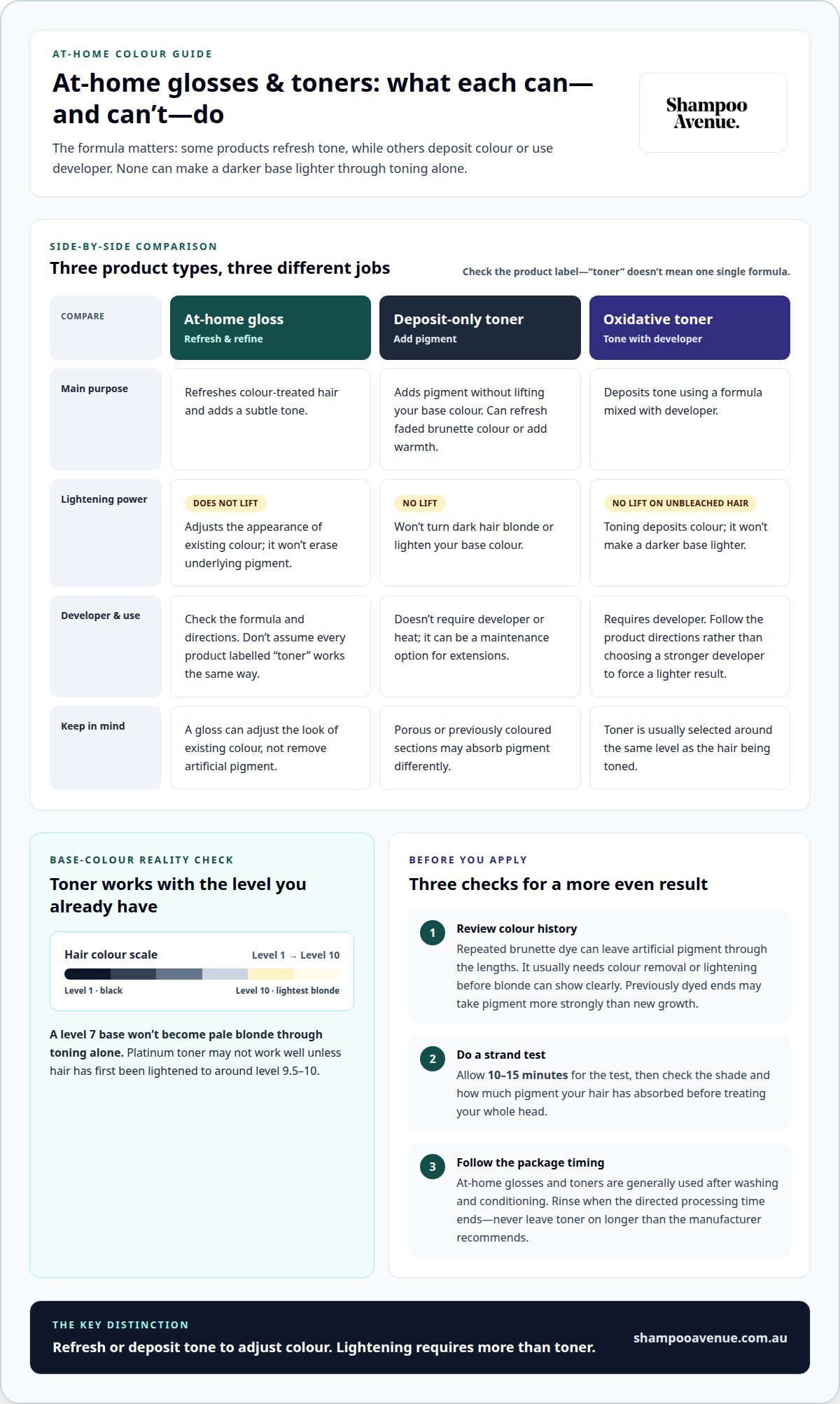
Start by identifying your base shade and the change you want. Hair colour is commonly described on a scale from level 1, black, to level 10, lightest blonde. Purple shampoo targets yellow tones in lightened hair, while a toner on unbleached hair mainly deposits colour. Use hair dye when you want a more noticeable colour change, such as covering grey or shifting your base shade. Toner can look uneven on a dark base or feel drying, particularly if your hair is already fragile.
-
Review colour history and buildup
List your previous colour services before choosing a toner. Repeated brunette dye can leave artificial pigment through the lengths, so a blonde toner won’t remove it or create an even blonde result. Artificial brunette colour usually needs colour removal or lightening before a lighter shade can show clearly. Colour buildup can also make sections absorb pigment differently. For example, previously dyed ends may take toner more strongly than new growth, so a stylist should assess your colour history before a transformation.
- Choose a blonde base and developer to match the intended result. Toner is usually selected around the same level as the hair being toned, so a level 7 base won’t become a pale blonde through toning alone. Traditional oxidative toners use developer; deposit-only products don’t. Follow the product directions rather than choosing a stronger developer to force a lighter result.
- Protect coloured hair from heat and sun exposure to help keep its tone looking fresh. Use heat protection before styling tools, and reduce repeated high-heat styling. If you’re maintaining bleached hair with purple shampoo, follow its directions: light maintenance may take 2-3 minutes, while very yellow hair may need 5-10 minutes. Hair that is damaged, dry or unevenly coloured needs a gentler, tailored approach.
At-home glosses and toners
- Choose a product for the change you want. An at-home gloss can refresh colour-treated hair and add a subtle tone, while deposit-only toners add pigment without lifting your base colour. Traditional oxidative toners require developer, so don’t assume every product labelled “toner” works the same way. Check whether the instructions describe a gloss, a deposit-only formula or a toner mixed with developer.
- Match the formula to your starting colour. A deposit-only gloss can refresh faded brunette colour or add warmth, but it won’t lift dark hair to blonde. For example, a platinum result needs a very light base: platinum toner may not work well unless hair has first been lightened to around level 9.5-10. A gloss can adjust the appearance of existing colour, not erase underlying pigment.
- Test the colour and timing on a small section. A strand test can show how much pigment your hair absorbs and whether the shade suits your lengths. Allow 10-15 minutes for the test, then assess the result before treating your whole head. Porous or previously coloured ends may take pigment differently from less processed roots, so use the test to guide your application rather than guessing.
- Apply in the order and timing stated on the packaging. At-home glosses and toners are generally used after washing and conditioning, then rinsed when the directed processing time ends. Never leave a toner on longer than its manufacturer recommends. Deposit-only toning products don’t require developer or heat, which can make them a suitable maintenance option for extensions. For a grey refresh, grey blending and natural colour can offer a more tailored approach than experimenting with a new at-home shade.
Choosing violet or blue-violet pigment
- Identify the warmth you want to soften. Look at your hair in natural light before choosing a pigment. Violet toning shampoo suits yellow tones in bleached hair because violet pigment helps counter their appearance. If your blonde looks buttery or golden, violet is the more direct choice. Toning adjusts the visible shade; it doesn’t lift the hair or turn a darker base blonde.
- Choose blue-violet when the warmth isn’t purely yellow. Blue-violet pigment combines violet with blue, creating a different balance from a straight violet product. Hair can show a mix of warm tones rather than one uniform shade, especially across previously lightened lengths. Match the product to what you see, not just the word “blonde” on the label. A strand test helps show how the shade looks against your own base.
- Use pigmented conditioner on freshly lightened hair only as directed. A blue-violet conditioner can be applied before a gloss, left for 10-20 minutes, then rinsed. This step deposits tone ahead of the gloss, so follow the product’s instructions and assess the hair before layering another colour product. If the result already looks balanced after rinsing, don’t add extra pigment just to intensify it.
- Keep maintenance measured. Toning shampoo adds pigment with each wash, so repeated use can shift your colour beyond the soft, neutral tone you want. Alternate it with your usual shampoo and check the colour in daylight between washes. For example, if the yellow has softened but the blonde looks muted, pause the toning product rather than leaving it on longer. Professional toners may be more concentrated, so take care when choosing one.
How long professional toner lasts
On unbleached hair, toner deposits colour without lifting your base, and its visible effect fades with washing. There’s no single lifespan: the formula, hair condition and shampoo frequency all affect how long the tone stays noticeable.
- Separate application timing from colour lifespan. Toner can be used up to 8 weeks after bleaching, but that timing doesn’t tell you how long its colour will last. On unbleached hair, a deposit-only toner changes the surface tone rather than lightening the natural base. As that deposited pigment fades, the underlying colour becomes more visible again.
- Use your washing routine to help maintain the result. Frequent shampooing can make deposited tone fade sooner, while gentler washing helps preserve it. After toning, wait 72 hours before shampooing, then use sulphate-free shampoo and condition regularly. For example, if your blonde begins looking brassy again after repeated washes, the pigment has faded and may need refreshing.
- Support hair condition between appointments. Dry, porous lengths can lose tone differently from smoother, healthier sections, so care matters as much as washing frequency. Regular conditioning or bond-maintaining treatments help care for coloured hair. Follow product directions and avoid adding extra toning products whenever warmth appears, as layered pigment can make colour look dull or uneven.
- Plan a refresh around your colour needs. Salon toning appointments can fit between regular colouring visits to maintain colour vibrancy. A stylist considers the current shade, remaining pigment and hair condition before selecting a toner. If the base colour itself needs to change, toner alone won’t provide that lift. Plan your colour refresh around the result you want and the condition of your hair.
Shampoo Avenue: Women’s Haircuts & Styling
Shampoo Avenue can help you choose a colour approach that suits your hair’s starting shade, condition and colour history. If toner alone won’t create the change you want, a Luxury Hair Colour Transformation can address a broader colour goal, while Lived-In Luxury Blonde Services suit a blonde look designed to feel natural and dimensional.
For a softer shift or visible regrowth, Grey Blending & Natural Colour can help create a more harmonious finish. Women’s Haircuts & Styling can complement a colour refresh, while Professional Haircare Products support your routine between salon visits. Share the result you’re hoping for and your previous colour treatments so the service can be tailored to your hair.
Contact Shampoo Avenue to discuss your colour goals and the right next step.
Choose your next colour step with confidence
If you’re still wondering whether you can tone your hair without bleaching, start with the finish you want, not the product name. Decide whether you want to soften warmth, refresh faded colour or make a more noticeable change. That distinction helps guide the conversation and prevents expecting toner to do a colourist’s job.
Your current shade, previous colour and hair condition all shape a thoughtful plan. Bring those details to your next colour discussion, along with a clear idea of how you’d like your hair to look and feel. The right approach should suit your starting point and everyday routine.
For advice tailored to your colour goals, contact Shampoo Avenue for toner advice. A considered plan can help you move towards a colour that feels like you.
Frequently Asked Questions
How long does a professional toner last after your salon visit?
A professional toner gradually fades, and how long its effect remains visible depends on your hair and routine. Shampoo frequency, the formula used and how your hair holds deposited pigment all affect the result. For example, frequent washing can make a cool finish soften sooner. Ask your stylist how to maintain your shade and when a refresh makes sense for your colour plan.
What is hair toner?
Hair toner is a colour product used to adjust the tone or appearance of hair. It can refine warmth, add a cooler or softer cast, or refresh colour that looks dull. Toner doesn’t remove dark artificial colour or create the lift needed for a much lighter shade. Professional salon toners contain a higher concentration of pigment and are used by stylists.
What is pre-toning and when should you use it?
Pre-toning means adding a tone before a later colour step, such as a gloss. It can help prepare freshly lightened hair when the existing warmth needs adjusting before the final shade is applied. The aim is to create a more suitable base for the next colour, not to lighten the hair. The right sequence depends on your starting shade and desired finish.
Can you tone hair without bleaching it?
Yes, you can tone your hair without bleaching when you want to adjust or enrich its existing shade rather than make it lighter. For instance, deposit-only colour can add a warmer or cooler cast to brown hair. It won’t turn dark hair blonde because toner deposits pigment instead of lifting the natural base. Choose a result that works with your current depth.
What does hair toner do to natural, unbleached hair?
On natural, unbleached hair, toner can add or shift visible tone without first removing natural pigment. The effect depends on the contrast between the product shade and your base. A subtle tone may show more clearly in lighter natural hair, while a darker base can make the change less noticeable. Toner won’t create highlights or lighten your natural colour.
Which hair tones can toner achieve without bleach?
Without bleach, toner can generally adjust tone within the limits of your existing colour. Depending on your base and the product, this may mean a warmer, cooler or more neutral appearance, or added richness to a brunette shade. It can’t create pale blonde from dark hair. Choose a toner for the direction you want while keeping your natural depth in mind.