

Gloss or Toner: Which Helps Neutralise Unwanted Warmth
More shine doesn’t necessarily mean less brass. The difference between a gloss and a toner comes down to their main purpose: a gloss boosts shine and refreshes colour, while a toner adjusts undertones, often targeting unwanted yellow or orange warmth in lightened hair. Both can deposit tone without lifting your hair colour.
It’s easy to see why the terms get mixed up: glosses and toners can both add colour tone, and sometimes one service delivers both effects. The right choice depends on what you want to change, whether that’s dullness, faded colour or warmth that’s become more noticeable after lightening.
Here, you’ll learn what a hair gloss does, how toner works on blonde and lightened hair, and when each option may suit your colour goal. We’ll also look at how the results differ, how long they can last and what to consider if your hair is porous or feeling fragile, so you can make a more informed choice about your next colour service.
Key Takeaways
- Choose a gloss when your main goal is extra shine or a refresh of faded colour.
- For unwanted yellow or orange warmth in lightened hair, toner is generally the more targeted option.
- Match the toning approach to the warmth you see, and take care with porous hair, which can absorb cool pigment unevenly.
- Learn what affects how long each result lasts, and which at-home habits can help preserve your colour.
What Is a Hair Gloss?
A gloss is a temporary colour treatment that enhances shine, tone and vibrancy without lifting natural colour. After lightening, toner can refine undertones, while a gloss can refresh the colour and its finish.
Gloss colour refresh and shine
A gloss deposits tone and helps smooth the hair cuticle, so the surface reflects more light. This adds shine and can make colour look fresher without lifting your base colour. After a colour service, a colourist may use a gloss to refine the finish or a toner to correct an unwanted undertone. Toner and gloss can also be used together when the colour needs both adjustments.
Clear, coloured and toning glosses
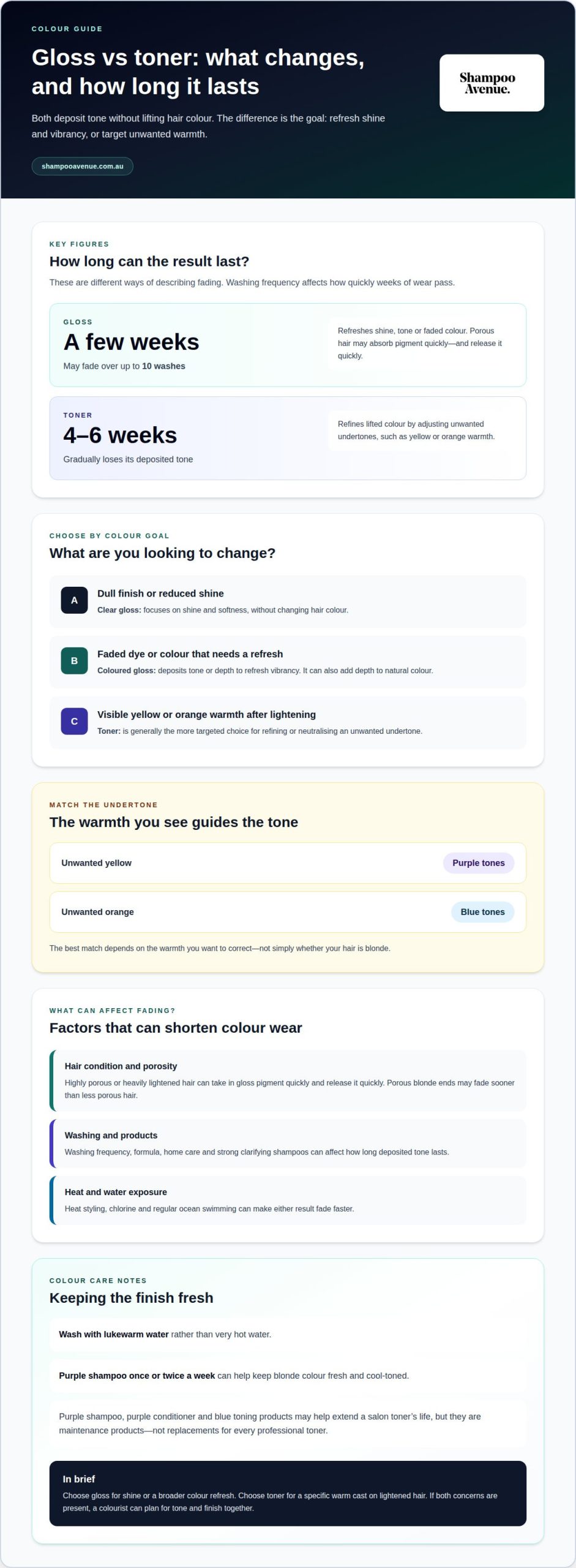
A clear gloss focuses on shine and softness without changing hair colour. A coloured gloss can refresh faded dye or add depth to natural colour, while a toning gloss deposits colour to adjust tone. For example, purple tones can help correct yellow, while blue tones are suggested for orange. The best match depends on the warmth you want to correct, not simply whether your hair is blonde.
Can you apply gloss or toner at home? Follow the product directions when using a gloss; damp hair is generally preferred. Toner is best applied with professional guidance, particularly after bleaching, foiling or balayage.
Gloss benefits for faded colour
When dyed hair looks dull between colour services, a coloured gloss can refresh its vibrancy and add shine. It can also add depth to natural colour. Unlike a clear gloss, it deposits colour; unlike a toner chosen to correct yellow or orange, its main purpose may be a broader refresh. A gloss can suit different hair colours and textures, including virgin hair.
To maintain colour after a gloss or toner, wash with lukewarm rather than very hot water. Purple shampoo once or twice a week can help keep blonde colour fresh and cool-toned.
| Option | Main goal | Colour effect | Example concern |
|---|---|---|---|
| Clear gloss | Shine and softness | No colour change | Dull finish |
| Coloured gloss | Refresh and enrich | Deposits tone or depth | Faded dye |
| Toner | Adjust undertones | Refines lifted colour | Yellow after lightening |
Choose a clear gloss for shine, a coloured gloss for faded colour, or toner when unwanted warmth needs correcting.
Differences between toner and gloss
The difference between a gloss and a toner is clearest in the colour problem each is intended to solve. Both deposit tone rather than lift hair colour, but toner is generally chosen to neutralise a specific unwanted undertone. Gloss can also deposit tone, yet its role may focus more on shine, vibrancy or refreshing faded colour. Salon terminology can overlap: a toning gloss combines aspects of both.
After bleaching, foiling or balayage, lifted hair may show yellow or orange undertones. Toner is selected to adjust that warmth: purple tones target yellow, while blue tones are suggested for orange. The colourist considers the underlying shade and the result you want, rather than applying the same tone to every blonde. A gloss may be used instead when the main concern is lacklustre colour, not pronounced brassiness.
| Criteria | Toner | Gloss |
|---|---|---|
| Main purpose | Refine or neutralise undertones | Refresh tone and enhance shine |
| Common example | Adjust yellow after lightening | Revive faded brunette colour |
| Colour lift | Does not lift hair colour | Does not lift natural colour |
| Best fit | Visible yellow or orange warmth | Dullness or reduced vibrancy |
For brunettes, a gloss can add depth or refresh faded dye without a lightening step. A toner can also add depth and dimension, but its defining job is adjusting undertones. Neither is permanent colour: both deposit tone, and the result fades with washing. A gloss may help maintain a fresh-looking finish between colour appointments, but it won’t necessarily correct pronounced orange or yellow brassiness as effectively as a targeted toner.
Choose based on the result you want: select toner for a specific warm cast on lightened hair, or gloss for shine and a broader colour refresh. If both concerns are present, a colourist can plan a service that addresses tone and finish together.
How long does a hair gloss last compared with a toner?
A hair gloss typically lasts a few weeks and may fade over up to 10 washes. A toner commonly lasts 4-6 weeks. These are different ways to describe fading: wash frequency affects how quickly weeks of wear pass. Both treatments gradually lose their deposited tone rather than leaving a permanent colour change.
Hair condition matters too. Highly porous or heavily lightened hair can absorb gloss pigment quickly and release it quickly. As a result, a gloss may fade sooner on porous blonde ends than on less porous hair. Formula, washing frequency, heat styling and home care also affect how long a gloss lasts.
| Colour service | Typical duration | What affects fading |
|---|---|---|
| Gloss | A few weeks, up to 10 washes | Porosity, formula, washing and heat styling |
| Toner | 4-6 weeks | Washing, home care and exposure to fading factors |
Chlorine, regular ocean swimming and strong clarifying shampoos can make either result fade faster. For example, frequent clarifying washes can remove deposited tone sooner than a gentler routine. Purple shampoo, purple conditioner and blue toning products may help extend a salon toner’s life, but they’re maintenance products, not replacements for every professional toner.
Choose your timing by the result you want to maintain. If shine and colour vibrancy are fading after several weeks, a gloss may refresh the finish. If a blonde toner’s cool tone has softened around the 4-6-week mark, a toner can refine the undertone again. Porous, lightened hair may lose pigment faster, so its colour change can appear sooner than the calendar suggests.
There isn’t one exact wash count that applies to every head of hair. Compare the treatment’s purpose, your hair’s porosity and your washing habits. Those factors explain why one person’s gloss fades within a few weeks, while another’s tone remains noticeable closer to the 10-wash mark.
What are the risks or side effects of hair gloss and toner?
Porous, lightened hair can take cool pigment unevenly. For example, bleached ends or old highlight bands may absorb toner more strongly than nearby strands, leaving patchy or overly cool sections. Highly porous hair can also absorb gloss pigment quickly and release it quickly. Hair condition and colour history therefore affect how even the result looks.
Blue or purple toning products need to match the warmth you’re correcting. Purple tones target yellow, while blue tones are used for orange. Overusing either on very porous blonde hair can leave it looking flat, smoky or slightly purple. Applying more toning product repeatedly can deepen the unwanted cast rather than create a balanced finish.
Look closely at your hair’s condition before adding another colour deposit. Brittle strands, hair that stretches when wet, or strands that snap easily are signs to pause repeated toning. Uneven colour from previous home colouring also needs professional assessment. These concerns can signal that your hair needs a considered colour plan, not another layer of cool pigment.
- Porous or bleached ends: cool toner can absorb unevenly around ends and highlight bands.
- Overused purple or blue products: blonde hair can look smoky, flat or slightly purple.
- Brittle or stretching strands: avoid repeatedly toning hair that feels fragile or snaps easily.
- Uneven home-coloured sections: have the colour assessed before adding more pigment.
Gloss and toner both deposit colour, but the concern is not identical: porosity affects pigment uptake, while repeated cool toning can create a smoky cast. A professional stylist can assess the hair’s feel, porosity and colour bands before choosing a next step. For fragile strands or uneven colour, talk through your colour concerns before another toner application.
Shampoo Avenue
Shampoo Avenue can help you weigh up your colour concern, hair condition and colour history before deciding on a suitable direction. If blonde hair has developed unwanted warmth, or coloured hair looks faded and lacks shine, a professional assessment can help determine whether tone correction or a broader colour refresh is the priority.
Through Luxury Hair Colour Transformations and Lived-In Luxury Blonde Services, the team works towards colour goals ranging from refined blonde tones to a more natural-looking refresh. For grey coverage or a softer blend, Grey Blending & Natural Colour may be a relevant option. The focus is on matching the approach to your hair and the finish you’re after.
Contact Shampoo Avenue to discuss your colour goals and choose your next step.
Choose a colour direction that feels right for you
The difference between a gloss and a toner is a useful guide to that conversation, not a rule that every head of hair must follow. Your colour history and hair condition also influence the approach, especially if you’ve had previous lightening or at-home colour. Share those details so the next step reflects both your goal and your hair’s needs.
Contact Shampoo Avenue for hair colour advice and talk through the result you’d like to work towards. A thoughtful plan can help you feel more confident about your next colour choice.
Frequently Asked Questions
What is Hair Toner?
Hair toner is a colour treatment used to refine the undertone of coloured or lightened hair. A colourist selects its tone based on what’s visible in the hair and the finish you want. For instance, a blonde that looks too warm needs a different tonal adjustment from hair that already appears cool. Toner deposits colour; it doesn’t lighten hair.
Can You Have a Toner and Gloss Together?
Yes, toner and gloss can be used together when your hair needs both a tonal adjustment and a refreshed finish. They can also be used separately if one colour concern is the priority. For example, a colourist may address unwanted warmth and then enhance shine. The choice depends on the result you want and how your hair responds to colour.
How Does a Toner Work?
A toner deposits colour onto the hair to adjust its visible undertone, rather than lifting or lightening it. The selected shade works against the unwanted tone: purple is used for yellow, while blue is suggested for orange. This changes how the existing colour reads, not its level of lightness. Toner can’t make dark hair blonde without a separate lightening process.
What is a hair gloss treatment?
A hair gloss treatment is a temporary service that can add shine and refresh tone. It may be clear, for a lustrous finish without changing colour, or tinted to enrich existing colour. For example, a clear gloss can suit natural hair that looks dull, while a tinted option can bring vibrancy back to faded colour. Gloss doesn’t lift natural colour.
What is a hair toner treatment?
A hair toner treatment refines the tone of coloured or lightened hair by depositing pigment. It’s commonly used after bleaching, foiling, balayage or a blonde service, when the lifted shade needs tonal adjustment. The colourist considers the underlying warmth and desired result before selecting a tone. Unlike a lightening service, toner won’t lift hair to a lighter shade.
What is the difference between hair gloss and toner?
The difference between a gloss and a toner is mainly the intended result. A gloss is often chosen to enhance shine or refresh colour, while toner is directed at adjusting undertones. Their effects can overlap because both may deposit colour. If hair looks dull but its tone feels right, a gloss may fit; if unwanted warmth stands out, toner is more targeted.