

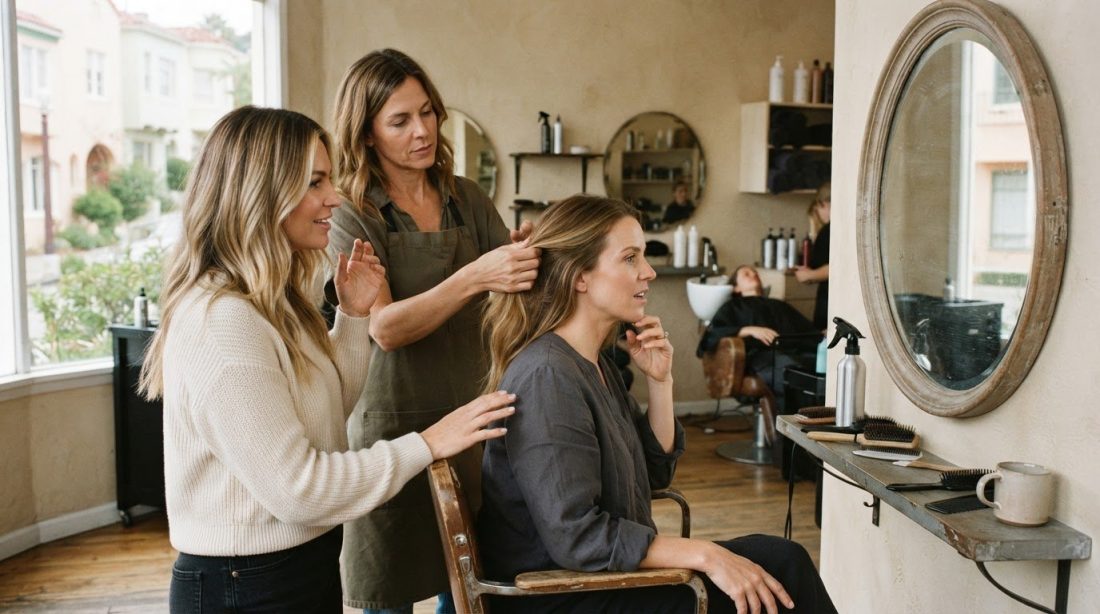
How personal recommendations can help you find a hairdresser you trust
A polished portfolio can reveal more about a hairdresser’s fit than a stylish salon interior. To find a hairdresser you trust, combine personal recommendations with online reviews, a close look at the stylist’s work and a consultation before committing to a major change. Each offers a different clue, and the portfolio helps you judge whether their results match the look and level of change you have in mind.
It’s natural to value a friend’s recommendation, especially when you like their hair. But a great result for someone else doesn’t automatically mean the same stylist is right for your hair, routine or goals.
This guide explains how to weigh recommendations and reviews, assess a stylist’s portfolio and specialities, and use a consultation to see whether you feel heard. You’ll have a practical way to evaluate the overall experience, not just a before-and-after photo, and make a more confident choice.
Key Takeaways
- Ask people whose hair you admire what they value about their stylist, then consider whether their needs are similar to yours.
- Look beyond a review’s star rating: notice comments about communication, attentiveness and the overall salon experience.
- Compare portfolio results with your hair goals, and look for experience in the services you’re considering.
- Use a consultation to share your hair history and routine, then notice whether the stylist listens and makes thoughtful recommendations.
Asking for personal recommendations
Start with friends, family, coworkers or someone whose hair you admire. Ask what they like about their hairdresser’s work, not just whether they recommend them. A friend’s soft layers may look great, but your thick, curly hair could need different skills. Their experience is a useful lead, not proof that the same stylist suits your needs.
When choosing between a salon, independent hairdresser and mobile hairdresser, consider the setting, convenience and personal attention you prefer. A salon is a shared space, an independent hairdresser works for themselves, and a mobile hairdresser travels to you. Ask the person recommending them what the appointment felt like and how the stylist handled their requests.
Make the recommendation relevant to your goal. If you want grey blending, ask someone with a similar colour result who created theirs. For a short haircut, look for someone whose cut has a shape and finish you’d be happy to maintain. Then ask about the process: did the hairdresser discuss the desired result, explain options and listen before starting?
If you’re unhappy with a haircut or colour in Australia, contact the hairdresser or salon promptly and explain clearly what differs from what you discussed. Share photos, describe your original request and ask to talk through a suitable next step. Keep the conversation calm and specific, for example, point out if the fringe sits shorter than agreed.
Use these prompts when asking someone for a recommendation:
- “What did you ask for, and how closely did the result match?”
- “Did the stylist explain options before cutting or colouring?”
- “How did the hair feel and look after styling it at home?”
- “Would you return for the same service, such as highlights or a trim?”
Notice how the person describing their experience explains it. A detailed example, such as a stylist adapting a layered cut to someone’s daily routine, gives you more to assess than “they’re great”. Ask for the stylist’s name and service, then compare that recommendation with your own hair goals. This turns a personal referral into a more considered shortlist.
Assessing online reviews
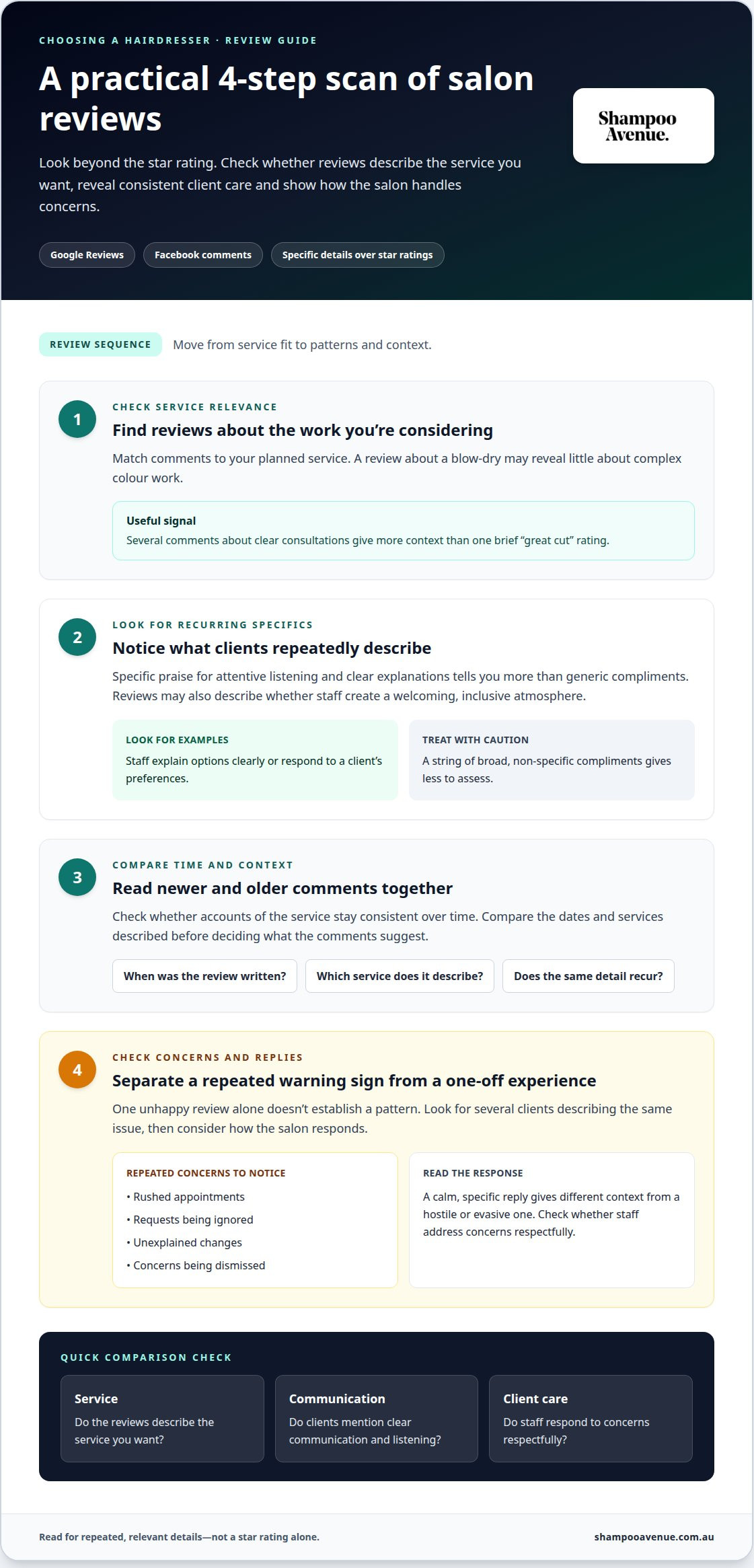
Google Reviews and Facebook comments can reveal how a salon handles hair services and client care. Look for recurring, specific details rather than relying on a star rating alone.
Interpreting Online Reviews
Online reviews describe clients’ experiences of a stylist’s skills and the salon environment. Repeated details can show whether communication and results are likely to fit your expectations. Read comments on Google Reviews and Facebook for recurring specifics. Several mentions of clear consultations offer more context than one brief “great cut” rating. Match comments to your planned service, since a blow-dry review may reveal little about complex colour work.
Read newer comments alongside older ones to see whether accounts of the service are consistent. Specific praise for attentive listening tells you more than a string of generic compliments. Reviews may also describe whether staff create a welcoming, inclusive atmosphere. Look for examples of thoughtful service, such as staff explaining options clearly or responding to a client’s preferences.
Spotting Reliability Warning Signs
Warning signs are repeated review details suggesting poor communication, inconsistent service or an unwelcoming salon environment. They matter because those patterns can flag a mismatch before you book. Look for several clients describing rushed appointments, ignored requests, unexplained changes or staff dismissing concerns. A calm, specific response from the salon gives different context from a hostile or evasive reply.
One unhappy review alone doesn’t establish a pattern. Compare the dates, services described and business responses before deciding what the comments suggest. Repeated accounts of stylists not listening deserve closer attention, especially if you value a collaborative appointment. Complaints about a different service may be less relevant to your plans.
Use these checks while comparing salons:
- Do reviews describe the service you want?
- Do clients mention clear communication?
- Do staff responses address concerns respectfully?
For another perspective on salon care, explore this approach to client care alongside the reviews you’ve read.
Reviewing a stylist’s portfolio and specialties
A portfolio shows examples of a stylist’s work, while their specialities indicate the services they focus on. Compare both with your hair goals, rather than choosing based on one striking image.
Assessing a Stylist’s Portfolio
A stylist’s portfolio is a collection of images showing their hair work. It lets you judge whether their results suit your preferred shape, colour and finish. Browse the salon website and social media, then compare several examples. For a textured bob, check whether the shape and movement resemble what you want, not just whether the model’s overall look appeals.
Look for consistency across different clients and angles. A single carefully styled image may not show how a cut falls from the side or back. Find clear examples that resemble your hair length, texture or starting colour. If you’re considering a major change, compare before-and-after images to understand the transformation, rather than judging only the final finish.
Understanding Stylist Specialities
A speciality is an area of hair work a stylist highlights through their services, biography or portfolio. Experience with your desired result can shape the options discussed. A stylist whose work features grey blending, for example, may be a closer match for a soft transition than someone whose portfolio mainly shows vivid colour.
Read the salon website biography for education and areas of focus, then compare those details with your goal. A stylist whose work features lived-in blonde may suit someone seeking softer regrowth, while a portfolio of precision cuts may appeal if you want a defined shape. Match the speciality to the service, not simply to a trend.
Use this quick comparison to make your shortlist more useful:
- For a haircut, compare shape, texture and how the style sits.
- For colour, look at tones and transitions similar to your starting point.
- For styling, check whether the finish matches your event or everyday routine.
Review the salon’s website and social media together. A website biography can provide context about a stylist’s education and areas of focus, while recent social posts may show a wider range of work. Save a few examples with specific details you like, such as face-framing layers or a natural-looking colour blend. These references make it easier to explain your preferences during a consultation.
What questions should I ask a hairdresser before booking?
A consultation lets you discuss your hair goals, budget and communication style before choosing a service. Explain your hair history and daily routine, then notice whether the stylist listens, asks questions and makes recommendations that suit your lifestyle. A clear conversation helps you understand the plan before booking.
Start with the result you want. If you’re considering a shorter cut, explain how much length you’d like removed and how you usually style your hair. For a colour change, describe the shade you have in mind and your current hair history. Then ask:
- “What approach would suit my hair and the result I’m after?”
- “What should I expect during the appointment?”
- “How might this style fit my usual routine?”
- “What options would work with my budget?”
Your hair history matters. Mention previous colour, chemical treatments, cuts you’ve liked and anything you want to avoid. For example, if a past fringe needed more daily styling than you expected, say so. Ask how your history and usual routine might affect the options. The stylist’s recommendations should respond to these details, rather than treating your reference image as the whole brief.
Notice how the stylist communicates. Do they ask follow-up questions about your goals, or move straight to a recommendation? A thoughtful discussion should give you room to explain what feels manageable. If you prefer a low-maintenance shape, say so plainly. If you’re open to change but unsure about the details, ask the stylist to explain the options in everyday language.
Before booking, make sure you understand the agreed service and intended result. Repeat the key points in your own words, such as “keep the length, add soft layers, and make styling simple”. This gives you both a chance to clarify any mismatch before the appointment begins. A respectful exchange helps you decide whether the stylist’s approach and communication suit you.
Ready to discuss your hair goals with a stylist? Start a conversation about your hair.
Shampoo Avenue: Luxury Hair Colour Transformations
If your research points towards a colour change or healthier hair, Shampoo Avenue offers Luxury Hair Colour Transformations, Lived-In Luxury Blonde Services and Grey Blending & Natural Colour for different colour goals. If scalp comfort or hair condition matters to you, its Scalp Health & Hair Wellness Treatments may also suit your needs.
Bring your reference images and explain your hair history, daily routine and desired result. That gives the stylist useful context for discussing an approach that fits your needs. You can also share what you valued in recommendations or reviews, such as clear communication or a natural-looking finish. Choosing a hairdresser is personal, and a considered conversation can help you decide whether the salon’s colour and wellness services align with your goals.
Contact Shampoo Avenue to discuss your hair goals.
Take the next step with confidence
Choosing a hairdresser is also about finding a working relationship that feels right. Use your first conversation to share what matters most, whether that’s a thoughtful colour change, a softer blonde or a natural approach to grey. Knowing how to find a hairdresser you trust means giving yourself space to discuss your goals and decide whether the proposed approach feels right.
Shampoo Avenue offers Luxury Hair Colour Transformations, Lived-In Luxury Blonde Services and Grey Blending & Natural Colour. If one fits your direction, bring your ideas and hair history into the conversation. A clear starting point helps you discuss the result you want and the options that suit your hair.
Take the next step when you’re ready. Contact Shampoo Avenue to talk about your colour goals and explore an approach that feels right for you.
Frequently Asked Questions
What should I look for in hairdresser reviews and recommendations?
Look for comments that describe a specific service and its outcome, rather than broad praise alone. A review mentioning that a curly cut kept its shape after washing gives useful context if you have similar hair. When asking for a personal recommendation, find out what the person requested and how the result worked in their everyday routine. These details help you judge whether their experience applies to yours.
How can I check a hairdresser’s experience with my hair type and desired style?
Ask to see examples that resemble both your hair and your intended result. For fine hair and a layered cut, for example, look for styles with a similar texture and length, not just a matching shape. Explain how you usually wear your hair and ask how the proposed style could fit that routine. This practical fit can help you decide how to find a hairdresser you trust.