

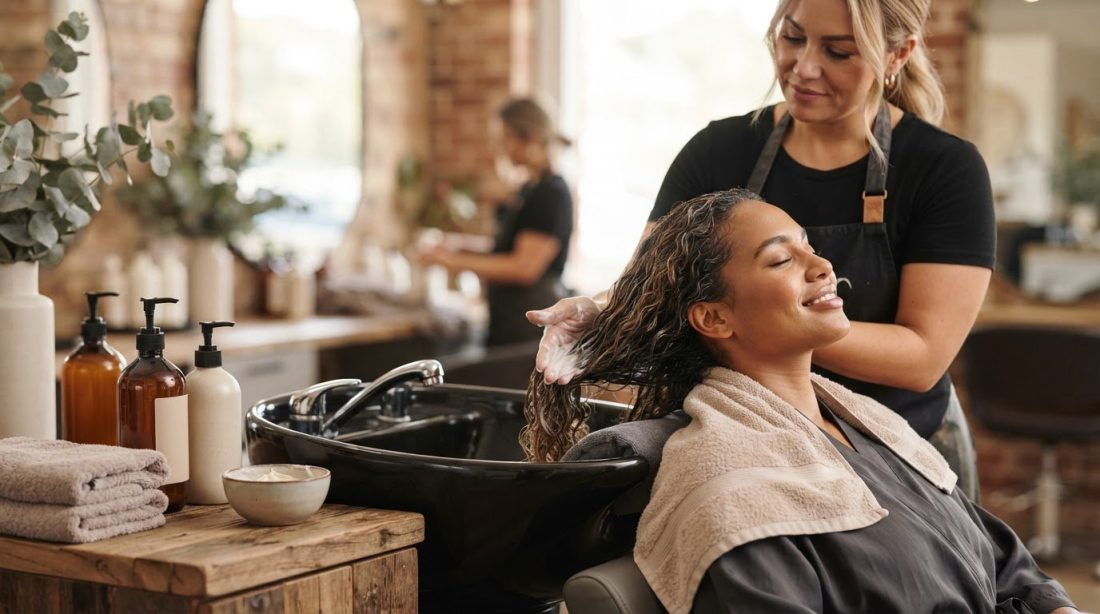
Deep Conditioning Salon Service Benefits and Add-On Costs
A deep-conditioning appointment can be a practical add-on, not just a relaxing pause at the basin. The benefits of a deep conditioning salon service include improved moisture, softness and manageability, although it won’t reverse existing damage. For most people, a salon treatment once a month is a useful routine; particularly dry or damaged hair may benefit from one every two weeks.
If your hair feels rough, looks dull or tangles easily, a conditioning treatment may help. The right option depends on what your hair needs: moisture-focused conditioners and protein treatments address different concerns.
Here, you’ll learn what deep conditioning does, how salon treatments work and how often to consider one. We’ll also compare conditioner types and explain what can affect the cost of adding a treatment to a salon visit, so you can make a choice that suits your hair and routine.
Key Takeaways
- Learn how a salon treatment can support smoother-feeling hair and what it can’t do for existing damage.
- Use your hair’s condition and care routine to guide treatment frequency, and watch for signs that conditioning is becoming excessive.
- Compare moisture-focused and protein treatments to understand which approach may better suit your hair’s needs.
- Find out what happens during a salon add-on and which treatment details can shape its cost.
What Is a Deep Conditioning Treatment?
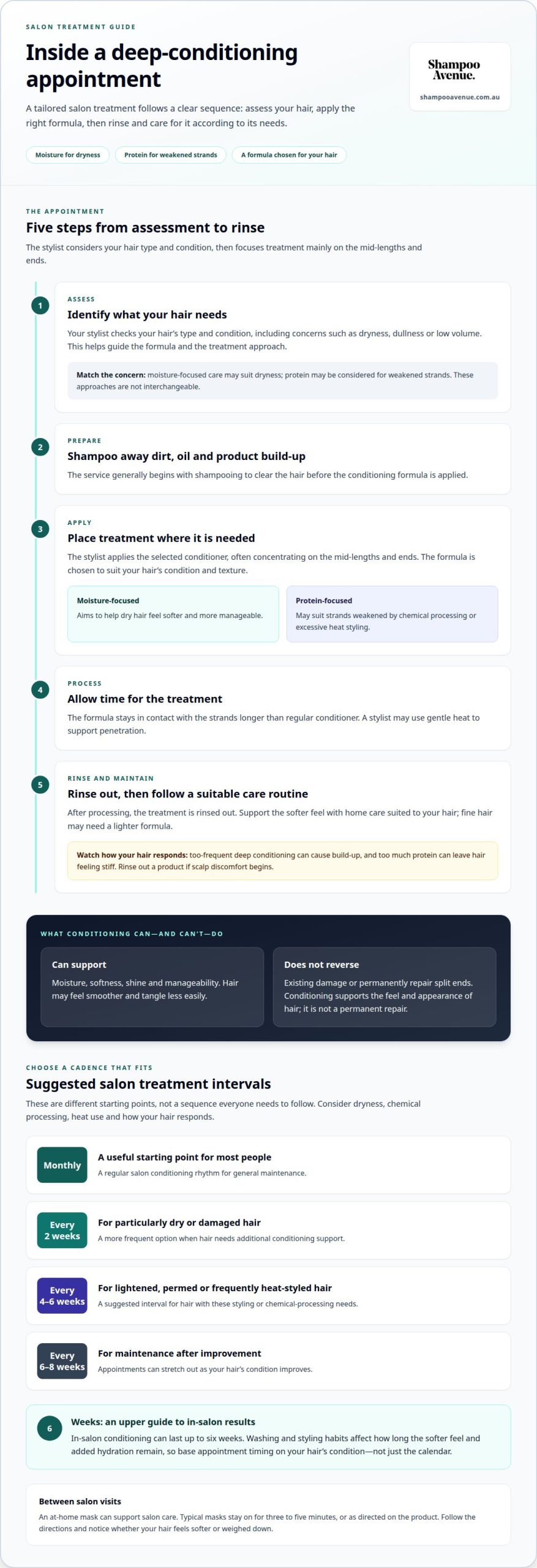
Deep conditioning uses an intensive formula to add moisture and improve the feel of the hair shaft. In a salon, a stylist assesses your hair, applies treatment mainly through the mid-lengths and ends, then rinses it out after processing.
Improving Hair Feel and Appearance
By supporting moisture and smoothing the hair shaft, deep conditioning can leave dry strands feeling softer and looking shinier. This can help when hair feels rough, tangles during combing or looks dull after heat styling. Conditioning may improve texture and manageability, but it can’t reverse existing damage or permanently repair split ends.
Hair Concerns That May Benefit
Conditioning treatments may suit dry, brittle, tangled, curly, frizzy, dull or coarse hair. The benefit depends on matching the formula to the concern: curly hair may need moisture for definition, while fine hair can feel weighed down by a rich product. Colour-treated strands may also need added moisture, as chemical colouring can make hair more prone to dryness and breakage.
A salon service generally starts with shampooing to clear dirt, oil and product buildup. The stylist applies conditioner, often to the mid-lengths and ends, and may use gentle heat before rinsing. The treatment is chosen after assessing your hair type and condition.
For chemically treated or damaged hair, a stylist may consider a protein-focused or bond-building treatment alongside moisture care. These approaches aren’t interchangeable: too much protein can leave hair stiff, so the formula should reflect whether your main concern is dryness, weakness or both.
Using deep conditioning too often can cause buildup, and protein-heavy formulas may leave hair feeling stiff. A product that doesn’t suit your scalp may also irritate it; rinse it out if discomfort begins.
Between appointments, follow your stylist’s home-care advice and choose a mask suited to your hair. A weekly at-home mask, for example, can help maintain the feel of salon conditioning, while fine hair may need a lighter formula.
Recommended treatment frequency
A useful starting point is monthly salon conditioning for most people. Particularly dry or damaged hair can call for treatment every two weeks, while maintenance after improvement can stretch to six to eight weeks. Lightened, permed or frequently heat-styled hair has a suggested four-to-six-week interval. Choose a cadence around dryness, chemical processing, heat use and how your hair responds.
Results typically last several weeks with supportive home care, and in-salon conditioning can last up to six weeks. Washing and styling habits affect how long the softer feel and added hydration remain. As moisture gradually washes away, strands can return to their usual texture, so the best appointment rhythm reflects your hair’s condition rather than a fixed calendar.
Regular conditioner is designed to rinse clean quickly, while a deep conditioning treatment gives the formula longer contact with the strands. A salon visit also lets the stylist assess dryness, dullness or low volume and tailor the treatment. More nourishment isn’t always better: frequent deep conditioning can leave buildup that affects how hair feels.
For dryness, a moisture-focused treatment addresses a different concern from a protein treatment aimed at weakened hair. A stylist can pair a concentrate for the main concern with a booster for a secondary one, such as dullness. Fine hair needs a lighter approach to avoid limpness, while curls may need more hydration to maintain definition. The goal is targeted care, not simply adding more product.
An at-home mask can support salon care, but it doesn’t include the same professional assessment or customised pairing. Typical masks stay on for three to five minutes, or as directed on the product. A salon treatment is selected around hair condition and can use gentle heat to support penetration. Keep to the mask directions between appointments, and notice whether hair feels softer or weighed down.
For support matched to dryness, dullness or volume concerns, explore hair wellness guidance.
Moisturizing, protein and balancing deep conditioners
Moisture and protein address different aspects of hair condition, so a treatment’s ingredients matter. Matching them to your hair’s texture and styling needs can support softness without leaving strands stiff.
Moisture, Strength and Elasticity
Moisture supports flexibility, while protein can help reinforce weakened strands. Together, these qualities affect how hair responds to brushing and styling. Hair with improved elasticity can bend more readily under tension, while dry or weakened strands may snap more easily. Chemically treated hair, for example, may need a different balance from hair that mainly feels dry. The aim is suitable care, not simply maximum strength.
Balancing Moisture and Protein
Balancing moisture and protein means choosing treatment ingredients around the hair’s main concern. A moisture-focused formula can help dry hair feel softer, while protein treatments may suit strands weakened by chemical processing or excessive heat styling. Too much protein can leave hair feeling stiff, so a protein treatment isn’t automatically the answer to every concern. Revlon Professional recommends alternating protein and moisture treatments to help avoid brittleness from excessive protein.
Softness, Shine and Moisture Retention
Moisture can improve softness and help smooth the hair’s surface, supporting a shinier appearance. Deep conditioners may also help hair retain water and reduce moisture loss by forming a protein barrier around the hair shaft. This can improve dry texture and manageability, but it doesn’t reverse damage or remove split ends. Choose care that supports the finish you want without overloading the strands.
Deep conditioning treatments may contain protein, essential oils and water. Conditioners may also contain oils, silicones or emollients to condition the strands. These ingredients serve different roles, so the formula should suit your hair’s condition and desired texture. Understanding the difference between moisture-focused and protein-rich ingredients helps guide a considered treatment choice.
Deep conditioning as a salon add-on service
A deep-conditioning add-on can complement a cut, colour or styling appointment. It focuses on the hair strands, helping dryness, brittleness and frizz feel more manageable. For damaged hair, treatment can support moisture and reduce breakage during combing. It won’t reverse damage or mend split ends, so think of it as supportive hair care, not a permanent repair.
The salon process usually starts with shampooing to remove oil, dirt and product buildup. A stylist applies conditioner mainly through the mid-lengths and ends, then allows it to process. Salon treatments commonly process for ten to twenty minutes, sometimes with gentle heat to help the product penetrate the hair shaft. The hair is then rinsed and styled as part of the visit.
Conditioning can complement a colour service when coloured strands feel dry, or a styling appointment when hair feels rough. A stylist assesses your hair’s condition and chooses a suitable focus, such as moisture for brittle lengths or protein for weakened strands. Add treatment to address a clear concern, rather than assuming every appointment needs it.
Timing and cost are practical parts of the decision. Some in-salon conditioning add-ons take five to ten minutes, while the treatment itself may need a separate processing period. Price depends on the case and is given after a quote request; factors include the treatment selected, hair length and condition, and how it fits the appointment.
For a simple takeaway, consider a treatment when dryness, frizz or breakage is affecting how your hair feels or styles. Keep the rest of your routine gentle, and follow the stylist’s home-care advice between visits. Explore professional hair treatment options to find care that addresses your hair concerns.
Shampoo Avenue: Luxury Hair Colour Transformations
Shampoo Avenue is a natural next step if your hair concerns connect with colour, scalp health or ongoing hair wellness. Its Luxury Hair Colour Transformations, Lived-In Luxury Blonde Services, and Grey Blending & Natural Colour address different colour goals, while Scalp Health & Hair Wellness Treatments support a broader focus on hair condition. If dryness or damage is affecting how your hair feels, a salon treatment can form part of a considered care plan alongside your colour needs.
Choose the service that reflects what you want to change, whether that’s a new colour direction, a softer blonde look or a natural approach to grey. For care shaped around your hair goals, contact Shampoo Avenue.
Make your next hair-care choice with confidence
Start your next appointment with a clear priority: how you want your hair to feel, look and fit into your everyday routine. The benefits of a deep conditioning salon service are most useful when treatment supports that goal, rather than becoming an unnecessary extra step. Share what you’ve noticed, such as rough-feeling lengths, a colour change you’re considering or a wish to blend grey more naturally. That gives your stylist a practical starting point for discussing suitable care alongside your hair goals.
Shampoo Avenue offers Luxury Hair Colour Transformations, Lived-In Luxury Blonde Services, and Grey Blending & Natural Colour. Bring your questions about your hair and the look you’d like to achieve. Contact Shampoo Avenue to discuss your hair, and take the next step towards a routine and style that feel right for you.
Frequently Asked Questions
Does my hair need moisture or protein?
Dry, rough-feeling hair may call for moisture, while chemically treated or heat-weakened strands may benefit from protein. These needs can overlap, so consider how your hair behaves rather than choosing by hair type alone. If it feels stiff after a protein treatment, ease back and focus on moisture. A stylist can assess your hair’s condition and select a suitable balance.
What are the benefits of a deep conditioning salon treatment for hair?
The benefits of a deep conditioning salon service can include softer-feeling hair, improved shine and easier detangling. Added moisture can support elasticity and help reduce breakage during combing, especially when strands feel dry or brittle. It can also help smooth the hair’s surface, making styling more manageable. Conditioning won’t reverse existing damage or remove split ends, so think of it as care for hair condition, not a permanent repair.
How does a salon deep conditioning treatment work?
A salon treatment generally begins with shampooing to clear away oil and product buildup. The stylist assesses your hair, applies a suitable conditioner mainly through the mid-lengths and ends, then lets it process. Gentle heat may support penetration. After rinsing, the hair can be styled. The formula and application are adjusted to the strands’ condition and the concern being addressed.
Which hair types benefit most from professional deep conditioning?
Hair of any type can benefit when it has a specific conditioning need. Dry, brittle, tangled, curly, frizzy, dull or coarse strands are common examples. Curly hair may need moisture to support definition, while fine hair often calls for a lightweight formula to avoid a limp feel. Colour-treated hair may also need moisture because chemical colouring can leave strands more prone to dryness.
How often should you get a deep conditioning treatment at a salon?
Monthly treatment is a useful starting point for most people, while particularly dry or damaged hair may need conditioning every two weeks. Once hair improves, maintenance can move to every six to eight weeks. Lightened, permed or frequently heat-styled hair may suit a four-to-six-week routine. Frequent treatments can cause buildup, so consider your hair’s changing condition rather than following an overly frequent schedule.
How does salon deep conditioning compare with at-home hair masks?
A salon treatment includes a stylist’s assessment and a formula selected for your hair’s needs. An at-home mask offers a convenient way to maintain conditioning between appointments, but it doesn’t provide the same professional tailoring. A typical home mask stays on for three to five minutes, or according to its directions. For example, fine hair may need a lighter mask than dry, coarse lengths.