


French Bob Haircut Styling, Texture and Cut Details
A French bob isn’t defined by a complicated styling trick. Its signature is a short, blunt line just above the jaw, often paired with a fringe. Styling a French bob haircut means working with that shape and your natural texture, not forcing every strand into place. A little movement is part of the look.
Its polished-yet-relaxed feel is appealing, but the right length and finish depend on how your hair falls. The cut has roots in short bobs worn in the 1920s, and today it can be adapted for straight, wavy or curly hair.
Here, you’ll learn what distinguishes a French bob, how texture and length affect the cut, and which product types can help create a soft, tousled or smoother finish. You’ll also see how the haircut’s history informs its shape and how it might work with your own hair.
Key Takeaways
- Fine, thick, wavy and curly hair can all suit this cut; the shape and layering make the difference.
- Its inspiration comes from 1920s bobs, with a short, jaw-framing outline and a fringe often completing the look.
- Adjusting the length and finish can help the cut sit comfortably with your hair’s natural texture and face shape.
- Lightweight styling products can add movement, texture or shine without overwhelming the bob’s shape.
What hair texture do I need to pull it off?
A French bob can suit fine, thick, straight, wavy or curly hair. The cut and finish can be adapted to your texture, density and preferred amount of movement.
Adapting the cut to texture and thickness
Texture describes how hair bends or curls; thickness affects how much bulk sits in the shape. For fine hair, blunt ends can make the outline look fuller, while subtle layers add lift without removing too much weight. Joel Goncalves recommends a cut near the earlobe with a fringe grazing the eyebrows for finer hair. Thick hair can benefit from interior layers or texturising to reduce bulk and help the bob keep its shape.
Length, movement and texture
Length sets the bob’s outline, while layers shape how freely the hair moves. Soft layers can help wavy or curly hair keep its bounce; a heavily blunt shape may feel bulky when dense hair gathers at the ends. A layered, textured bob offers inspiration for an undone finish, while a cleaner outline looks more polished. Consider how your hair sits around your jaw before choosing a length, as its natural bend can change where the ends appear to fall.
Styling waves and natural texture
For curl patterns between 2A and 3B, the recommended cutting approach is freshly washed, conditioned hair with minimal tension. For patterns between 3C and 4A, dry cutting lets the hair be assessed in its natural state. These different methods reflect how curl pattern affects the shape as hair settles. To style naturally wavy hair, work curl cream through damp lengths and let them air-dry. Very curly hair can also be shaped with a different length and internal layers.
Texture and flexible hold
Flexible hold keeps texture visible and lets the bob move instead of setting it into a stiff shape. Apply lightweight volume mousse to damp hair, then roughly dry it to encourage natural movement. Texture spray can add grip and hold while keeping strands mobile. Use a light touch: fine hair can lose lift under heavy product, while thick hair may need texture through the lengths to show its layers. These options create an undone finish without hiding your natural texture.
French bob history and defining cut
The French bob draws inspiration from short bobs worn in the 1920s. That reference gives the hairstyle its compact outline, but the modern cut isn’t a strict period recreation. Its defining idea is a short shape that frames the face, with the finish adjusted to suit natural texture. Think of the 1920s influence as a starting point: a clear silhouette, then softer detail if desired.
In its classic form, the bob has a short, blunt line just above the jaw. That length brings the ends close to the face, keeping the outline central to the look. A straight finish makes the shape appear crisp; a wave or curl softens its edge and adds movement. Comparing these finishes helps clarify whether you want the cut to make a clean statement or feel more relaxed.
A traditional French bob is often paired with a blunt fringe, though a softer fringe can suit the same shape. A straight fringe creates a strong horizontal line, while a wispy or side-swept version gives the forehead a lighter frame. If a full fringe feels too defined, a softer edge can keep the overall cut flattering without losing its French-bob character. Fringe shape changes the impression, even when the length stays similar.
Natural texture also affects how the classic French bob reads after drying. Straight hair can show the outline clearly, while waves or curls break it up with bends and volume. Styling a French bob haircut, then, doesn’t mean copying one polished finish; it means choosing how much of your natural texture to show. Letting hair air-dry can reveal its own movement, while a smoother finish makes the cut’s line more noticeable. The 1920s reference supplies the inspiration, but your texture helps shape the result.
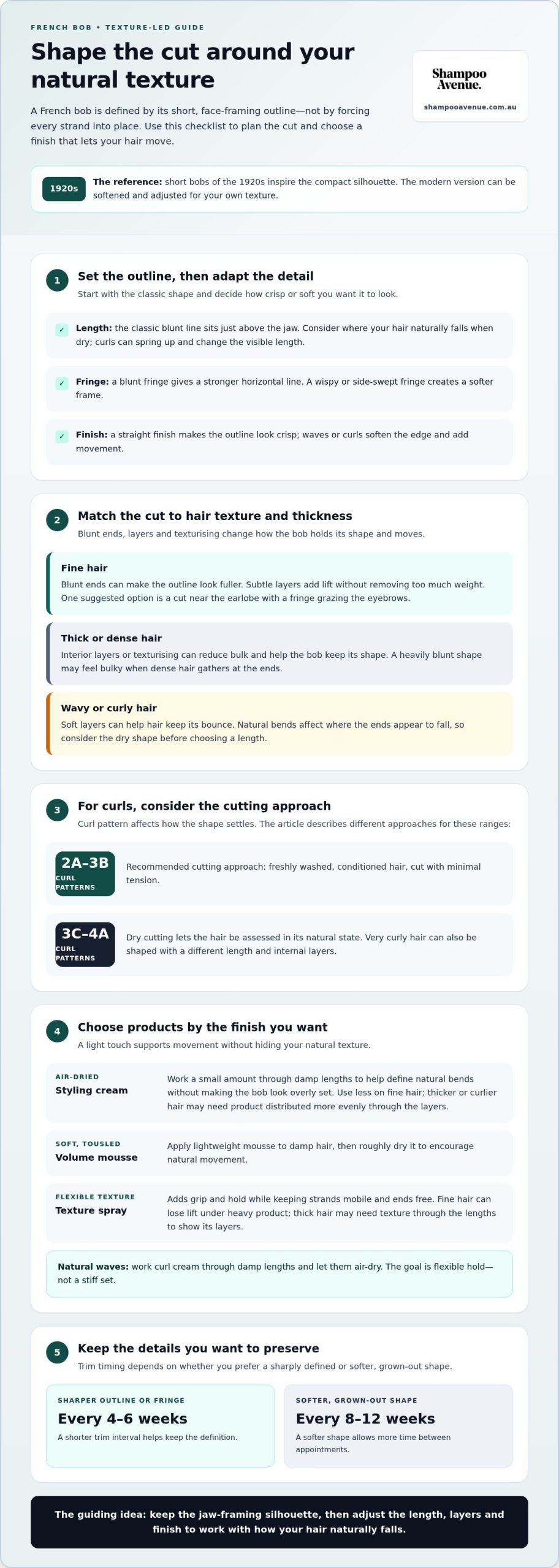
French bob length and defining features
Maintenance advice for a French bob ranges from trims every 8-12 weeks to trims every four to six weeks. Choose a shorter interval to keep a sharply defined outline or fringe; a softer, grown-out shape allows more time between appointments. The trim rhythm depends on which details you want to preserve, especially the bob’s length around the jaw.
The classic length sits just above the jaw, but the line can shift to suit your face shape and how your hair falls. For a rounder face, a slightly longer bob can avoid adding width. A softly asymmetrical line can also introduce flattering angles. With curly hair, the visible length changes as curls spring up, so the cut’s outline needs to account for its natural shape.
Face shape can guide small adjustments without changing the defining bob silhouette. For a square face, textured or wispy ends can soften a strong jawline; an overly blunt edge can emphasise it. A heart-shaped face can benefit from volume around the jaw, while side-swept bangs soften the forehead. For a diamond-shaped face, a slightly longer bob can balance a narrow forehead, and subtle waves or curls can add width at the jaw.
Consider the outline as well as the front view. A blunt edge creates a clear, graphic finish, while layers or textured ends break up the line and add movement. Straight hair often shows the shape distinctly; curls and waves create a fuller, less uniform edge. Before settling on a length, consider how your hair sits when dry and whether you prefer a precise line or a softer shape. This helps the cut feel intentional as it grows.
Products for styling a French bob
The right product should support your preferred finish, not hide your hair type. For an effortless, air-dried shape, work a small amount of styling cream through damp lengths. It can help define natural bends without making the bob look overly set. Use less on fine hair; thicker or curlier hair may need product distributed more evenly through the layers.
For a soft, tousled effect, apply lightweight volume mousse to damp hair, then roughly dry it to encourage movement. Texture spray can add grip and flexible hold while leaving the ends free. If your hair is straight, these products can help create a slightly undone finish; naturally wavy hair may need only a little cream and air-drying. The goal is to enhance the shape, not create uniform waves.
Second-day hair offers another styling option. Dry shampoo can absorb excess oil at the roots, helping the style feel fresher without reworking every section. Apply it where the roots look oily, then use your fingers to loosen the hair and restore its shape. Keep the product near the roots rather than coating the ends, where it could dull the texture you want to show.
For a glossier finish, smooth a small amount of hair oil through the mid-lengths and ends. Start sparingly, especially on fine hair, so the bob keeps its movement rather than looking weighed down. A simple product pairing can work well: cream for natural texture, or mousse followed by texture spray for added lift and grip. This approach to styling a French bob haircut keeps the Parisian-inspired result personal, whether you prefer polished ends or an undone finish. Match each product to the result you want, then adjust the amount to suit your hair.
Shampoo Avenue: Luxury Hair Colour Transformations
Shampoo Avenue offers luxury hair colour transformations that complement a French bob’s shape with colour tailored to your look. A bob’s clean outline can make colour placement especially noticeable, while lived-in tones create a softer effect through the lengths. Choose Lived-In Luxury Blonde Services for a blended blonde look, or Grey Blending & Natural Colour to work with your natural colour direction.
If your hair needs attention beyond colour, Shampoo Avenue also offers Scalp Health & Hair Wellness Treatments and Hair Treatments and Hair Repair Treatments. These services can be a relevant next step when planning a colour change or looking to support your hair’s condition alongside your new style.
Contact Shampoo Avenue to discuss your hair goals, or visit shampooavenue.com.au.
Make the look your own
Use your next salon conversation to decide what you want your bob to express: a sharper outline, softer movement or a colour shift that brings out its shape. Bring a clear idea of your preferred finish to make the discussion more focused. Styling a French bob haircut becomes easier to make your own when the cut, colour and daily routine feel connected.
For colour support, Shampoo Avenue offers Luxury Hair Colour Transformations, Lived-In Luxury Blonde Services and Grey Blending & Natural Colour. Choose the direction that feels right for you, then discuss how it can work with your style.
Contact Shampoo Avenue for styling advice and take the next step towards a bob that feels like you.
Frequently Asked Questions
What is a French bob?
A French bob is a short bob with a face-framing outline, often finished with a fringe. Its character comes from the overall silhouette, not one required styling method. The same cut can look crisp when smoothed or more relaxed with natural bends. The fringe, ends and finish can all change its feel while keeping the recognisable bob shape.
For a hairdresser, what does it involve?
Creating a French bob means tailoring the shape to your hair and preferred finish. Your hairdresser will consider how your hair sits, where it naturally parts and how much styling you want to do. Bring a couple of reference photos and point out what you like in each, such as the outline in one and the fringe in another. That makes your request specific.
What face shape suits a bob?
A bob can suit any face shape when its proportions create the balance you prefer. Rather than relying on a face-shape label alone, consider where you want the outline to draw attention, such as your eyes, cheekbones or jaw. A front-facing photo can help you compare possible lengths and see how a fringe might change the overall frame.
What kind of fringe works best with the French bob?
The best fringe is one that feels comfortable with your hairline, natural parting and daily routine. A blunt fringe creates a more defined look, while a softer or side-swept fringe feels lighter at the front. If your hair naturally separates at the forehead, show your hairdresser how it falls before choosing a fringe, so its shape works with your usual part.
What level of everyday styling does this haircut require?
A French bob styling routine can take five minutes or less. The effort depends on whether you prefer your natural texture or a more shaped finish, and how your hair behaves as it dries. For a low-effort day, let your natural pattern guide the look and tidy the outline with your fingers. A more polished finish may call for extra drying or shaping.
Why is it so appealing?
Its appeal lies in its flexibility: a French bob can feel polished for a dressier occasion or relaxed for everyday wear. Small changes to the fringe or finish can shift its character without losing the bob’s identity. It works with straight, wavy and curly textures, so the style can reflect your own hair rather than require one uniform look.