


How to Know If Your Hair Needs Protein or Moisture
Dry, dull, rough or frizzy hair may need more moisture, while limp, overly soft, weak or easily broken hair may need protein. To know if your hair needs protein or moisture, notice how it feels and behaves, especially when wet. Hair that stretches without bouncing back may benefit from strengthening care, while hair that snaps quickly may need more flexibility. Both moisture and protein matter, so the goal is balance, not choosing one forever.
It’s easy to reach for a treatment when your hair feels off, but the same symptom can have more than one cause. How your hair responds to washing, conditioning and gentle stretching can offer useful clues.
Here, you’ll learn the signs of moisture and protein imbalance, how to assess your hair on wash day and how often to consider treatments. You’ll also see how moisture supports softness and flexibility while protein helps strengthen hair, so you can make a more considered choice for your routine.
Key Takeaways
- Look for a pattern of changes in texture, strength and manageability before choosing a treatment.
- Set protein treatment frequency according to damage and how your hair responds, not a one-size-fits-all routine.
- Compare how strands behave across several wash days to spot whether your routine needs adjusting.
- If hair feels stiff or unusually limp after treatment, simplify your routine and reconsider the balance of care.
How Do I Know If My Hair Needs Moisture?
Dry, dull, frizzy, rough or brittle hair can signal that it needs more moisture. If you’re working out how to know if your hair needs protein or moisture, look for several changes together: ends snagging during brushing, lengths losing shine or styling becoming harder. Hair that feels coarse after washing and remains difficult to manage may need more hydration. Crunchiness needs closer attention, as excess protein can also leave strands stiff and rough.
Notice how your hair behaves during washing and styling. Moisture may help when dry lengths feel rough, lack flexibility or seem brittle. Limp, overly soft hair may point to excess moisture instead. Consider porosity: hair that absorbs water quickly but dries out fast may need a routine that supports hydration. No single texture clue proves a deficiency, so note whether the signs persist across wash days.
For moisture-focused products, look for ingredients such as aloe, honey and natural oils. For protein care, check for keratin, silk or amino acids. These examples can help you compare labels, but let your hair’s response guide you. A product that leaves strands softer and easier to manage may suit dry-feeling lengths. If your hair feels stiff after protein care, reduce strengthening products.
Signs of a possible protein imbalance can include hair that feels limp, overly soft, weak or fragile, and breaks easily. When wet, strands that stretch a lot without returning to shape may need strengthening. If you’re unsure how to know if your hair needs protein or moisture, compare how it feels wet and dry, and note whether changes follow colouring, heat styling or rough towel-drying.
Handle brittle hair gently. Avoid rough towel-drying and reduce heat styling while assessing its condition. See a hairdresser if breakage persists or makes styling difficult; they can assess your hair and discuss suitable care. Seek a dermatologist if brittle hair occurs alongside scalp irritation, sores or unusual scalp changes, which need medical assessment.
Protein treatment frequency
Protein and moisture treatments have different roles. Protein care helps strengthen fragile hair, while moisture-focused conditioning supports softness and flexibility. Choose based on how your hair feels and behaves, not a fixed schedule. A wet strand that stretches excessively without returning to shape may suggest a need for strengthening. Hair that feels dry and rough may respond better to moisture.
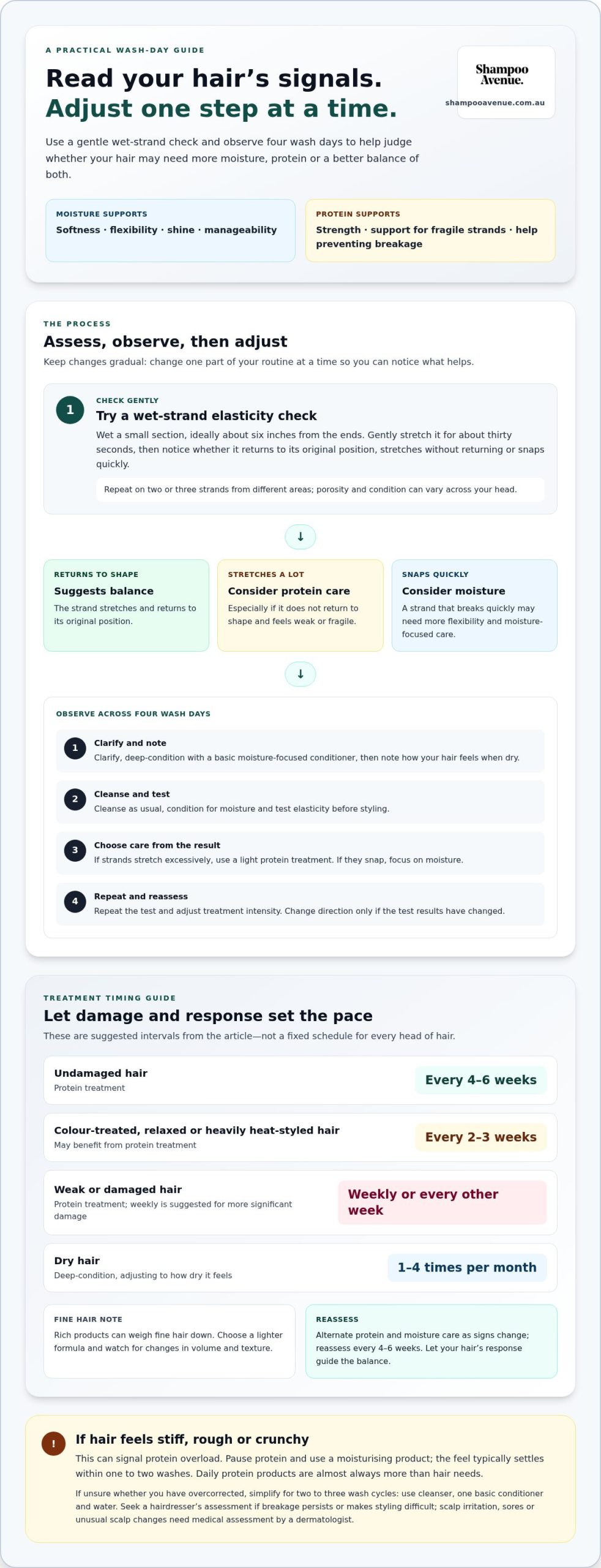
Treatment frequency depends on damage and your hair’s response. For undamaged hair, a protein treatment every four to six weeks is generally sufficient. Colour-treated, relaxed or heavily heat-styled hair may benefit from one every two to three weeks. If hair feels weak or damaged, use one weekly or every other week; weekly treatments are suggested for more significant damage. Fine hair can feel weighed down by rich products, so choose a lighter formula and watch for changes in volume and texture.
Porosity and damage affect how hair responds. Porous, chemically treated or heat-stressed lengths can lose moisture and feel fragile, while the wet-strand stretch test can help indicate whether strengthening may be useful. Deep-condition dry hair one to four times per month, adjusting according to how dry it feels. Let your hair’s response, rather than porosity alone, guide the balance.
Alternate protein and moisture care according to changing signs, then reassess every four to six weeks. Daily protein products are almost always more than hair needs. Stiff, rough or crunchy strands can signal overload; pause protein and use a moisturising product, as the feel typically settles within one to two washes. If colour services or ongoing breakage leave your hair feeling fragile, professional hair treatments can be part of a considered hair-care approach.
A wash-day routine for assessing hair balance
Use wash day to observe how your strands respond instead of changing several products at once. A gentle elasticity check can help guide your next step.
Balancing Protein and Moisture
Balancing protein and moisture means supporting hair strength without leaving strands stiff or overly soft. Healthy hair needs both: conditioner can support softness, while protein care can help fragile hair feel stronger. Porosity and damage affect how hair responds, so compare how it feels after washing and drying. Change one part of your routine at a time to see what helps restore manageability.
Testing Hair Elasticity at Home
A wet-strand test checks how gently stretched hair responds. Wet a small section, ideally about six inches from the ends, then gently stretch it for about thirty seconds. If it stretches and returns to its original position, that suggests balance. If it stretches a lot without returning, consider protein care; if it snaps immediately, consider moisture. Repeat on two or three strands from different areas, as porosity and condition can vary across your head.
For a clearer picture, assess your hair across four wash days. On the first, clarify, deep-condition with a basic moisture-focused conditioner, then note how your hair feels when dry. On the second, cleanse as usual, condition for moisture and test elasticity before styling. On the third, use a light protein treatment if strands stretch excessively, or focus on moisture if they snap. On the fourth, repeat the test and adjust treatment intensity. Change direction only if the test results have changed.
If you suspect you’ve overcorrected with protein or moisture, simplify your routine for two to three wash cycles: use cleanser, one basic conditioner and water. This reset can make it easier to notice whether brittle strands, excess softness or stretching changes as your routine settles.
How protein and moisture affect hair
Hair needs both moisture and protein, but they support different qualities. Moisture helps hair stay flexible, soft, shiny and manageable; protein strengthens strands and helps prevent breakage. Keratin, silk and amino acids are examples of proteins used in hair products. Protein makes up 60-95% of hair’s overall chemical composition, but that doesn’t mean every strand needs frequent protein treatments.
Think of the hair shaft as a structure that needs flexibility as well as strength. When hair stretches a lot but doesn’t return to its shape, it may benefit from protein care. If a wet strand snaps immediately, moisture may be more useful. These responses offer practical clues, but don’t treat one test as a complete diagnosis. Compare the texture across different sections and wash days.
Colouring, bleach and heat styling can leave hair feeling more fragile or rough, changing which care it responds to. After a colour service, for example, notice whether the lengths feel unusually stretchy when wet, or dry and brittle after shampooing. Hair that feels stiff, rough or crunchy after protein care may have had too much; very soft, limp hair after conditioning may indicate excess moisture. Adjust one treatment at a time, then observe the result.
Protein deposits are temporary and can wash out over several cycles, so a single treatment doesn’t permanently change the hair’s balance. Use the way hair feels, its elasticity and its response to washing as a guide. If your colour history and changing texture make the next step unclear, discuss grey blending and natural colour as part of a considered approach to your hair’s needs. The takeaway: strength and softness work together, so aim to support both rather than relying on one treatment alone.
Shampoo Avenue: Luxury Hair Colour Transformations
Shampoo Avenue offers Luxury Hair Colour Transformations alongside hair wellness treatments, making the salon a natural next step if colour-treated hair feels fragile, dry or difficult to manage. If you’re considering a colour change, lived-in blonde or grey blending, discuss your hair’s texture and condition as you plan the look you want.
Scalp Health & Hair Wellness Treatments can also support readers looking beyond their home routine for help with hair concerns. Bring your wash-day observations, such as whether strands feel brittle, stretch when wet or seem unusually soft. These details can help shape a conversation about the care your hair may need alongside your colour goals.
For a considered approach to colour and hair wellness, contact Shampoo Avenue or visit shampooavenue.com.au.
Make your next hair-care choice with confidence
Let your hair’s response guide your next move rather than changing several parts of your routine at once. Learning how to know if your hair needs protein or moisture gives you a clearer starting point, especially when your texture or styling needs change. Keep a simple note of what you use and how your hair feels afterwards; those observations can help you make more deliberate choices over time.
If colour is part of your plans, consider your hair’s condition alongside the look you want. Shampoo Avenue offers Luxury Hair Colour Transformations, Lived-In Luxury Blonde Services and Grey Blending & Natural Colour. Share what you’ve noticed about your hair and discuss an approach that takes your colour goals and hair wellness into account.
Contact Shampoo Avenue for hair care advice and take your next step with confidence.
Frequently Asked Questions
What do protein and moisture mean for curls?
For curls, moisture supports softness and flexibility, while protein care helps reinforce strands that feel weak. This balance can affect how curls clump and hold their shape after washing. If curls feel limp rather than springy, notice how they respond to conditioning and styling before changing products. Compare the same section of hair across wash days to spot a consistent pattern.
Can fine hair use a protein mask without it feeling heavy?
Yes, fine hair can use a protein mask; the key is choosing a formula and amount that suit how it feels. Start with a small amount on the mid-lengths and ends, then rinse as directed on the product. After drying, notice whether strands feel stronger or coated and flat. If volume drops or hair feels stiff, use the mask less often or reassess the formula.
What does protein overload actually feel like?
Protein overload can leave hair feeling stiff, rough or crunchy instead of flexible. You may notice strands resisting movement during brushing or feeling less smooth after using a protein-focused product. Compare the result with how your hair felt before the treatment, rather than adding another strengthening product straight away. Pause protein care and use a moisturising product; the change in feel can help guide your next routine choice.
What happens when hair is lacking protein?
Hair that may need protein can feel fragile and struggle to hold its shape, particularly when wet. A strand may stretch during washing but fail to spring back, or break during gentle detangling. Notice whether weakness affects several areas or mainly the ends, which may have different care needs. A repeated pattern of poor elasticity and breakage can help you decide whether strengthening care belongs in your routine.
What are the signs hair needs protein?
Possible signs include limp, overly soft, weak or fragile strands, along with breakage or excessive stretching when wet. One sign alone can be hard to interpret, so look for several together. If three or more of these signs appear, protein care may be worth considering. Use a wet-strand check and track how your hair responds after washing before adding a treatment to your routine.
How do protein overload and dry hair differ?
Protein overload often feels stiff, rough or crunchy, while dry hair may feel brittle, dull or frizzy and lack softness. Timing can offer another clue: note whether stiffness appeared after protein care or dryness persists across washes. Avoid layering treatments to guess. Simplify your routine, then observe how your hair’s texture changes after conditioning and drying before choosing what to adjust.