


Lived-in Haircuts: How Layers Create Movement and Texture
The cut and colour don’t need to do equal work to create dimension. To understand what a lived-in haircut is, picture softly blended layers that remove excess weight and add movement without obvious steps. Colour can bring contrast, while the haircut gives your hair shape, texture and flow.
It makes sense to consider both for a dimensional result, but they don’t need to be equally bold. Layers can add relaxed movement, while colour can complement the shape. The right balance depends on your natural texture, hair density and styling habits.
In this guide, you’ll learn how lived-in layers work, what the cut involves, and the benefits and trade-offs to consider. You’ll also find practical ways to describe the look you want to your stylist, from subtle movement to more noticeable face-framing pieces, so the plan feels like yours.
Key Takeaways
- Describe the movement you want, whether that means barely-there softness or more noticeable, face-framing pieces.
- Bring reference photos and explain how you usually wear your hair, so the shape reflects your real routine.
- Ask how layers will work with your hair’s texture and density, especially if you want to keep the ends looking full.
- Consider the trade-off between effortless texture and the styling needed to bring out a more defined shape.
- Think of colour as a complement to the cut: a blended shade can enhance dimension without needing to match the layers in impact.
Communicating haircut preferences to a stylist
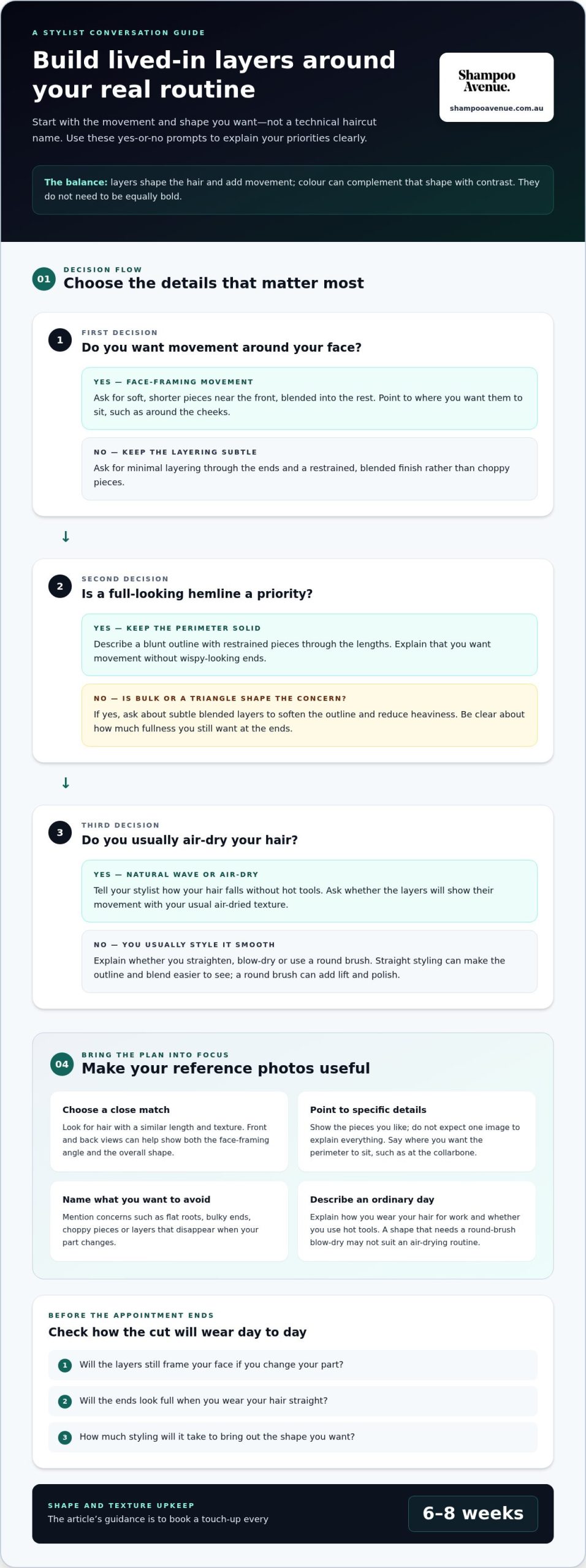
Start with the result you want, not a technical haircut name. “I want movement around my face, but a full-looking hemline” gives your stylist two clear priorities. A photo of hair with a similar length and texture can help convey the idea. Point to the details you like, such as soft pieces around the cheeks, rather than expecting one image to explain everything.
Explain how you usually wear your hair. Say whether you air-dry it with a natural wave, blow-dry it smooth or tie it back for work. Those details affect where layers sit and how they look day to day. If you rarely use hot tools, mention that before the cut. A shape that needs a round-brush blow-dry to show its lift may not suit an air-drying routine.
Be clear about what you want to avoid, too. If you like a blunt outline but dislike a heavy, triangular shape, ask for subtle layers that soften the bulk while keeping the ends looking solid. If choppy pieces aren’t your style, say you prefer a blended finish and restrained texture. “Less layering around the crown” is more useful than “not too layered”.
- Show the length: Point to where you want the perimeter to sit, such as at the collarbone.
- Describe the movement: Ask for soft face-framing pieces or minimal layering through the ends.
- Explain your routine: Say whether you air-dry, straighten or use a round brush.
- Name a concern: Mention flat roots, bulky ends or layers that disappear when your part changes.
Bring images showing both the front and back, if possible. A close-up of face-framing layers can show the angle you like, while a full-length view communicates the overall shape. Johnny Ramirez recommends childhood photos when guiding clients back towards their natural hair-colour palette. For a haircut, use the same practical approach: point out the details that match your preferences rather than treating the whole image as a template.
At home, use a round brush to add lift and polish, or air-dry your hair with a little wave to show off the layers. For shape and texture upkeep, the guidance is to book a touch-up every 6-8 weeks.
Before the appointment ends, explain how you want the cut to work on an ordinary day. For example, ask whether the layers will frame your face if you change your part, or whether the ends will look full when worn straight. Clear examples help turn an inspiration photo into a wearable shape.
Piece-y layers for movement and texture
Piece-y layers create movement by removing weight in selected areas rather than carving obvious steps through the hair. Imagine a blunt, collarbone-length cut with a few shorter pieces around the face and within the lengths. These pieces guide how the hair falls while blending into the overall shape. The cut can look close to one length, with extra texture and movement as the hair shifts.
This softer effect differs from classic geometric layers, where pronounced angles and visible lines define the haircut. Lived-in layers aim for a more natural finish, without a distinct shelf. For example, your stylist might add discreet layers underneath longer top sections. The shorter pieces support the hair above, helping it lift instead of falling like one heavy curtain.
Layer placement changes how the shape behaves. Shorter face-framing pieces add movement around the cheeks, while subtle layers through the back can reduce heaviness. If a blunt cut creates a bell or triangle shape, a few blended layers can soften the outline without removing too much from the ends. Soft layering can also make the hair feel less heavy when you change your part.
- For a polished look: Keep the bottom blunt and add restrained pieces through the lengths.
- For face-framing movement: Add shorter sections near the front, blended into the rest.
- For less bulk: Use subtle layers to soften a triangular outline.
- For a barely layered finish: Ask to avoid choppy pieces and excessive texture.
The texture looks different depending on how you style the cut. A natural wave can reveal separated pieces, while straight styling makes the outline and blend easier to see. You can also curl or blow-dry your hair to suit the finish you want. A blunt bottom with piece-y layers can work across these styles because the perimeter keeps its shape as the layers add movement.
Lived-in layers can also update a 90s-inspired haircut. Instead of relying on strong weight lines and a more structured shape, blended pieces soften the look and give it a relaxed finish. The key distinction is not simply “more layers”. It’s where they sit, how they connect, and whether they support the shape without making the ends look thin.
If you’re considering a softer, more textured shape, women’s haircuts and styling can help you explore how layers might work with your preferred finish. Bring a reference showing the amount of separation you like, such as subtle movement rather than distinctly choppy pieces.
Benefits and potential drawbacks
Lived-in layers can add texture and volume to long hair without making the ends look too sparse. For example, a long, blunt outline can retain its visual fullness while selected layers help the lengths move. That balance matters if you want your hair to feel lighter without a wispy finish. The effect depends on how much weight is removed and where the layers sit.
A softer shape can also make a blunt cut feel less wide at the bottom. If thick hair forms a triangle around the shoulders, subtle layers can soften that bell-shaped outline. Layers don’t automatically make hair look fuller, however. Removing too much from the ends can work against your goal if you want a dense-looking perimeter, so explain whether movement or fullness matters more.
Another benefit is flexibility. Piece-y layers can show through a natural wave, a blow-dry or loose curls, while a smoother finish keeps the shape understated. Colour can add a different kind of dimension: balayage can blend with natural hair and complement the haircut. For instance, soft colour variation through layered lengths can emphasise movement without relying on the cut for all the visual contrast.
- Long hair: Layers can add texture and volume while preserving fuller-looking ends.
- Blunt shapes: Subtle layers can soften a triangle-shaped outline.
- Fine hair: A blunt cut can make fine hair appear thicker, while excess layering may reduce that effect.
- Colour dimension: Balayage can blend with natural hair and complement the cut.
The main trade-off is that movement and definition can call for different things. A barely layered cut may be easy to wear, but won’t create the same visible separation as stronger layers. More pronounced pieces may need extra styling to show their shape. Consider a typical day: if you prefer air-drying, a cut designed around a polished blow-dry may not suit your routine.
Texture also affects the result. A natural wave can help separate layers, while very straight hair may show the cut’s lines more clearly. Very curly or coily hair may need specific texturing to manage frizz and define curls, so the technique matters as much as the outline. A fringe or face-framing pieces can also change the overall balance, especially if you want the cut to suit a round, oval, square, heart-shaped or oblong face.
Set your priorities before choosing a shape. If keeping your length and full ends comes first, ask for restrained layering. If you want a lighter feel and visible movement, discuss where texture can be added without losing the outline you like.
Cutting techniques for movement and texture
A lived-in shape comes from adding texture and removing weight, rather than creating heavy lines. Texturising techniques can soften bulk while allowing longer sections to move. For example, removing some weight from thick lengths can help them sit more easily, while keeping the outer edge intact preserves the outline. The aim is a shape that works with your hair’s natural fall.
Dry cutting lets your stylist see how your hair naturally falls while shaping it. That can help when one side sits differently or a wave springs up as the hair dries. A section that looks even when wet may settle at a different angle when dry. Observing your hair in its natural state helps guide where to refine the shape and how much texture to add.
Layer terminology can be confusing. “Short layers” describes the distance between layers, not the length of the top layer. A short distance creates closer layers; a longer distance leaves more space between them. For example, long hair can have short layers while keeping the top section long. Clarifying this distinction helps you describe the result you want without relying on the label alone.
- Weight removal: Texturising reduces bulk without creating pronounced lines.
- Dry cutting: The natural fall helps reveal where the shape needs refining.
- Layer spacing: Short layers refer to the gap between sections, not the top layer’s length.
- Razor work: A razor can add texture, but the hair type influences whether it suits the cut.
A razor is one way to create texture, but it isn’t right for every haircut. Hair type affects how the ends respond, so the technique needs to suit both the strands and the finish you want. Very curly or coily hair may need specific texturing methods or extra shaping to manage frizz and define curls. A soft, blended result on wavy hair may call for a different approach from one designed for tight curls.
Layer placement can also support fullness. Anh Co Tran recommends shorter layers underneath the top sections to boost longer layers, particularly when hair is thinning. This adds support beneath the surface without making the top look heavily layered. The aim is lift and shape, not simply to remove as much weight as possible.
Each technique affects a different part of the result: dry cutting reveals natural fall, texturising reduces bulk, and layer spacing controls how sections connect. To keep the outline looking full, your stylist can preserve more weight at the ends. To add movement, selective texture through the lengths can help your hair shift more freely.
What hair types and lengths suit a lived-in haircut?
Medium-to-thick hair with a natural wave or soft curls often shows lived-in layers clearly. The texture separates the sections, while the hair’s density gives the shape body. For example, shoulder-length wavy hair can gain movement through the mid-lengths without needing a tightly styled finish. Hair type alone doesn’t determine the cut: density, lifestyle and styling habits also affect how the layers sit.
Fine hair can also suit this shape when layers are placed thoughtfully. Shorter sections and careful weight removal can add shape and body without taking fullness from the ends. Fine hair with plenty of density may also carry long layers well. If fine, dense hair feels bulky at the back, a subtle undercut there can reduce weight while keeping the outer shape intact.
Long layers can suit natural waves, normal-to-thick hair, and fine hair with good density. They leave more distance between the top layer and the ends, keeping the top sections long while the lengths move. Short layers describe closer spacing between layers, not a short top section. That distinction explains why long hair can have short layers while retaining length around the crown.
- Natural waves or soft curls: Layers can work with the hair’s own bend to show movement.
- Fine hair: Strategic sections can add shape, while preserving enough weight helps the ends look full.
- Thick hair: Selective weight removal can ease bulk without losing the overall outline.
- Long hair: Long layers retain length while helping the mid-lengths move.
Length matters because it changes how layers fall. On long hair, longer layers can keep the top section connected to the ends. On shorter hair, face-framing pieces can have a stronger effect on the overall silhouette. The cut can be adapted for round, oval, square, heart-shaped and oblong faces. For example, face-framing sections can be positioned to complement the outline you want rather than copied from a reference photo.
Very curly or coily hair may need specific texturing or additional shaping to manage frizz and define curls. A razor can add texture, but its effect depends on hair type, so it isn’t suitable for every head of hair. Your stylist considers curl pattern, density and how your hair behaves when dry. If you air-dry most days, you may need different layer placement from someone who regularly blow-dries their hair smooth.
Before choosing a shape, consider how you wear your hair most often. Bring a photo of your natural texture and describe whether you want length, movement or less bulk to take priority. For a cut tailored to your texture and preferred length, book women’s haircut and styling.
Shampoo Avenue: Luxury Hair Colour Transformations
Shampoo Avenue can bring your haircut and colour goals together with Luxury Hair Colour Transformations and Lived-In Luxury Blonde Services. If you’re considering layers for movement, colour placement can complement the shape and add dimension without making the cut and colour compete. For a softer, natural-looking change, Grey Blending & Natural Colour offers another direction. Scalp Health & Hair Wellness Treatments may also suit your goals if scalp comfort is a priority.
Share how you usually style your hair, the movement you want and what you’d like your colour to achieve. These details help shape an approach around your preferences.
Contact Shampoo Avenue to discuss your hair goals.
Make your next haircut feel like you
If you’re wondering what a lived-in haircut could look like on you, start with the feel you want: softer, more relaxed or a little more polished. Your stylist can use that preference to create a look that feels personal rather than copied from a photo. You don’t need perfect salon terminology. A clear idea of what you like and what you’d rather avoid is a strong place to start.
Haircut and colour choices can be considered together. Shampoo Avenue offers Luxury Hair Colour Transformations, Lived-In Luxury Blonde Services, and Grey Blending & Natural Colour, so you can discuss the overall look you want to create.
Contact Shampoo Avenue about your haircut and share the style you have in mind. Your next look can start with a simple conversation.
Frequently Asked Questions
Are the cut and colour equally important to add dimension?
No, the cut and colour can add dimension in different ways, so they don’t need equal emphasis. Layers can create movement in naturally dark hair, while colour variation can bring contrast to a smoother cut. For example, balayage may complement natural hair tones, while carefully placed layers shape how the lengths fall. Choose the balance that suits your preferred look and styling routine.
What if someone’s lifestyle doesn’t allow her to be at the salon every few months?
Talk about your schedule before choosing a shape or colour plan. A softer grow-out can suit someone spacing out salon visits, while a strongly defined outline may need more frequent reshaping to maintain its intended look. Johnny Ramirez says he creates a blended root for clients who want to wait eight months between colour visits. Haircut and colour maintenance are separate considerations.
What is a lived-in haircut?
A lived-in haircut is a softly blended shape designed to move naturally, rather than relying on sharply defined layer lines. Your stylist can tailor the placement to your hair’s natural fall and the way you wear it. For example, a collarbone-length cut might keep a clean outline while adding gentle movement at the front. The name describes a finish, not one fixed haircut template.
What does a lived-in haircut look like?
A lived-in haircut can look polished when styled and relaxed when left to air-dry. Picture a smooth shape that shifts as you move, with no obvious ledge between layers. A natural wave can reveal more texture, while straight styling shows the outline clearly. The exact look depends on length, density and layer placement, so reference photos can clarify how subtle or defined you want it.
How is a lived-in haircut different from a regular haircut or shag?
“Regular haircut” can describe many shapes, while “lived-in” usually refers to a blended, natural-looking finish. A shag typically has a more recognisable layered silhouette, often with stronger separation through the crown and around the face. These labels can overlap. If you like a shag’s movement but want a softer outline, describe those details instead of relying on the name alone.
How do you ask a hairdresser for a lived-in haircut?
Describe the result you want in everyday terms. For example, say, “I’d like movement around my face, but I want the ends to look full.” Mention whether you usually wear your hair straight, wavy or air-dried, as this changes how the shape looks. Bring photos showing the features you like, and point out what you’d change instead of asking for an exact copy.
How is a lived-in haircut done at the salon?
Your stylist considers your hair’s natural fall, texture and density, then shapes the layers to create movement without heavy lines. Dry cutting can reveal how sections sit in their natural state. Texturising may remove bulk, while the placement of shorter and longer layers affects lift and fullness. For curly or coily hair, specific shaping techniques can help define curls and manage frizz.
How often does a lived-in haircut need trimming?
A touch-up every 6-8 weeks is recommended to maintain the haircut’s shape and texture. Your preferred outline matters: a crisp perimeter can show growth sooner, while a softer shape may feel different as it grows. If salon visits are difficult to schedule, discuss how the cut will wear between appointments. Trims maintain the haircut; they don’t determine how often you refresh your colour.