

Ash Blonde Maintenance Tips for Cool, Clean Colour
For cool, clean ash blonde, use purple shampoo when brassiness appears, and limit unnecessary washing and rinsing, as water exposure can fade colour. These ash blonde maintenance tips also include conditioning lightened hair to help manage dryness and breakage. Keep your routine focused: tone when warmth shows, and avoid washing more often than your hair needs.
It’s tempting to reach for purple shampoo whenever your colour looks less icy, but using it when you see brassiness keeps your routine considered. The right balance depends on how your hair feels and how quickly warm tones appear. Read on for practical ways to care for your lengths, reduce colour fade and use toning products thoughtfully, so your ash blonde stays fresh without making home care complicated.
Key Takeaways
- Use leave-in conditioning to support dry, lightened lengths and help reduce the friction that can contribute to breakage.
- Keep cool blonde looking clean by noticing when warmth appears and choosing your toning routine accordingly.
- Reduce unnecessary washing and rinsing to help limit colour fade, while still cleansing when your hair needs it.
- Reach for purple shampoo when brassiness shows, and use it thoughtfully as part of your care routine.
- When your colour needs a refresh or a more personalised approach, lived-in blonde services can help shape a look that suits your hair and routine.
1. Leave-in conditioning and breakage resistance
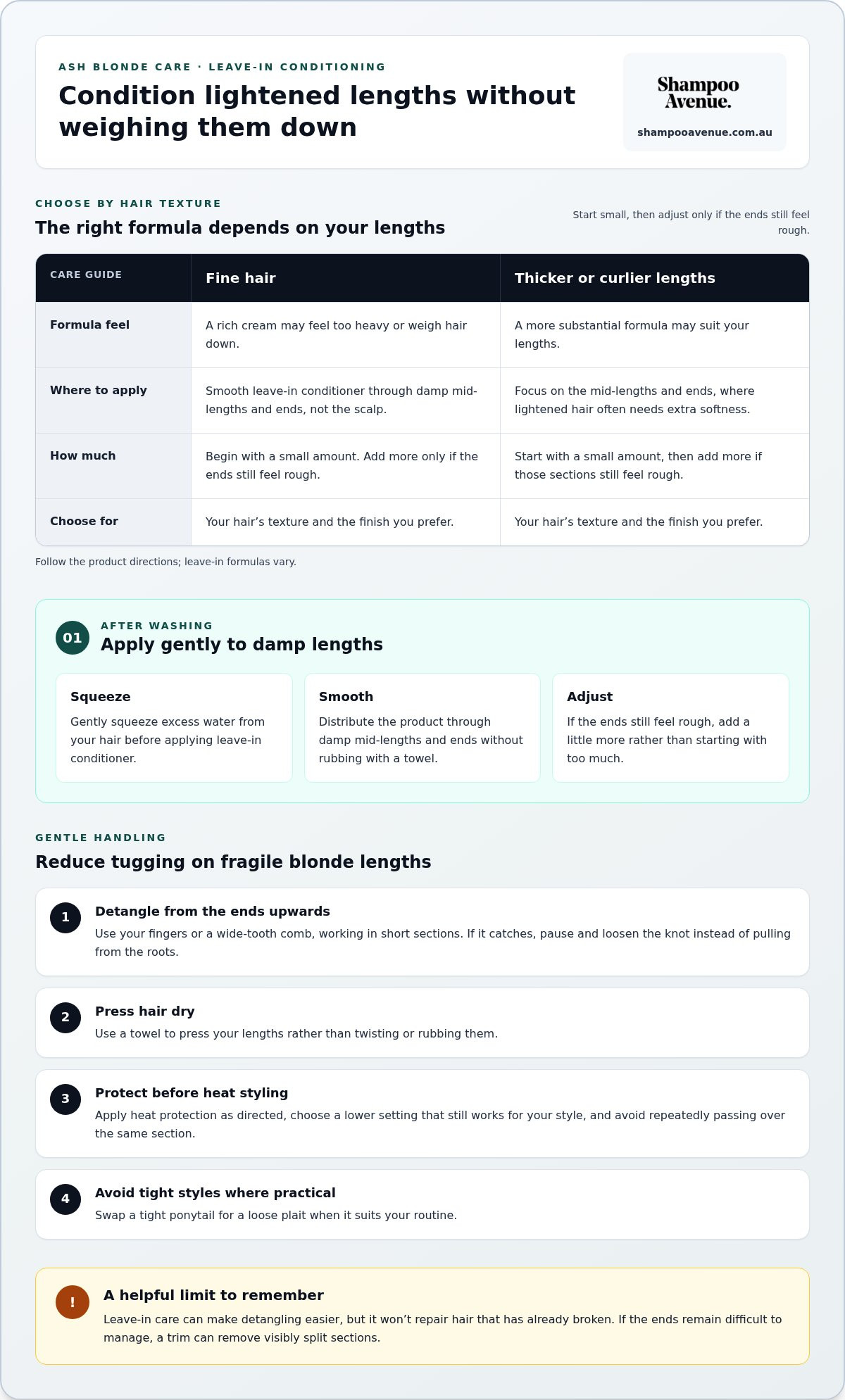
Lightening can leave blonde lengths feeling dry, rough or more prone to snapping during brushing. Build leave-in conditioning into your routine after washing, focusing on mid-lengths and ends rather than the scalp. These ash blonde maintenance tips start with a simple step: gently squeeze excess water from your hair before applying leave-in conditioner. This helps distribute the product through damp lengths without rubbing them with a towel.
Choose a leave-in conditioner suited to your hair’s texture and preferred finish. Fine hair may feel weighed down by a rich cream, while thicker or curlier lengths may suit a more substantial formula. Start with a small amount, smooth it over the ends, then add more only if those sections still feel rough. Follow the product directions, since formulas vary. Leave-in care can make detangling easier, but it won’t repair hair that has already broken.
Be gentle while your hair is wet. Use your fingers or a wide-tooth comb, begin at the ends, and work upwards in short sections. If the comb catches, pause and loosen the knot instead of pulling from the roots. For example, separate a tangled nape section before brushing the rest of your hair. When drying, press with a towel rather than twisting or rubbing your blonde lengths.
Choose shampoo and conditioner that suit both your colour and your hair’s needs. Use a colour-care shampoo to cleanse the scalp, then let the lather run through the lengths as you rinse. Apply conditioner from mid-lengths to ends, where lightened hair often needs extra softness. Rinse thoroughly, especially near the nape, so residue doesn’t leave strands feeling coated. If your ends feel dry after washing, adjust the amount or placement of conditioner before adding more products.
Heat styling and tight hairstyles can add strain to fragile ends. Before using a hairdryer or styling tool, apply a heat-protection product according to its directions. Choose a lower heat setting that still works for your style, and avoid repeatedly passing over the same section. Swap a tight ponytail for a loose plait when practical. Small changes like these can reduce tugging during everyday styling.
Notice where breakage happens. Short flyaways around the hairline may have different causes from rough, splitting ends, so tailor your care accordingly. Keep a simple routine: cleanse the scalp, condition the lengths, detangle carefully and protect hair before heat styling. If the ends remain difficult to manage, a trim can remove visibly split sections. Consistent, gentle handling helps ash blonde hair feel smoother while keeping the focus on colour and condition.
2. Keeping ash blonde tones cool and clean
A cool finish depends on the tone you’re aiming for, not simply on making every strand look grey. Ash blonde can range from pale, smoky beige to deeper, muted blonde, so use a clear reference photo when discussing colour. In natural daylight, compare your hair with the reference and notice whether warmth sits near the roots, through the mid-lengths or mainly at the ends. That detail helps distinguish an overall tone shift from a few warmer sections.
Check your colour in consistent light before changing your routine. Indoor bulbs can make blonde look warmer or yellower, while a bathroom mirror may cast a different tone from a window. Look at your hair near a window during the day, then assess it again under the lighting where you usually style it. If warmth appears only under one type of light, avoid making a dramatic change based on that view alone.
Consider greige if you like a softer alternative to distinctly icy blonde. Greige combines warm beige with cool grey, creating a balanced shade rather than a purely silver finish. For example, beige pieces around the face can soften an overall cool look, while grey tones through the lengths keep the result muted. Clearly describing the balance you prefer gives your colourist a more useful starting point than simply asking for “cooler”.
Keep everyday styling from obscuring your colour. Product build-up can leave blonde lengths looking dull, so use shampoo to cleanse the scalp and rinse thoroughly through the hair. If your usual styling product leaves a film, reduce how much you apply and notice whether your blonde looks clearer after washing. Also check the ends separately: dry or rough sections may reflect light differently, making them appear less clean-toned than smoother hair.
Sun exposure, heat styling and repeated colouring can all affect how your blonde looks over time. In Australia, a hat offers a practical way to cover your hair outdoors, particularly during extended time in strong sun. For heat styling, use a heat-protection product as directed and avoid repeatedly applying high heat to the same section. These steps support a more even-looking finish without relying on constant toning.
Make changes one at a time. If you alter your shampoo, styling products and toning routine together, it becomes harder to tell what improved or dulled the result. Keep a simple note of what you used and how your hair looked in daylight. Bring a reference photo to your next colour appointment, especially if you want to adjust the balance between beige and grey. A specific visual goal makes it easier to maintain a cool, clean finish that still feels natural.
3. Reducing rinsing to limit colour fade
Water exposure can contribute to colour fading, so repeated rinsing may gradually affect ash blonde. The aim isn’t to leave shampoo or conditioner in your hair. Instead, combine steps where practical and rinse only when your hair needs cleansing or product removal. For example, avoid wetting your lengths just to restyle them, and use a dry styling method when it suits your hair.
Plan wash days around your scalp and styling routine, rather than washing simply because your hair feels flat. If your roots need cleansing but your lengths feel comfortable, concentrate shampoo on the scalp and let the lather pass through as you rinse. Apply conditioner to the mid-lengths and ends, then rinse it out thoroughly. This approach limits unnecessary handling of blonde lengths while still removing residue.
Keep your shower routine simple. Before turning on the water, have your shampoo and conditioner ready so you’re not repeatedly rinsing while deciding what to use. Wet your hair once, cleanse the scalp, then rinse. Apply conditioner next, allow it to sit according to its directions, and rinse it away in one steady step. A focused sequence helps avoid extra water exposure between products.
Swimming, exercise and hot Australian days can make you want to rinse your hair more often. After a sweaty workout, decide whether your scalp needs shampoo or whether a quick rinse will remove the salt and sweat that bother you. If you do rinse, avoid repeating the process several times. After swimming, remove pool water promptly, then follow with a suitable cleansing and conditioning routine rather than leaving residue in your hair.
Think about water exposure beyond the shower, too. Rain, ocean swims and pool sessions all mean additional wetting, while repeated rinsing at the basin can add up over a week. You don’t need to avoid activities you enjoy. Instead, note what leaves your hair feeling coated or dry, and plan your next wash around that experience. A swim followed by a proper wash is more useful than several quick rinses without cleansing.
When you do wash, make each step count. Use enough shampoo to cleanse your scalp, rinse until it’s removed, and apply conditioner where your lengths need it. Don’t keep rinsing simply to make your hair feel squeaky clean; that sensation isn’t the goal. If colour seems to fade faster after a change in routine, consider how often your hair gets wet, how many rinse steps you’re adding, and whether styling products require a full wash. Adjust one habit at a time, then observe your colour in daylight.
4. Using purple shampoo to neutralise brassiness
Reach for purple shampoo when hints of brassiness appear, rather than using it automatically at every wash. Purple pigment helps counter unwanted yellow tones, keeping blonde looking cooler between colour appointments. It won’t lighten your hair or replace a colour service. First, check your hair in daylight: a warm cast across pale blonde may suit toning, while a deeper change in shade can need a different approach.
Read the product directions before applying it. Wet your hair as directed, distribute the shampoo evenly, and pay attention to the areas that look warm. Avoid concentrating the product on one patch, such as the front hairline, while leaving the rest untouched. Uneven application can create an uneven-looking finish, especially if the back sections are harder to reach.
Follow the stated application time instead of guessing or leaving purple shampoo in longer. Formulas differ, so the instructions on the bottle guide how to use that product. Rinse thoroughly when the directions say to, then assess your colour once your hair is dry. Wet blonde can look darker or more muted, making it harder to judge the finished tone.
Notice how your lengths respond. Porous or very pale sections can take on visible pigment more readily than darker blonde areas, so inspect the ends and face-framing pieces after use. If those sections already look cool while the rest appears yellow, applying more shampoo everywhere may make the tones less even. Use the product as directed and keep track of which areas need attention.
Purple shampoo is a toning cleanser, not a substitute for every part of your wash routine. If your hair feels dry after using it, follow with conditioner on the mid-lengths and ends. Keep your regular shampoo available for washes when cleansing is the priority and brassiness isn’t showing. This lets you respond to the colour you can see instead of adding pigment without a clear reason.
Keep a simple note of when you use purple shampoo and what changes afterwards. For example, record whether the yellow cast softened evenly or whether the ends looked more violet than the roots. That observation can guide your next wash and help you describe the result at a colour appointment. If brassiness returns quickly or appears unevenly, a personalised colour discussion can help identify whether your tone needs more than at-home shampooing.
5. Your blonde
Your blonde should suit your hair, routine and preferred finish, rather than follow a single cool-tone formula. Start by noticing where you want the brightness: around your face, through the ends or across the whole head. For example, face-framing blonde can create a lighter impression without making every section equally bright. Save a reference photo that shows the placement and depth you like, not just the overall colour.
Hair texture affects how blonde looks from day to day. Straight lengths can show colour transitions clearly, while curls and waves reveal different tones as they move. Look at your hair both loose and styled before deciding what feels balanced. If you usually wear a side part, show that parting in your reference photo. Your everyday style gives a clearer picture of which sections need brightness and which can remain deeper.
A shorter cut changes how colour is seen and maintained. An ash blonde pixie is described as a suitable option for women over 50, but the best finish still depends on the individual’s features and preferences. If you’re considering a pixie, bring photos showing the cut from the front and sides, alongside your preferred blonde tone. That helps you discuss how the colour will sit around the fringe, temples and crown.
Think about your usual styling before choosing a shade or placement. If you wear your hair tied back for work, colour around the hairline may show more than blonde hidden underneath. If you air-dry curls, a blend of light and deeper sections can look different from a smooth blow-dry. Describe a typical day, including how you part and style your hair, so the intended result works beyond the salon mirror.
Keep a record of what you like after each colour appointment. Note whether the face-framing pieces feel too bright, the ends look too pale, or the overall tone suits your wardrobe and makeup. A photo taken in daylight can help you compare the finish over time. Bring those observations to your next colour discussion rather than relying on a vague request for “more blonde”. Specific feedback makes it easier to refine placement and tone.
Your preferred blonde can also change with a new cut, lifestyle or styling habit. Revisit your reference photos when your hair length changes, and point out what still feels right. If you’re ready to talk through a blonde look shaped around your hair and routine, plan your next blonde colour conversation.
Shampoo Avenue: Lived-In Luxury Blonde Services
Shampoo Avenue offers Lived-In Luxury Blonde Services for ash blonde that needs a thoughtful refresh or a more personalised colour direction. Turn to the service when at-home care isn’t keeping your tone looking clean, your colour feels uneven, or you’re ready to adjust brightness and placement. Bring a daylight photo of your preferred shade and describe how you usually style your hair. That gives you a useful starting point for discussing a blonde look that fits your routine. If you’re also considering a softer blend with natural regrowth, Grey Blending & Natural Colour may suit your colour goals. For support with shape and finish, Women’s Haircuts & Styling can complement your blonde. Contact Shampoo Avenue to discuss your hair colour.
Make your next colour choice feel like yours
Your blonde doesn’t need to follow a fixed routine or a trend that doesn’t feel right. Use the ash blonde maintenance tips that suit your hair, then pay attention to how your colour and styling preferences evolve. Perhaps you’d like a softer blend, a brighter finish or a different balance between cool and natural tones. Bringing a few daylight photos and clear notes about what you want can help shape a focused colour conversation.
Shampoo Avenue offers Luxury Hair Colour Transformations, Lived-In Luxury Blonde Services, and Grey Blending & Natural Colour. Explore these options to find a direction that aligns with your colour goals and everyday style. Talk with Shampoo Avenue about your blonde and take the next step with confidence.