

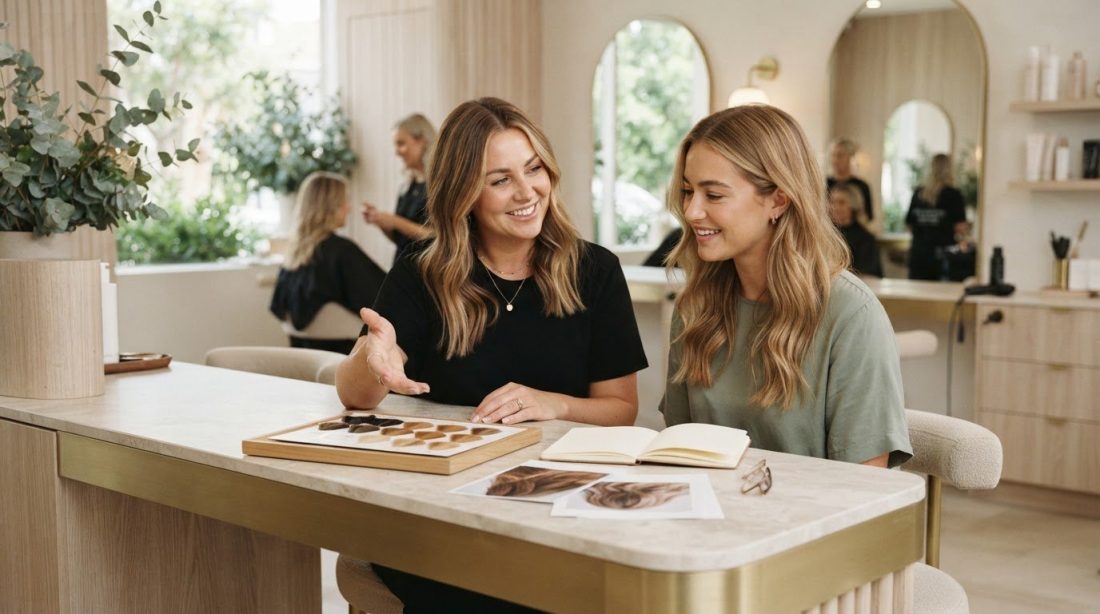
What to Ask Your Hairdresser Before Colouring: A Confident Consultation Guide
A great colour result starts with a conversation, not perfect salon vocabulary. It’s normal to have a shade in mind but feel unsure how to describe it. Your hair’s history, condition and the upkeep you’re comfortable with all matter. Knowing what to ask your hairdresser before colouring can help you explain your ideas and make a considered decision together.
You don’t need to know the technical names for every colour or technique. Bring inspiration photos, explain what you like about them and be honest about past colour, treatments and your routine. A thoughtful consultation gives your hairdresser a clearer picture of your goal and helps you understand the options for your hair.
This guide covers practical questions about colour options, realistic results, hair health, maintenance, appointment planning and whether a patch test is needed. It also shows how to discuss aftercare so you can leave the conversation with a shared direction and fewer surprises. Whether you’re considering a subtle change, lived-in blonde or a bigger transformation, start with what matters to you and build the plan together.
Key Takeaways
- Describe the feeling, depth and tone you want in everyday language. You don’t need salon terminology to start a useful conversation.
- Knowing what to ask your hairdresser before colouring can help you understand which options suit your hair’s history, condition and goals.
- Use inspiration images to show what appeals to you, then discuss how that look might translate to your hair.
- Talk through upkeep, appointment planning and home care before deciding, so the plan fits your routine.
- A considered colour conversation can connect your goals with options such as a luxury colour transformation, lived-in blonde or grey blending, alongside hair wellness and aftercare.
Before colouring your hair, what do you want to change?
You don’t need to arrive with a perfect shade name or salon-ready description. Start with how you’d like your hair to look and feel. Are you after something softer and more natural, or a change that feels fresh and noticeable? Your hairdresser can help turn those preferences into options. The consultation is a shared conversation, not a test of your colour vocabulary.
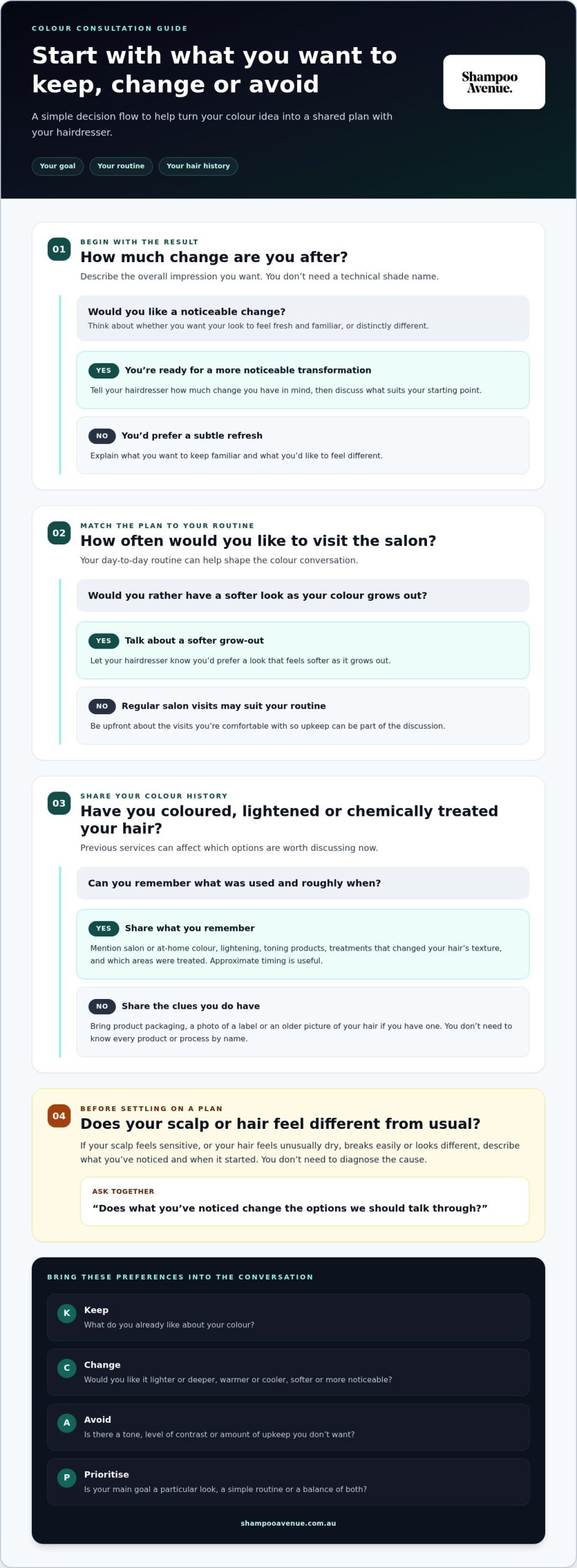
A successful colour consultation means shared expectations and a clear plan for working towards them. Begin with your idea of the result, then discuss what suits your starting point and what you’d be happy to maintain. If you’re thinking about what to ask your hairdresser before colouring, start with what you want to keep, change or avoid.
How can you describe the colour you have in mind?
Use everyday words. You might want your hair to look lighter or deeper, warmer or cooler, or simply more natural and refreshed. Describe the overall impression you’re after rather than trying to name a formula. For example, you could say, “I’d like more warmth through my hair, but I don’t want it to look noticeably brighter.”
Be clear about what isn’t working for you now. Does your colour feel too dark, too warm, too flat or harder to manage than you’d like? Which parts do you want to keep? These details help your hairdresser understand your priorities and avoid assumptions about what “a change” means to you.
Bring a few reference images that feel relevant to your goal. Point out the specific detail you like, such as the softness, depth or placement of the colour. A photo is inspiration, not an exact recipe: the same look can appear differently on different hair. For background on the science behind hair colouring, you can also explore how colour and dye work.
Which details should you share before discussing techniques?
Talk about your day-to-day routine before getting into how the colour might be created. How much time do you spend styling your hair? Do you prefer a polished look or something easy to wear with minimal fuss? Let your hairdresser know whether regular salon visits suit you or whether you’d rather have a softer look as it grows out.
It also helps to explain how much change you’re considering. Perhaps you want a subtle refresh that keeps your overall look familiar, or you’re ready for a more noticeable transformation. Neither preference is more valid. Being upfront helps shape the conversation around what matters to you.
- Keep: What do you already like about your colour?
- Change: What would you like to feel different?
- Avoid: Is there a tone, level of contrast or amount of upkeep you don’t want?
- Prioritise: Is your main goal a particular look, a simple routine or a balance of both?
Clear preferences give your hairdresser useful direction without locking you into a technical choice too early. Start with the outcome you want, then build the conversation from there.
What should you tell your hairdresser about your hair history and health?
Your hair’s history can shape which options are worth discussing now. The colour you can see may not tell the whole story: previous colour, lightening or chemical treatments can affect how your hair responds to a new plan. Share what you remember, even if the details are approximate. You don’t need to know every product or process by name.
Previous colour and your hair’s current condition can affect the options a colourist discusses with you. Being open gives your hairdresser useful context before you agree on a service. This isn’t about judging past choices. At-home colour and experiments are simply part of your hair’s history.
Which past colour and chemical services should you mention?
Think back over the past few years, if you can. Mention roughly when you last coloured or lightened your hair, whether it was done in a salon or at home, and any other chemical treatments you’ve had. Include colour-depositing products, box colour and treatments that changed your hair’s texture. Approximate timing is useful, even if you can’t recall the exact date.
- Previous salon colour or lightening, including which areas were treated.
- At-home colour, toning products or other colour products you’ve used.
- Chemical treatments, such as services that altered your hair’s texture.
- Products or services you’re unsure how to describe.
If you can’t remember a product name, bring the packaging, a photo of the label or a picture of your hair from around that time, if you have one. These clues can make the discussion more specific. Share what you know and answer any follow-up questions as best you can.
How can you raise concerns about scalp comfort and hair condition?
Describe what you’ve noticed in straightforward terms. For example, explain if your scalp tends to feel sensitive, or if your hair feels unusually dry, breaks easily or looks different from usual. Mention when you noticed the change and whether anything seems to make it more uncomfortable. You don’t need to diagnose the cause; just share your experience.
Before settling on a colour plan, ask how your hair’s current condition will be considered. You might ask, “Does what you’ve noticed change the options we should talk through?” or “Are there any steps you’d suggest before we decide?” This keeps the discussion focused on your hair without assuming a particular result or making promises about how it will respond.
At Shampoo Avenue, colour conversations sit alongside a focus on scalp health and hair wellness. If you’re considering a colour change, explore Shampoo Avenue’s colour services as part of planning a look that takes your hair into account.
Which colour options, techniques and results should you discuss?
Once you’ve described the change you want, explore what that goal could look like on your hair. Rather than choosing a technique from a trend list, ask your hairdresser to talk through options that align with your priorities. You might be considering a more even colour, added variation, a softer way to blend greys or a bigger shift in your overall look.
Use the questions below to compare the results you’re after, not to lock yourself into a particular method. Your existing colour and hair history can influence which options are worth discussing, so ask your hairdresser to explain relevant limitations or alternatives.
| Colour goal | What to discuss | A useful question |
|---|---|---|
| A more even-looking colour | Whether you want a consistent overall impression or to keep some natural variation | “How would this look from roots to ends?” |
| More depth and dimension | How much contrast or visible variation feels right to you | “Could we add depth while keeping the overall look soft?” |
| A softer approach to greys | Whether you want greys to blend with your natural colour or appear less prominent | “What kind of result could blending create for my hair?” |
| A noticeable change | How much your overall appearance may shift and what that involves | “What would be the main difference from my current colour?” |
How do you talk about shade, tone and dimension?
Words such as warm, cool and neutral can help describe the mood of a colour, but they’re starting points, not fixed promises about the final shade. A warm result might feel golden or rich to you; a cooler one may seem more muted. Ask your hairdresser how they interpret your description and what range of tones may suit your starting colour.
Then talk about dimension. Do you picture a more even appearance, or would you like visible variation and depth? Ask how your existing colour might affect the options being considered, and whether the change you’re imagining is subtle or more significant. This keeps the discussion focused on your priorities while your hairdresser explains possible approaches.
How can reference photos help without dictating the technique?
Choose images that show a tone, placement or overall impression you’re drawn to. You don’t need a technical recipe. For each photo, point out what appeals, such as softer contrast or a brighter appearance, and what doesn’t. It’s also useful to say if you like the colour but not the level of change, or the placement but not the tone.
A reference image communicates a goal, not a guaranteed result. Your hairdresser can discuss how that idea may translate to your hair and suggest a suitable approach. If you’re unsure what to ask your hairdresser before colouring, try: “What parts of this look could work for me, and what might need to change?” That leaves room for a realistic, personalised conversation.
What should you ask about upkeep, timing and budget before deciding?
A colour plan needs to work beyond the salon chair. Before agreeing to a service, talk through what it may ask of your time, routine and budget. The right questions depend on the look you’re considering and your starting point, so focus on understanding the proposed plan rather than relying on a universal upkeep schedule.
What maintenance commitment fits your routine?
Ask how the colour may change as your hair grows and fades, and what that could mean for keeping the look the way you want it. Try, “How might this grow out?” or “What sort of maintenance should I expect with this result?” Your hairdresser can explain what’s relevant to the colour being discussed without assuming you want frequent visits.
Be honest about how often you’d realistically like to return for colour maintenance. If you’d prefer fewer salon visits, make that a priority. Ask what home care the look may involve, including whether your hairdresser recommends particular habits or products. You don’t need every aftercare detail immediately, but you should understand whether the ongoing routine feels manageable.
Which practical details should be clear before you proceed?
Ask what the appointment involves, how much time to allow and whether the goal would be approached in stages. If more than one step may be needed, find out what each stage is intended to achieve before committing. Talk openly about your budget, ask what the proposed service includes and whether further work might be considered later. This helps you understand the plan before you decide.
Use questions such as these to guide the discussion:
- How might this colour look as it grows out or fades?
- How often might I want to return to maintain the result I’m after?
- What home-care routine would you recommend for this colour?
- How long should I allow for the appointment, and could the plan be staged?
- What does the proposed service include, and how does it fit within my budget?
- What are we agreeing to today, and what would be a later step?
Before the service begins, summarise the plan in your own words: the result you’re aiming for, what’s included, the time involved and the upkeep you’re comfortable with. If anything sounds different from what you understood, pause and talk it through. Knowing what to ask your hairdresser before colouring includes asking for clarity before you decide, not just choosing a shade.
At Shampoo Avenue, colour goals can be discussed alongside hair wellness and professional haircare, making maintenance part of a considered colour conversation. Explore Shampoo Avenue’s colour services and start thinking about a plan that fits your preferences and routine.
How does Shampoo Avenue turn a colour conversation into a thoughtful plan?
A considered colour plan begins with your priorities. The shade or change you’re drawn to matters, but so do your hair history, current condition, comfort and preferred level of upkeep. At Shampoo Avenue, the conversation brings these pieces together to shape a direction that reflects what you want while keeping hair wellness in view. You don’t need to arrive with a technical brief. Honest answers and clear preferences give the discussion a useful starting point.
How can a tailored colour plan bring goals and hair wellness together?
Different goals call for different conversations. A luxury colour transformation may suit someone looking for a more noticeable change, while lived-in blonde can be discussed if you’re drawn to a softer, more natural-looking blonde. If you’re hoping for a gentler transition with grey or want to work with your natural colour, grey blending and natural colour are relevant options to explore.
These are starting points, not promises of a particular result. Your colourist can consider your hair’s history and condition alongside the look you’re after, then talk through suitable options and any limitations. Ask how scalp health and hair wellness fit into the plan, especially if you have concerns about your scalp or hair condition. A thoughtful colour discussion makes room for both your aesthetic goal and your hair’s care needs.
If you’re considering a bigger change, Shampoo Avenue’s luxury hair colour transformations offer a way to explore that goal as part of a tailored salon conversation.
What can you do after the consultation?
Before you leave the conversation, check that you can describe the plan in your own words. Confirm the colour goal, the approach being discussed and whether any stages are involved. Make sure you understand the likely upkeep and home-care guidance, too. If something is unclear, ask for an everyday-language explanation. You should feel comfortable with the direction before deciding how to proceed.
- Colour goal: What overall look are we working towards?
- Approach: What plan are we considering, and are there any relevant limitations?
- Upkeep: What maintenance might suit this look and my routine?
- Home care: What should I know about caring for my hair after the appointment?
Professional Davines haircare is part of Shampoo Avenue’s approach to supporting hair wellness and colour care. Your discussion can connect your colour choices with suitable aftercare without turning the consultation into a list of products. For ongoing guidance, you can also refer to the salon’s hair colour aftercare guide.
Knowing what to ask your hairdresser before colouring helps turn ideas into a shared plan, but it’s fine to take time to decide. To explore how these conversations connect with tailored colour options, explore Shampoo Avenue’s colour services.
Take your colour ideas into the next conversation
Your colour consultation doesn’t need to feel like a test or a commitment to a look you’re unsure about. Treat it as a chance to shape an option that feels right for your hair and everyday life. Bring questions, ask for plain-language explanations and take a moment to consider the plan before deciding.
Knowing what to ask your hairdresser before colouring gives you a starting point, but you don’t need every answer ready. A good conversation makes room to explore your preferences, talk through possibilities and agree on a considered direction. At Shampoo Avenue, colour goals are discussed with care for the whole picture, including your hair’s wellbeing.
Ready to take the next step? Explore Shampoo Avenue’s colour services and start a thoughtful colour conversation. Bring your ideas and ask for a plan that feels like your own.
Frequently Asked Questions
Should I wash my hair before a colour appointment?
There isn’t one washing rule for every hair type and colour service. Follow the preparation advice for your appointment, as factors such as how oily your hair gets and the process being discussed may affect what’s recommended. If you have a sensitive scalp, mention it beforehand. Also tell your hairdresser if you’ve used a lot of styling products, so they can advise you rather than you having to guess whether to wash.
Can I colour my hair if I have used henna or at-home colour?
Possibly, but tell your hairdresser about any henna or at-home colour before making a plan. Share the product name if you know it, when you last used it and roughly which parts of your hair were treated. Older applications can still be relevant, even if they’ve grown out. If you’re unsure what to ask your hairdresser before colouring, start by showing a photo of the product or your hair at the time.
Is a patch test needed before hair colouring?
Whether a patch test is needed depends on the colour product and the salon’s procedure. Ask what applies to your appointment and follow the instructions you’re given. Don’t assume a previous test automatically applies to a different product or a later visit. If you’ve reacted to hair colour before, explain what happened before discussing a new service. Follow product instructions as well as your hairdresser’s guidance.
Can I have my hair coloured while pregnant?
Discuss pregnancy-related questions with your healthcare professional, then share your plans with your hairdresser before the appointment. Your circumstances and the colour service you’re considering may affect what feels appropriate for you, so a general yes or no may not answer your situation. If you decide to proceed, make sure your hairdresser knows what you’re comfortable with and can talk through the service in light of that conversation.
What should I do if I have had a reaction to hair colour before?
Tell your hairdresser about the reaction before planning another colour service. Describe what happened, when it occurred and, if you know, which product was involved. A previous appointment without a reaction doesn’t establish that a future application will be suitable. If the reaction was significant or you don’t know what caused it, seek advice from a healthcare professional before deciding whether to colour your hair again.
Can I have my hair coloured if I wear extensions?
It depends on the extension type, how it’s attached and the condition of your natural hair. Tell your hairdresser what kind of extensions you wear and explain the colour change you’re considering. For example, mention whether you want to colour your natural hair, the extensions or both. Your hairdresser can discuss how the extensions may affect the plan and whether your preferred change is suitable alongside them.