

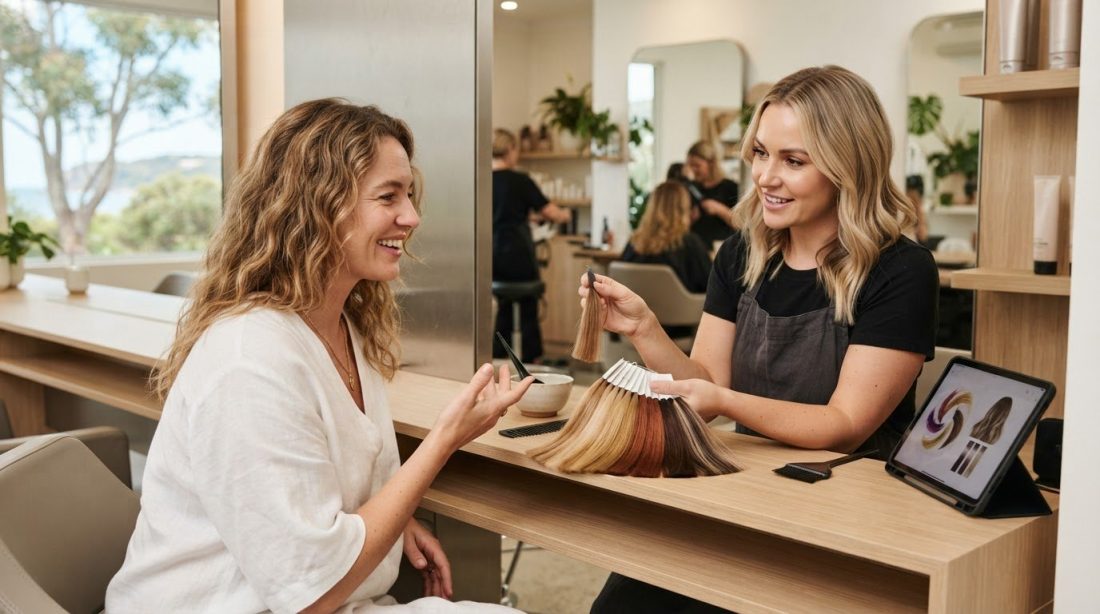
How to Explain the Hair Colour You Want: A Simple Guide
You don’t need the perfect colour vocabulary to get a result you love. If you’ve ever struggled to explain the difference between a warm blonde and a golden one, you’re not alone. Learning how to explain the hair colour you want is less about salon jargon and more about sharing what you like, what you’d rather avoid and how much upkeep suits your life.
An inspiration photo is a helpful starting point, but it can leave you wondering whether the same shade will work with your current colour, texture and hair history. Your colourist needs the full picture, including previous colour or chemical treatments and how often you’d like to refresh your colour. That information helps shape a conversation around your hair and preferences.
This guide shows you how to describe your colour goals in everyday language, choose useful reference photos and set clear priorities. You’ll also find practical prompts for discussing placement, maintenance and the path to your desired result, so you and your colourist can agree on a shared direction.
Key Takeaways
- Explain the hair colour you want using everyday words for shade, tone, placement and overall effect.
- Choose a small set of reference photos and point out the details you’d like to carry through.
- Compare your inspiration with your current hair to set realistic colour goals and upkeep expectations.
- Prepare a short brief with your hair history, styling habits and colour boundaries before your salon conversation.
- Turn your preferences into a shared colour plan shaped around your starting point and priorities.
How to describe the hair colour you want
You don’t need to memorise salon terminology. Start by describing the effect you’re after, then work with your colourist to shape it around your hair. Instead of trying to name an exact shade, say whether you want your colour to look softer, brighter, warmer, more natural or more noticeable. Those everyday words are a useful starting point for how to explain the hair colour you want.
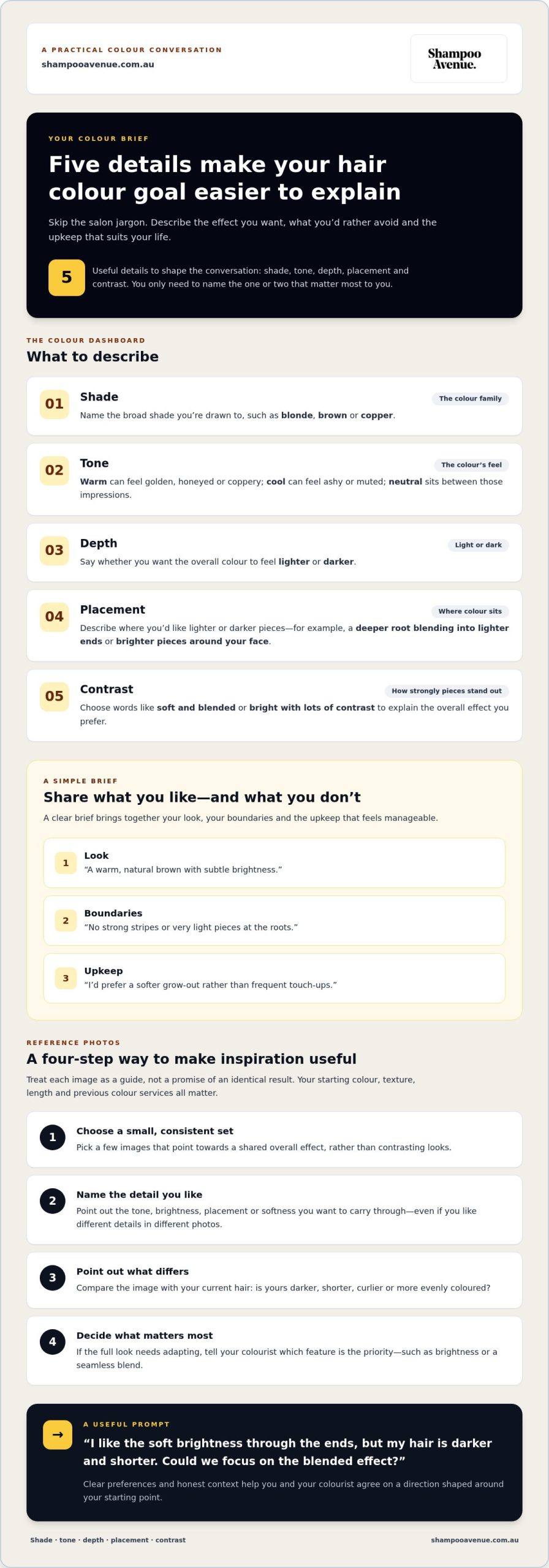
To make your description more specific, consider five details: shade, such as blonde, brown or copper; tone, such as warm, cool or neutral; depth, meaning light or dark; placement, or where lighter and darker pieces sit; and contrast, meaning how strongly those pieces stand out. You don’t need to decide every detail in advance. Naming the one or two that matter most is enough to guide the conversation.
Describe the colour effect, not just the shade name
Think about the overall feel you want. “A soft, blended blonde” suggests a different result from “bright blonde with lots of contrast”, even though both descriptions include the same shade name. Warm tones may look golden, honeyed or coppery; cool tones may look more ashy or muted; neutral tones sit between those impressions. For a simple overview of hair colouring principles, you can explore how colour choices and starting hair can influence the result.
Then describe the details that make the look yours. You might want a deeper root that blends into lighter ends, or brighter pieces around your face while the rest stays soft. Try: “I’d like my overall colour to look natural, with a little brightness through the ends and around my face.” That tells your colourist more than a shade name alone.
Say what you like, and what you do not want
Be as clear about your boundaries as you are about your preferences. Try phrases such as “I’d like less contrast between the roots and ends”, “I prefer a softer root” or “I want the pieces around my face brighter, but not streaky”. If there’s a colour or placement you want to avoid, say so. You don’t need to know the technique’s name to explain what doesn’t feel right to you.
Make your brief personal and practical. Describe the look you enjoy, what you’d change and how much upkeep feels manageable. A clear colour brief describes the look you want, the boundaries you want respected and the upkeep that suits your life.
- Look: “A warm, natural brown with subtle brightness.”
- Boundaries: “No strong stripes or very light pieces at the roots.”
- Upkeep: “I’d prefer a softer grow-out rather than frequent touch-ups.”
These aren’t technical instructions. They’re starting points for a collaborative conversation. Your colourist can clarify what you mean and help translate your preferences into a considered colour plan.
Choose hair colour reference photos that communicate your goal
A reference photo can make an abstract idea easier to discuss, especially if you’re still finding the words for how to explain the hair colour you want. Treat it as a visual guide, not a promise of an identical result. Your starting colour, hair texture, length and previous colour services all affect how a target look can be approached.
Choose images with enough detail to see where the colour sits and how it blends. Clear lighting makes it easier to judge whether a shade looks warm, cool or muted. A visible view of the roots, lengths and ends can also show how the colour is placed. Where possible, choose hair with a starting colour, texture or length similar to yours. That makes it easier to compare the features you like with your own hair.
What makes a useful hair colour inspiration photo?
Keep your selection small and consistent. A few images with a shared direction are more useful than a camera roll of contrasting looks. For each image, identify the detail you like: the tone, brightness, placement or softness. You might love the face-framing pieces in one photo but prefer the blended root in another. Point out those preferences rather than expecting one image to communicate everything.
Use this four-step method to prepare your references:
- Choose a small set: Save a few images that point towards a consistent overall effect.
- Identify the details: Note what appeals, such as warm tones, brighter ends or subtle pieces around the face.
- Spot the differences: Mention what doesn’t match your hair or isn’t part of your goal, such as the length or a very bright root area.
- Discuss flexibility: Decide which feature matters most if the full look needs adapting to your starting point.
How to discuss differences between the photo and your hair
Before your colour conversation, compare the reference with your current hair. Is yours darker, shorter, curlier or more evenly coloured? Pointing out these differences gives your colourist useful context. Then explain which feature you’d most like to carry through. If you love both the brightness and the seamless blend, but one matters more, say which one.
Try a simple prompt: “I like the soft brightness through the ends, but my hair is darker and shorter. Could we focus on the blended effect?” This opens a practical discussion about how the look could work with your hair and helps you agree on a priority.
For a broader overview of salon colour options and transformations, explore this luxury hair colour transformation guide. You can also see how Shampoo Avenue approaches tailored colour transformations.
Set realistic expectations when your inspiration colour differs from your current hair
A reference photo shows the destination, while your current hair is the starting point. Your natural colour, previous colour services and hair condition all influence how a colour goal can be approached. That doesn’t make your inspiration picture less useful. It gives your colourist something specific to discuss and adapt with you.
A reference image guides the conversation, while your individual starting point shapes the plan. Showing a photo doesn’t guarantee an identical colour. Lighting, hair texture, length and the way colour sits in someone else’s hair all affect how it appears. Use the image to show the features you’re drawn to, then discuss how those details could translate to your hair.
What your current colour and hair history can change
Share what you know about your hair’s colour history, even if you can’t remember product names or exact shades. Mention previous salon colour, at-home colour, lightening or other chemical treatments, along with any changes you’ve noticed in your hair’s condition. These details help your colourist understand your starting point and consider an approach suited to your hair.
Be straightforward, even if the history feels complicated. You don’t need to diagnose your hair or predict what’s possible. Explain what has been done, roughly when it happened and what your hair looks and feels like now. If you’re unsure about a detail, say so rather than guessing. Honest context gives the conversation a more useful foundation.
Compare the goal with the upkeep you are comfortable with
Look at your reference and current hair side by side. Compare four details: tone, or whether the colour looks warm or cool; brightness, or how light the overall result appears; placement, such as lighter pieces near the face or through the ends; and upkeep, including how noticeable regrowth might feel to you. This turns “I want it like the photo” into a clearer discussion about what matters most.
A softly blended result may give you a gentler-looking grow-out, while brighter roots or stronger contrast can make regrowth more noticeable. Think about how often you’d like to refresh your colour and how much time you usually spend styling your hair. Would you still enjoy the look on an ordinary day, without recreating the finish in the reference? Your answers help connect the visual goal with your routine.
If your inspiration is blonde, you might prefer softer roots and a blended effect. Shampoo Avenue offers lived-in blonde services, and the details of your reference can help guide a discussion about the direction you want. Explain which parts matter most, such as brightness through the ends, and where you’re happy to be flexible. Agreeing on a priority helps turn inspiration into a considered plan, rather than an expectation that someone else’s colour can be copied exactly.
Prepare a clear hair colour brief for your salon conversation
A little preparation can make your colour conversation feel more relaxed and focused. Your brief doesn’t need to sound polished or technical. It’s a way to gather the details that help your colourist understand what you’re hoping for, what your hair is like now and what will fit your routine. That’s the heart of how to explain the hair colour you want.
The details to bring into your colour conversation
Jot down a few notes before your appointment or keep them on your phone. Include the preferences that matter most, along with practical context about your hair and day-to-day life.
- Your goal: Describe the tone, brightness and placement you like, plus the overall feeling you’re after, such as soft, natural or bold.
- Your references: Bring your selected inspiration images and, if useful, recent photos of your own hair taken in natural light. These can show your current colour and length without relying on memory.
- Your hair history: Note previous salon colour, at-home colour and any treatments you’ve had. Mention concerns about your hair’s condition or anything you’ve noticed changing.
- Your routine: Explain how you usually style your hair, how often you’d like to refresh the colour and what level of upkeep feels realistic.
- Your boundaries: Record the features you’d rather avoid, such as strong contrast, a particular tone or a placement that doesn’t feel like you.
Keep your notes simple. “I like the brightness around the face, but I’d prefer the rest to look blended” is more useful than guessing a technical colour name. Questions are welcome, too. Ask what a particular result might involve, how it could grow out or what options might better suit your preferences. A productive conversation is collaborative, not a vocabulary test.
How to agree on priorities and boundaries
If your ideas include several details, sort them into three groups: must-haves, nice-to-haves and not for me. Perhaps a soft root and natural-looking tone are essential, brighter ends would be a bonus, and a high-contrast finish is something you’d rather avoid. This gives your colourist a useful sense of where there’s room to adapt the plan.
Talk about maintenance before settling on a direction. Your styling habits and preferred refresh routine are part of the brief, not an afterthought. Once you’ve discussed the possibilities, summarise the shared goal in plain language: “We’re aiming for a warm, blended result with subtle brightness, and I’d like the grow-out to feel soft.” If anything sounds different from what you mean, clarify it together.
To put your preferences and hair history into a colour conversation, explore colour services with Shampoo Avenue.
Turn your hair colour brief into a tailored salon colour plan
A useful colour conversation ends with more than “I like that photo”. You and your colourist should share an understanding of the direction, how it relates to your starting hair, which details matter most and what level of upkeep feels comfortable. You don’t need to settle every technical detail yourself. The aim is to feel heard and understand the direction you’re working towards.
What a shared colour direction should make clear
Before moving ahead, put the agreed result into everyday language. For example, you might be aiming for a neutral brown with soft brightness through the lengths, or a brighter blonde that still feels blended at the roots. Clarify which parts of your reference are the priority and where there’s room to adapt the look to your hair. Your preferred maintenance should fit the plan, too, so the result feels considered beyond the salon.
A final recap helps make sure you and your colourist mean the same thing by words such as “natural”, “bright” or “soft”. If a term could mean different things to each of you, describe what you want to see: a subtle difference between the roots and ends, for instance, or brighter pieces around the face. This brings together how to explain the hair colour you want and the direction that suits your starting point.
Think of the plan as a shared guide, not a script. Your colourist can use your preferences and hair concerns to shape the approach, while you can speak up if an important detail still feels unclear. That shared understanding keeps the intended effect, personal priorities and realistic upkeep connected as the service takes shape.
How Shampoo Avenue makes colour personal
At Shampoo Avenue, luxury colour transformations are tailored around individual goals and hair concerns. The right direction depends on what you want your colour to do for you, whether that means a noticeable change, a softer blend or a result closer to your natural colour. Lived-in blonde services and grey blending are among the colour options shaped around personal preferences, rather than treated as one-size-fits-all looks.
The salon’s professional haircare approach also uses premium salon-grade formulas. Your colour conversation is a chance to connect the look you want with a plan that takes your hair and preferences into account. You don’t need to arrive with all the answers or perfect salon vocabulary. Clear preferences and an open conversation are enough to get started.
Explore colour services with Shampoo Avenue.
Take the next step towards a colour that feels like you
Your colour conversation doesn’t have to be perfectly rehearsed. Start with one clear thought about how you want your hair to look and feel, then let the discussion build from there. The best way to explain the hair colour you want is to share what matters to you and stay open to shaping the details together.
It’s fine to arrive with questions or to be unsure of the exact words. A thoughtful conversation can help turn your ideas into a direction that feels personal, considered and suited to your hair and everyday life.
When you’re ready, start a colour conversation with Shampoo Avenue and begin shaping a colour direction that feels right for you.
Frequently Asked Questions
Can I show my colourist a photo instead of describing the colour?
Yes. A photo can communicate colour ideas quickly, especially if words like “warm” or “soft” mean different things to you and your colourist. Choose an image you can zoom in on, then point to the exact area that catches your eye. Mention whether you like the colour itself, the styling or both. If the image has a filter or strong lighting, say so, as that can change how the shade appears.
How many hair colour inspiration photos should I bring?
There’s no set number, but a few carefully chosen photos are usually easier to discuss than a large collection. Pick images that share a similar direction, then use one or two to show details that differ, such as the root or face-framing pieces. If you’re choosing between two very different looks, explain what you’re deciding between. That helps your colourist understand the choice rather than guess which image is the main goal.
Should I tell my colourist about hair dye I used at home?
Yes. Mention at-home dye, even if you used it a while ago or only applied it to your roots. Colour can remain on sections of hair after it has grown out, so the ends may have a different history from the roots. Share roughly when you coloured it, which areas you applied it to and whether you remember the shade or type. An approximate account is helpful; you don’t need the packaging.
Can I get the same hair colour as the person in my reference photo?
Not necessarily. The same colour can look different depending on the starting hair, lighting, filters, texture and styling in the photo. A picture taken outdoors may appear brighter than one taken indoors, for example. Use the image to show the mood or feature you like, rather than expecting an exact match. Your colourist can discuss which elements may translate well to your hair and where a different approach may suit better.
What should I say if I do not know the right hair colour terms?
Describe what you see in ordinary language. You could say, “I like the creamy look in this photo, but I don’t want it to feel too yellow,” or “I’d love a natural finish, not a dramatic change.” If a word feels unclear, explain what it means to you or point to a section of your reference. You don’t need technical terms for a useful conversation about how to explain the hair colour you want.
How do I explain that I want low-maintenance hair colour?
Explain what low maintenance means in your routine. For instance, tell your colourist whether you want regrowth to be less noticeable, prefer fewer salon visits or don’t usually style your hair between washes. You might say, “I’d like a colour that still looks blended as it grows, and I don’t want to rely on regular touch-ups.” This gives your colourist practical context for discussing a direction that suits your habits.