

Alternatives to All-Over Grey Coverage: Find a Colour Approach That Feels Like You
What if covering every grey isn’t the only way to feel comfortable with your colour? If visible regrowth between appointments is getting harder to manage, there are alternatives to all-over grey coverage that can soften the contrast without making a sudden change to your look.
It’s understandable to want a natural-looking result, protect your hair and choose a routine that fits your life. The right approach depends on your existing colour, where your greys are coming through and how much coverage you’d like.
This guide compares grey blending, partial colour and embracing your natural grey, so you can weigh up the look and upkeep of each option. You’ll also find questions to discuss with a colourist, including how a change in technique may work with your hair’s current condition. At Shampoo Avenue, grey blending and natural colour are options to explore with your colourist.
Key Takeaways
- Explore alternatives to all-over grey coverage, from soft blending to leaving your natural silver visible.
- See how highlights, lowlights and softer colour can create different levels of contrast, depending on your starting colour and grey pattern.
- Compare the likely look and upkeep of five approaches before deciding how much grey you want to show.
- Use your desired coverage, previous colour services and comfort with regrowth to narrow down your options.
- Learn what to discuss with a colourist so your next step reflects your hair’s condition and the result you have in mind.
Alternatives to all-over grey coverage: what can you choose instead?
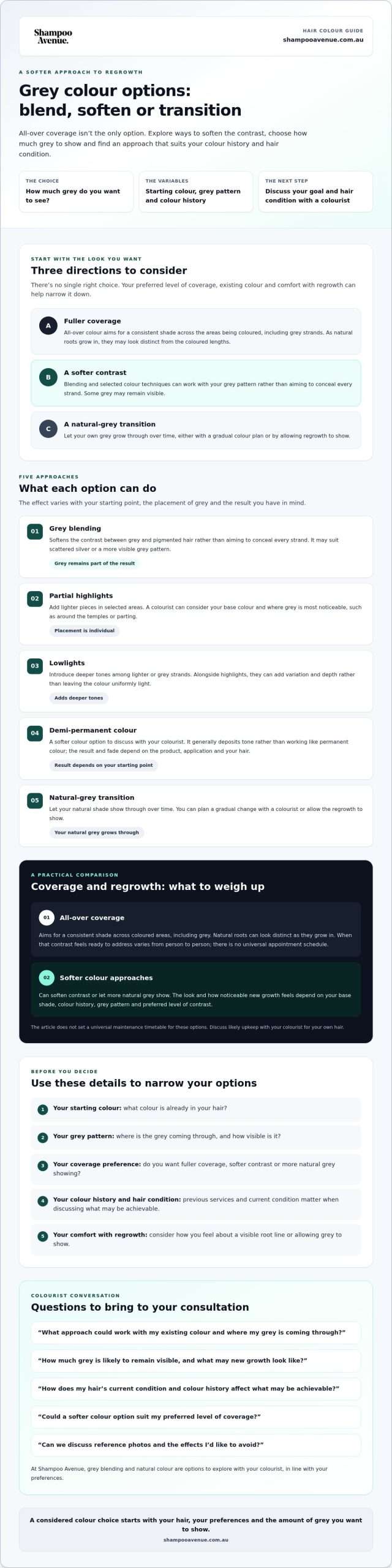
If colouring your roots again and again is starting to feel like a chore, you’re allowed to want something different. Alternatives to all-over grey coverage range from softening the contrast between grey and coloured hair to gradually letting your natural shade show. There’s no single right choice: your colour history, grey pattern and preferred level of coverage all help determine what may work for you.
The options in this guide include grey blending, partial highlights, lowlights, demi-permanent colour and a gradual transition to natural grey. They create different effects and may sometimes be combined. A colourist can assess your starting point and hair condition to discuss what may be achievable.
What does all-over grey coverage involve?
All-over colour aims to create a consistent shade across the areas being coloured, including grey strands. As your natural roots grow in, they can look distinct from the coloured lengths, particularly when the shades differ noticeably. How soon that contrast becomes something you want to address varies from person to person, so there’s no universal appointment schedule.
For some, consistent coverage remains the preferred look. For others, the visible root line is a reason to explore a softer result. Start by deciding which matters more to you: fuller coverage or a gentler grow-out.
What are the main alternatives to full coverage?
Each approach changes how much grey is visible and how it sits alongside your existing colour:
- Grey blending softens the contrast between grey and pigmented hair rather than aiming to conceal every strand.
- Partial highlights add lighter pieces in selected areas. Placement can be planned around your grey pattern and base colour.
- Lowlights introduce deeper tones among lighter or grey strands, adding variation and helping create a more blended appearance.
- Demi-permanent colour offers a softer colour option to discuss with your colourist. The result depends on the shade, your starting point and the coverage you want.
- A natural-grey transition lets your own grey grow through over time. You may make the change gradually with a colour plan, or simply allow the regrowth to show.
Hair colour methods vary in how they are applied and how much coverage they provide; Hair coloring offers a broad overview of permanent, semi-permanent and temporary approaches. For a personal decision, discuss your colour history and desired result with a colourist. At Shampoo Avenue, grey blending and natural colour are options to explore, with techniques discussed in line with your preferences.
How grey blending, highlights and softer colour approaches work
Grey blending is designed to soften the difference between natural grey and coloured hair, not to guarantee complete coverage. The aim might be to make scattered silver strands less distinct or to work with a more visible grey pattern so it feels intentional. Your starting colour, the amount and placement of grey, and how much contrast you’re comfortable with all influence the approach.
The same technique won’t look identical on everyone. A colourist can consider your colour history and hair condition before recommending lighter or deeper tones, or discussing whether a softer colour approach may suit you. As you weigh up alternatives to all-over grey coverage, think about the look you want and how you feel about leaving some grey visible.
Grey blending and strategically placed highlights
Highlights add lighter pieces among your existing colour and grey. Thoughtful placement can help break up a stark difference between darker coloured hair and silver strands. For example, if grey is most noticeable around your temples or parting, a colourist may consider how lighter pieces in those areas could work with the rest of your hair. Placement depends on your individual pattern, not a one-size-fits-all map.
Highlights aren’t the same as full coverage, and they won’t necessarily make every grey strand disappear. The final effect and how visible new growth feels can vary with your base shade, previous colour and preferred level of contrast.
Lowlights, demi-permanent colour and natural-grey transitions
Lowlights add deeper pieces to the hair. Combined with lighter highlights, they can create more variation and depth instead of leaving the colour looking uniformly light. The balance of tones matters, so discuss reference photos and the effects you’d like to avoid with your colourist.
Demi-permanent colour may suit you if you want a softer colour effect. It generally deposits tone rather than working like permanent colour, but the result and how it fades depend on the product, application and your hair. Ask whether it can achieve your preferred level of grey visibility, particularly if you have a history of permanent colour.
If you’d like to see more of your natural silver, growing out previously coloured hair can be a gradual process. The most suitable plan depends on the difference between your existing shade and natural grey. A colourist can talk through options without assuming you need to commit to a full transition straight away. Shampoo Avenue offers grey blending and natural colour; explore its grey blending and natural colour services as you consider what to discuss at a personalised consultation.
Compare alternatives to all-over grey coverage by look and upkeep
The best fit depends on how much grey you want to see, how much contrast you like and how you feel about regrowth. Use this table as a starting point, not a promise of a particular result. Colour history, hair condition and the placement of your grey can all affect what’s achievable.
| Approach | Likely visual effect | Grey visibility | Upkeep considerations |
|---|---|---|---|
| All-over colour | A more consistent shade across coloured areas. | Often aims for fuller coverage. | As natural roots return, the difference from coloured lengths may become noticeable. |
| Grey blending | Softens the contrast between grey and coloured hair. | Some grey may remain visible. | Root contrast can be gentler, though results depend on placement and starting shade. |
| Highlights | Add lighter pieces for a brighter, more varied look. | Can make grey less distinct without covering every strand. | Placement and contrast influence how regrowth appears. |
| Lowlights | Add deeper tones to create depth and variation. | Grey can remain part of the overall colour. | May be combined with other techniques; the plan depends on your existing colour. |
| Demi-permanent colour | Can add tone for a softer colour effect. | Coverage varies with the product and your hair. | Ask how it may fade on your hair and how it fits with previous colour services. |
| Natural-grey transition | Allows your natural silver to become more prominent over time. | Increasingly visible as coloured lengths grow out or are addressed in a tailored plan. | The transition may take time; discuss the approach that feels manageable to you. |
Which option gives you softer regrowth?
Blended colour may create less sharp contrast at the roots than a uniform all-over shade, but no technique can guarantee that regrowth won’t be visible. The same lighter placement may look different beside grey than against a darker base. Ask your colourist how your starting shade and grey pattern could affect the grow-out.
Which option leaves more grey visible?
Fuller coverage aims to conceal more grey, while blending, partial highlights, lowlights and a natural-grey transition can leave some silver in the mix. Partial colour may create a more dimensional appearance, with different tones alongside your natural hair. Be specific about your preference: would you like just a hint of grey, or are you happy for it to remain prominent?
These alternatives to all-over grey coverage involve different trade-offs, and upkeep varies with your hair history, preferences and chosen technique. A stylist should assess your hair in person before confirming suitability or recommending a plan.
How to choose a grey coverage alternative that fits your life
Start with the change you want, not the idea that you must either keep covering every grey or go completely silver. Alternatives to all-over grey coverage sit along a spectrum: you might soften regrowth while keeping some colour, reduce how much grey is covered or gradually transition to your natural shade. You can take one step at a time.
Use these questions to narrow down the options:
- What would you like to change? Is your main goal softer-looking regrowth, less overall coverage or a full transition to natural grey?
- How much grey feels comfortable to see? Picture your everyday look, including the areas where your grey is most noticeable.
- What upkeep suits your routine? Consider the time you can set aside for salon visits and at-home colour care, without assuming every technique follows the same schedule.
- What’s your starting point? Note your current shade, where your natural grey appears and any previous colour services. These details can affect which changes are realistic.
A change in approach doesn’t mean you have to go completely grey straight away. You could explore a softer blend while retaining colour, then decide later whether you’d like to show more of your natural shade. For a closer look at blending and transition techniques, read this grey blending guide.
What to share with your colourist
Give your colourist an honest account of your hair’s history. Mention salon colour, home applications and treatments, even if they happened a while ago. This helps them assess your hair and discuss suitable options. Inspiration photos can clarify the finish you like, but ask how your starting colour and grey pattern may affect the result.
Ask whether a staged change could suit your goal, what upkeep may involve and how your hair’s condition should inform the plan. You don’t need to arrive with a technique chosen. Shampoo Avenue offers grey blending and natural colour, and a personalised colour consultation can help you compare possibilities. Explore grey blending and natural colour as a next step in finding an approach that feels right for you.
Plan your next step with a personalised grey colour consultation
Once you’ve narrowed down the alternatives to all-over grey coverage that appeal to you, a personalised consultation can help turn your preferences into a considered plan. A stylist can look at your grey pattern, existing colour and hair condition, then discuss how these factors relate to the result you want. This grounds the conversation in your hair, rather than relying on inspiration images alone.
A gradual plan is an option, not a requirement. You might prefer a subtle shift that retains plenty of your current colour, or you may be ready to explore a more visible transition. Shampoo Avenue offers grey blending and natural colour services alongside luxury colour transformations. For broader ideas on planning a colour change, explore this luxury hair colour guide.
What happens during a colour consultation?
Think of it as a two-way conversation. Share what you like about your current hair, what you’d change and how colour fits into your everyday routine. Be open about previous salon colour, home applications and treatments, as these can be relevant when discussing suitable approaches.
After seeing your hair, a stylist can talk through options and trade-offs. Ask whether a change could be staged, what upkeep may involve and how much variation in tone or visible grey to expect. You can also discuss how your hair’s condition should guide the plan. There’s no need to settle on a particular technique before you’ve talked it through.
Support your chosen colour approach between visits
Aftercare depends on the colour service and your individual hair needs, so don’t assume one routine suits every result. Ask your stylist what to keep in mind at home and whether your existing products or habits should change. Shampoo Avenue uses professional salon products, and your stylist can discuss care in the context of your hair and colour plan. For more general guidance, read the hair colour aftercare guide.
Ready to talk through a colour direction that feels like you? Explore Shampoo Avenue and discuss your preferences with the salon as a next step towards a personalised approach.
Choose a colour direction that feels right for you
The right alternatives to all-over grey coverage depend on how much grey you want to see, the contrast you prefer and the upkeep that fits your routine. Grey blending, partial colour and a gradual move towards natural grey each offer a different way to approach the change; none is right for everyone.
Consider your colour history and hair condition as part of the decision, not as an afterthought. A personalised conversation with a colourist can help you compare options and decide whether you’d prefer a subtle shift or a more noticeable transition. You don’t have to commit to going completely grey to change your routine.
Shampoo Avenue offers grey blending and natural colour services alongside luxury colour transformations, and uses professional Davines products. Explore Shampoo Avenue’s colour services and take the next step towards a colour plan shaped around your hair and preferences. However much silver you choose to show, you can find an approach that feels like you.
Frequently Asked Questions
What are the best alternatives to all-over grey coverage?
The best alternatives to all-over grey coverage depend on how much grey you want to see and how you prefer your colour to grow out. Grey blending can soften the contrast between silver and coloured hair; partial highlights or lowlights add lighter or deeper tones, while demi-permanent colour may provide a softer colour effect. You could also gradually grow out your natural grey. A colourist can help compare options for your hair.
Is grey blending better than all-over grey coverage?
Grey blending isn’t automatically better than all-over coverage; it offers a different look. All-over colour aims for more consistent coverage, while blending softens the contrast and may leave some grey visible. Your preference for coverage, tolerance for visible roots and colour history all matter. Discuss these with a colourist, who can assess your hair and explain what each approach may involve before you choose.
Can highlights cover grey hair without colouring it all over?
Highlights can add lighter pieces through selected areas without applying colour all over, but they don’t necessarily cover every grey strand. A colourist may consider their placement in relation to your natural grey pattern and existing shade. For example, if grey is more noticeable around your parting, targeted lighter pieces may help soften the contrast there. The effect depends on your starting colour and the result you want.
Can I stop getting all-over grey coverage and grow my natural grey?
Yes, you can stop all-over coverage and allow your natural grey to grow in. The change may feel gradual as coloured lengths and new growth sit together, and the contrast depends on your current shade and grey pattern. You don’t have to transition all at once: ask a colourist whether a staged plan may suit your hair history, condition and comfort with visible regrowth.
How often do you need salon appointments for grey blending?
There isn’t one appointment schedule that suits everyone. How often you choose to refresh grey blending can depend on your starting colour, how your hair grows, where grey is concentrated and how much contrast you’re comfortable seeing. Ask your colourist what upkeep may look like for the technique they recommend. You can also discuss how the result may change as your natural roots grow in.
Is grey blending suitable if my hair has previously been coloured?
It may be an option, but previous colour can affect what’s suitable and achievable. Tell your colourist about salon services, at-home colour and other treatments, including approximate timing if you remember. They can assess your hair’s current condition and discuss an approach that takes its history into account. Bring inspiration images too, and ask how your starting shade may influence the result.
Will alternatives to all-over grey coverage damage my hair?
No colour approach can be assumed to leave every person’s hair unaffected. The impact depends on the technique, your colour history, hair condition and how the service is carried out. Alternatives to all-over grey coverage aren’t automatically less damaging, so ask a colourist to assess your hair before making a change. Discuss how to support its condition during the service and what aftercare may suit your individual needs.