


Clarifying Shampoo: What It Does and How to Use It
What if the shampoo that leaves your hair feeling extra clean isn’t the one to use every wash? If your hair feels coated, limp or less fresh despite regular cleansing, a clarifying shampoo may help lift some product residue. But it’s an occasional reset, not a replacement for your usual shampoo or a fix for every hair concern. Product build-up, hard water and scalp issues can feel similar, so the cause isn’t always obvious.
It’s understandable to be cautious, especially if your hair is colour-treated, curly or prone to dryness. Used too often, clarifying shampoo may leave hair feeling dry, and some formulas may affect colour. The right approach depends on your hair, your routine and the product you choose.
This guide explains what clarifying shampoo can and can’t do, how to use it gently, and how to choose a cautious routine for your hair. You’ll also learn when persistent concerns may call for personalised advice, including support from a salon that offers scalp health and hair wellness treatments.
Key Takeaways
- Learn how clarifying shampoo differs from your regular wash and which kinds of residue it may help lift.
- Recognise when hair may benefit from a deeper cleanse, while remembering that changes in feel don’t reveal the cause on their own.
- Use the product directions, your styling habits and your hair’s condition to guide a cautious wash routine.
- Find out when ongoing residue, dryness, irritation or colour concerns may be worth discussing with a salon professional.
What Is Clarifying Shampoo, and What Can It Remove?
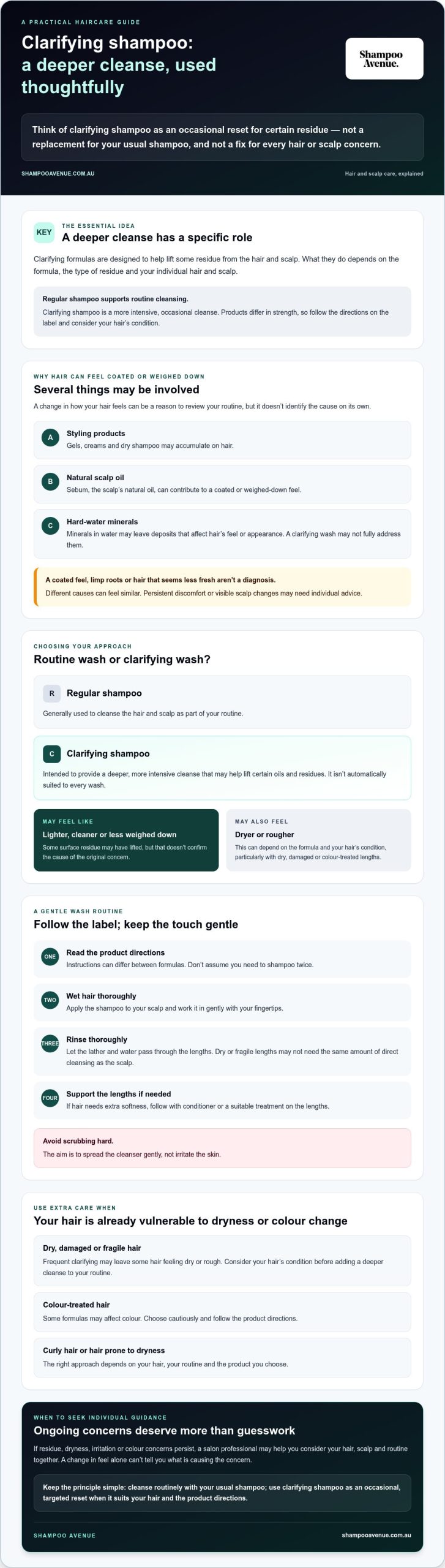
A clarifying shampoo is a deeper-cleansing shampoo designed to lift certain residues from the hair and scalp. Unlike an everyday shampoo, which supports regular cleansing, clarifying shampoo is an occasional reset for residue, not a replacement for your usual wash. The result depends on the formula, the type of residue and your individual hair and scalp.
Residue can come from more than one source. Styling products such as gels, creams and dry shampoo may accumulate, while sebum, the scalp’s natural oil, can contribute to hair feeling coated or weighed down. Minerals in hard water may also affect how hair feels over time. A deeper cleanse may help with some residue, but it can’t promise to remove every deposit or resolve every cause of dullness or heaviness.
What Can Cause Build-Up on Hair and Scalp?
Notice how your hair feels, but don’t treat that sensation as a diagnosis. A coated feel, limp roots or hair that seems less fresh can be reasons to review your routine, including how much styling product you use and how often you cleanse. Similar changes can have different causes. Persistent discomfort or visible scalp changes aren’t proof of product build-up and may need individual advice.
Hard water is another possible factor. Minerals in water can leave deposits that influence hair’s feel or appearance, though the effect varies. A clarifying wash may not fully address mineral residue, so don’t assume one wash will solve the problem.
Clarifying Shampoo Versus Regular Shampoo
Regular shampoo is generally used to cleanse the hair and scalp as part of your routine. Clarifying formulas are intended to provide a more intensive cleanse, though products differ and aren’t all equally strong. Clarifying shampoos are described as a stronger-than-usual treatment for removing oils and residue, but the ingredients and results depend on the individual formula.
That deeper-cleaning role is why clarifying shampoo isn’t automatically suited to every wash. Frequent use may leave some hair feeling dry or rough, particularly if it’s already prone to dryness. Check the product directions and consider your hair’s condition before adding it to your routine. If you’re unsure whether the concern is product residue or a scalp issue, the scalp health guide offers more context on caring for your scalp as part of overall hair wellness.
How Clarifying Shampoo Cleans Hair Without Replacing Your Routine
During washing, cleansing ingredients help loosen oil and residue so they can be rinsed away with water. The ingredients and cleansing strength vary between formulas, so one product may feel gentler or more thorough than another. Hair that feels clean afterwards may indicate that some surface residue has lifted, but it doesn’t prove build-up caused every concern. As Healthline explains, a deeper cleanse may help get rid of buildup in your hair, though the right approach depends on the product and your hair’s needs.
Routine washing supports regular cleansing; occasional clarifying is a targeted reset when your hair and routine call for it. It isn’t a reason to replace your everyday shampoo or automatically add an extra wash every time your hair feels different.
What Happens During a Clarifying Wash?
Start by reading the label, as directions can differ. Wet your hair thoroughly, then apply the shampoo to your scalp and work it in gently with your fingertips. Avoid scrubbing hard. The aim is to spread the cleanser, not irritate the skin. Rinse thoroughly and let the lather and water pass through the lengths. Follow the product’s instructions rather than assuming you need to shampoo twice.
Keep the focus on the scalp, where oil and product residue can collect. The lengths still get rinsed, but they may not need the same amount of direct cleansing, especially if they’re dry or fragile.
Why Hair May Feel Different Afterwards
With some surface residue washed away, hair may feel lighter, cleaner or less weighed down. That change can be welcome, but it isn’t a diagnosis. A fresh feel doesn’t confirm that build-up was the only cause of the original concern.
There’s another side to a deeper cleanse. Dry, damaged or colour-treated lengths may feel rougher afterwards, depending on the formula and your hair’s condition. If your hair needs extra softness, follow with conditioner or a suitable treatment on the lengths. Choose care that fits your hair rather than applying more cleanser in pursuit of a particular feel.
If you’re unsure how to balance cleansing with your hair’s needs, Shampoo Avenue offers professional scalp and hair care. The salon’s scalp health and hair wellness treatments can be part of a personalised discussion about your hair, scalp and routine.
Who May Benefit From Clarifying Shampoo and Who Should Be Cautious?
If your hair feels coated, limp or less fresh even after your usual wash, a clarifying shampoo may be worth considering. These are clues, not proof of product build-up: hair can feel different for several reasons. Think about any recent changes to your styling products, how much you use and whether your usual washing routine has changed. That context can help you decide whether a deeper cleanse makes sense.
Signs a Clarifying Wash Might Help
Regular use of styling products, or hair that seems to lose its light, clean feel between washes, may prompt you to review your routine. Start with the basics: check whether you’re using more product than usual and follow your regular shampoo’s directions. A stronger cleanse isn’t automatically the answer, especially if the concern keeps returning.
Ongoing itching, irritation or flakes deserve extra care. A cleansing shampoo may not address the reason for persistent scalp symptoms, and trying stronger or more frequent washes could leave your scalp feeling less comfortable. Consider seeking personalised advice rather than assuming residue is the cause.
When to Be Gentle With Dry or Colour-Treated Hair
Dry, damaged or colour-treated hair may need a more cautious approach. A deeper cleanse can leave some hair feeling rough or dry, and colour compatibility depends on the specific formula and your hair. Check the product directions and, if you’re unsure, ask your colourist before using it. Pay attention to how your hair feels and how its colour looks afterwards instead of assuming that more cleansing will help.
Whether a clarifying wash suits you depends on the formula, your hair’s condition and how often you use it. Keep that in mind if your lengths already feel dry or your scalp is sensitive. A gentler routine may be a better starting point while you work out what your hair needs.
For colour-care context, see this hair colour aftercare guide. If a concern persists, Shampoo Avenue offers scalp health and hair wellness treatments, as well as hair treatments and hair repair treatments. Professional guidance can help consider your scalp, hair history and current routine together, rather than treating every change in feel as build-up.
How Often to Use Clarifying Shampoo and How to Apply It
There’s no single schedule that suits every head of hair. The product’s directions, how often you use styling products and your hair’s condition all matter. Treat clarifying shampoo as an occasional option, not an automatic extra step in every wash. Start cautiously, then see how your hair and scalp respond before deciding whether to use it again.
A Gentle Step-by-Step Clarifying Wash
Follow the label first, as formulas and directions differ. For a careful wash:
- Read the directions. Check how much to use and whether the label gives specific application advice.
- Wet your hair thoroughly. This helps spread the shampoo evenly.
- Apply it to your scalp. Use an appropriate amount and massage gently with your fingertips. Avoid rough scrubbing or pulling at tangled lengths.
- Rinse thoroughly. Let the water and lather pass through your lengths without rubbing them together.
- Condition as needed. Apply a suitable conditioner or treatment to the lengths if they need extra care.
Don’t assume you need a second shampoo application. Repeat only if the product directions or a professional recommends it. A gentle approach can help you notice how your hair responds without adding unnecessary cleansing.
How to Adjust Your Routine Over Time
After washing, take note of how your scalp and lengths feel, and whether the original concern returns. If your hair feels fresh and comfortable, there may be no need to repeat the wash straight away. If it becomes persistently dry or uncomfortable, pause or reduce use rather than pushing through.
Think about what else has changed, too. A new styling product or a shift in your routine may affect how your hair feels, while ongoing scalp symptoms may need more than a cleansing adjustment. If concerns keep recurring, seek professional advice. If your hair is colour-treated and you’re unsure whether a formula is suitable, ask your colourist before using it.
The right interval is individual: let the formula, your routine and your hair’s response guide when to clarify again. For personalised support with a recurring scalp or hair concern, ask Shampoo Avenue about scalp and hair care.
When a Salon Haircare Consultation Can Help
If residue keeps returning, your hair stays dry after cleansing, or colour-care questions make you hesitate, another product trial may not be the clearest next step. A hair professional can consider your scalp condition, hair history and current routine together, helping you think through what may suit your needs. Clarifying shampoo won’t necessarily address every cause of a change in how your hair or scalp feels.
Bring a few useful details to the conversation: what you’ve tried, how your hair responds and what has changed. The aim is a more informed routine, not a promise that one product or treatment will fix the concern. For ongoing irritation or other persistent scalp symptoms, consider seeking advice from a healthcare professional as well.
What to Share With a Hair Professional
Make a note of the shampoos, styling products and treatments you currently use, including any recent changes. Describe when the concern began and whether it seems better or worse after washing, styling or using a particular product. Mention colour services, sensitivities and changes in your hair’s condition. These details give a hair professional helpful context to discuss your routine and possible next steps.
Choosing Professional Haircare With Confidence
Professional guidance can help narrow down haircare options by taking your individual needs and existing routine into account. Shampoo Avenue offers scalp health and hair wellness treatments, as well as hair treatments and hair repair treatments. The salon also retails professional haircare ranges. Recommendations should take your needs and the product’s suitability into account, without assuming that a particular option will deliver the same result for everyone.
If home care hasn’t settled the concern, you can explore Shampoo Avenue and its scalp and hair care offerings. Sharing what you’ve already tried can help make the next conversation more useful and personalised.
Choose a Haircare Routine That Feels Right for You
A clarifying shampoo can be a useful occasional reset, but it isn’t a one-size-fits-all answer or a replacement for your regular wash. Let the product directions, your hair’s condition and how your scalp responds guide your approach. If dryness, irritation, persistent residue or colour concerns continue, consider getting personalised advice rather than repeatedly changing products.
Good haircare starts with understanding what your own hair needs. Shampoo Avenue offers scalp health and hair wellness treatments, and retails professional Davines haircare. These options can support a more informed conversation about your routine and the care that may suit you.
Explore Shampoo Avenue’s professional haircare and wellness offerings to discuss support for your scalp and hair concerns.
Frequently Asked Questions
What does clarifying shampoo do to your hair?
Clarifying shampoo gives hair a deeper cleanse than many everyday shampoos, helping lift some surface oil and product residue. This may leave hair feeling lighter or fresher, but results depend on the formula and the residue involved. It won’t necessarily remove every deposit or resolve every reason hair feels coated. A change in feel is a clue, not proof of what caused the concern.
How often should you use clarifying shampoo?
There’s no schedule that suits everyone. General guidance often ranges from once every one to four weeks, but your product’s directions, styling habits and hair condition should guide your routine. If your hair is dry, curly or colour-treated, be especially cautious and seek advice if you’re unsure. Start conservatively, then assess how your hair and scalp feel before considering another wash.
Can clarifying shampoo remove hard-water build-up?
It may help cleanse some surface residue, but don’t assume a clarifying shampoo will fully remove mineral deposits from hard water. Formulas vary, and a shampoo not designed for mineral build-up may have limited effect. If your hair continues to feel dull or coated despite adjusting your routine, consider asking a hair professional what options may suit your hair rather than repeating stronger washes.
Is clarifying shampoo safe for colour-treated hair?
It depends on the formula and your colour-care needs. Some clarifying shampoos may affect colour, particularly with frequent use, so check the label and ask your colourist if you’re uncertain about compatibility. Take note of how your colour and hair feel after washing. If maintaining your colour is a priority, don’t assume that every deeper-cleansing shampoo is suitable for your routine.
Can clarifying shampoo dry out your hair?
Yes, it can leave hair feeling dry or rough, especially if the lengths are already dry or damaged, or if you use it more often than directed. The effect varies by formula and hair condition. Follow the product instructions, rinse thoroughly and use a suitable conditioner on the lengths if they need extra softness. Stop or reduce use if dryness persists.
What happens if you use clarifying shampoo too often?
Frequent use may leave hair feeling dry, rough or less manageable, and can make a sensitive scalp feel uncomfortable. Depending on the formula and your colour-care routine, it may also affect how long colour looks fresh. If you notice ongoing dryness or irritation, pause use and reassess your routine. Persistent scalp symptoms may need individual advice rather than more cleansing.
Should you use conditioner after clarifying shampoo?
Use conditioner if your hair needs it, particularly on dry or damaged lengths that feel rough after washing. Apply it where your hair needs softness and follow the conditioner’s directions. You may also choose a suitable hair treatment if it fits your routine. There’s no need to use a product your hair doesn’t need. Pay attention to how the lengths feel and adjust accordingly.