

Signs of Over Processed Hair: How to Spot and Save Your Strands
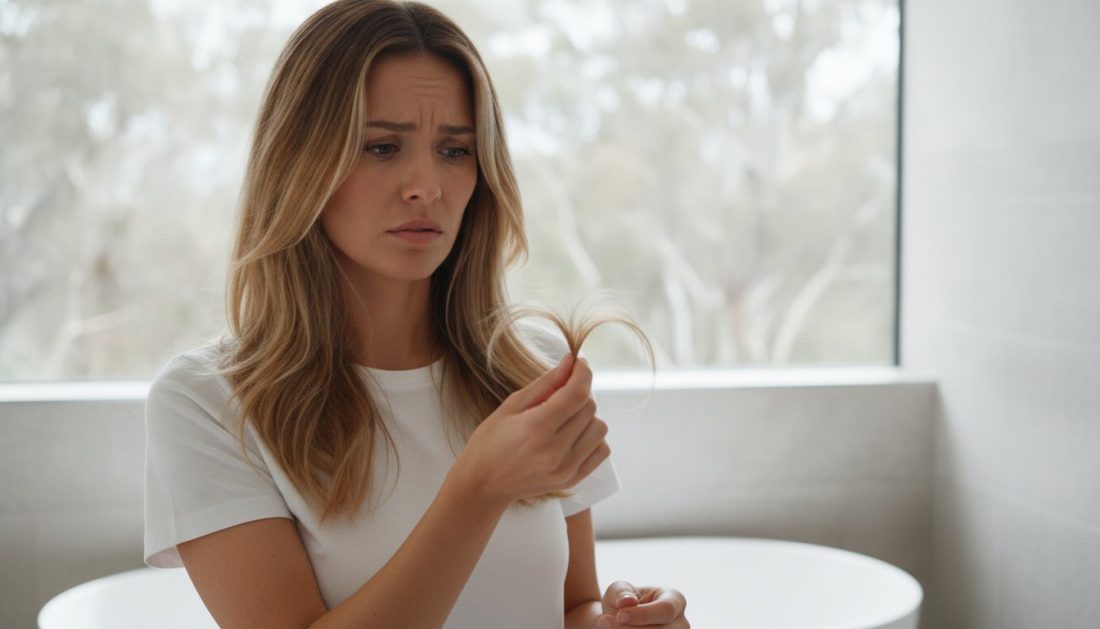
You’re standing at the bathroom mirror, combing through damp hair, when you notice something terrifying: your ends aren’t just breaking, they’re stretching like chewing gum before snapping away. It’s the ultimate wake-up call that your latest colour transformation might have pushed your strands too far. Recognising the early signs of over processed hair is the first step toward saving your style before the damage becomes permanent.
We understand how disheartening it feels when your hair loses its natural bounce and refuses to hold onto that expensive new shade. You’ve probably tried every hydrating product on the shelf, only to find your hair still feels mushy when wet and brittle when dry. This article will show you how to move beyond surface-level fixes to restore your hair’s structural integrity with professional-grade care.
We will help you distinguish between a simple lack of moisture and a critical protein deficiency through a clear diagnostic checklist. From there, you’ll discover a tailored recovery plan rooted in hair wellness to rebuild strength and manage chemical fatigue, ensuring your strands feel healthy, authentic, and uniquely yours again.
Key Takeaways
- Learn to spot the signs of over processed hair, from a “mushy” texture when wet to strands that snap under the slightest pressure.
- Understand the vital difference between severely dry hair and structural chemical damage so you can choose the right balance of moisture or protein.
- Discover why hitting “pause” on at-home box toners and excessive heat styling is the most important first step in saving your hair’s integrity.
- Explore how adopting a “lived-in” colour philosophy allows you to achieve high-end blonde results while prioritising long-term hair wellness.
- Get a professional roadmap for restoring your hair’s strength using restorative treatments that focus on internal repair rather than just surface shine.
What Exactly is Over Processed Hair?
Think of your hair as a delicate fabric. Just as silk can only take so much heat and detergent before it loses its lustre, your strands have a limit. Over-processing occurs when chemical alterations reach a point where they compromise the internal structure of the hair. It isn’t just a bad hair day; it’s a structural crisis that leaves your hair vulnerable to every brush stroke and gust of wind.
The most common culprits are often the things we do in the name of style. Excessive bleaching for high-end colour transformations, frequent high-heat styling, and overlapping chemical relaxers can all strip the hair of its natural resilience. While we all love a fresh look, these processes can permanently lift the cuticle, those protective scales that shield the hair’s core. When the cuticle stays open, moisture escapes instantly, making “dryness” merely the tip of the iceberg for identifying the signs of over processed hair.
The Science of the Hair Shaft
Inside each strand, disulfide bonds act as the architectural scaffolding that provides strength and elasticity. Aggressive colouring treatments work by breaking these bonds to deposit new pigment. If this process is repeated too often or without professional-grade repair treatments, the hair becomes highly porous. It might soak up water like a sponge when you’re in the shower, but it lacks the internal integrity to hold onto that hydration once you step out. Over-processed hair is a state of permanent structural depletion. When this depletion occurs, you will likely notice Trichoptilosis (split ends) appearing not just at the tips, but further up the hair shaft where the protein has been most degraded.
Chemical Fatigue vs. Natural Wear
Is your hair just tired from the sun, or is it chemically fatigued? Environmental wear from the harsh Australian sun or salt water usually only affects the surface. Chemical fatigue, however, is a deeper issue caused by salon-grade products that change the hair’s pH balance and protein levels. Even “lived-in” luxury blonde styles require a methodical approach to avoid overlapping lightener on previously treated sections. Without this professional care, the cumulative damage can lead to a gummy texture that feels “fake” to the touch. Understanding this difference helps you move away from generic supermarket fixes and toward a restorative plan that actually respects your hair’s health.
5 Critical Signs of Over Processed Hair to Watch For
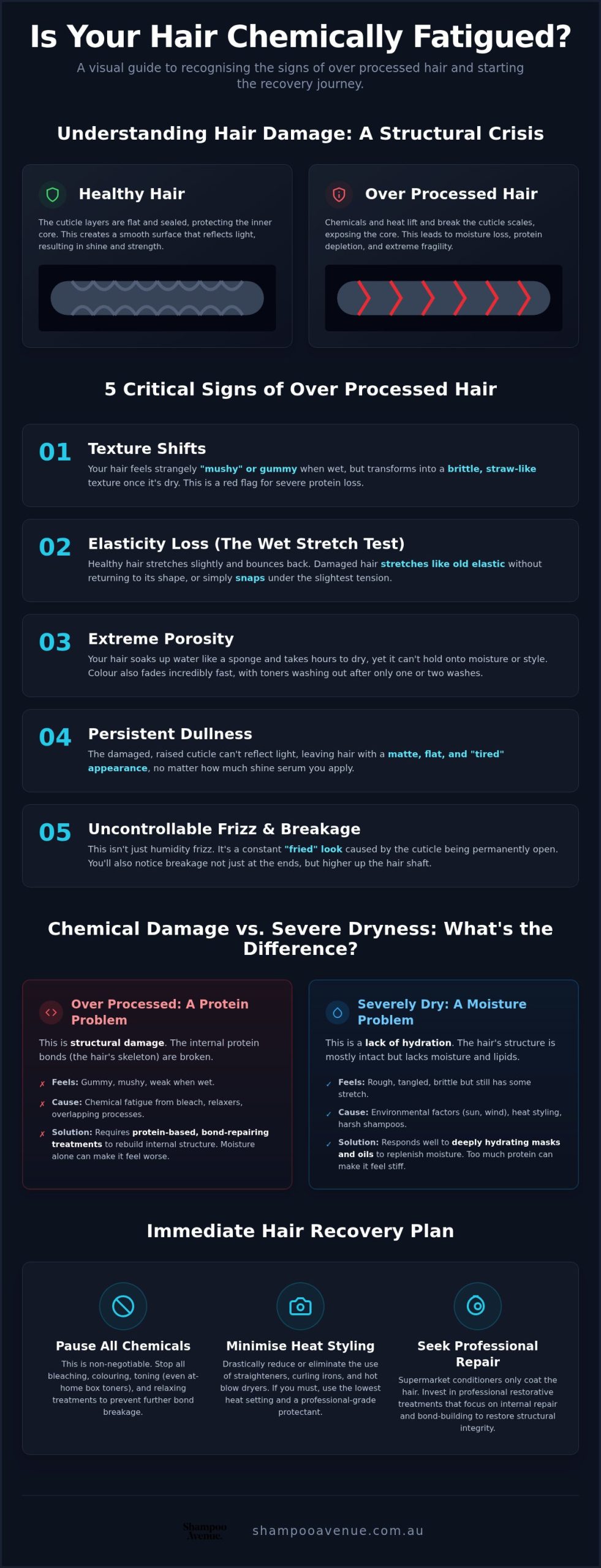
Identifying the signs of over processed hair early can mean the difference between a manageable recovery and a forced “big chop”. It’s about listening to what your strands are telling you when you wash, style, and touch them throughout the day. When damage moves from the surface into the core, your hair begins to behave in ways that no amount of standard conditioner can fix. Look out for these five red flags:
- Texture Shifts: Your hair feels strangely “mushy” or gummy when it’s wet, but transforms into a brittle, straw-like crunch once it’s dry.
- Elasticity Loss: Healthy hair has a natural bounce. If you pull a strand and it stretches out like old elastic without returning to its shape, the internal structure is failing.
- Extreme Porosity: Your hair soaks up water like a sponge in the shower, yet it takes hours to dry. Conversely, it might feel “hollow” and lose its style almost immediately.
- Persistent Dullness: You’ve lost that healthy, light-reflecting shine. Instead, your hair has a matte, flat appearance that looks “tired” regardless of how much serum you apply.
- Uncontrollable Frizz: This isn’t just a reaction to a humid afternoon. It’s a constant, “fried” look at the ends that refuses to lie flat or smooth down.
The Gummy Texture Warning
When your hair feels like wet seaweed or “mushy” in the shower, it’s a major red flag for severe protein loss. This is the most vulnerable state for your hair to be in. Brushing it while it’s this soft is like pulling on a piece of wet tissue paper; it will simply disintegrate or snap. You can check your integrity at home with a “Wet Stretch Test”. Take a single strand of damp hair and gently pull it between your fingers. If it stretches significantly and stays limp, or if it curls up and breaks, your hair’s architectural scaffolding is compromised. If you notice these signs of over processed hair, it’s vital to swap your regular routine for professional hair repair treatments that focus on structural stability.
Colour That Won’t Stay Put
Have you noticed your toner or semi-permanent shade washing out after just one or two cleanses? This “hollow hair” phenomenon happens because the internal cortex is too damaged to hold onto pigment molecules. Without a healthy cuticle to seal the colour in, even the most expensive professional shades will fade almost instantly. This makes consistent hair colour aftercare absolutely essential for protecting your investment. However, if the hair is truly over-processed, you’ll need to focus on rebuilding the “foundation” of the hair before it can successfully hold a new shade again. A professional wellness plan can help bridge this gap, ensuring your next transformation lasts much longer.
Over Processed vs. Severely Dry Hair: The Difference
Many people often believe their hair is simply “a bit thirsty” after a colour appointment. They reach for the heaviest oils and hydrating masks they can find, only to wonder why their hair still feels like straw. Understanding the difference between surface-level dryness and deep chemical damage is vital. Dry hair is typically a lack of sebum, the natural oil that keeps the cuticle supple and shiny. Over-processing, however, is a lack of keratin, the essential protein that forms the hair’s internal structure.
You can usually tell the difference by how your hair reacts to tension and heat. Dry hair often feels stiff and will snap quite quickly if you pull it. In contrast, one of the most telling signs of over processed hair is a strange, rubbery elasticity; the strand stretches significantly before finally breaking. While heat styling can often “tame” dry hair by smoothing the cuticle, applying a flat iron to over-processed strands is incredibly dangerous. Because the core is compromised, the hair may smoke or even melt under the plates of your styling tools.
When a Hydrating Mask Isn’t Enough
If your hair is already in a fragile state, slathering it in heavy butters and oils might actually do more harm than good. Without the structural “spine” provided by protein, the hair cannot support the weight of heavy moisture. It’s all about the moisture-protein balance. Adding excessive moisture to mushy, chemically fatigued hair can lead to hygral fatigue, a condition where the hair shaft weakens from constant swelling and contracting. If your hair feels gummy, you need to stop the hydration-only approach and look toward structural repair.
The Role of Protein Treatments
Protein acts as a temporary patch for the holes in your hair’s cuticle. When you apply a professional-grade treatment, it fills those gaps to restore strength and prevent further snapping during your daily brush. It’s a restorative process that helps your hair feel like hair again, rather than a synthetic fibre. You must be cautious not to overdo it, though. Relying solely on protein without reintroducing soft moisture can make your strands too rigid, which leads to a different type of breakage. Shampoo Avenue recommends mastering protein treatment for hair by following a professional guide to ensure you’re achieving the perfect equilibrium for your specific hair wellness needs. This balanced approach is the only way to truly reverse the signs of over processed hair and bring back its natural vitality.
Immediate Steps to Save Your Strands
Identifying the signs of over processed hair is a wake-up call, but it isn’t the end of your style journey. It’s time to move into a protective triage mode to prevent further breakage. Your first priority is to stop all at-home chemical treatments immediately. This includes box toners or supermarket kits that promise a quick fix for brassiness. Your strands are currently too porous to handle even mild chemical shifts without risking total collapse.
Second, minimise heat styling as much as possible. Your hair is in a weakened state; the high temperature of a flat iron can cause compromised protein to literally melt or smoke. If you must use a hair dryer, always apply a professional-grade heat protectant first. You should also switch to a sulphate-free, pH-balanced shampoo. Traditional cleansers are often too alkaline, which further agitates the cuticle and leads to more tangles and structural stress. Finally, book a professional consultation for a deep-bond repair treatment. These salon-only formulas penetrate the cortex to re-link broken bonds in a way that at-home masks simply cannot achieve.
At-Home Damage Control
Mechanical damage is your biggest enemy during recovery. Switch to a wide-tooth comb for detangling and only work from the ends upward to avoid putting pressure on the roots. Silk pillowcases are a game-changer for fragile hair; they reduce the friction that leads to mid-shaft snapping while you sleep. We also suggest avoiding tight hairstyles, such as high ponytails or sleek buns, which put unnecessary tension on the hairline. For gentle detangling, a high-quality, lightweight leave-in treatment can provide a protective, weightless slip that makes styling much safer.
The Professional Rescue Plan
A salon-only treatment goes significantly deeper into the hair shaft than any supermarket alternative. We often recommend a “dusting” or a very light trim during this phase. This stops split ends from travelling further up the shaft and causing more widespread damage. We also believe that a scalp health focus is vital for long-term recovery. A healthy scalp environment ensures that the new growth coming through is as strong and resilient as possible. If you are currently struggling with the signs of over processed hair, our team can help you design a bespoke hair repair treatment plan to restore your hair’s natural integrity.
Future-Proofing: Luxury Colour Without the Damage
We exclusively utilise Davines products because they align with our commitment to ethical, high-performance haircare. These formulas are designed to be incredibly gentle on the cuticle while delivering vibrant, professional results. Our goal is to establish a long-term routine that respects your hair’s natural pH and protein levels. This requires honest communication about your hair history. Sharing details about previous box dyes or heat damage allows us to customise your service, ensuring we never push your hair past its breaking point again.
The Lived-In Blonde Advantage
As a lived-in blonde specialist, our team focuses on creating depth and dimension without the need for global bleaching. This technique involves leaving natural “bridges” of your own hair between lightened sections. These bridges act as a built-in support system, maintaining the overall strength and elasticity of your style. It is the gold standard for luxury hair because it grows out seamlessly. You get a low-maintenance look that requires fewer salon visits and places significantly less chemical stress on your hair shaft over time.
Your Next Steps at Shampoo Avenue
A hair wellness transformation begins with a thorough, unpretentious consultation. When you visit our San Remo salon, you aren’t just another appointment; you are part of our community. We take the time to listen to your concerns and diagnose any lingering signs of over processed hair before we even pick up a brush. Our tight-knit team is committed to solving complex hair problems with a family-like touch that makes high-end fashion feel accessible and grounded. We encourage you to start your journey back to healthy, vibrant hair today. Let’s work together to create a professional plan that restores your confidence and keeps your strands looking their best for years to come.
Your Journey Back to Hair Wellness
Recognising the signs of over processed hair is the first step toward reclaiming the vibrant, healthy style you love. It isn’t just about fixing damage; it’s about shifting your mindset toward a long-term wellness routine that respects your hair’s internal structure. By distinguishing between simple dryness and structural chemical fatigue, you can stop the cycle of breakage and start building a foundation of strength. Your hair is a delicate fabric that deserves the highest quality care and a patient, methodical approach to colour.
As a Davines Professional Partner Salon, we specialise in luxury colour transformations that never compromise on integrity. Our expert focus on scalp and hair wellness ensures that every treatment we provide supports your hair’s natural resilience from the root to the tip. We take pride in being a friendly team of experts who are passionate about solving complex hair problems with a grounded, unpretentious touch.
You don’t have to navigate hair recovery alone. Book your Hair Wellness Transformation at Shampoo Avenue today and let us create a bespoke plan to restore your strands. We look forward to welcoming you into our community and helping you achieve the beautiful, authentic results you deserve. Let’s work together to make your hair feel like yours again.
Frequently Asked Questions
Can over-processed hair be permanently fixed?
How long does it take to recover from chemical over-processing?
Recovery is a gradual process that typically takes several months of consistent care. While professional repair treatments provide immediate structural support, true health returns as your new, untreated hair grows from the scalp. Most clients see a significant improvement in texture and manageability within three to six months if they follow a strict professional plan and avoid further chemical stress during the recovery period.
Is it okay to colour my hair again if it feels dry?
You should wait until your hair’s integrity is restored before applying more chemical colour. If your strands are merely dry, a hydrating treatment might suffice, but if you notice the signs of over processed hair, adding more chemicals could cause total breakage. We recommend a professional assessment to ensure your hair can safely hold pigment without suffering from further structural depletion or “hollow” fading.
What is the “Wet Stretch Test” and how do I do it?
The Wet Stretch Test is a simple way to check your hair’s elasticity at home. Take a single strand of damp hair and gently pull it between your fingers. Healthy hair will stretch slightly and bounce back to its original length. Over-processed hair, however, will stretch like chewing gum and stay limp or snap instantly. This test helps you decide if your hair needs moisture or structural protein.
Will I have to cut my hair off if it is over-processed?
You won’t necessarily need a “big chop”, but a series of regular “dustings” is essential to stop damage from spreading. Trimming the most compromised ends prevents split ends from travelling further up the shaft. By combining small, frequent trims with intensive repair treatments, you can maintain most of your length while gradually removing the over-processed sections over several salon visits in a controlled way.
What is the best shampoo for chemically damaged hair?
Look for a sulphate-free, pH-balanced shampoo that focuses on restorative ingredients rather than just surface shine. We recommend professional-grade options, such as those from the Davines range, which gently cleanse without stripping away the few remaining natural oils. Avoiding harsh detergents is vital for keeping the cuticle flat and preventing further agitation of the already weakened internal hair bonds during your washing routine.
How often should I get a professional hair repair treatment?
Most clients benefit from a professional treatment every four to six weeks. During the initial recovery phase, your colourist might suggest more frequent sessions to provide the consistent protein and moisture needed to stabilise your strands. These salon-only treatments penetrate deeper than at-home masks, making them a cornerstone of any effective plan to reverse the signs of over processed hair and restore shine.
Can I use heat on my hair if it is snapping?
You should avoid all high-heat styling tools while your hair is snapping or breaking. Applying a flat iron or curling tong to compromised strands can cause the protein to melt, leading to permanent structural failure. If you must use a hair dryer, use the coolest setting possible and always apply a high-quality heat protectant to create a barrier against further thermal damage while your hair recovers.